BOOK REVIEW: Batman: The Dark Knight Returns by Frank Miller

Batman: The Dark Knight ReturnsBatman: The Dark Knight Returns by Frank Miller

My rating: 4 of 5 stars

Amazon page

A couple of reviews ago, I covered Frank Miller’s Batman: Year One, which imagined the first year of the Dark Knight’s venture into crime fighting. The Dark Knight Returns is Miller’s take on the other end of the Caped Crusader’s career. It begins ten years after the last sighting of the Batman. Commissioner Gordon is on the verge of retirement, and there’s a mix of new and old threats rising.

There are four parts to this work. The first, also entitled The Dark Knight Returns shows the rise of a powerful gang of thugs called “The Mutants.” The way this gang’s leader is drawn makes him look like he truly is an altogether different species, but it’s his filed teeth and his bulky physique that account for his appearance. The main battle is with the “rehabilitated” Harvey Dent (a.k.a. “Two-Face,” an inappropriate moniker as his face has been fixed and his flighty psychiatrist ensures the community that Dent’s mind is fixed as well.) We see Bruce Wayne’s concern about the deteriorating state of Gotham and his eventual return to crime fighting, which is instigated by a freakish bat flying through his [closed] window. Wayne takes the bat as a sign from the universe that the Batman is indeed needed. Dent engages in a terroristic plot which the Dark Knight must try to foil.

As was the case in Batman: Year One, the story of Commissioner Gordon plays out in parallel with that of Bruce Wayne / Batman. However, in the third book, Gordon has retired and it’s the new Commissioner, Ellen Yendel, who shares the spotlight. Yendel, unlike Gordon, promptly issues an arrest warrant for Batman.

Book Two is called, The Dark Knight Triumphant, and it’s in this episode that Batman comes up against the leader of the Mutants. As in Batman: Year One, Batman arrives to the fight as an underdog. However, as would be expected, the nature of his underdog status is completely different. In Year One, Batman is a supreme physical specimen, but is green to crime fighting. In The Dark Knight Returns we see a battle-hardened veteran Batman who is a spry geriatric, not up to fighting young, mutant thugs. However, as with the former comic, the Dark Knight does redeem himself. Many of the Mutants, being fair-weather friends to their leader, form a cult of Batman in the wake of the Dark Knight’s victory over their former boss.

Besides broadening the readership demographic to retirement community dwellers, another new demographic is appealed to with Carrie Kelley, the new Robin. There are references early in the book to the profound effect that the death of Jason Todd had on Bruce Wayne. Be that as it may, Batman seems quick to bring this young girl into harm’s way given the lingering wound of Jason Todd.

Book Three, Hunt the Dark Knight, pits Batman against his ultimate nemesis, the Joker—who like Dent—has been sprung in no small part due to his lunatic psychiatrist. Miller continues the popular Batman comic disdain for psychiatrists, who are portrayed as a small nudge away from becoming bat-shit crazy (pun intended.) While the battle against the Joker provides this chapter’s crime fight, Commissioner Yendel’s war on Batman is a major part of the storyline. We also discover that time has not been as kind to Selina Kyle as it was to the men of this series. (i.e. Gordon is old but distinguished, and Batman has pretty much the same preternatural physique that he did as the young batman.)

The Dark Knight Falls is the last section, and it’s the most famous for the battle between Batman and Superman. Earlier in the book there’s a foreshadowing call from Clark Kent to let Batman know that the Superman will be out-of-town for a while. Appropriate to the 1986 issue date of this comic, a Cold War crisis is the event consuming Superman’s time. These Cold War tensions result in a nuclear missile launch that Superman diverts, but the Man of Steel hasn’t read up on the Electro-Magnetic Pulse (EMP) effect. [Incidentally, Miller didn’t read up on the use of nuclear weapons as an EMP either, or—at least—he gets it completely wrong. Perhaps, he just figured that his readers wouldn’t know the difference–and he’s probably right. At any rate, I’m not deducting stars for bad science.] The power outage caused by the EMP results in looting and societal chaos. Batman quells this with the help of the cult of Batman mentioned previously. However, this doesn’t go over smoothly with some, which results in Superman’s invasion of Batman’s Gotham turf, and the ultimate battle.

I enjoyed this work more than Batman: Year One in part owing to the serious enemies that the Dark Knight must vanquish. I’d agree with the common view that this is a must-read for those interested in the canon of the Caped Crusader.

Also, if you aren’t a comics fan but are wondering how Batman and Superman could end up fighting–as per the upcoming Batman v Superman: Dawn of Justice movie–this might give you some insight. [Though I wouldn’t expect that movie to follow this work in any of the vaguest ways.] Also, there are other Caped Crusader versus Man of Steel interpretations out there, though this is probably the most famous.

View all my reviews

BOOK REVIEW: Batman: Year One by Frank Miller, et. al.

Batman: Year OneBatman: Year One by Frank Miller

My rating: 3 of 5 stars

Amazon page

Amazon recently had a sale on classic Batman collections in celebration of the Caped Crusader’s 75th anniversary. I bought a few titles, including this one.

Batman: Year One is Frank Miller’s vision of the hero’s first year of crime fighting. Unlike the first movie in the Nolan trilogy, Batman Begins, there’s no backstory about Bruce Wayne’s training. The comic begins with Bruce Wayne beginning to go on the equivalent of self-sanctioned “neighborhood watch” rounds in Gotham’s seedy underbelly. He’s in his planning and research phase, and only quasi-reluctantly gets into brawls with street thugs. His goal is, ostensibly, intelligence gathering.

Miller’s work isn’t aimed at a boyish market. From the intimation of underage prostitution to themes of marital infidelity to the unsubtle homage to Edward Hopper’s famous painting Nighthawks, this book is directed at a more mature reader. It’s grittier, but Batman hasn’t yet become so sophisticated as to abandon wearing his underwear outside his pants.

The four chapters that make up this graphic novel parallel and twist together the stories of Jim Gordon and Bruce Wayne as they each begin their Gotham crime fighting careers. In many versions of the Batman mythology, Gordon is a young cop who helps boyhood Bruce Wayne on the night his parents are killed. This is one of the ways in which the Miller version differs. In Batman: Year One Gordon is a detective who moves to Gotham from Chicago at about the same time Bruce Wayne is sticking his toe in the waters of Gotham crime. This comes in handy for Miller later in works like Batman: The Dark Knight Returns in which he is able to have a geriatric Bruce Wayne and Jim Gordon coexisting.

The interests of Gordon and Batman only align at the very end of the last chapter. Until then, Gordon is trying to find and apprehend Batman like all the other cops. In fact, Gordon is leading the crusade against the Dark Knight when his bosses still have little interest in it—until Batman crashes their ball.

There are no supervillains yet—only corrupt cops and organized crime. Bruce Wayne, who adopts the guise of Batman only after a bat flies through his window (never heard of that happening), gets off to a rough start. He isn’t yet the phantom nightmare that he will later become, and is still learning his lessons. In his early encounters with criminals, he prevails mostly by being able to take a punch.

Besides Bruce Wayne’s inner monologue being a bit ham-handed, I enjoyed this work. The ham-handed inner monologue is—no doubt–intended to convey that Wayne is a man of thought as well as a man of action, but it’s hard to believe that someone who could transform himself into the Batman would be that riddled with doubt. That said, the dialogue is better written than the typical comic. There’s not a lot of the “As-you-know-Bob” dialogue that often plagues this genre.

If you’re a fan of the Dark Knight, this is worth reading.

View all my reviews

BOOK REVIEW: Injustice: Gods Among Us by Tom Taylor

Injustice: Gods Among Us #1Injustice: Gods Among Us #1 by Tom Taylor

My rating: 4 of 5 stars

Amazon page

If you’re among those who were distraught over Superman’s uncharacteristic behavior at the climax of the Man of Steel movie, this graphic novel isn’t for you. However, the author and illustrator do know how to build tension and keep it rolling. That’s the good news. The bad news is that they achieve this via a mountain of corpses. If you’re good with that, you’ll likely enjoy this work. If not, you may find it a tad dark and / or gratuitous in its violence.

With the movie Batman v Superman: Dawn of Justice filming for a summer of 2016 release date, many are wondering how a Batman versus Superman battle might occur (and how the Caped Crusader could credibly avoid being smashed to pulp 30 seconds into the movie.) This comic offers one possible approach—though it’s exceedingly unlikely to be the tack portrayed in the movie. (This book is ancillary to a video game, and wouldn’t necessarily be seen as core canon of the Justice League.)

This book consists of six parts. In part I, the Joker outwits Superman, tricking him into an act that is so horrendous that it will shake the Man of Steel’s core values. In part II, Superman takes a proactive stance against global conflict. In part III, the U.S. government supports a covert action designed to give them leverage against Superman, and to dissuade him from enforcing his previously announced ceasefire. Aquaman and his nautical army oppose Superman in the fourth part because the former is displeased with a dictator setting rules in the maritime domain—even if it is a largely benevolent dictator. In the penultimate part, Batman and Nightwing resist Superman’s attempt to clear out Arkham Asylum and to put the lunatics somewhere where they can’t keep breaking out and causing trouble (as the Joker caused for Superman.) In the final part Batman is exposed to a life-altering event (as Superman had been at the book’s beginning), but the bulk of this section is just picking teams for the epic game of superhero dodgeball that is presumably to unfold in later volumes.

What worked? The setup in which the Joker bests Superman is well-played. The Joker’s willingness to die for the ultimate prank, his perfect psychopathy, and his love of sowing the seeds of chaos make him the perfect man for the job. Harley Quinn gets a few laughs in this otherwise morose book. There’s a lot to think about in terms of the morality of a benevolent dictator. If a god-like creature, i.e. Superman, were to exist on Earth, what should he/she/it take on and what should he leave alone? That’s a question that’s at the core of this book. As in many good storylines, there’s a blurring of the lines between good and evil, a blurring which is essential to have a Batman versus Superman battle make sense.

What doesn’t work? We come into the middle of the Joker’s plot and are supposed to accept that he and Harley Quinn could pull off the phenomenally complex plan in a manner in which it seems easy. It involves hijacking a nuclear sub, successfully taking control of and reprogramming a nuclear weapon, and not only giving Superman a hallucination but controlling the nature of the hallucination. For these events to play out, the Joker needs more than his usual complete lack of moral compass; he needs access to far greater intellectual ability than he usually has to display. And that’s not the only point at which events seem a little too easy. (However, yes, I do realize we are talking about a world in which there are people who can fly under their own locomotion and make complex constructs out of thin air. I didn’t say it was a deal breaker. I’m just saying there were some opportunities for tension missed.)

There is also a death that should have a profound impact on Batman, but which he seems to shrug off pretty well after a couple of hours of bereavement—and possibly some behind-the-scenes Catwoman nookie. I assume the effects of said death will play out in later volumes, but it seemed gratuitous given its lack of effect within the volume. Unlike the death that fundamentally alters Superman’s course, Batman seems to remain unchanged. I’m presuming that the death wasn’t just to create an excuse to bring Selina Kyle (Catwoman) into the storyline, and addition of mixed outcomes. Kyle’s left-of-Marx preachiness will grate on the nerves of politically conservative readers. (Not that it should, regardless of one’s views, one should be able to accept that realistic character development will include individuals with extreme views—just as one sees such individuals in real life… or on Facebook. I’m just saying that, sadly, in our world people don’t want to hear opposing views unless they are being lampooned, and so some will stay away just to avoid hearing characters spouting views contrary to their own. I don’t know how we got there, but…)

I enjoyed this comic overall. Like most entries in its genre, it’s a quick read, and it’s better written than most.

View all my reviews

BOOK REVIEW: Hellboy: Midnight Circus by Mike Mignola

Hellboy: The Midnight CircusHellboy: The Midnight Circus by Mike Mignola

My rating: 4 of 5 stars

Amazon Page

Hellboy meets Something Wicked This Way Comes. In this issue, Hellboy—as a boy—runs away from the BPRD (Bureau for Paranormal Research and Defense) and stumbles upon a circus that operates only through the wee hours of the morning. An acknowledgement of Ray Bradbury suggests that the use of a creepy, nocturnal circus of the netherworld was not a coincidence but a purposive homage.

The comic also borrows elements of the story of Pinocchio, which is explicitly referenced in the story line.

The comic is well-written and drawn. Those who don’t like it will likely find their dislike rooted in the comic’s ending. The title character doesn’t have a great deal of agency—i.e. he has little influence on the resolution of the story arc. That said, given that Hellboy is a boy in this issue and that his upbringing as a human boy by the Professor is credited with his ability to refrain from regression to his demon-like nature, there’s not a lot that he could probably do without straining credulity.

I enjoyed this book.

View all my reviews

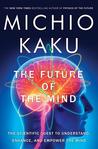
BOOK REVIEW: The Future of the Mind by Michio Kaku

The Future of the Mind: The Scientific Quest to Understand, Enhance, and Empower the MindThe Future of the Mind: The Scientific Quest to Understand, Enhance, and Empower the Mind

by Michio Kaku

My rating: 4 of 5 stars Amazon page

The Future of the Mind continues a line of inquiry that Michio Kaku has been following with his earlier books Physics of the Impossible and Physics of the Future. The central question remains: what sci-fi imaginings might come to fruition, which of them are impossible given the laws of physics in the known universe, and what breakthroughs or discoveries would be necessary to achieve the achievable. Technology is the inevitable gateway to these advanced breakthroughs. Humanity has eliminated gross evolutionary pressures through technology—this might not remain true, but we can certainly not expect X-men style mutations as a result of the foreseeable progression of humanity (which is more likely to be described by the horrible—though probably presagious 2006 movie Idiocracy than it is by the X-men movies.)

The theme of the book, as the title suggests, is the mind. As the most complex system that we know of, the human nervous system offers fertile ground for investigation. Among the sci-fi mainstays considered by Dr. Kaku are telepathy, telekinesis, false memories (think Total Recall), intelligence enhancement, mind control, artificial intelligence, and the nature of alien minds. Along the way he considers the challenges of reverse engineering the brain and whether consciousness could take a non-material form (e.g. embedded in a beam of light.)

As always, Kaku’s book is easy to follow, even for the scientific neophyte. Few others write on the topic with such clarity. While part of Kaku’s book deals with the same concepts covered by Roger Penrose in his book Shadows of the Mind, the Kaku book scores much higher in readability. Of course, the flipside is that Kaku’s book offers less explanatory power. So if one isn’t looking for pop science simplification, The Future of the Mind is probably not for you. However, if you want the jist of the science and have neither the background nor the energy to digest the mathematical and biological nuance, you’ll find this book readable.

Incidentally, Kaku is more optimistic about the ability to computationally replicate consciousness than Penrose, which the latter argues is impossible. Professor Kaku’s optimism runs through all of his books. He takes the stance that if one can imagine it–and figure out a technological or theoretical loophole around the known barriers –one can achieve it. Therefore, some of his discussion of what could come to pass depends upon theories about, for example, black-holes being true. It should be noted that Kaku is quite clear about the differences of opinion that exist about these theories and the role that differences between theory and reality could play in making science fiction into scientific reality.

I enjoyed this book. I’ve been reading a lot about neuroscience lately—entirely on the pop science level- and found this book to be beneficial to my understanding of the subject. It begins by discussing what is known about the brain and consciousness—it turns out that a lot remains unknown, but the technology of recent years has vastly improved our understanding of the brain, and it continues to do so by the day. The book also delves into the depths of what could come to be. There is definitely pragmatic understanding to be gained as well as outlandish, but fun, science fiction ruminations.

For sci-fi fans and writers, it’s definitely worth reading. I had many new conceptions of the future as I read the book. (I might suggest reading Physics of the Impossible first, which gives an overview many “impossible” technologies and explains how few are just flat impossible regardless of technological development and scientific discovery. My review of that book is here.) Many of the ideas covered may seem a bit eccentric, such as what first contact with an alien race would look like. (Kaku is of the notion that the transmission of an immaterial consciousness(es), possibly in conjunction with self-replicating machines would be the likely shape of such an alien presence.)

I recommend this book for almost anyone. We are really only beginning to venture out of the dark ages understanding the mind, and this book provides an interesting map what might be possible.

As I mentioned it, sadly, this may be the more likely future of the human mind:

View all my reviews

BOOK REVIEW: Dirk Gently’s Holistic Detective Agency by Douglas Adams

Dirk Gently's Holistic Detective Agency (Dirk Gently, #1)Dirk Gently’s Holistic Detective Agency by Douglas Adams

My rating: 3 of 5 stars

Amazon page

Dirk Gently’s Holistic Detective Agency [DGHDA] is the opening book in Douglas Adams’ second series of novels (what would have been a trilogy—at least–had Adams not passed away.) DGHDA was followed by The Long Dark Tea-Time of the Soul, and that would have been followed by The Salmon of Doubt—though the manuscript was released in its incomplete form along with other random works in a collection by the same name—as publishers are want to make their cash cows rage after the dying of the light.

Adams is most famous for the Hitchhiker’s Guide to the Galaxy [H2G2] series. DGHDA shares the British absurdist humor of H2G2, but is a more genre-bending a work. While H2G2 crosses humor and sci-fi, DGHDA takes those two genres and throws detective and supernatural fiction into the works. The book was billed by the author as a “detective-ghost-horror-who dunnit-time travel-romantic-musical-comedy-epic.” Of these, “horror” is dubious given the fundamental silliness, “epic” is a little grandiose for a work of 300 pages, and the “romantic” and “musical” parts are rather thin.

The title refers to a detective agency owned by Dirk Gently, who believes in the fundamental interconnectedness of all things and is a bit of a con man. Gently is the lead character in a comedic sense, but his straight man–Richard MacDuff–has at least equal claim to being the book’s overall lead. (Just as straight man Arthur Dent leads in the H2G2 books.) Gently gets involve when he discovers Richard engaged in the inexplicable activity of breaking into the window of his (Richard’s) girlfriend’s apartment—a girlfriend with which he has a favorable relationship. This convinces Gently that Richard has either been hypnotized or possessed, either of which makes him a prime customer of Gently’s agency.

The mystery part of the novel revolves around the new owner and editor of a magazine—Gordon Way–who dies, and whose ghost continues to be active in story (even having PoV chapters in this shifting PoV novel.) Richard comes to believe he’s a suspect, although the bungling former editor of the magazine—Michael Wenton-Weakes–is the lead suspect. Of course, the fact that the deceased is the father of Richard’s girlfriend, Susan Way, does encourage the notion that Richard could be involved. Of course, it wouldn’t be much of a who-dun-it if it was a straightforward case of one of these men with motives having done it.

As would be expected of a book by Douglas Adams, it has its moments of hilarity, but it wasn’t as funny as the best of the H2G2 books. The best absurdist device introduced into the book is the Electronic Monk. In an era in which no one has time for believing in things, one can purchase or rent a robot to believe things for one—particularly those outlandish notions that are unsupported by evidence and thus are least worthy of the effort of belief.

The main characters are all sufficiently quirky to be memorable, likable, or both. The characters are one of the strengths of this book. The story is a bit disheveled, probably purposefully so, but it doesn’t make for the easiest work to follow–particularly early in the story when one hasn’t yet got a firm grasp of who’s who and who’s doing what. That said, it’s a decent enough plot, all things considered.

I’d recommend this for those who like humorous speculative fiction.

View all my reviews

BOOK REVIEW: Marvel 1602 by Neil Gaiman (Art: Andy Kubert)

Marvel 1602Marvel 1602 by Neil Gaiman

My rating: 5 of 5 stars

Amazon page

This is anachronism done right by Neil Gaiman. The title gives one the jist of this graphic novel’s theme. It’s the Marvel Universe circa 1602. There’s a big cast of Marvel characters in this collection of eight comics. However, those who don’t follow comics might not recognize some of the characters because they are decidedly less comic-esque in this take. The characters mostly go by their given names rather than their superhero nom de guerre and not one of them wears spandex—and even capes are fairly few and far between. While the cast is large, there’re just a few main players and some major Marvel superheroes play only minor or unheroic roles.

The principal heroes in this book are Nicholas Fury (as head of the Queen’s Intelligence Service), Carlos Xavier (principal of a school for mutants), Virginia Dare (the first girl born in the Roanoke Colony), Rojhaz (the–decidedly Caucasian but–Native American protector of Dare), Stephen Strange (close to his modern-day namesake), Matthew Murdoch (think Daredevil), and a smattering of other X-men, Avengers, and Fantastic 4 members.

The principal villains are King James I (as himself), Count Otto Von Doom (similar to the modern character), The Inquisitor Enrique (a Magneto-esque character), David Banner (advisor to James I and–it would appear–the gray Hulk), and Natasha (think Black Widow). Before one bemoans the fact that the slate of heroes seems much stronger than the slate of villains, it should be noted that there is a threat that far exceeds the likes of Von Doom.

The world of Marvel 1602 is quite similar to Earth 1602, but there are differences such as the existence of pterodactyls and dinosaurs in some locales. The plot includes political intrigue in the form King James I of Scotland’s desire to nudge an ailing–but beloved—Queen Elizabeth I out-of-the-way. We soon find out that three assassins have been dispatched to target Fury, the Queen, and Virginia Dare, but finding out who hired them and why takes up a fair piece of story line. There’s a substory that features Matthew Murdoch and Natasha on a mission to retrieve what can only be described as a McGuffin (a highly sought after artifact whose value and purpose remain completely unknown until a big reveal, but for which characters are none-the-less willing to lay their lives on the line on pure faith) that offers its own intrigue. There is also the matter of strange weather that increasingly comes to be considered a harbinger of doom (not Von Doom the character, but actual doom.) Ultimately, this is a bigger threat than is presented by any of the human villains, and it can only be overcome through a combination of Richard Reed’s brilliance, Nicholas Fury’s courage, and Rojhaz’s sacrifice of what matters most to him.

I enjoyed this graphic novel. First, having a top-rate writer like Gaiman was certainly a help. There was none of the juvenile / poorly written dialogue that usually plagues comic writing. Gaiman is his usual clever, witty self. Second, while the anachronisms often border on silly (e.g. 1602 Reed’s noodling out Einstein’s discovery of 300+ years later), they are intriguing and recognize real science. Third, the last being said, there’s a lot of effort put into making the comic appropriate for the era in which it’s set. It’s not just putting frilly shirts on modern-day characters. The blending of fact into the fiction is thought-provoking.

If you read graphic novels–even sparsely–this is one that you should definitely check out.

View all my reviews

BOOK REVIEW: Futureland by Walter Mosley

FuturelandFutureland by Walter Mosley

My rating: 4 of 5 stars

Amazon page

As suggested by the subtitle, this is a collection of nine short stories about a dystopian world. What makes it a particularly intriguing read is that the stories take place in one world, and the events all exist within a greater context that could qualify the book as a loosely plotted novel had the writer not defined it as a story collection.

Some characters recur in different stories. For the most part the recurring characters are cameo appearances (e.g. Folio Johnson, a detective and the lead in one story, commiserates at a bar in another). However, the character of Ptolemy “Popo” Bent is a critical character in both the first and penultimate chapters.

Race and politics aren’t subtle in this book. Given the [sad] proclivity of American readers to only read / enjoy politically charged works with which they agree (unless the book in question is making fun of the opposition), it’s safe to say that—on the whole–those at the left-end of the political spectrum will find this book more palatable and on-point and those to the right-end will find it unbelievable and overbearing in its message.

Having said that, I’m of the persuasion that finds Mosley’s dystopian vision strains credulity, and yet I thoroughly enjoyed this collection of stories. This book’s dystopia is characterized by global domination by a corporation and a religion called the “Infochurch,” both led by the same man. The corporate control of the world storyline is a little hard to swallow. A monopoly can’t enslave people (or even enforce its monopoly status) unless it has a monopoly on force, and it’s hard to imagine a path by which a private business gets the people to give them a monopoly on force. That being said, Mosley’s stories are engrossing, creative, and readable.

The nine stories are as follows:

1.) Whispers in the Dark (6 Chapters): A man makes the ultimate sacrifice to help nurture a brilliant child’s special gift.

2.) The Greatest (9 Chapters): A female boxer becomes the world champion while seeking to help her father, whose addition to a drug called Pulse has left him in dire health. (The father’s story, Voices, appears later in the collection.)

3.) Dr. Kismet (4 Chapters): The man who is, for all intents and purposes, Emperor of the World tries to co-opt the co-chair of the 6th Radical Congress—a leading member of his opposition.

4.) Angel’s Island (5 Chapters): A hacker, sent to prison for Antisocial Behavior, has a device called a snake-pack installed that can control him by administration of drugs and shocks. But the ultimate hacker might not be the most easily controlled using technology.

5.) Electric Eye (4 Chapters): Folio Johnson, a private eye with an electronic eye, is hired to find out why young International Socialists are dropping dead left and right. Johnson learns that any hardware, even his eye, can be hacked.

6.) Voices (8 Chapters): Professor Jones, father of the female boxer from The Greatest, undergoes a transplant of neural matter to repair damage from his Pulse addition. After having dreams and memories that are not his own, Jones discovers that his treatment is not all that it seemed.

7.) Little Brother (3 Chapters): Frendon Blythe is on trial before a computer that acts as both judge and prosecutor. He pleads his own case, and finds he was a pawn.

8.) En Masse (12 Chapters): A worker gets sent to a new division only to find that it’s nothing like his previous divisions. Instead of strict rules, GEE-PRO-9 has no rules. He wonders if it might be a test by the management. It turns out that it is a test–just not of the type he imagined.

9.) The Nig in Me (6 Chapters): After a plot to destroy certain races backfires, a surviving man finds himself missing those with whom he was closest.

There’re no stinkers among these stories. They are all intriguing and readable, but a few of them stood out as being particularly good. These were: Whispers in the Dark, Angel’s Island, Voices, and En Masse.

I’d recommend this for readers of soft science fiction.

View all my reviews

BOOK REVIEW: Frankenstein by Mary Shelley

FrankensteinFrankenstein by Mary Shelley

My rating: 5 of 5 stars

Amazon page

Even if you haven’t read Mary Shelley’s masterwork, you’re probably familiar with the gist of the story. An ambitious, young scientist creates a creature grotesquely emulating the human form, and then abandons it in disgust. The creature, which doesn’t start off as a monster, eventually becomes one as it is subjected to brutal, inescapable loneliness.

The story has been spoofed by Mel Brooks and the Simpsons, and recently a movie came out that is based on a graphic novel that continues the story in the future as the immortal “monster”—played by Aaron Ekhart–roams the Earth. Of course, many of the pop culture references are based on the early Frankenstein movies. These movies made the creature much less nuanced, and told a story that was much less sophisticated. In the movies, Frankenstein’s monster is the villain, but in the novel one is as likely to see the doctor, Victor Frankenstein, as the true villain.

Besides being readable for early 19th century prose, the story is loaded with morality tales that don’t draw attention to themselves—those are the best kind. The first lesson is that joy is in the journey and not the destination. Victor Frankenstein wants nothing more than to create life—except perhaps to marry Elizabeth, a sister-like childhood playmate who is not blood related. As soon as he succeeds in creating life, he abandons his creation and will have nothing to do with the monster.

Second, Frankenstein’s lack of empathy for the wretched creature is the source of his own downfall. This lack of empathy is rooted in the notion that the creature is not human. While perhaps the creature isn’t human (that question itself is one of the great philosophical debates proffered by this book), when Frankenstein’s monster shows himself to have the same longings and frailties as a man, doctor Frankenstein still can’t empathize with it.

Third, decisions made out of fear often lead down a path to damnation. Dr. Frankenstein vacillates between agreeing to assist the monster he detests and refusal to help. After agreeing, he lets his fears drive a turnabout that ultimately damns the monster and himself.

The narrative approach taken is interesting. It’s a story being told within a story. The account is written by a ship’s Captain who rescues Dr. Frankenstein during the doctor’s pursuit of the monster. The explanation takes the form of a series of letters to the Captain’s sister. However, as it’s essentially a transcription of Dr. Frankenstein’s account to the Captain, that’s how most of it reads. We start and end in real-time aboard the ship in the icy north, but the bulk of the book is a retelling of events that occurred in Europe, starting with Dr. Frankenstein’s childhood and revolving around the creation of the monster and the events that ensued thereafter. Part of the story is actually told from the monster’s perspective as Frankenstein recounts what the monster told him.

The main weakness of the book is a slow beginning as Dr. Frankenstein feels the need to tell his life story in chronological order from his boyhood. It’s deceptive to say it “starts slow” because it opens with a great hook. If you knew nothing of the story—as Mary Shelley had to assume of her readers—you would really be curious about the Captain’s description of what the ship’s crew witnessed. It’s really when Frankenstein begins telling his tale that there is some needless exposition.

As one might imagine, there are many elements of the story that strain credulity. Frankenstein’s monster not only learns the language, but learns to speak it with the eloquence and erudition of a highly educated man in a relatively short time period. However, I don’t fault this because it raises the question of what faculties the monster receives from his component pieces. In other words, does Frankenstein really need to learn to read and speak from scratch or does he just need to remember what lays in the transplanted brain (and vocal chords) from which he was built. Of course, this further raises the question of whether he is human, humans, or something different altogether.

This is one of those books that everybody should read, and they should think about what they are reading. This is the kind of book that one can learn from. Mainly, one can learn a lot about how not to conduct oneself by the tragic story of Dr. Frankenstein.

Furthermore, for fans of science fiction, this is generally considered to be where the genre all began. While the movies have been heavily in the domain of horror, the novel revolves around the scientific and philosophical questions, which are much more front and center.

View all my reviews

BOOK REVIEW: Regarding Ducks and Universes by Neve Maslakovic

Regarding Ducks and UniversesRegarding Ducks and Universes by Neve Maslakovic

My rating: 4 of 5 stars

Amazon page

As one might guess from the title, this is a lighthearted–dare I say whimsical–science fiction novel set around parallel universes. The light tone works to discourage one from being too much of a stickler about logical consistency and scientific validity. Parallel universes can raise almost as many troubling questions as time travel; but when the tone is comedic, it’s easy to set the these concerns aside and take it as a simple plot device. This isn’t to suggest that Maslakovic neglects the issues altogether. She is, after all, an engineer by training. Having the universes split a relatively short time in the past is likely an attempt to deal with the fact that the two universes are extremely similar, but recognizably different (a cliché among sci-fi parallel universes.) But she does avoid getting bogged down in the minutiae of consistency. There may be some happenings that leave one a bit befuddled, given there is obviously different decisions and behaviors occurring in the alternative universes, so events in one universe shouldn’t be a predictor of events in the other.

The backdrop is that a technical writer and aspiring novelist, Felix Sayers, finds out that he has an “alter.” In Sayer’s world, there are two San Franciscos. He is from what’s considered the original Universe, A, and there’s an alternative Universe B that one can cross over to if one is willing to follow a number of rules–mostly set in place to prohibit interacting with one’s alter. Everyone born before the schism of the two universes has an alternative version of themselves in the alternate universe unless that person has passed away. Like identical twins, “alters” look alike, but because of chains of different decisions and experiences, they may lead considerably different lives. Felix thought he was alter-less, but when he finds out about a discrepancy in his birthdate, he realizes he does.

Felix decides to go to Universe B, to spy on and possibly interrogate his alter—in contravention of the rules. Specifically, Felix of A wants to know if Felix B is working on a novel, and, if so, if the alter is ahead of him. He doesn’t want his to be relegated to writing the novel by “the other Felix Sayers.”

As the story progresses, the novel crosses genres again, adding a mystery component. When Felix crosses over, he draws much more attention than he wants or expects. This includes several failed (and sometimes comedic) attempts on his life. Felix immediately suspects one person, but it wouldn’t be much of a mystery if the initial suspect turned out to be the villain. Actually, it’s not much of a murder mystery because there are few characters who we can believe would be credibly wicked.

However, there’s still the mysterious question of whether Felix engaged in an activity that resulted in the split. Of course, there’s a scientist who creates the conditions in which the schism can happen, but Felix nonetheless worries whether he “caused” the split through some inadvertent act as an infant. This may not be so much a critique as it is insight into what makes the lead likable, if hapless. Incidentally, this is where the duck comes in.

If you like light sci-fi, this is a good read. It’s not side-splitting like Douglas Adams, but it’s laid back and has a dry sense of humor.

View all my reviews