Recently, I’ve begun to read at least one piece of literature from each of the countries I visit. While I’ve done this for the last several countries I’ve been to, now I’m going back to fill in the gaps from past travel.
I don’t want to be doctrinaire about the books I choose, but I’ve learned a little about what I find the most beneficial. While some people who do this insist on reading a novel from each country, I’ve been much more open to a range of forms, including: poetry, short stories, and — in a case or two — creative non-fiction. One reason I’m flexible this way is that the novel isn’t the basic unit of literature everywhere in the world. I don’t want to read a pop crime novel published by an expat that offers zero insight into culture just because that’s the only novel I can get my hands on in English. Short story collections have proven at least as insightful as novels because one sees more lead characters put into more diverse situations, and poetry can be as well — as long as it gives a sense of place and people.
I should also point out that I’ve violated almost all of these suggestions when something caught my eye — often to great effect. #5 and #1 are really the only ones upon which I insist.
5.) Offers insight into the culture of the country at hand. I don’t want to sound like a literary fiction snob. I read a lot of genre fiction and the occasional commercial fiction, but this is one area where I find literary fiction is best. In large part this is because literary fiction tends to be character-driven and that depth of character usually transmits some insight into culture. When I went to Nepal I read Samrat Upadhyay’s Mad Country [short stories] and learned a great deal about the people of Nepal from various walks of life.
4.) Authored by a national of said country and set there as well. The second part (set in the country) seems like it would be non-negotiable, but I’ve certainly violated the first part (local author) and can imagine violating the second (local setting) as well. The key is that it must do #5 (cultural insight, that’s the point after all.) To give an example of a violation of the local author proviso, for the time being at least, I’m going with George Orwell’s Burmese Days as my pick for Myanmar (Burma.) I may change that at some point, but it definitely offered insight about more than one of the items on this list.
To give an example of how one might violate the setting clause and still benefit, I’ve had Michael Ondaatje’s The Cat’s Table, recommended to me for a Sri Lankan book. It features a Sri Lankan boy on a ship headed from Colombo to England and thus (as I understand it) is only briefly set in Sri Lanka. Sometimes, when a national is abroad, one gains even more cultural insight — i.e. it becomes easier to see culture through the state of contrast. (It turns out that I’m reading another novel set in Sri Lanka entitled Chinaman by Shehan Karunatilaka, which promises to offer me insight into not only Sri Lanka, but also into the craziness that is the sport of cricket.
3.) Teaches me about some historical happenings of the country in question. In some sense this is always true because even a contemporary novel deals in history by the time it’s published. However, I tend to prefer a time-frame during which something interesting was going on in the country, but not so far into the past that there is disconnect with the people I interact with in my travels. For example, for Vietnam, I recently read Novel Without A Name, which features a North Vietnamese soldier as a protagonist, and it’s set during the last days of the war with America.
2.) Exposes me to a diverse set of characters. It’s a definite plus if the book shows how more than one element of society lives. A great example of this is Gagamba, a book by F. Sionil Jose, that I read in conjunction with my trip to the Philippines. In it, one peeks into the lives of rich and poor alike, as well as seeing Filipinos who’ve been living abroad and expats living in the Philippines, all this contrast makes the shadowy shapes of culture clearer.
1.) It’s a good read. It’s as simple as that. It must be a book I’d want to read regardless of whether I was trying to check off a box on travel literature.
Here’s a list of countries I’ve been to with my selections for that country — if I have one. There are some countries (e.g. USA, Hungary, India, China, Japan, and the United Kingdom) from which I’ve read a lot, but I’ll stick to presenting one that is an exemplar vis-a-vis the criteria above.
I’d love to receive recommendations, particularly for those countries I don’t have anything for yet.
Austria: The Tobacconist (recommended to me, not yet read.)
Belize:
Botswana:
Cambodia: First They Killed My Father (I’ve read some fiction set here, but this non-fiction is the best.)
Canada: Surfacing (not yet read)
 China: Life and Death Are Wearing Me Out
Czech Republic: The Good Soldier Svejk
Estonia: The Man Who Spoke Snakish (In progress. An unconventional choice as it’s genre fiction, but it came highly recommended and has not disappointed.)
Finland: The Year of the Hare (not yet read)
Guatemala: The President (not yet read)
Hungary: Cold Days
India: The Guide
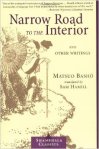 Japan: Narrow Road to the Interior
Kenya: A Grain of Wheat
Malaysia:
Mexico: Selected Poems of Octavio Paz
Mongolia: The Blue Sky
Myanmar (Burma): Burmese Days
Nepal: Mad Country
Netherlands:
 Peru: Death in the Andes
Philippines: Gagamba
Singapore: Inheritance (in progress; another odd choice as the family that this novel presents is Punjabi, though they live in Singapore. and their lives are shaped by that locale. Some places, like Singapore and the UAE, have a lot of immigrants and it’s only fair to consider them through that lens.)
Slovakia:
Slovenia: I Saw Her That Night (not yet read)
Sri Lanka: Chinaman (in progress)
Thailand:
UAE: Temporary People (not yet read)
United Kingdom: A Christmas Carol
United States: Blood Meridian
Vietnam: Novel Without a Name
Zambia: