Rainy Day Tanka [Day 10 of NaPoMo: Tanka]

[A tanka is a Japanese form closely related to the shorter form, haiku. In fact, a haiku can be thought of as the upper phrase of a potential tanka. Traditionally, the tanka (a.k.a. waka) is a 31-syllable poem. In modern notation, the additional 14 syllables are  put into two seven-syllable lines below the three haiku lines, i.e. 5 – 7 – 5. (That said, there are many — myself included — who feel that the 5 – 7 – 5 – 7 – 7 approach applied to English language poetry loses the sparse, Zen feel of Japanese poetry because English syllables can be — and frequently are of — much longer duration. Personally, I’m more partial to the 2 – 3 – 2 stressed beats approach.) Historically, a haiku presents an image devoid of analysis or commentary. In Tanka, there is a pivot and the lower phrase often presents a response to the image.]


dry season
afternoon downpours
come daily
like one bird nesting
in another’s nest


soggy forest
oppressed smoke hangs low
unseen, but smelt
bone dry wood exists
but only within flame


drippy garden
a bright orange flower
hangs its head high
you warm my mind,
if not my bones


Cloud Ruba’iyat [Day 9 NaPoMo: Ruba’i]

[Ruba’i is a Persian form of poetry written in four lines, i.e. one quatrain. A ruba’iyat is a collection of such poems. [These quatrains aren’t necessarily thematically or narratively connected.] The most famous such collection in English translation is Rubáiyát of Omar Khayyam. In English language ruba’i, the most popular rhyme scheme is A-A-B-A, but A-A-A-A is also popular — not to mention dispensing with rhyme altogether.]


1.)
clouds drift, unrushed, across skies of blue
tranquil spies that follow stuck like glue
no gains or losses are made in this game
for “heed the wind” is the only rule


2.)
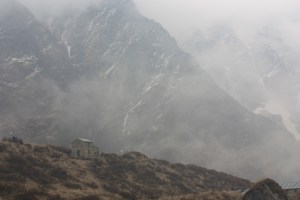
to hide a mountain takes a special cloud
the mountain may lack color, but it’s proud
its steely, silvery gray stands manly
so neither white nor grime will enshroud


3.)
still cloud, I find troubling your lack of speed
it’s like you’ve stopped to draw a bead on me
those untethered should take a roaming spree
hasn’t anyone told you that you’re free?


4.)
wispy crystalline cloud high above
your shape won’t be discussed by those in love
’cause no one’s lying back this frigid day
wearing fur-lined coats, and hats, and gloves

POEM: Ode to My Immune System [Day 8 NaPoMo: Ode]

I

Accused of failing to think about you,
I cannot deny that it’s true.
My lymph bristles with white blood cells
that make invading me treacherous hell.
And leucocytes are just a start,
marrow and spleen each play a part.
I can’t thank you all in this strophe,
but if I could I’d give you each a trophy.

 
II

I can’t say I recall each time I’ve been sick,
but my T-cells must surely have a nice trick
cause they’ve got them etched from first to last,
dating back fifty years in my past.
And if my thymus weren’t a taskmaster
I fear my life would end in disaster
for my body would self-cannibalize.
[And if that idea gives me teary eyes,
tears have antimicrobial enzymes.]
If I had to think about all the times
my NK-cells shivved a potential tumor,
I couldn’t maintain such good humor.

 
III

My ode is almost done, and many were left out.
The truth is there’s a lot that I don’t know about.
So, it’s not that I don’t love my antibodies.
Nor that I think their work is shoddy.
I just didn’t do well enough in Chemistry
to describe their heroism with rhymed brevity.
Skin, lung cilia, gut mucus, and macrophage
each deserve more words up on this page…

than have smarts to write.

POEM: A Few Clerihew [Day 7 NaPoMo: Clerihew]

Edmund Clerihew Bentley
delivered his sarcasm gently
with just four lines
using the simplest of rhymes


It’s said that Adolf Hitler
shoulda been killed when he was littler,
but maybe he’d not have been reigning
if someone had bought one of his paintings


Edgar Allan Poe
always wrote in the Flow
his secret was a life of melancholy
you don’t write “The Raven” while jolly


President Woodrow Wilson
might’ve lost votes in the millions
think how one would do
with first term Spanish Flu

POEM: Escaping the Frame [Day 6 NaPoMo: Villanelle]

[A villanelle is a six-stanza form (originally French) in which the first five stanzas are three lines (tercets) with an A-B-A rhyme scheme, and the sixth is of four lines (a quatrain) with an A-B-A-A rhyme scheme.]

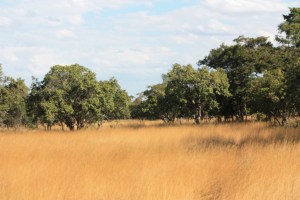
a vast grassland spans my field of vision
bison languidly trample the dry grass
azure sky seen in perfect precision

are these the fields the Greeks hailed Elysian?
but while it’s vast I feel it has no mass
perhaps, it’s just hi-def television?

I find my mind is wild in ambition
and ignores the window frame and the glass,
pretending all that is, I envision

but I know I see with imprecision
a glance sees no more than in science class
though vivid, it’s as false as a gryphon

but beauty beats logic to submission
I become one with wind-tousled tall grass
dazed, I’ve lost all mental inhibitions

why would nature thrill in exhibition?
baring beach to beach across each landmass
it’s not to employ more aestheticians
but to drown out distrusting suspicions

POEM: Bangalore [Day 5 NaPoMo; Acrostic]

Bridge between high-tech and no tech

Also, city of garrisons, gardens, and grandparents

Native of none and yet Namma Bengaluru

Growing bamboo-like with dense patches of people

Artistically eclectic: Kuchipudi dancers to cringe comedians

Lal Bagh calls to keep the title “city of gardens”

Obliging in ways rarely seen above ten million

Rust red and old stone buildings; the city’s grey hair

Everything is possible here

POEM: Away [NPM Day 4: Ghazal]

[Ghazal is a poetic form of Arab origin consisting of between 5 and 15 couplets. Traditionally, it is metered (how many feet per line varies from poem to poem, but shouldn’t within a couplet,) and has a rhyme scheme of AA-BA-CA-DA-etc. A common theme word or phrase across couplets is also tradition, and it often forms the rhyme. Loss and separation are among the most common themes.]
FF4ED57F-B107-4CC4-A94D-22BFE34FBE87

In the airport, I think I’ll find a way
to be “he who stayed” as I go away.

“Left” and “stayed” aren’t just matters of locale.
Some who stay, long ago drifted away.

Some retreat within their seats, I speak true.
Body here; mind a million miles away.

Unwalking undead, this kind of zombie.
So, the living must become runaways.

They’ll say I’m playing games of semantics,
but games are done, now I must go away.

Solitude Haiku [On the Third Day of NaPoMo]

let us now pray
for short people with no one
to reach the top shelf


moon-gazer
sitting on a rooftop
hugging knees


silent morning
awakened by the sounds
that aren’t


closing eyes
seeking faces forgotten,
sadly failing


what void
holds the millions
unseen


[Since it’s National Poetry Month (NaPoMo,) I’m trying to do a different form each day. So far: limericks, a sonnet, and haiku. If you know of any obscure forms, I’d be glad to hear of them, because I don’t think I know 30 flavors of poetry, presently — relatively short form, of course, I don’t have the time or skill to do an epic narrative in a day. (Though micro-narrative will certainly be a thing.)]

A Sonnet in Contradictions [Day 2 NaPoMo: Sonnet]

a tantrum caught on the face, but not thrown
a barrier unseen, like a mime’s “box”
a sprouting plant sprung from a seed unsown
and time shown on broken, not working, clocks

passing the test using knowledge unknown
farmer plows no field with an oxless ox
interest free loans and the silent moan
sale on magic, mineral-deficient rocks

train bound for nowhere at nought miles-an-hour
entropy decrease, the Second Law is dashed
try solving world peace with all-purpose flour
car jumps from a telephone pole uncrashed

i’ve seen all these, and oh so many more,
but i’m not some self-aggrandizing poet-whore

Viral Limerick III

I once tried an act of repositioning
to escape a fellow, uninteresting.
Back then, I did offend,
Too late, I have a mend,
Nowadays it’s just called “social distancing.”