BOOK REVIEW: Satantango by László Krasznahorkai

SatantangoSatantango by László Krasznahorkai
My rating: 4 of 5 stars

Amazon page


This was the first novel by László Krasznahorkai, who’s considered perhaps the most important living Hungarian writer (a country with a literary tradition disproportionate to its small population.) “Satantango” was first published in 1985, and it’s been said to remain Krasznahorkai’s best known novel—though winning the 2015 Man Booker Prize may have pointed people toward his more recent works.

If there’s one thing one must know about the Hungarian mindset in order to feel where this novel will take one, it’s the national proclivity for gloominess. You may have heard of the song “Gloomy Sunday” by Rezső Seress, which is often called the “suicide song” because of the number of people who’ve quoted its lyrics in suicide notes, clutched its sheet music as they committed suicide in the Danube, or had it on the phonograph when their bodies were found. If “Gloomy Sunday” is the epitome of melancholy put to song, “Satantango” just might be its literary counterpart—the perfection of gloom in novel form. The book scores highly on emotional evocativeness.

The story is set in a small Hungarian village that is swamped in by perpetual rains. The village has been shrinking as many of the villagers have abandoned it, and the few remaining residents are often known to interact at the village’s only pub—you know how alcohol-fueled scenes can be cheerful or depressing, this is the latter. I won’t get into the details of the story, but suffice it to say that constant tension results from this situation in which everyone knows everyone else and all are more or less trapped together in the confines of the village. Some have wronged others. Some covet that which belongs to others. And everybody’s dirty laundry has been seen flapping in the wind by everyone else. For literary fiction, there’s an intriguing story told using this tense atmosphere.

So, it’s a good story that’s highly emotionally charged. What more could one want? Well, the warning I feel obliged to issue is that this novel’s readability is low. In other words, it’s challenging reading in almost every way that a novel can be challenging to read, except being bad—of course. There are changing points of view and a non-linear story line, but that’s not the worst of it. I read it in an e-format, and it has near zero white space. By that I mean there are no indented paragraphs and pages are just huge, solid blocks of text. I suspect the same is true of hard-copies, but I can’t recall picking one up. The author is stingy with information early in the story, and this leaves one little by way of mnemonic handholds to keep a grip on the story through to the heart of narrative arc. The book is presented and organized to be knocked out in a day or two of intense reading. The problem is, it’s not that type of novel–both because it would be an overdose of gloominess and because it would be mentally tiring to read this style of writing in that way.

I would recommend this book for readers of literary fiction unless: a.) you are prone to depression; or b.) you find it extremely frustrating when a writer / publisher make no efforts to make the reading experience a pleasure. This book is optimized for masochistic readers. If you love a difficult read, this is the book for you.

View all my reviews

5 Great Literary Malcontents

When I first thought about this post, I was reading Steppenwolf, and I realized that the book wasn’t about the lead being dissatisfied with society as much as with his inability to function in the modern world. Then it occurred to me that this was just the flip-side of the same coin. I’m avoiding the hardcore literary dystopias.


5.) The Narrator & Tyler Durden of Fight ClubThe lead feels that modern society emasculates.


4.) Christopher McCandless of Into the Wild:  This is non-fiction, but it’s a great story of a man who believes that modern society robs individuals of self-reliance.


3.) Ray Smith of Dharma Bums: The lead character and his compatriots feel that modern society is devoid of a spirit of transcendence.


2.) Narrator [and Ishmael] in Ishmael: Author, Daniel Quinn, suggests that modern society is composed of “takers”–in contrast to the “leavers” of aboriginal societies.


1.) Harry Haller of Steppenwolf: Haller can’t cope with what he sees as the triviality of modern society.

BOOK REVIEW: Collected Poems 1947 – 1997 by Allen Ginsberg

Collected Poems 1947-1997Collected Poems 1947-1997 by Allen Ginsberg
My rating: 5 of 5 stars

Amazon page


This “collection” is actually 13 collections bound together in one volume that presents much of the published poetry of the Beat poet Allen Ginsberg over the second half of the 20th century—till his death in 1997. Ginsberg is probably best known for “Howl,” which is both the name of the third collection in this book and the poem for which it was named (i.e. “I saw the best minds of my generation destroyed by madness,…”) However, Ginsberg’s work is extensive, and one can find many a lesser known gem inside.

Ginsberg’s body of work isn’t just copious; it’s also highly varied stylistically. While Ginsberg most commonly uses free verse, he also uses rhyming / metered poems, shaped poems, variations on haiku, musical lyrics, and–in rare instances–prose form poems and puzzle poems.

While Ginsberg’s work is also thematically varied, there are a number of recurring themes. First, as one might expect of the author of “Howl,” Ginsberg’s work is highly politically charged. One gets a history review of the latter 20th century from reading this volume. Ginsberg rails against the war in Vietnam, against the Iran-Contra affair, and against alleged CIA drug dealing at home and abroad. It should be noted that while Ginsberg’s views are expectedly counter-culture, there isn’t the delusional glorification of the opposition that one often sees from many political writers. That is to say, as Ginsberg rebukes capitalists and conservatives, he also takes on the Soviets and other leftist regimes who engaged in human rights violations or war-mongering.

Second, as one might expect from the inspiration for Alvah Goldbook in Jack Kerouac’s “Dharma Bums,” Ginsberg frequently references Eastern spiritual traditions—notably Tibetan Buddhism and Zen. There are a number of poems set in places like Varanasi (Benares) and Siem Reap (Angkor) that reflect Ginsberg’s traveling exploration of these systems. Of course, Ginsberg was a traveler in general, and so there are a number of poems set in the Western Hemisphere and Europe as well. Ginsberg also writes a little bit on his birth religion, Judaism, but usually in a secular manner and sometimes while rebuking the actions of Zionists.

Third, there are many [mostly homoerotic] sex poems in the collection. For those who are sensitive about such matters, I don’t use the term “sex poem” as a sloppy substitute for the word erotica. These aren’t erotic love poems in the conventional sense, they are usually graphic and Ginsberg purposefully uses provocative, shocking, and sometimes lurid wording to evoke a response in the reader. If reading about Ginsberg’s sexual adventures will cause you emotional trauma, be forewarned.

There are end-notes that can be quite helpful, particularly if you’ve forgotten some of your 20th century history, are unfamiliar with Beat trivia (all of the characters from Kerouac’s “Dharma Bums” make an appearance), or aren’t familiar with the various yogic and Buddhist gurus who Ginsberg refers to. (The first set of notes oddly comes after the 10th collection. that’s because this collection is actually even more of a matryoshka doll than I suggested. The first 10 collections are actually collections inside a collection (“Collected Poems 1947 – 1980”) that’s inside a collection (“Collected Poems 1947 – 1997”.) The last three collections have their own end-notes immediately following them.

There are few graphics, mostly the music to poems that are—or can be—set to music.

I’d recommend this collection to poetry readers, particularly those who enjoy Beat period language. As I mentioned, the delicate political or sexual sensitivities of some readers may be offended. On the other hand, as I always say: If you’re not reading outside your comfort zone, you shouldn’t consider yourself so much educated as indoctrinated.

View all my reviews

BOOK REVIEW: Monkey: A Folk Novel of China by Wu Cheng’en

Monkey: A Folk Novel of ChinaMonkey: A Folk Novel of China by Wu Cheng’en
My rating: 4 of 5 stars

Amazon page


If you’re familiar with any Chinese folklore, it’s probably this story. But you probably know it as “Journey to the West.” It’s not only been released in numerous editions as a novel, it’s also been adapted for film, stage play, and I’m sure there must be a video game of it out there.

If you’re thinking, “Chinese folklore? Sounds boring.” Think again. This is a superhero story. Monkey, also known as the Monkey-King and “Great Sage Equal to Heaven,” is an immortal who has all manner of supernatural powers. He can fly. He can make copies of himself. He can transform himself—either disguising himself as another being or appearing as an inanimate object. He has an iron truncheon that can be the size of a sewing needle or a mile long and which is indestructible. Wielding said staff, he can defeat armies or deities.

In fact, the flaw in this story isn’t a lack of adventure or thrill. On the contrary, it’s one adventure after the next. If anything, the flaw is “Superman Syndrome.” That’s what I call it when the hero is so ridiculously overpowered that even when he’s fighting gods, dragons, or whole armies there’s still no doubt about the outcome.

Of course, the Monkey does eventually meet his match in the form of the Buddha. The Buddha defeats Monkey not in combat, but in a bet. That event shifts the direction of the story. In the early chapters, Monkey is goes about heaven and earth arrogantly wreaking havoc. He’s not altogether detestable. He does have his redeeming traits, but he’s insufferably arrogant and mischievous. After he’s imprisoned following his run-in with the Buddha, a monk is assigned to go to India to bring back scriptures (hence, a “journey to the west”) to China. Monkey is assigned to be the monk’s guardian and along with two others that they pick up along the way (Pigsy and Sandy) the monk is escorted on his journey. The party faces one challenge after the next, and the trip is long and arduous. Some of the challenges require brute force but in many cases they are battles of wits. So while Monkey may be overpowered, he does experience personal growth over the course of the story.

The story is told over 30 chapters, each set up with a cliffhanger. I enjoyed this translation by Arthur Waley. It is end-noted, which is useful given the historic and cultural nuances that may not be clear to readers.

It should be noted that this is unambiguously a Buddhist tale. There is a bias against Taoists and other non-Buddhist religions evident throughout the story. It’s not just the fact that the Buddha easily defeats Monkey when no other deity or group of deities can, there’s a steady stream of anti-Taoist sentiment. So, Taoists and Chinese Folk Religion practitioners be warned, I guess.

I would recommend this book for fiction readers, particularly if you have an interest in the superhero genre or Chinese literature.

View all my reviews

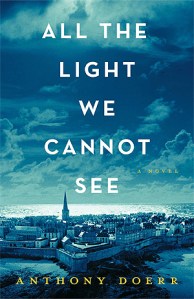
BOOK REVIEW: All the Light We Cannot See by Anthony Doerr

All the Light We Cannot SeeAll the Light We Cannot See by Anthony Doerr
My rating: 5 of 5 stars

Amazon page


This review will be short because, JUST READ IT.


“But, historical fiction isn’t my bag,” he said.


This isn’t that kind of historical fiction—i.e. the kind that binds one in a web of cultural minutiae and reads like a history book writ purple. This book will make you enrapt.


“But, I don’t like war stories. Too violent,” she said.


I bet you’ll like this one. Yes, it’s set during World War II, and war’s ugly face peeks around the corner from time to time, but one also sees how ordinary people do extraordinary things when exposed to the crucible of war. War doesn’t just bring out the worst; it also forces people to be better than they’ve ever had cause to be. The book is largely about a girl living under occupation and isn’t so much about life on the front lines.


How can I so boldly assert that one should read this particular book? (I normally lay out the facts first and only at the end make a recommendation.) Because this is one of the best crafted novels I’ve read. It’s extremely readable and engaging. The characters are superbly developed and one feels one knows them. Even the closest thing to a villain (if you don’t count war as the villain) is a complex and nuanced character who one wants to understand better.


I will tell you something substantive about the novel. It interweaves the stories of two teenage characters whose lives are fated to become entwined through the fortunes (and misfortunes) of war. The first is a blind girl who lives with her father in Paris. Father and daughter flee when the Nazis occupy France and end up living on the coast at Saint Malo with her great-uncle who is a shut-in owing to his experience in the last Great War. Of course, the move to the coast only delays the occupation and the point at which the war comes to them.


The other lead character is a German orphan boy with a gift for science who gets prematurely drawn into the war because of his great intellect and skill with radios. Not only are these characters both people who readers are drawn to, they both experience great growth over the course of the story. Imagine being blind in a war zone–or even just being a young nerd drafted into the war–and you can taste some of the emotional tension that resonates throughout this book. I won’t say that it’s all happy endings. It never is in war.


I’d highly recommend this book for all readers.

View all my reviews

BOOK REVIEW: Tropic of Cancer by Henry Miller

Tropic of CancerTropic of Cancer by Henry Miller
My rating: 3 of 5 stars

Amazon page


This, Henry Miller’s first novel, is about a young man living a bohemian life in Paris in the late 1920’s. It reads autobiographically. It’s often said that literary fiction downplays story in favor of character development. This isn’t necessarily true today, but it seems to be the case with this 1934 novel. There’s not much story—though a little one is packed in at the very end. The book does illuminate the lead character, but the reaction that character evokes is neither love nor hate but more of an “ewww” of disgust. Put another way, he’s like a Chuck Palahniuk anti-hero (e.g. think of Victor from “Choke”), but without out the quirky humor to make him amusing and interesting. This will make more sense in the next paragraph.

This book is often classified as erotica, but many readers might not find it to be erotic. Like a shock-jock, Miller chooses the most vulgar term to stun rather than using descriptive language to arouse. The lead (and other characters) spends a lot of time in bed with prostitutes, but at the same time he’s sleeping on the couch of some acquaintance or grumbling that he can’t afford a sandwich. Lest one think I’m hammering the book because of gratuitous sex, let me say that it’s not the sex that I find dismaying but a guy whose priorities are so askew of Maslow’s hierarchy as to make one wonder if he’s of the same species. There’s an uncanny valley with this character, only not with respect to facial appearance. All of that would be fine if the character experienced change over the course of the book, but the character neither grows nor is destroyed. I should also point out that I like Palahniuk’s anti-hero stories, but Miller takes himself too seriously to be fun, and I think that fun is the only way such a character makes for appealing reading.

So far I’ve made this book sound horrible, but I didn’t savage it with a sour rating. Ergo, there must be some redeeming value. There is. Miller’s use of language is intermittently gorgeous. He gets in these streams of consciousness in which poetry infuses into his prose. During these times, the story—such as it is—disappears even further into the hinterland, but the words can spark. Maybe Miller should’ve forgotten the hype that the novel is the ultimate literary art form and devoted his efforts to poetry.

I offer a qualified recommendation of the book. If you’re a reader of erotica and heard that this was a classic of that genre, then pursue it with caution. However, if you love words artfully twisted into little flashes of light, maybe you should check it out.

It goes without saying that there’s graphic content, but there are other reasons readers might be sensitive to this book. Not that I encourage avoiding a book because a character makes one feel ill-at-ease. (On the contrary, I frequently encourage it.) If a lead who comes off as simultaneously lusting after and despising women is a trigger for you, be forewarned this is such a character. (Note: He may also be anti-semitic, racist, and homophobic as well, but those elements aren’t explored in great detail. It could well be that the character doesn’t like humans in general. Maybe he was supposed to be a robot after all [hence the uncanny valley] and in that case I recant this review.)

View all my reviews

BOOK REVIEW: Modern British Poetry ed. by Louis Untermeyer

Modern British PoetryModern British Poetry by Louis Untermeyer
My rating: 4 of 5 stars

Amazon page (not the same edition)


This is an anthology of 183 poems written by 77 British authors. Given the title, “Modern British Poetry,” the first thing that should be stated is that the original work came out around 1920, and so the bulk of these poems are from the 19th century. That may fit perfectly with your classification of modern poetry, but if you’re looking for present-day poets, this isn’t the book you’re after.

However, the good news is that you might still find some unexpected treasures. Often collections of public domain poetry like this gather poems that are ubiquitous and which are probably already on the shelves of most poetry readers in various collections and anthologies. But of the almost 80 poets included, only a handful will be household names for a general reader—particularly if you aren’t from the UK and thus didn’t get exposed to the more obscure British poets. Of course, there are a number who have stood the test of time: Thomas Hardy, Robert Louis Stevenson, Oscar Wilde, A.E. Housman, William Butler Yeats, Rudyard Kipling, G.K. Chesterton, Alfred Noyes, D.H. Lawrence, Edith Sitwell, and Robert Graves spring to mind. Furthermore, the poems chosen aren’t a straightforward “greatest hits” list. (e.g. “If” isn’t among the four Rudyard Kipling entries.)

As one might expect of a 230 page anthology that contains 183 poems (plus author bios and the occasional footnote), the poems selected are brief. In a few cases, excerpts from longer works are included, but for the most part these are poems that fit comfortably on a single page. This is great for someone trying to get a feel for the various poets and for those who enjoy more compact works over epic poems—which, if we’re being honest, is most of us.

The anthologist, Louis Untermeyer, includes brief bios for each of the poets in front of their entries in the anthology. Generally, each included poet has between one and four poems. While the poems are organized by poet, the poets seem to be organized chronologically (at least as near as I can tell; it begins with Thomas Hardy [1840 – 1928] and ends with Robert Graves [1895 – 1985.])

I read a Kindle version of this work and found it to be far better organized than most of these public domain compilations. It not only had an index that would take one to individual poems or poet bios, but it also contained a hyperlinked index. Unfortunately, I obtained the book some time ago and I couldn’t find the same edition when I looked for it while doing the review. Most of the Kindle editions now seem to bundle Untermeyer’s “Modern American Poetry” with his “Modern British Poetry” but the edition I had was just the British poets.

I recommend this book for poetry readers. In addition to having some exemplary short form poetry from both well-known and forgotten poets, it happens to contain the first poem I ever memorized in it—a powerful little poem by John McCrae entitled “In Flanders Fields” (if you don’t know it, read it; it’s war poetry at its finest.)

View all my reviews

BOOK REVIEW: District and Circle by Seamus Heaney

District and CircleDistrict and Circle by Seamus Heaney
My rating: 5 of 5 stars

Amazon page


“District and Circle” is a collection of 44 poems by the Nobel Laureate Seamus Heaney that was released in 2006.

One feels the essence of the 20th century across this collection. There are a couple of poems that refer to World War II, not from the perspective of crucial events and violent clashes, but as it was experienced in “the District” (e.g. “Anahorish 1944.”)

There are also a number of poems that make industrialization romantic or—at least, in some way–evocative. Heaney writes of mechanical devices and processes in a way that many great nature poems are composed (e.g. the first poem in the collection “The Turnip-Snedder.”) In fact, it’s almost like industrial haiku. It doesn’t share the brevity of Japanese form, but it removes the extraneous and deals in only what one can experience with the senses. In that way, one can feel the heft of these objects. They aren’t cheap, flimsy plastic, but wood and iron and brass. There are also some lovely nature poems.

Heaney’s use of language is resplendent. It’s not just the description, but the sound. I’ve even found myself thinking, “I don’t know what that word means, but—damn–it sounds gorgeous right there.”

The poems range from several words to a few pages in length, with most fitting on a single page. It’s about 80 pages of beautifully composed poetry.

I’d recommend this book for all poetry readers.

View all my reviews

BOOK REVIEW: The Memoirs of Sherlock Holmes by Arthur Conan Doyle

The Memoirs of Sherlock Holmes (Sherlock Holmes, #4)The Memoirs of Sherlock Holmes by Arthur Conan Doyle
My rating: 5 of 5 stars

Amazon page


This is the second collection of short stories and the fourth book overall in the canon of Sherlock Holmes. It includes eleven adventures of the great detective as narrated by his partner, Dr. John Watson.

Below, I’ll describe the premise of each of the stories:


“Silver Blaze” A race horse goes missing and its trainer is found dead. The eponymous race horse is favored to win an upcoming race, so Holmes faces a race against time to see that the horse can compete.


“The Yellow Face” A man begins to suspect the wife that he’s never had cause to doubt before. Only he doesn’t know exactly what he suspects her of, but it seems to revolve around visits to a nearby cottage that has been recently occupied by an unknown and mysterious resident. Note: this is one of my favorite Sherlock Holmes stories both because it displays the humanity of the character in that his initial guess proves wrong, and in it shows how the author was ahead of his time in his worldview.


“The Stock-Broker’s Clerk” When an out-of-work clerk, recently hired by prestigious firm, is given an offer of much more money but finds himself doing only busy work, he gets suspicious and calls on Sherlock Holmes.


“The ‘Gloria Scott’” Holmes is visiting a college friend when the friend’s father is visited by a gruff ex-sailor. When the family patriarch uncharacteristically bends over backwards to make the sailor happy, it’s unclear why. When the old man dies upon reading a letter, the mystery becomes all the more intriguing.


“The Musgrave Ritual” A butler is fired for digging around in the family papers, despite the fact that the document he’s discovered with is nothing more than a series of cute questions constituting an old family ritual.


“The Reigate Puzzle” Burglaries in the countryside culminate in the murder of a coachman. The family that employed the coachman is neighbor to a close friend of Watson.


“The Crooked Man” A couple who’ve been married for thirty years without any known incidents of domestic unrest get in a raucous fight, and the man–a career military officer–ends up dead. The wife is the only suspect.


“The Resident Patient” A benefactor agrees to fully fund a new doctor’s practice provided that he is allowed to live on-site as a resident patient. The mystery begins when the resident patient begins to be inexplicably nervous.


“The Greek Interpreter” An interpreter is kidnapped and forced to translate a mysterious conversation between his kidnappers and a disheveled Greek man. Despite handsome compensation and threats of what will happen if he should tell anyone of the job, the interpreter feels obliged to get to the bottom of the imprisoned Greek man’s case by hiring Holmes.


“The Naval Treaty” A member of the Foreign Service has a crucial treaty stolen while he goes to check on the service of his tardy coffee. The loss of the treaty spells professional death for the young man unless Holmes can solve the case. The commissionaire and his wife are initially the sole suspects.


“The Final Problem” Perhaps the best known story of the collection, it was intended to be the end of Sherlock Holmes. The story involves an uncharacteristically shaken Holmes, his arch-nemesis, and a trip to Reichenbach Falls.


This collection includes some essential Sherlock Holmes stories, as well as some classic Holmsian cases and quotes. For 19th century literature, it’s highly readable. Definitely a must read for fans of Sherlock Holmes.

View all my reviews

BOOK REVIEW: Norse Mythology by Neil Gaiman

Norse MythologyNorse Mythology by Neil Gaiman
My rating: 5 of 5 stars

Amazon page


This is the telling of a select group of Norse myths with the signature humor and down-to-earth prose of Neil Gaiman. It’s a fascinating collection of stories and is well-ordered so that the reader is often familiar with references to past events from earlier stories.


After an introduction that explains how Gaiman first became interested in Norse mythology both through the comics and then actual mythologies, there are a couple of chapters that largely provide background before delving into the chosen Norse myths in great detail. One of these chapters gives extended “bios”—if you will—for three of the most prominent characters: Odin, Thor, and Loki. Then there are a couple of chapters that both convey the timeline and of the spatial dimensions of the nine realms of the world the Norse created.


There is a brief story of how Odin lost his eye in the pursuit of wisdom that’s entitled “Mimir’s Head and Odin’s Eye.”


It’s from this point on that the stories are substantial and complete. The first of these stories is entitled “The Treasures of the Gods” and it’s about of how Loki created a competition among dwarf master craftsman. Loki does this in order to keep Thor from beating him with Mjöllnir after the god of mischief stole the hair of Thor’s wife, Sif (one of the items to be judged by the gods was stipulated to be a set of hair that would reattach and be as beautiful as Sif’s original hair.) The competition was Loki’s way of using a clever ploy to make the fix without it costing him anything and while at least sticking it to the dwarfs a little. The story is also well positioned as some of the items that are gifted to the gods in the competition are seen repeatedly in later stories. Loki creating mischief is a recurring theme not only in Norse mythology, but in this collection of myths specifically as they make for some particularly humorous tales.


“The Master Builder” is about a builder who shows up right as the Asgardians need a wall built. He claims that he can build it improbably quickly in exchange for the sun, the mood, and the hand of Freya (the most beautiful Norse goddess) in marriage. While all the other gods consider the price too high—not the least of whom being Freya—Loki convinces them that it’s an impossible task and that they can get free foundations if they give the builder a set timeline (a fraction of what he stated) and set another limitation or two. When they are on the verge of losing, the gods—suspecting the builder isn’t what he appears—agree to cheat.


“The Children of Loki” concerns a second family that Loki that is kept secret from the Asgardians. The three are an odd bunch: a girl who is half beauty / half corpse, the creature that becomes the Midgard serpent, and Fenrir wolf. Most of the story deals with the wolf child and the fact that they will only release the creature if they know that they can later bind it, but its strength is such that it seems to be able to break any binding. This story also explains why the Norse god Tyr has only one hand.


“Freya’s Unusual Wedding” This story revisits the idea of someone trying to negotiate Freya’s hand in marriage. Freya proves unwilling to take one for the team in order to fix the problems of other gods—in this case Thor’s hammer, Mjöllnir, has gone missing and the thief says he will give it back as a wedding gift. This time it is Heimdall—rather than Loki—who hatches a clever plot that will save the day.


“The Mead of Poets” This story revolves around a god of wisdom named Kvasir who comes into being after a strange treaty agreement between the Aesir and the Vanirs. Kvasir is killed and his blood is used to brew mead that is said to give imbibers the ability to write great poetry. This time it is Odin who saves the day and retrieves the mead. It also offers a humorous explanation of from whence bad poetry comes.


“Thor’s Journey to the Land of the Giants” Thor travels with Loki, and—eventually—with a bondservant named Thialfi (how Thialfi comes to be with them is part of a prank that Loki pulls that is explained at the story’s beginning.) The three were each subjected to a competition to see whether they were worthy, and it appears they weren’t.


“The Apples of Immortality” This is another tale that begins with a traveling trio including Thor and Loki. When Loki gets himself into hot water, he agrees to hand over the Apples of Immortality, which go hand-in-hand with the goddess who oversees them, Idunn. Without Idunn’s apples the Asgardian gods age and die like humans. Loki first has to hatch a plot to surrender Idunn, and then he’s forced by the angry and aging gods to carry out a plan to get her back.


“The Story of Gerd and Frey” This is a love story in which the god Frey (brother to the aforementioned Freya) is smitten with a woman named Gerd. Frey promises his magical sword, capable of defeating any attack, to his manservant in order for him to ask for Gerd’s hand.


“Hymir and Thor’s Fishing Expedition” Thor needs to borrow the huge mead cauldron of a giant to make a massive banquet happen. Thor goes on a fishing trip to help grease the wheel with the giant, who is very attached to the cauldron. Thor shows both his legendary strength and dimwittedness, but ultimately wins a bet that will grant him ownership of the cauldron.


“The Death of Balder” Balder is one of the most beloved Norse gods, and he dies as the result of one of Loki’s vicious mischiefs. To call it a prank would seem to trivialize it, but that seems to be how Loki views these acts. When the overseer of the underworld (where the dead who didn’t die gloriously in battle go), Hel, agrees that she will release Balder if all the creatures of the world agree that he was beloved, Loki outdoes himself.


“The Last Days of Loki” Adding insults (literally) to the injury of having been responsible for the death of Balder, Loki heads off into exile, but is pursued by the Asgardian gods.


“Ragnarok: The Final Destiny of the Gods” Here we have a description of how the Asgardian end of days is to play out. The Norse gods aren’t immortal, but Ragnarok is the end of a cycle, but not the end of all existence.


As I mentioned, the first couple chapters offer more backstory than the extensive myths through the rest of the book. This works well as it gives the reader the necessary background in a readable and palatable fashion. Another nice feature is a glossary that includes all the named characters and major places mentioned throughout the book. The section of mini-bios at the front only covers Odin, Thor, and Loki, and so it’s beneficial to have a list of all the various other gods–a number of whom (e.g. Freya, Frigg, Heimdall, Tyr, etc.) play major roles in one or more of the stories.


I’d highly recommend this book. It’s extremely readable, humorous, and educational to boot.

View all my reviews