BOOK: “Hell’s Angels” by Hunter S. Thompson

Hell's AngelsHell’s Angels by Hunter S. Thompson
My rating: 5 of 5 stars

Publisher Site – Penguin

This, the first published book of Hunter S. Thompson, is said to be from his pre-Gonzo period, but it bears many of the hallmarks Thompson would later be famous for: inventive colorful language, immersion in scenes of debauchery, and insight into the American cultural landscape.

The book is part exposé of the Hell’s Angels motorcycle gang, an organization shrouded in a reputation that was as much myth as reality and whose tightknit inner circle made obtaining an accurate picture a challenge. It would take someone as fearless / crazy as Thompson to get close enough to learn about the gang and then to tell enough truth to make at least some of the members unhappy.

The book also takes the temperature of America and reports on what ails the country. One might think this would not be worth reading, given that its insight of America is from the late sixties (it came out in ’67.) However, as I read the penultimate chapter, I was surprised to find how much of what was being said could be seen as prophetic. Thompson wrote about the Angels not as a romantic throwback to wild west outlaws (as many saw them,) but as a class of people who were ill-equipped to make a living in an ever more technologically advanced America, leaving them with little money and loads of resentment. He wrote of them as “prototypes,” and his description connects up to the latest model. It was at that point that I started seeing Thompson not only as a brilliant creative writer, but — perhaps — as a prophet.

I’d highly recommend this book for anyone curious about the Hell’s Angels or American outlaws, more generally.

View all my reviews

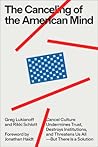
BOOKS: The Canceling of the American Mind by Greg Lukianoff & Rikki Schlott

The Canceling of the American Mind: Cancel Culture Undermines Trust and Threatens Us All―But There Is a SolutionThe Canceling of the American Mind: Cancel Culture Undermines Trust and Threatens Us All―But There Is a Solution by Greg Lukianoff
My rating: 5 of 5 stars

Amazon.in Page

This book presents an in-depth exploration of cancel culture in its many varied manifestations, from both the left and the right of the American political spectrum. The biggest part of the discussion is with respect to the educational system, and particularly higher education. Sadly, this is because the institutions that used to be among the most formidable bulwarks of free speech, expression, and academic freedom have increasingly become untenable to multiple points of view. (The authors point out that there have been more dismissals of faculty members for cancel culture speech and expression issues than there were during the McCarthy era for political stance.)

However, the book doesn’t restrict itself to education, but also investigates cancelations in journalism, publishing, the scientific community, standup comedy, and the medical and psychiatric communities. The authors also present cases of the effect that wokeness and other expression limiting activities are having in these areas. One of the most disturbing revelations to me was the role of wokeness in psychotherapy and the negative effect it may have on people getting the help they need.

The book presents a series of cases in detail to advance the discussion. It also has a couple chapters that examine the tactics that are used to apparently “win” debates by silencing / demoralizing the opposition while avoiding any actual contest of ideas. The authors go through tactics favored by the Right as well as those by the Left. (Though it’s clear that, in a race to the bottom, both sides adopt the approaches of the other side that seem to be effective. e.g. the Left is getting into book banning (historically a Conservative tactic) and the Right is getting into cancelling and shout-downs (usually Progressive tactics.)) I think it was smart to have two authors, one from the left and one from the right, in order to help ensure balance in the project. That said, as the Left has been in the cancel culture vanguard, they come up more often.

Some have called this a sequel to “The Coddling of the American Mind,” with which it shares a co-author, Greg Lukianoff. I don’t know that I’d think of it that way. While it does address some of the same issues as background, psychology and child development are not at the fore in this book (Jonathan Haidt – the other co-author of “Coddling” is a psychologist,) but rather are the legal, cultural, and political issues.  

This is probably the most important book I’ve read this year (and, being late November, it’s likely to retain that status) and I’d highly recommend it for all readers.

View all my reviews

BOOKS: How Long Can the Moon Be Caged by Suchitra Vijayan & Francesca Recchia

How Long Can the Moon Be Caged?: Voices of Indian Political PrisonersHow Long Can the Moon Be Caged?: Voices of Indian Political Prisoners by Suchitra Vijayan
My rating: 4 of 5 stars

Amazon.in Page

It’s no secret that the Gandhian pluralistic vision for India has been taking some hard knocks under the current administration (and the rise of Hindu nationalism that it represents,) but it’s also not as widely and intensely discussed as it could be. This book represents an attempt to make the stories of dissident political prisoners more widely heard.

For that attempt, I would give it high marks, but the execution is problematic. The middle part of the book does a reasonably good job of telling the stories of these individuals. However, the book comes across far too much like a reference book than a journalistic account for much of its length — particularly in the beginning and at the end. The beginning has a long bullet point account of relevant events that I’m sure is meant to give readers an idea of the scope of the problem, but it also sterilizes the information. At the end there are letters and a chapter that consists entirely of data. Letters can be fine, but they aren’t the most evocative way to convey these stories because they contain a good deal of information that is extraneous to the author’s point, and thus the message is diluted.

I do wish supporting evidence was turned up and gratuitous statements turned down a bit. In other words, I assume the government could present a counter-narrative that these are not just dissenters voicing unpopular opinions but rather individuals actively engaged in subversive operations. Granted, the prominence of poets, the ill, and the elderly does make it hard to believe these are some sort of guerrilla warfare masterminds. True, there is a challenge in disproving a negative that makes it hard to prove a person has done nothing wrong.

At any rate, it’s a book I’m glad I read, and I did learn about the issue, but I wish the execution had been better. Maybe that’s for another book.

View all my reviews