The Force of Nature

This video begins on the peaceful banks of a river in a nondescript Japanese town. The first minutes of footage is unremarkable except that the water level is quite low, but as it might be in dry season or low tide. Then there is a shrill siren and an urgent warning by loudspeaker–events that will replay periodically throughout the video. Twenty-five minutes later, the camera is fixed on throngs of people trapped on a rooftop across the river. Dawn slinked in and it would be too dark to see these rooftop refugees, but they are silhouetted by the glow of the fires that rage in the background. In the footage in between, one sees houses and ships being carried by the water as if they were a child’s toys washed away by an overturned bucket of water–but brown, debris-laden water that is roiling and churning. Eventually, we see the river reverse its flow.

Someone posted this on Facebook yesterday. I watched all 25 minutes of it. Who watches 25 minutes of shaky, hand-shot home movie? Not me, normally, but I was compelled by the force of nature. They say that one of the things that differentiates humans from even our closest primate brethren is that humans routinely achieve the identical physiological state emotionally from remembering tragedy as from experiencing it first hand–or sometimes even through being exposed to them remotely.

I thought about this force of nature, at first in the literal sense–a pedestrian bridge swept away and freighters swept up a normally unnavigable river. Then I wrote the first 1,000 words or so on a short story entitled The Ghost Ship Onryō that was inspired by watching the tsunami and remembering the news stories it triggered. The story is quite dark, as matched my mood for much of yesterday. Such is the force of nature, to compel me to change my plans and to morph my emotional state through ripples that continue to expand years after the event.

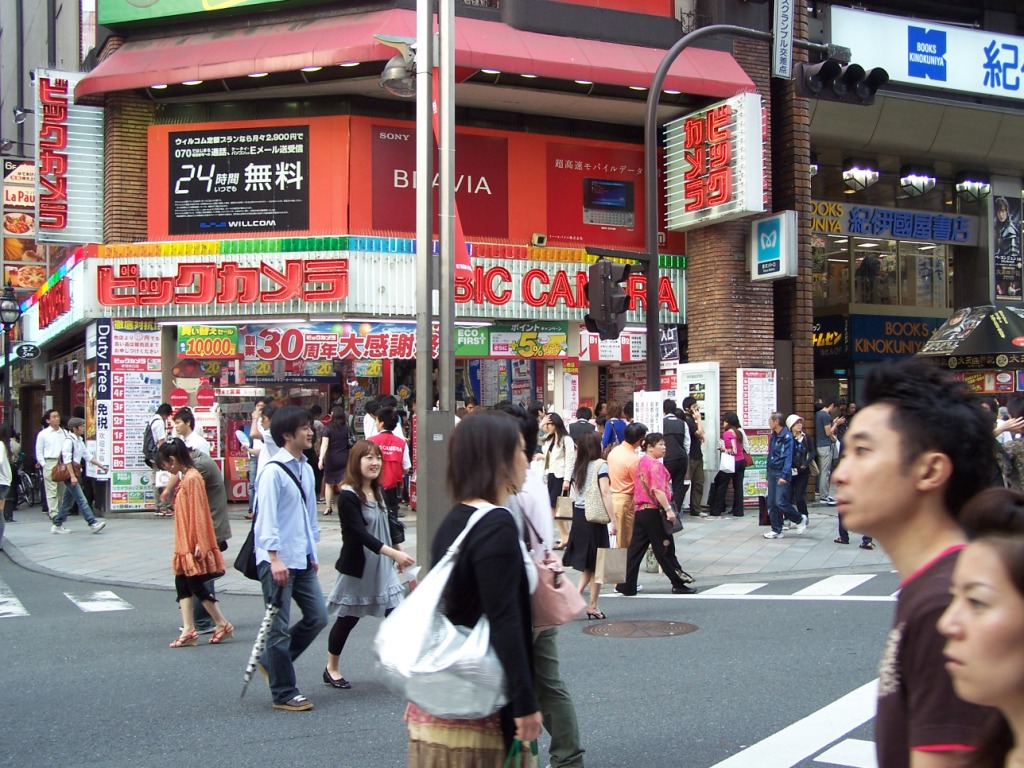
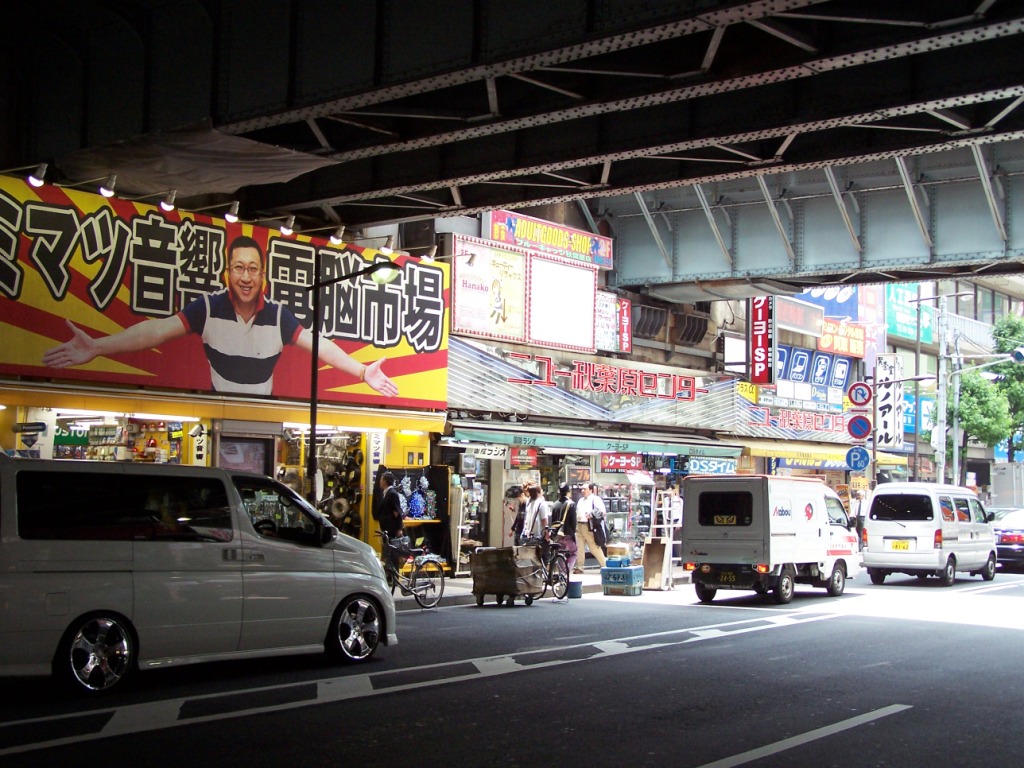
DAILY PHOTO: Tokyo Streetscene

Taken in 2008

Taken in 2008


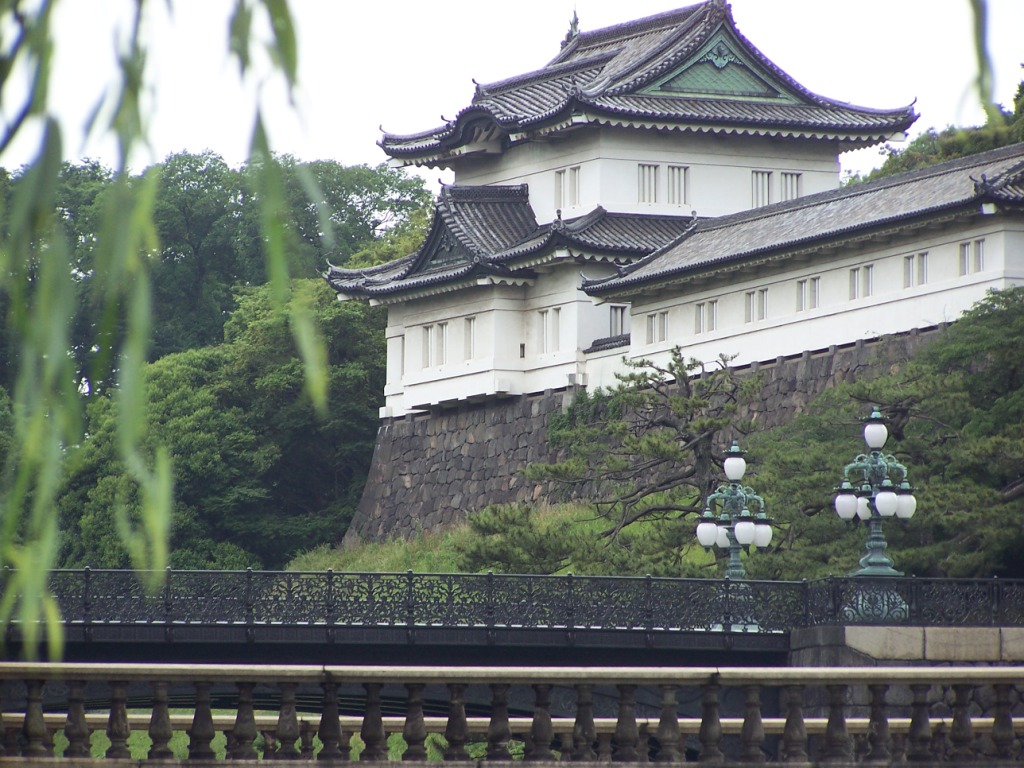
DAILY PHOTO: Imperial Palace Tokyo

Taken in July of 2008

Taken in July of 2008

The Good and Ugly of Olden Times

This was posted in my martial arts blog, Jissen Budoka, as well.

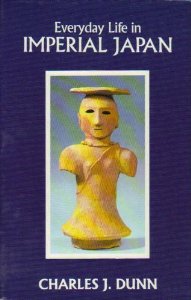
I’ve been doing a lot of reading about Japan’s past recently. In my spare time, I’m working on rewrites for a novel in which 14th century Japan features prominently. Being my first foray into historical fiction, I’m finding the need to go back and do a lot of research about the time because the quick and dirty draft I wrote needs a lot of gussying up. I just finished reading Charles Dunn’s Everyday Life in Imperial Japan,  which is about a later period but one which would have shared much in common when it comes to everyday life. Presently, I’m reading The Taiheiki–which is about the 14th century, but which blends fact and fiction.

Doing such research encourages one to consider what it meant to live during that time. We all build constructs of the world to adjust for our limitations in knowledge. Some of these constructs hold up better than others, but they’re all simplifications. When one reflects upon a time before one’s experience–and particularly regarding a place with which one has limited familiarity–there are two major forms of fallacious reasoning that can take hold:

1.) The Golden Age Fallacy: This is the thought that everything was better back in the day–back before humanity started slouching toward craptasticness.

2.) The Outhouse Fallacy: This is the idea that any society that couldn’t manage indoor plumbing couldn’t possibly be worthy of emulation.

Of course, these simplifications are both true and false in some regard, and–as absolute statements–are absolutely false. The truth is something more like what Ralph Waldo Emerson suggested in Self-Reliance. Emerson described society as a wave, receding on one side as quickly as it advanced on the other. In other words, changes maybe seen as progress, but they also bring about the destruction of valuable knowledge. In martial arts terms, the spear becomes obsolete and the art of spear-fighting dies.

LastSamuraiThe movie entitled The Last Samurai revolves around this premise. Of course, in Hollywood fashion the forces of modernity are made entirely villanous and our heroes, the samurai, are entirely virtuous. In a way the movie is perverse in that it suggests we root for the medieval approach over our own.

When considering feudal Japan, Golden Agers point to it as a time during which virtue was paramount, craftsmanship was exquisite, and much culture flourished. They are right; but don’t set your time machine just yet because Outhouse Agers are also correct when they say that it was a time during which most of the population had no rights, wars ravaged the country, and in which farmers were not allowed to partake of many of the products they produced–but rather had to feed and cloth their families with inferior substitutes.

One should be careful to neither romanticize nor vilify the samurai. We should keep what is of value of the old ways without being a slave to the worst ways of our predecessors’ nature. One shouldn’t abandon everything old on the assumption that by definition everything abandoned to the past is refuse.

BOOK REVIEW: Everyday Life in Imperial Japan by Charles Dunn

EverydayLifeImperialJapanEveryday Life In Imperial Japan by Charles J. Dunn

My rating: 4 of 5 stars

Amazon page

This interesting little book is invaluable for anyone researching what life was like for people in Japan before the Meiji Restoration. While it’s an essential volume for a writer of historical fiction, those interested in Japan more generally will find it readable and packed with interesting tidbits of information. For example, I would recommend it for those who study traditional Japanese martial arts (i.e. kobudō)to get a better insight into the art they study through knowing the society from which it sprang.

This type of work is relatively rare, but is a writer’s dream come true. It’s not a history book, but–as the title implies–tells one how people of various classes and occupations lived day in and day out. That is, its approach is more anthropological than historical.

The range of occupations in Japan’s pre-modern period were far fewer than in society as we know it, and so the book takes broad job classes as its primary unit of organization. It begins with the group that undoubtedly draws the most interest, the samurai. It proceeds to the occupation which is most numerous in any pre-modern society, the farmers. Beyond that, it covers the lives of skilled craftsmen, merchants, courtiers, priests, doctors, intellectuals, actors and outcasts. The concluding chapter looks specifically at life in the city, and–in particular–life in Edo. Edo is the city that would become known as Tokyō, and which became the capital of the Shogunate in 1603 and eventually the nation’s capital.

Japan’s relative isolation throughout its early history has made for many intriguing national peculiarities. It’s true that Japan’s literary, religious, and philosophical systems were greatly influenced by China, but–in all cases–these cultural elements were forged into a uniquely Japanese form. This uniqueness provides many “ah-ha” moments while reading.

One learns why warriors were required to wear extra long hakama (a very billowy form of pleated pants that look like a long skirt–though having individual pant legs.)One learns about how one got around on the early highway system in a time when infrastructure (e.g. bridges) were minimal, and who was allowed to use the roads–such as the famous Tōkaidō road. The book tells how police went about arresting armed samurai. The roles played by women in society are discussed. While this was obviously a patriarchal society, women weren’t locked entirely outside the domain of power.

This was a feudal society with the samurai owning the land and the farmers toiling in hopes of having a little left over to support their families. While farmers made silk, they were, by law, not allowed to wear it. Farmers sometimes resorted to selling daughters to brothels to make ends meet.

There were many types of craftsmen from saké brewers to carpenters to makers of lacquer-wares. Japan has a long history of appreciation for master craftsmanship as is most apparent in sword-making. The Japanese sword was the cutting weapon perfected. Its folded steel design offered a flexible spine with a hard edge that could be honed to razor sharpness.

Merchants were a class that was both looked down upon and increasingly powerful during this period. Samurai were often barely making a living then, but merchants were beginning to flourish. Japan’s first indigenous money wasn’t introduced until 1636. Prior to that Chinese coins were used, much in the same way that some present-day countries use US dollars for currency–thus avoiding inflation that would be inevitable if they had their own currency and governance. There is an extensive discussion of the early sea trade.

Some of the most interesting careers were those more peripheral. Doctors practiced something akin to Traditional Chinese Medicine. There were wandering street performers and holy men of a wide variety.

I’d recommend this book for anyone interested in Japan’s history, and would call it indispensable for a writer addressing pre-Meiji Restoration Japan.

View all my reviews

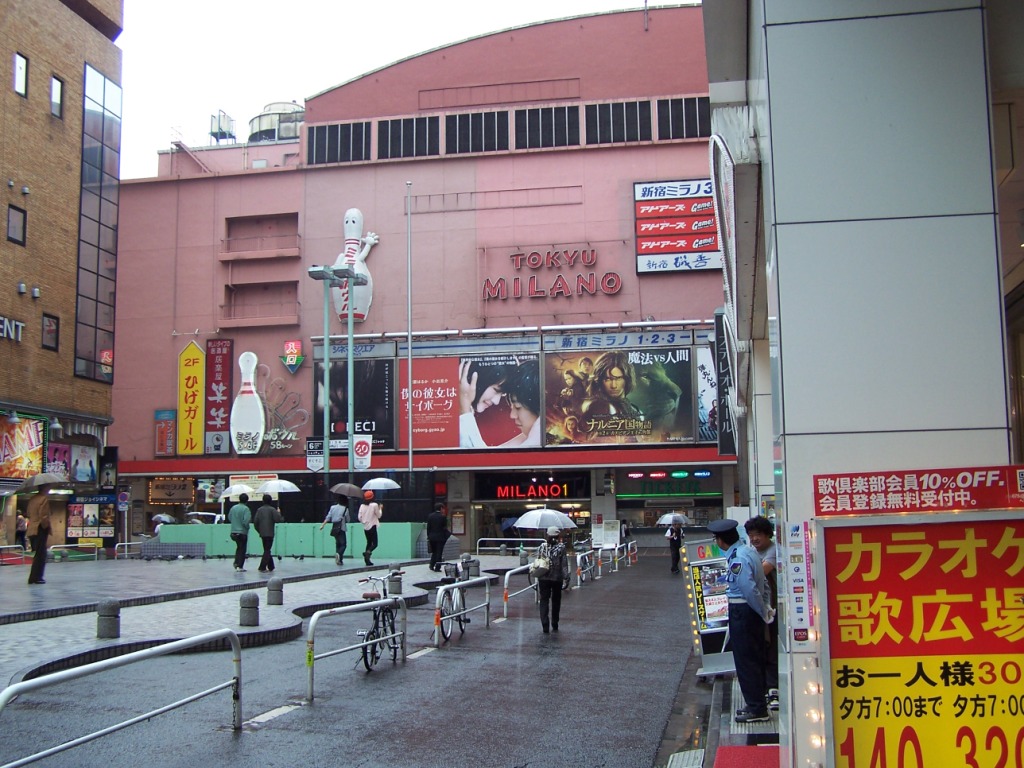
DAILY PHOTO: Bowling Kabuki-cho

Taken in June 2008 in Kabuki-cho, Tokyo, Japan

Taken in June 2008 in Kabuki-cho, Tokyo, Japan

DAILY PHOTO: Come to my Troll-free Under-the-Bridge Emporium

Taken in the Summer of 2008 in Tokyo.

Taken in the Summer of 2008 in Tokyo.

DAILY PHOTOS: Hanazono Inari Jinja in Ueno Park, Tokyo

Taken summer of 2008.

Taken summer of 2008.

BOOK REVIEW: The Classic Tradition of Haiku Edited by Faubion Bowers

The Classic Tradition of Haiku: An AnthologyThe Classic Tradition of Haiku: An Anthology by Faubion Bowers

My rating: 4 of 5 stars

Amazon page

The other haiku anthology I reviewed is Classic Haiku, located here.

This is the second haiku anthology that I’ve reviewed on my site. While they’re both thin volumes of traditional haiku, each has its distinct flavor. The previous volume was organized by season. This one is organized by author. The two books share several authors (e.g. the greats Bashō, Issa, and Buson), but diverge on many of the lesser known poets.

One nice feature of this book is that it offers multiple translations of many of the haiku. Poetry is notoriously tricky to translate as literal translations can be meaningless. Multiple translations can give one a better opportunity to hone in on what the author meant to convey. This volume does give the original Japanese poem in romanized transcription (for those who enjoy the sound the author conveyed as well as meaning), but–unlike the other volume–it does not include the kanji. (This doesn’t matter for me, as I don’t read Japanese, but I’m sure the kanji is a nice feature for readers of Japanese.)

Some favorites are:

clouds occasionally
make a fellow relax
moon-viewing

Matsuo Bashō

islands
shattered into a thousand pieces
in the summer sea

Matsuo Bashō

you’re the butterfly
and I the dreaming heart
of Sōshi

Matsuo Bashō

[Note: Sōshi is the Japanese name of the Taoist thinker Chuang Tze, and this references his famous statement about having dreamt he was a butterfly.]

that dream I had
of being stabbed–was true
bitten by a flea

Takarai Kikaku

oh, won’t some orphaned sparrow
come
and play with me

Kobayashi Issa

View all my reviews

DAILY PHOTOS: A Sculpture of Three Nudes in Tokyo

Three nude women sitting around chatting, as happens all the time... in the dreams of men.

Three women standing around chatting in the nude, as happens all the time… in the minds of men. Taken in Tokyo in the Summer of 2008.