
Top 10 Travel Locales of India

People sometimes ask what my favorite travel locations have been in India. While there remain a great many places that I have yet to see, in the past three years I’ve seen many of India’s iconic (and lesser known) hot-spots.  Here’s my top 10 list in ascending order.


10.) Mumbai: I’ll admit to a bias against big cities in my preferences. Indian cities are particularly noisy, smelly, crowded, and frenetic–none of which are characteristics I hold in high regard. However, Bombay has such a unique vibe. From old colonial mansions to shanty-town slums, it’s a city like no other.

The Taj Hotel

The Taj Hotel


9.) Coffee and Tea Plantations: No. 9 may lack specificity, but there’s a common beauty in these verdant, rolling hills–be they in Munnar (Kerala), Madikeri (Karnataka), or the more well-known Darjeeling (West Bengal.) Not only are the plantations scenic, they’re also a peaceful place to recharge.

Munnar, Kerala

Munnar, Kerala


8.) Khajuraho: This is a quick stop; there’s not a lot to keep one in town once one has seen the amazing set of temples and the art that adorns them. However, Khajuraho makes my list because I favor places that have their own feel, and the open eroticism of Khajuraho certainly stands in contrast to mainstream India.

Khajuraho art

Khajuraho art


7.) Agra (the Taj Mahal and Agra Fort): People are often surprised that the Taj Mahal doesn’t come in higher on my list. I’m not saying one shouldn’t see it, but it’s not among the most impressive sights I’ve seen in India. This memorial to love is probably the most well-known tourist site in India, so enough said.

The Taj Mahal

The Taj Mahal


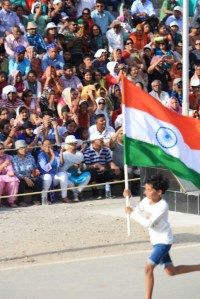
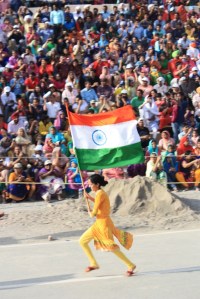
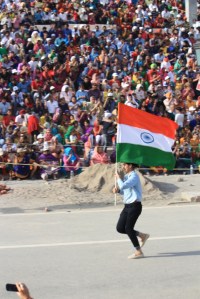
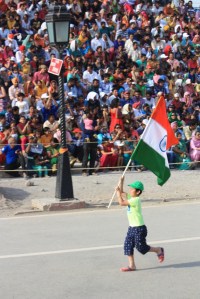
6.) Amritsar: Guidebooks often portray Amritsar as a one-hit wonder, and that one hit is the Golden Temple (i.e. the Harmandir Sahib.) While the Golden Temple is certainly this town’s centerpiece, there’s more to see (not to mention to eat.) While each Indian state has its own cultural flavor, the Sikh character of Punjab makes it particularly true here.

The Golden Temple (Harmandir Sahib)

The Golden Temple (Harmandir Sahib)


5.) Kerala’s Backwaters: Adrift in the backwaters of Kerala is one of the most simultaneously relaxing and scenic experiences India has to offer.

A typical houseboat seen in the Backwaters

A typical houseboat seen in the Backwaters


4.) The Caves of Ajanta and Ellora: This is one of those places that one has to really want to see because it’s not easy to get to. Except for die-hard Buddhists, for whom it is considered an important religious site, relatively few travelers make it to these grand sites. They aren’t just caverns but rather entire temples and monasteries carved into the side of mountains.

The Ajanta horseshoe bend

The Ajanta horseshoe bend


3.) Varanasi: Varanasi is both iconic India and–at the same time–a place that has its own unique feel. There are the near-naked holymen, the maze-like back alleys, and the burning ghats where the departed are cremated and have their remains put in the sacred Ganges River.

A Brahmin conducting the Ganga Aarti, a daily Hindu ceremony conducted on the Ganges

A Brahmin conducting the Ganga Aarti, a daily Hindu ceremony that takes place at the main ghat along the Ganges


2.) Hampi: Until last summer, Hampi had held my # 1 spot for some time. Yes, there are the Vijayanagara temples and monuments, but– even if there weren’t–the environment in which this ancient city is nestled is otherworldly. Imagine red sandstone boulders precariously (re: impossibly) perched upon each other with cacti communities and a carpet of green in between.

Plus the ruins of a once great Empire.

Plus the ruins of a once great Empire.


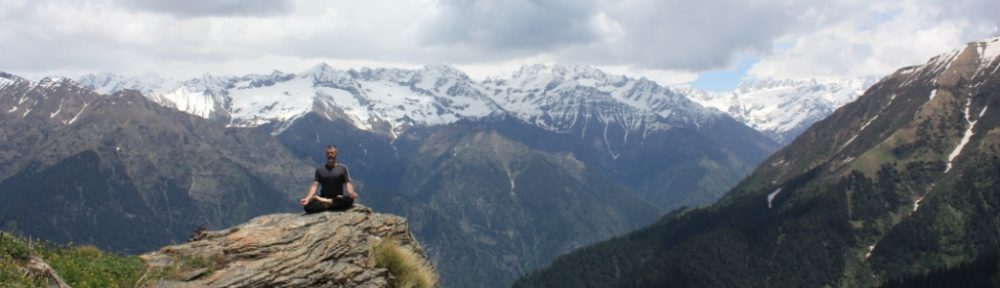
1.) Himalaya: For peacefulness, beauty, and inspiration of awe, it’s hard to compete with the land of snows. Around every corner is some new vista to blow one’s mind. The shear grandiosity of these mountains make them my #1.

In the land of yogis

In the land of yogis


DAILY PHOTO: Burning Ghat from the Ganges

Taken in October of 2015 in Varanasi

Taken in October of 2015 in Varanasi


IMG_3947 IMG_3950 IMG_3956

DAILY PHOTO: Kochi Market

Taken in July of 2014 in Kochi (Cochin)

Taken in July of 2014 in Kochi (Cochin)

IMG_1033

What RYT300 Taught Me About Fear

IMG_2752

I recently completed the RYT300 course at Amrutha Bindu Yoga to obtain my RYT500 yoga teacher certification. (i.e. The 200 hour course–which I completed a couple years ago–plus the 300 hour course are the primary requirements for the 500 hour certification.) The essay below is about one of the key lessons I learned in this phase of training.


I walked through the streets of Bengaluru barefoot and with not so much as a 5 rupee coin in my pocket. [If your response to that is “big whoop,” you probably live somewhere like Singapore, Helsinki, Kobe, or Calgary where the streets are immaculate and the rats aren’t so bold. If you’re familiar with what goes on in and near the streets in India, you may be wondering what the hell is wrong with me.]  It was an unconventional teaching tactic to be sure, but it ranks among the most valuable lessons of the training—surpassing no small revelations about postural alignment, pranayama methods, bandha technique, physiology, and yogic philosophy. It was even up there with the experience of advanced shatkarma (cleansing practices) that were completely new to me.


What’s the lesson?  If you’re going to teach yoga–particularly at the intermediate / advanced level that RYT500 is intended to prepare you for–you need to work on not being ruled by fear. That isn’t to say one must be fearless. We imagine fearlessness to equate to courageousness, but courage is action under fear. Neuroscience tells us what a fearless person is like. We know from individuals who’ve had the parts of their brains damaged that are responsible for the emotion—they are paralyzed by indecision. Our emotions provide a basis for choosing–at least as a tie-breaker when no clearly superior path exists. We need our fear, just like our other emotions, but if you can’t move forward because of it you may have a hard time keeping learning.


Not being ruled by fear isn’t just—or primarily—about being able to keep practicing advanced techniques until you can get a grasp on them.  Yes, mastering a handstand requires a fair amount of falling down (hopefully, in a controlled fashion), and that’s a lot of potential for anxiety, but there’s more at stake.  What precisely? One might start, as many do, with what Patanjali has to say on the subject, and one can start from square one. “Chitta Vrtta Nirodhah.” (Quieting the fluctuations of the mind.) Many of the fluctuations of the mind result from anxieties and our obsession with solving them. Our brains are wired to try to anticipate worst case scenarios so we can develop ready-made solutions for them. This can result in excessive pessimism, extended stress, and all the problems that go along with that stress.

IMG_2642

There’s a popular saying that goes, “money is the root of all evil.” But, I think it’s wrong. Fear is at the heart of all evil—not to mention a fair amount of run-of-the-mill pettiness.


So what is the path to anxiety management? Start small, and dispassionately observe your discomfort. Don’t try to squelch the emotion, just watch it while trying to avoid putting good or bad labels on it. Of course, sources of anxiety are personal. As far as prescriptive yoga practices, that depends upon one’s personal anxieties. For some inversions might do the trick, for others extreme back bends, for some external breath retention, for others it may be balancing. Then, of course, there are the advanced shatkarma practices I mentioned earlier–such as vaman dhauti (cleansing by vomiting) or poorna shankhaprakshalana (i.e. clearing out one’s digestive tract via massive ingestion of salt water.)


I recently finished teaching a Kid’s Camp (a post about that to come.) At the beginning of the camp, I was telling someone that the kids were fearless, but what I came to discover was that kids just allow their enthusiasm to swamp their anxieties. I had seven-year-olds doing pinchamayurasana (forearm stand) and vrschikasana (scorpion) within the first few days. That would be a hard sell for adults. [I don’t think I’ve ever taught those postures to adults.]  It’s not just that kids are bendy, they’re also ready to get up after they fall down. (And since they’re not stressed about the possibility of falling they don’t tense up and get badly injured.) Someone posted a great meme on Facebook recently. It said, “A child who falls down 50 times learning to walk, doesn’t go, ‘I don’t think this is for me.’”

DAILY PHOTO: Uncouth Chimp

Taken in November of 2013 at the Mysore Zoo

Taken in November of 2013 at the Mysore Zoo

BOOK REVIEW: The Yoga of Max’s Discontent by Karan Bajaj

The Yoga of Max's DiscontentThe Yoga of Max’s Discontent by Karan Bajaj
My rating: 4 of 5 stars

Amazon page

Max is a making a good living in New York City, but feels an inexplicable void that leads him to give it all up to travel to India in search of wisdom. This novel is a hero’s journey in which the quest isn’t for adventure (not in the usual sense) but for insight into his mind and a path to bliss. Along the way he finds a teacher and is assisted by others, but must ultimately find his own path. As is appropriate to such a quest, he faces hurdles within and without and it’s not always clear whether he will find what he’s searching for—or even whether it exists.

This book kept me reading. It had humor (particularly in the first part) and maintained awareness that it was a novel throughout. What I mean by the latter statement is that there is temptation for books that deal in spirituality to devolve into a muddle between story and self-help book. However, I think the author avoids that error and keeps advancing the story in a readable fashion. The descriptions of yogic practices don’t bog down the story. Those experienced with yoga will breeze right through said descriptions and know what’s happening, and those without such knowledge won’t lose much by grazing over such segments.

The book consists of 38 chapters divided into three parts. The first part covers the period during which Max moves from the US to India and seeks out a teacher. The second part describes his time studying yoga in a south Indian ashram. The final part is the period after which he’s achieved enlightenment, which he spends in the Himalayas.

I found the first two parts to the most interesting and enjoyable. The first part has all the humor and emotional turmoil one would expect from a well-developed and relatable human character. The descriptions of an austere life amid the harsh landscape of a south Indian ashram that comprise the second part make for a visceral read. Where the third part falls flat for me is that supernatural abilities are introduced, and that makes it more difficult to care about Max anymore. It’s a problem inherent in writing this type of story. While Max becomes wiser in the second section, that part doesn’t fall so flat because the life he’s living is so challenging. It’s certainly not that Max’s life is easy when he moves to the Himalayas, but by then he can speak languages he never learned and create sparks with his mind and as far as the reader knows he may be able to leap tall buildings in a single bound and other superman type magic. I suspect the author was aware of the risk of this because he backs away from having Max start a fire with his mind early in the third part and the last part unfolds much more quickly.

I’d recommend this book for anyone who’s interested in a story about personal transformation. Those who’ve spent time in India will find much that resonates and those who are considering (or curious about) such a quest will glean many insights from this book.

View all my reviews

DAILY PHOTO: Tibetan Murals in McLeod Ganj

Taken in June of 2015 in McLeod Ganj

Taken in June of 2015 in McLeod Ganj

IMG_2516 IMG_2577

DAILY PHOTO: Mata Ganga Ji Niwas

Taken on April 10, 2016 in Amritsar

Taken on April 10, 2016 in Amritsar

DAILY PHOTO: Sun Setting Over Ganta Ghar

Taken on April 8, 2016 in Amritsar

Taken on April 8, 2016 in Amritsar

DAILY PHOTO: Caves at Ajanta

Taken in November of 2014 at Ajanta

Taken in November of 2014 at Ajanta

IMG_0686