BOOK REVIEW: A History of the World in 6 Glasses by Tom Standage

A History of the World in 6 GlassesA History of the World in 6 Glasses by Tom Standage
My rating: 4 of 5 stars

Amazon page

Get Speechify to make any book an audiobook

Standage’s book takes a fascinating look at the effect that six key beverages had in the unfolding of world events, as well as how the beverages themselves made friends and enemies. The drinks in question are beer, wine, spirits, coffee, tea, and cola. There are two chapters for each of these drinks. They follow a chronological order based upon when the respective drink rose to prominence, but within the discussion there is overlap of time periods. For example, both the chapters on spirits and tea consider the effect of those beverages on the American Revolution (i.e. the Whiskey Rebellion and the Boston Tea Party, respectively.)

As the author points out, there’s a natural subdivision to the book, which is that the first three beverages are alcoholic and the last three are caffeinated. There’s another way of looking at it, and that’s the means used to achieve a drink that wasn’t a health hazard. The first three drinks achieve germ-killing by fermentation, the next two by boiling, and the last through technology.

The era of beer is associated with the Agricultural Revolution and the growing importance of cereal grains. Geographically, the region of focus is the Fertile Crescent and Egypt. Among the more interesting points of discussion is the role of beer (along with the related commodities of cereal grains and bread) in the development of written language.

The era of wine is associated with the civilizations of ancient Greece and Rome. Readers of the classics will be aware that wine was much celebrated among the Greeks and Romans, so much so that they developed gods of wine in their mythologies (Dionysus and Bacchus, respectively.) Of course, wine played no small role in Christian mythology as well–e.g. Jesus turns water to wine.

Spirits are related to the Colonial period, though they were first developed much earlier. The author emphasizes that these were the first global drinks. While beer and wine were robust to going bad, they could spoil in the course of long sea voyages.

Alcohol of all kinds has always attracted opposition. This conflict, of course, owes to the fact that people under the influence of alcohol frequently act like idiots. One might expect that the transition to discussion of non-alcoholic beverages would correspond to the end of controversy, but that’s not the case. Each of the beverages brought controversy in its wake. There were attempts to ban coffee in the Islamic world where its stimulative effect was conflated with intoxication. Coca-Cola became associated with capitalism and American influence, and drew its own opposition because of it. It seems there’s no escape from controversy for a good beverage.

The most fascinating discussion of coffee had to do with the role of cafés as corollaries to the internet. Centuries before computers or the internet as we know it, people went to cafés to find out stock values and commodity prices, to discuss scholarly ideas, and to find out which ships had come and gone from port.

The role of tea in world history is readily apparent. Besides the aforementioned Boston Tea Party, there were the Opium Wars. This conflict resulted from the fact that the British were racking up a huge tea bill, but the Chinese had minimal wants for European goods. Because the British (through the East India Company) didn’t want to draw down gold and silver reserves, they came up with an elaborate plan to sell prohibited opium in China in order to earn funds to pay their tea bill. Ultimately, Britain’s tea addiction led to the growing of tea in India to make an end-run around the volatile relations with China.

The book lays out the history of Coca-Cola’s development before getting into its profound effect on international affairs. A large part of this history deals with the Cold War years. While Coca-Cola was developed in the late 19th century, it was really the latter half of the 20th century when Coke spread around the world—traveling at first with US troops. The most interesting thing that I learned was that General Zhukov (a major Soviet figure in the winning of World War II) convinced the US Government to get Coca-Cola incorporated to make him some clear Coca-Cola so that he could enjoy the beverage without the heart-burn of being seen as publicly supporting an American entity (i.e. it would look like he was drinking his vodka, like a good Russian should.) General Zhukov was perhaps the only person to stand in opposition to Stalin and live (the General was just too much of a national hero to screw with.)

There’s also an interesting story about how the cola wars played out in the Middle East. Both Coke and Pepsi wanting access to the large Arab market, and were willing to forego the small Israeli market to pave the way for that access. When Coke finally had to relent due to public outrage and accusations of anti-Semitic behavior, Pepsi slid in and followed Coca-Cola’s policy of snubbing Israel in favor of the Arab world.

I enjoyed this book, and think that any history buff will as well. One doesn’t have to have a particular interest in food and beverage history to be intrigued by stories contained in this book.

View all my reviews

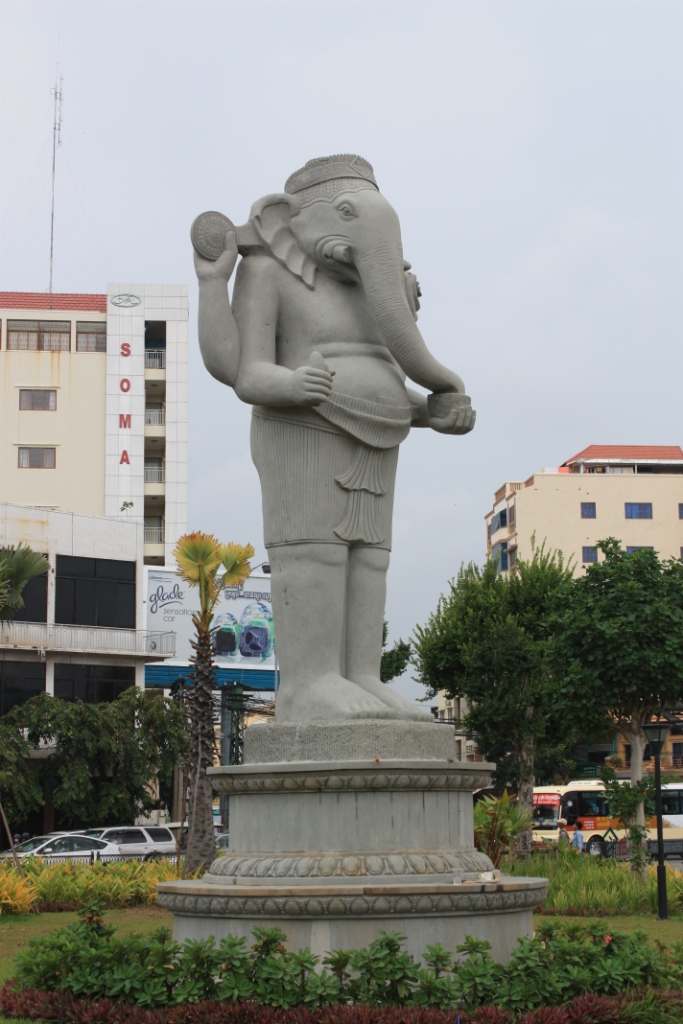
DAILY PHOTO: Cambodian Ganesh

Taken in October of 2012 in Phnom Penh.

Taken in October of 2012 in Phnom Penh.

An estimated 95% of Cambodians are Buddhist, and Buddhism has been the dominant religion since the time of Jayavarman VII (i.e. the late 12th century.) This begs the question, why might one see a statue of a Hindu deity in a public space in Cambodia’s capital city?


If you’ve visited Angkor, you know that Hindu imagery abounds. This is because before Jayavarman, the Khmeris were Hindu. In a great early act of recycling, Vishnu sculptures became Buddha sculptures by decree. (In what is–as far as I know–a coincidence, many Hindus believe that Buddha [Siddhartha Gautama Buddha] was an avatar, or incarnation, of Vishnu.)


This still doesn’t explain why a relatively new sculpture of Ganesha would reside in present-day Phnom Penh (Phnom Penh is not as old as Angkor,  and by the time it was founded Buddhism was dominant.) Just as contemporary taxi and auto-rickshaw (tuk-tuk) drivers in India display Ganesha in appeal to this “remover of obstacles,” 10th century maritime traders did the same. This desire to court the favor of the remover of obstacles has continued on into the modern-day.


It’s an interesting commentary on how cultures never interact without getting some of their chocolate into the other culture’s peanut butter and vice versa (for those who have no idea what I’m talking about, that’s a reference to an old Reese’s commercial and not some dark coded message.)

DAILY PHOTO: Madikeri Fort

Taken March 30, 2014 in Madikeri.

Taken March 30, 2014 in Madikeri.

This 17th century fort was built by the Mudduraja, and subsequently controlled by Tipu Sultan, Doddavira Rajendra, the British, and the Wodeyars.

DAILY PHOTO: 824 Year Old Magnolia Tree

Taken on March 30, 2014 near Madikeri.

Taken on March 30, 2014 near Madikeri.

This tree near Madikeri in Coorg is believed to have sprouted in 1190. That means it was living when:

-Jerusalem was recaptured during the 3rd Crusade.

-Genghis Khan came to power.

-the Magna Carta was issued.

-the Aztecs built Tenochtitlan.

-the first Black Plague struck.


I could go on and on, but you get my drift.

[Please note: Correlation does not equal causation. I’m not implying that the afore-pictured tree had anything to do with any of the aforementioned events.]

DAILY PHOTO: Bangalore Fort: The Tiny Attraction You Probably Missed

20140312_170923

20140312_171102

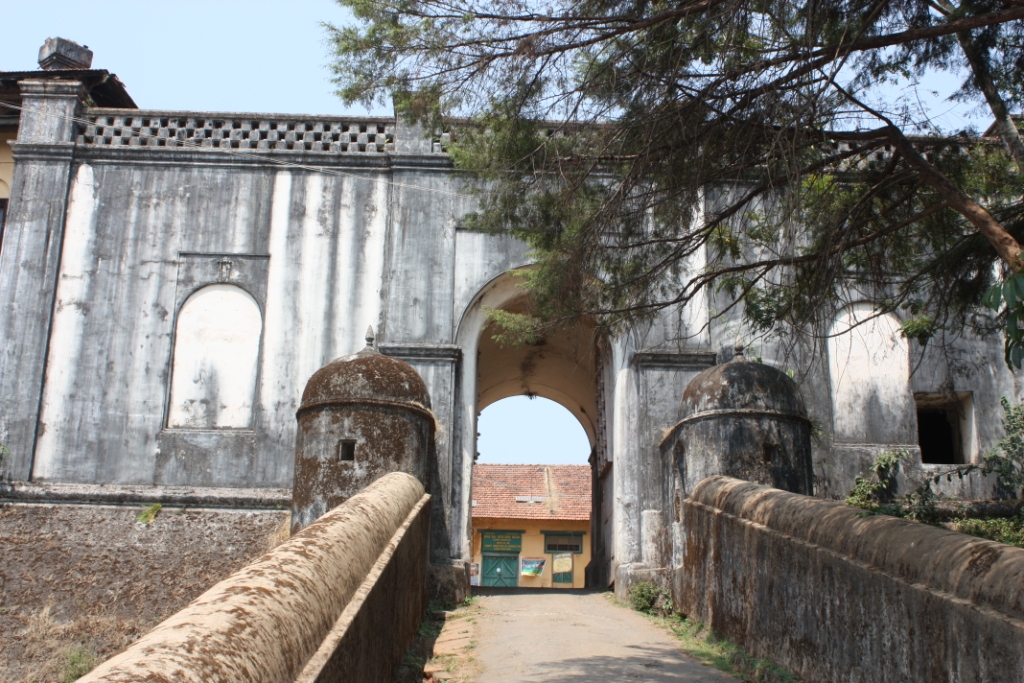
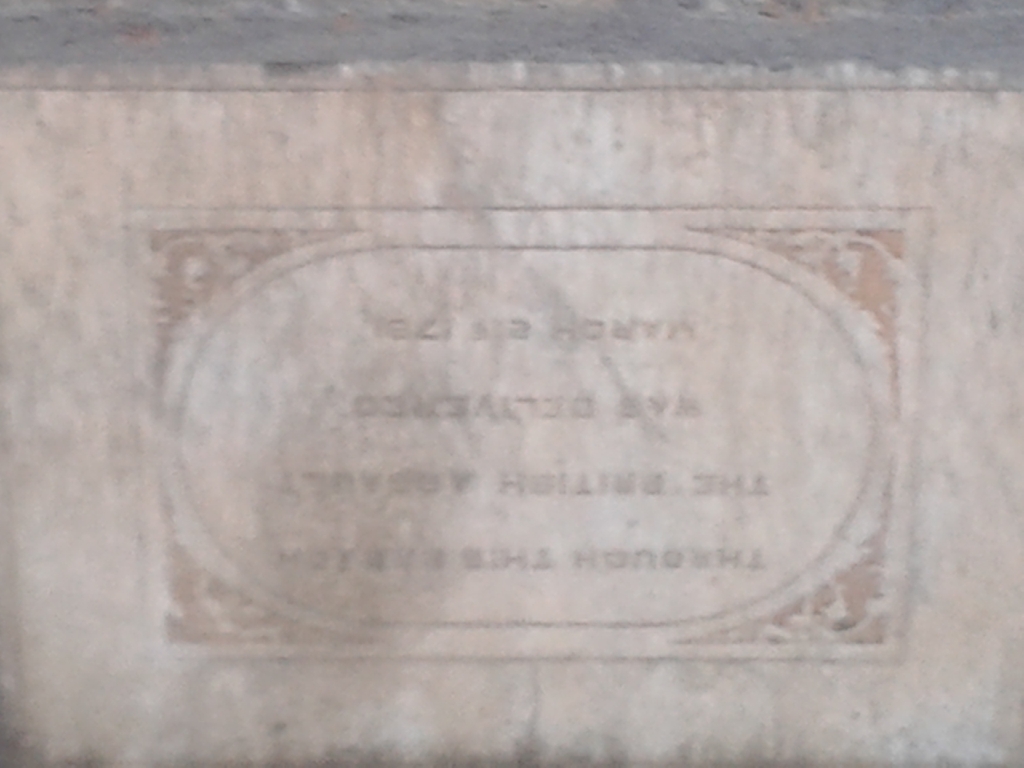
20140312_171018The inscription reads: “Through this breach the British assault was delivered March 21, 1791.” I guess that means that the 223rd anniversary of the British attack on Bangalore is right around the corner.

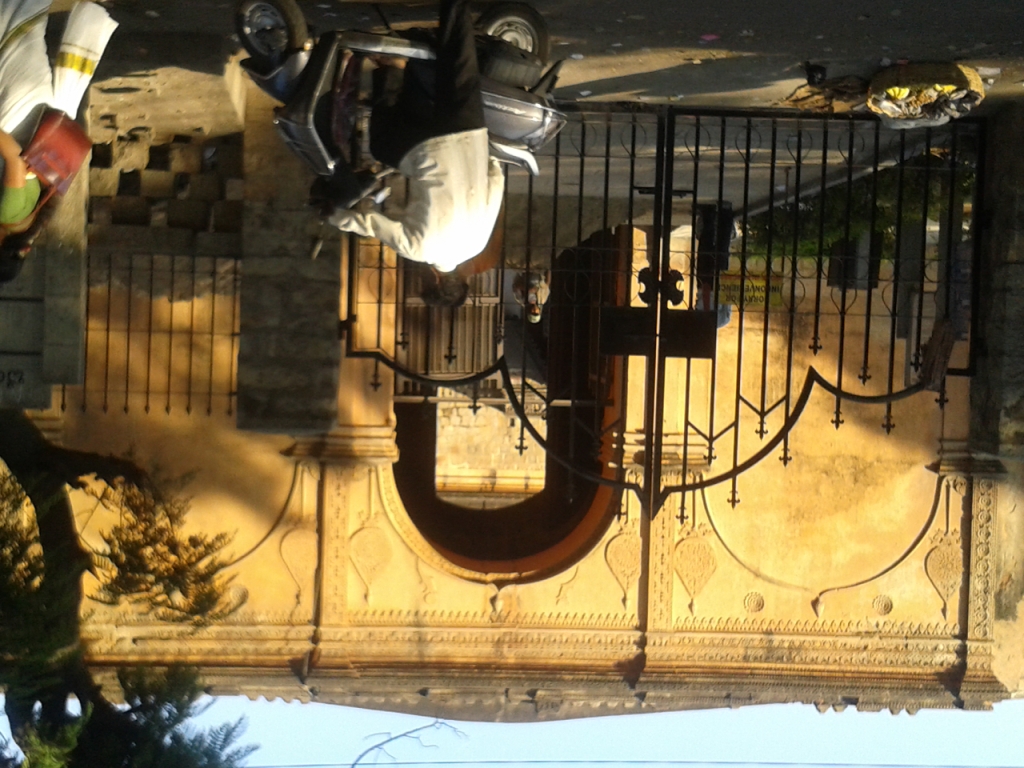
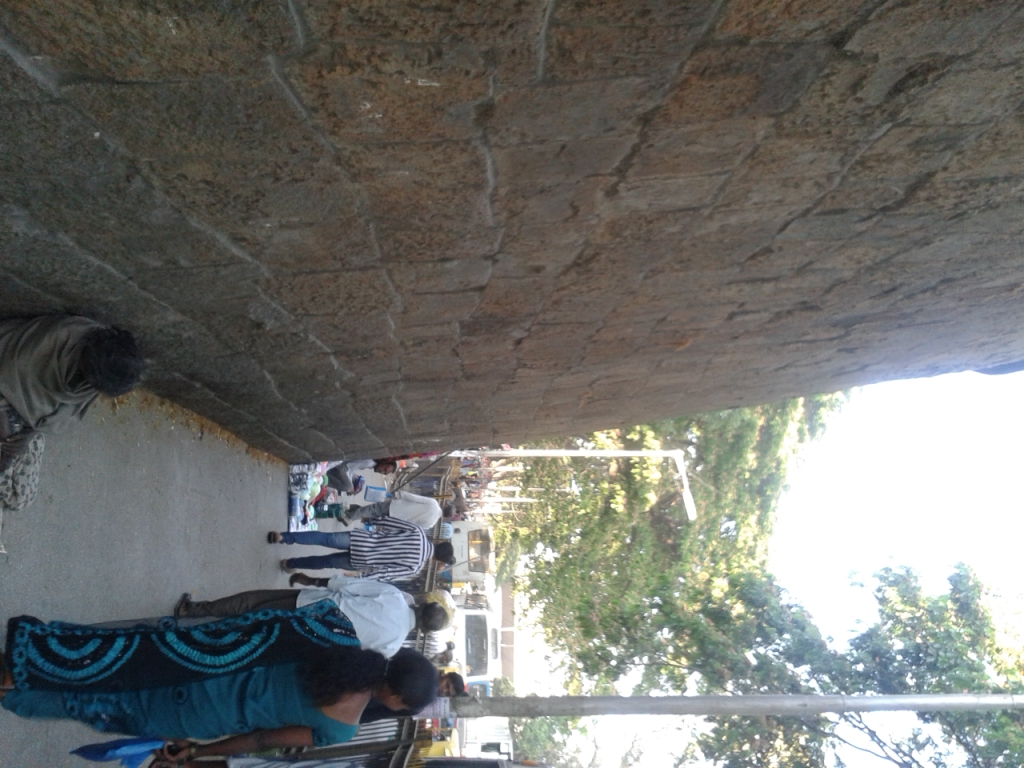
Bangalore Fort is a tiny piece of the 16th century Vijayanagar fortification that remains intact–it’s all that remains. It’s located between city market and Tipu Sultan’s Bangalore Palace. As it takes only about 10 minutes to walk through, a lot of people don’t even realize it’s there.


You’ll Never Guess Who I Saw In Cubbon Park

Taken in March of 2014 in Cubbon Park.

Taken in March of 2014 in Cubbon Park.

One of the little anomalies that surprised me when I moved to Bangalore last Fall was a set of statues of Queen Victoria and King Edward VII that are located in Cubbon Park.

There are a number of cities, towns, and other places named after British royalty in the eastern United States, but I always assumed that was because they were named before the Revolution and changing them would require getting American politicians to agree on something (other than the urgent need to eavesdrop on everybody’s communications.)

Edward VII, Emperor of England

Edward VII, Emperor of England

Having statues up seems a little beyond vestigial names, however. Most of the Warsaw Pact countries ripped up their monuments to tyranny after the Cold War ended. Budapest created a nice open air park of Stalins, Lenins, Béla Kuns, and generic Stakhanovite workers.

I remember reading Michael Palin’s book, Himalaya, and he mentions having a moment of pause after passing from Pakistan into India near Amritsar. He had thought of the border crossing as representing a trip from risky and tumultuous Pakistan into safe and secure India. However, among the first sights he saw was a monument to the assassin who killed Sir Michael O’Dwyer, the tyrannical governor of Punjab, and a monument for 400 peaceful protesters massacred by British troops in 1919. This reminded him that a British man might not be the most welcome visitor in those parts.

I’m not suggesting that we shouldn’t forgive and forget. Nor am I suggesting that one should lose sight of one’s history past the current regime. Those are both perfectly rationale and virtuous notions, but, yet, I’m still curious why those monuments remain.

Kalaripayattu and Single Point Origin Myths

I just began my study of Kalaripayattu this morning. Kalaripayattu is an Indian martial art that is named for the training space (kalari) in which it is conducted. It’s a very different martial art from others I’ve studied, and is a great learning experience—as well as an excellent workout. Kalaripayattu is said to be one of the oldest formal martial arts that has survived into the modern era. I have no reason doubt this. The art is documented in the 11th century by a historian who attributes its development to wars between the Chola and Chera kingdoms.

However, there’s another common claim that is much more controversial, and that’s that Kalaripayattu is the “mother of all [Asian] martial arts.” With all due respect, I’m skeptical of this claim—even if we don’t take it in the literal sense (i.e. Asia is a big place and there are almost certainly places where martial arts were established before contact with the Buddhist diaspora.) I obviously don’t base my skepticism on what I have been taught—as that is, at this point, a miniscule portion of the most basic of basics.

While I can offer no definitive proof to discredit the claim, I do have specific reasons to be skeptical. The theory of Kalaripayattu as the origin of martial arts is based on the legend of Bodhidharma. The legend says that the famous monk shared martial arts with the monks of Shaolin in conjunction with the Zen (Cha’an) form of Buddhism, and from Shaolin as Buddhism spread so did the martial arts. I’ve read myths about the origins of the Japanese martial arts that I’ve studied that place the beginnings of their ancestor arts with Chinese Buddhists fleeing persecution during the T’ang Dynasty (as well as later periods.)

The first problem with this theory is that historians have found it to be unsubstantiated and dubious. While the belief that Bodhidharma introduced the Chinese to martial arts is one of the most widely believed and cited pieces of martial arts lore, Meir Shahar in his book The Shaolin Monastery [http://www.amazon.com/The-Shaolin-Monastery-History-Religion/dp/082483349X] states that the evidence doesn’t support this popular belief. Specifically, the only historical documentation of this theory is a document that was written in the 1600’s that the author claimed was “discovered” from an earlier time—the problem is that the language usage isn’t consistent with the claim that the document was from a much earlier period, and there are many verified mistakes in the document.

Even if Shahar and other historians are wrong, the evidence that Bodhidharma came from southern India and that he studied Kalaripayattu specifically seems to be non-existent. There is at least one popular theory of Bodhidharma that puts the origin of this famous spiritual leader outside of India altogether. If the aforementioned Indian historian was right and Kalari developed during 11th century wars, then it’s late for the life of Bodhidharma by some 500 years.

The challenge is that it’s difficult to compare the modern martial arts and see definitive evidence of historic connections. Some will say, “But Kalaripayattu doesn’t look like Shaolin Kung fu (or any other subsequent arts) at all.” While it’s not true that they don’t look anything alike, it’s true that they look very different. However, what one has to keep in mind is not only did Kung fu continue to evolve in order to optimize to its circumstance, its predecessor system (whether Kalaripayattu or otherwise) would have continued to evolve as well. The Kalaripayattu of today most likely looks quite different from 11th century Kalaripayattu, but we can’t know how so in any detail. This could make for some pretty rapid divergence. Others may say, “But, hey, I do see the similarities in kicks and postures and so forth.” This may be true as well, but can one be sure that one of those commonalities is causal of the other? What if it’s just the constraints of the human body that make all martial arts similar at some level of granularity?

My intent is neither to destroy origin stories nor to discredit any martial art. Obviously, Kalaripayattu has a long history, and the fact that it survived to modern times is a testament to its value over that time. Combat is a harsh evolutionary environment, and things that don’t work for the situations they face are likely to die with the people who practice those systems. However, I think it’s important for warriors to not succumb to false fables because they must see the world as it is and not as they wish it to be.

BOOK REVIEW: Auschwitz by Miklos Nyiszli

Auschwitz: A Doctor's Eyewitness AccountAuschwitz: A Doctor’s Eyewitness Account by Miklós Nyiszli

My rating: 5 of 5 stars

Amazon page

Auschwitz is the account of a Jewish medical doctor who performed autopsies at the crematoria of Auschwitz at the behest of the infamous Dr. Mengele. It’s gut-wrenching reading. One is constantly reminded of the words of another famous Holocaust chronicler, Viktor Frankl, who said, “We who have come back, by the aid of many lucky chances or miracles – whatever one may choose to call them – we know: the best of us did not return.” That’s a sad fact with which Dr. Nyiszli had to live. Nyiszli lent his expertise to many despicable acts in the process of surviving, and it’s to his credit that he had the courage to write this work. He was the only one who could have told much of this story, and it’s a story that he felt the world must know–even if it meant rehashing the nightmare scenario of his life during the holocaust years, even if he was not always to be seen at his most virtuous.

While Nyiszli was a man of science who tried to stick to the objective task of conducting autopsies, his results were routinely perverted to support Nazi pseudo-science—the pseudo-science used by Nazis to justify elimination of the Jews and other despised classes of humanity. Nyiszli stayed alive first-and-foremost because Dr. Mengele valued Nyiszli’s expertise, and perhaps the credibility that expertise offered to the Nazi’s insane attempts to emulate science.

Sometimes by just answering basic scientific questions, Nyiszli was contributing to the advancement of dire atrocities. There’s no better example than when Mengele asked Nyiszli how one could obtain a skeleton from a corpse. These skeletons displayed deformities, and were thus to be sent to the Kaiser Wilhelm Institute for Anthropology, Human Heredity, and Eugenics to support the absurd assertion that Jews were genetically degrading. Of course, as Nyiszli points out the disease these two people were afflicted with was no less common among blond-haired, blue-eyed Aryans than it was among the Jewish people. At any rate this resulted in two corpses (made corpses by force, not nature) being boiled to remove the skeletons so they could be sent to an institute as pseudo-evidence.

Nyiszli’s forthcomingness is astounding. Nyiszli performed many objectionable actions at the behest of Mengele, but it’s clear he couldn’t have survived disobeying the Nazi doctor. However, there were also times when Nyiszli acted on his own in a way that was, arguably, detestable. After Auschwitz was abandoned, Nyiszli used his former position–and Mengele name-dropping)-to cut in line to get into an encampment (essentially a refugee camp) so he could get a shower and food for the night when others were left out in the cold.

I don’t mean to make Nyiszli look evil. He did many virtuous things in the process of surviving as well. This included sneaking medical supplies from the crematoria infirmary (where there was abundance) to barracks infirmaries (where there was a dire shortage.) He did his best to save those he could. It’s to Nyiszli’s credit that he shows us a complete picture. One expects such a book to be distorted when it comes to the author, but Nyiszli’s book seems honest.

This is an important book as it lets us peer into one of the darkest hours of humanity, and gaze upon a terribleness that would have been lost to posterity. The book gives a chilling account of what it must have been like to be in the gas chambers, told by someone who saw the aftermath in person. Nyiszli saw the piles of bodies reaching to the ceiling—dog piles in which the weakest were trapped on the bottom as the strongest tried to climb over women and children to get a gulp of good air. (Another proof of Frankl’s thesis.) Nyiszli also describes how one little girl, in a freak occurrence, managed to survive the chambers owing to an air pocket, only to have the SS finish the execution by cruder means.

I think everybody should read this book, but I’ll offer a warning that it’s not for the faint of heart. One has to keep righteous rage in check to just get through the book. However, to ignore this wicked moment in history is to fail to see the traps humanity is capable of falling into through simple refusal to do the right thing or a willingness to try to feel better about oneself by casting aspersions on those with slightly different physical features.

View all my reviews

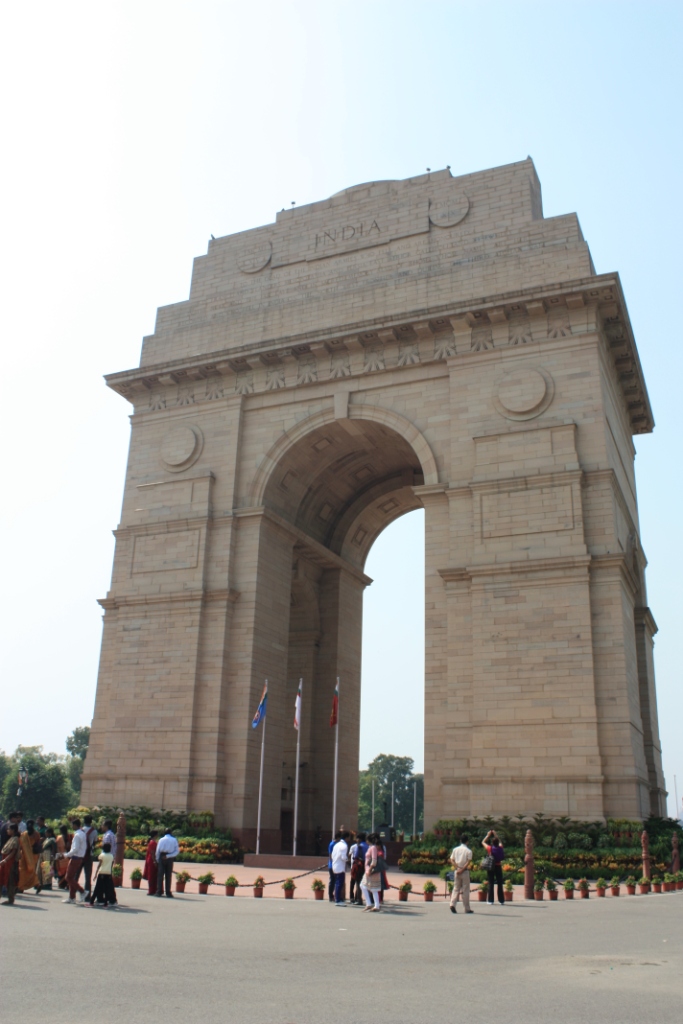
DAILY PHOTO: India Gate

Taken October 16, 2013 in Delhi.

Taken October 16, 2013 in Delhi.

The India Gate honors 70,000 Indians who died during World War I fighting on behalf of the United Kingdom. Beneath the arch is India’s Tomb of the Unknown Soldier.

It’s India’s answer to the Arc de Triomphe, and it sits at the opposite end of the Rajpath from the President’s house, i.e. the Rashtrapati Bhavan. Like the President’s house, the Gate was designed by Edwin Lutyens, a famous British architect.

The India Gate is among the must-see sights for visitors to New Delhi.

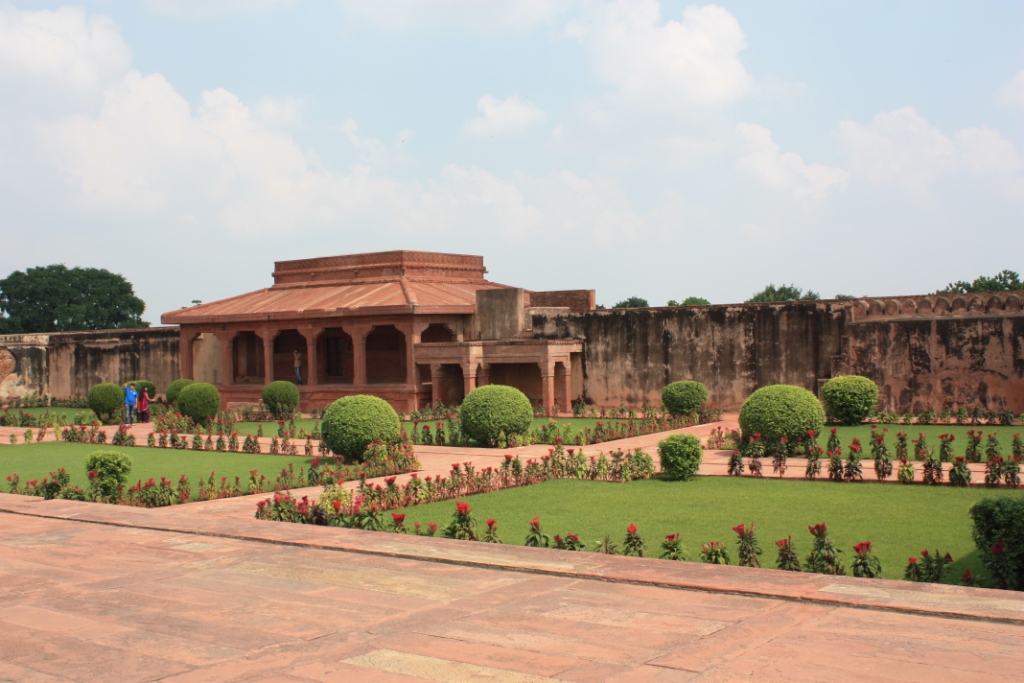
DAILY PHOTO: Garden of Fatehpur Sikri

Taken October 13, 2013 at Fatehpur Sikri.

Taken October 13, 2013 at Fatehpur Sikri.

Red sandstone dominates the scene at Fatehpur Sikri, a 16th century Mughal city near Agra. The architecture is beautiful, but the view can be a bit drab. There are two areas where this monotony of hue is broken. One is the white marble in the Tomb of Salim Chishti (as well as some decorative accent white marble on the mosque itself.) The other is this little garden which inserts a field of green and rose-red into the mix.