BOOK REVIEW: The Tattooist of Auschwitz by Heather Morris

The Tattooist of AuschwitzThe Tattooist of Auschwitz by Heather Morris
My rating: 5 of 5 stars

Amazon page


At its core, this is a love story set in the most unlikely of places, the Auschwitz Concentration Camp – which was in reality an extermination camp where Jews and others were executed as part of the Nazi Final Solution. Lale, the lead character, owing to his skill with languages and his survival instincts, was a prisoner chosen to be the assistant tattooist and in short order the tattooist’s replacement. As tattooist, Lale was responsible for writing numbers indelibly on the arms of the adult prisoners coming to the Auschwitz and Birkenau camps. This position offered him an unusual freedom of movement that allowed him to carry on a secretive relationship with one of the young women that he’d tattoo’d and become instantly smitten with. It also allowed him to carry out a small-scale relief mission in which he purchased food and medicine from a couple of sympathetic Poles. Still, this covert charitable work didn’t erase his guilt of believing he was participating in the atrocity by way of the tattoo-branding of his fellow prisoners. In a place where everyday was a test of survival, it goes without saying that both his love affair and his covert purchases created a heightened risk of being killed. The tension is perpetually high as one never knows whether Lale or those dear to him will survive from one scene to the next.

It’s testament to how tight and engaging the narrative arc is that I was under the impression that it was completely fictitious until I got to the back matter – which included an epilogue, an afterword, and a photo section that clarified that the book was based on interviews with the real-life tattooist, Lale Sokolov. The book is presented as a novel, and that’s how it reads throughout, but it’s in some measure a memoir. It’s hard to know how much is fictitious, but it seems reasonable to suspect that the author took some liberties – otherwise it would presumably have been presented as a history / biography.

I found this to be one of the most intense and gripping books I’ve read this year, and I’d highly recommend it for all readers.

View all my reviews

BOOK REVIEW: River of Teeth by Sarah Gailey

River of Teeth (River of Teeth #1)River of Teeth by Sarah Gailey
My rating: 4 of 5 stars

Amazon page


This alternative history book takes as its premise the “what-if” of: what if feral hippopotamuses had been introduced into the bayous of Louisiana. This was apparently an idea that was considered in the real world, presumably by people who didn’t realize that hippos are one of the most territorial and cantankerous creatures in nature. Those who’ve read the writings of the explorers / adventurers who made their way through Africa in the 18th and 19th centuries will be well aware that hippos were among the most feared creatures faced by those expeditions — rivaling black mamba and lions, and not at all like the cattle they were expected to be.

The first part of the novel consists of a hippo wrangler of British origin, named Winslow Houndstooth, building his team of hippo wranglers Magnificent Seven style. Houndstooth has a contract from the federal government to drive feral hippos out of a marshy river basin called “the Harriet.” Houndstooth also has a plan to do this dangerous job in a way that—if it works—will make the job quick and easy while exacting revenge on his archenemy, a man named Tavers who operates gambling riverboats on the Harriet. The story is as engrossing as it sounds. Dangers abound for our protagonist and his team of misfits – misfits of varying reliability, and —like George R. R. Martin—Gailey isn’t afraid to kill off a character.

The introduction of hippos isn’t the only way in which the story is alt-history. It’s also set in a world in which people of various sexual orientations and gender identities are much more open with their sexuality than they would have been in the Louisiana of the early 20th century as we know it. (Note: It’s not clear whether it was the introduction of hippos to America that created divergence in the parallel timeline that allowed for this progressiveness, whether it was a more open societal outlook on sexuality that facilitated the introduction of hippos, or whether these are independent events.)

At any rate, while gender and sexual orientation issues are quite prominent in the story, there’s only one area in which this disparity between historical reality and the alt-world became a distraction for me. I should point out that there would be no distraction in a science-fiction or fantasy story, as there is in historical fiction, because the author can create or destroy societal mores and norms as she wishes in a non-existent world. Anyhow, the one distraction I referred to had to do with one character, Hero, for whom the plural pronoun is used throughout. I must admit that I spent a few pages trying to figure out whether Hero had two heads like Zaphod Beeblebrox before I concluded that it was an attempt to deal with gender identity (I think.) I will say that the character development is skillful and Gailey does a great job of producing characters that evoke love or hate but not indifference.

I enjoyed this story. It’s a quick read, has likable and loathable characters, and builds tension throughout. There is a second book that I understand can be read independently of this one called “Taste of Marrow.” I have not yet read it, but probably will.

View all my reviews

BOOK REVIEW: Cold Days by Tibor Cseres

Cold DaysCold Days by Tibor Cseres
My rating: 5 of 5 stars

Amazon page


During the Second World War, there was a massacre conducted by the Hungarian military in the Yugoslavian town now called Novi Sad (known as Újvidék under the Hungarians.) The operation was meant to be a cleanup of Yugoslavian partisans, but the casualties were primarily innocent civilians. The novel is called “Cold Days” (i.e. literally translated from the Hungarian “Hideg Napok”) because the killings took place during a cold snap in January of 1942. Cseres bases his novel on this real world event, but he tells the story through the lens of four fictional military men who are sharing a cell for their respective actions in Novi Sad.

The novel weaves five narrative lines into an overall arc. Four of these are the personal stories of each of the four soldiers during the massacre and the time leading up to it, and the fifth takes place later when they are all together in the cell. The four characters have no connection before being placed in the same cell—or so it seems. At most, the officers know of each other. The five lines come together in the end and the reader sees how the four lives are no longer in strict isolation, but are connected by the events of that day—in some cases more severely than others.

Captain Büky is the highest ranking of the prisoners and is a straight-laced military man except that he takes issue with the order than keeps married men from bringing their families to station at Novi Sad. Prior to the massacre and some killings that instigated it, it’d been a routine assignment. Lieutenant Tarpataki is a new assignee, and his principal trouble is that he arrives to find that he hasn’t been assigned housing or a billet. Lieutenant Pozdor gets his men taken from his control by the police chain of command and is left hiding out trying to avoid being assigned some remedial task. Corporal Szabo is both the only enlisted man in the group and the only one who is directly involved with the violence, though a Cpl. Dorner takes the lead and Szabo is a follower.

If that cast doesn’t seem like the kind of villainous blackguards one expects of a massacre crew, I think that that is part of what the author is trying to convey. Run-of-the-mill men stumble down slippery slopes into treachery during times of war. Sometimes the worst go unpunished, while others take the fall. The author also shows that sides can matter little when it comes to such events. Anyone can suffer loss when events tumble out of control as they did in January of 1942 on frigid day in Novi Sad.

This book is translated from Hungarian. It’s sparse and simple writing, and readability is high. It’s a short book of only about 120 pages.

I’d recommend this book for those interested in tales of the horrors of war. It may have interest to history as well as fiction readers.

View all my reviews

BOOK REVIEW: Life and Death Are Wearing Me Out by Mo Yan

Life and Death are Wearing Me OutLife and Death are Wearing Me Out by Mo Yan
My rating: 5 of 5 stars

Amazon page


This strange title turns out to be a perfect summation of the book. The narrator / protagonist was a wealthy land owner named Ximen Nao who was executed when the Communists gained power in China. In heaven, Lord Yama (the judge in Chinese folklore’s version of the afterlife) sentences Ximen Nao to be sent back to Earth as a donkey, and—in subsequent lives—as an ox, a pig, a dog, and, finally and briefly, as a monkey. He’s always sent back to the family of one of his former underlings, Lan Lian, and the story follows that family over the course of several decades through the Cultural Revolution and China’s grand reforms.

The early parts (the lives of donkey, ox, and part of pig) are centered on Lan Lian’s decision to remain an independent farmer. Mao Zedong promised all farmers the right to remain independent contractors if they wished, but there was great pressure—first from the community and later from his own family—to become part of the commune. This ends up dividing the family, and ultimately Lan Lian ends up on his own. The latter part of the book (i.e. dog and monkey lives) deals with Lan Lian’s children (and eventually their children), and—particularly–with Lan Jiefang who shares a birthmark and a stubborn streak with his father. Lan Jiefang’s stubbornness is revealed as a desire to divorce his wife and to marry a younger woman. His equally stubborn wife refuses the divorce, and Jiefang and his young lover become ostracized. At the tail end of the book we see how Lan Jiefang’s son is afflicted by the same dogged determination to pursue a costly path—as a respected member of the police force he falls for a former classmate who has become a pariah.

The book mixes humor with tragedy. The animal incarnations of Ximen Nao each have its own personality, but retain some of the landlord’s character and memories. The animal stories are both part of and comedic counterpoint to the tales of woe experienced by Lan Lian’s family. Mo Yan has cameo appearances throughout the book, though in the dog’s life section he plays a more substantial role. References to Mo Yan’s character invariably come with self-deprecating humor. The author creates characters that the reader is interested in. What I call stubbornness is really a tenacious willingness to suffer for the principle of pursing one’s own happiness. In the case of Lan Jiefang and his wife, the reader is likely to be torn by the gray situation. The wife seems the more sympathetic character, but, still, one can’t help but appreciating the tenacity of Lan Jiefang and his willingness to suffer so greatly on the principle that “the heart wants what the heart wants.”

In addition to a good story with vibrant characters, this book offers a birds-eye view of China in the latter half of the 20th century. What is happening in the lives of the characters isn’t divorced from what is going on in the world, but is shaped by it. One notices this most vividly across the three generations over which the book’s story unfolds—with the middle generation (Lan Jiefang’s) serving as hinge point. When Lan Jiefang’s half-brother goes from being a Communist Party apparatchik to the wealthy CEO of a large firm, it’s a reflection of the societal undercurrents.

I enjoyed this book, and would recommend it for readers of fiction—and particularly translated literary fiction.

View all my reviews

BOOK REVIEW: The Taiheiki trans. / ed. by Helen Craig McCullough

TaiheikiTaiheiki by Helen Craig McCullough
My rating: 3 of 5 stars

Amazon page

Let me be blunt, “The Taiheiki” isn’t a book you pick up to read a gripping story. While it’s considered a work of fiction, it reads like a history. In some sense, it is a history. It does follow the broad brush strokes of the events in Japan in the early 14th century. However, there are way too many characters to keep track of, or to remember who is on the side of whom, or even to know whether a given individual is worth remembering or whether they’ll soon die an ignominious death. If you don’t believe me, here are the words of the book’s translator and editor, “In short, the ‘gunki monogatari’ [the war tales of which ‘The Taiheiki’ is one] are not great literature. But the best of them are worth reading.”

I agree with McCullough’s point about these books (and this one in particular) being worth reading, but I would add an “if.” “The Taiheiki” is worth reading, if you have an interest in medieval Japan, samurai, or civil war life. The time period in question was fascinating, and it was characterized by war and intrigue. The Hōjō clan was ousted. (They were the military clan that administered the government.) A compromise had been in effect in which the mantle of Emperor was to be alternated between two opposing lines. However, an ambitious Emperor Go-Daigo refused to relinquish the title, and this led to a war between the courts. It’s a story of both warriors of legendary loyalty (most famously, Kusunoki Masashige) and those of shifting loyalties.

While the book is too fractured to form a clear and interesting story overall, that doesn’t mean it isn’t filled with intriguing episodes of battles, espionage, siege warfare, and even the occasional ghost or goblin story. There are many interesting individuals that are dealt with in sufficient detail to make them intriguing—the aforementioned Kusunoki Masashige stands out among them. The book offers insight into the medieval Japanese mind and to some degree the modern mind as well. There are discussions of philosophy and strategy worked into the narrative that help one to understand from whence the individuals were coming.

The book has a few features that help non-expert readers. The first is an extensive introduction written by Dr. McCullough that serves to provide background for the book and the era in which it took place. The second is frequent footnoting. There are also several plates of artworks and photos interspersed throughout the book. These help the reader visualize the environs and how these individuals would have looked.

If you have an interest in medieval Japan, in samurai, in ninja, or even in pre-modern war generally, I’d recommend this book. (If you’re looking for a gripping tale of intrigue set in 14th century Japan, not so much.)

View all my reviews

BOOK REVIEW: Burmese Days by George Orwell

Burmese DaysBurmese Days by George Orwell
My rating: 5 of 5 stars

Amazon page

Orwell’s novel is about the ugly face of empire. It takes place in a Burma that was administered by the British as part of their Indian colony—but it’s in the waning days of the Empire, much to the chagrin of the entitled and chauvinistic European characters of the book. Most of the characters are shockingly racist and life abroad hasn’t broadened their thinking in any discernible way. The notable exception is the lead character, John Flory, whose best friend is Dr. Veraswami (an Indian medical doctor and government official) and who is unique among the British for being able to see the native ways as anything other than primitive and preposterous.

However, the hero is deeply flawed. Flory is a coward, and in the early pages of the novel is unwilling to support the nomination of his good friend Dr. Veraswami for membership to the expat’s club because many of its more vociferous members will be damned before they admit a brown person. Flory is also a bit morally loose for the taste of his early post-Victorian comrades. He has a birthmark that he’s constantly trying to conceal, and whose presence we are led to believe is crucial to his lack of confidence. While the main intrigue is provided by a plot by an unsavory Burmese official named U Po Kyin to undermine Dr. Veraswami and bolster his own stock among the whites, it’s Flory’s story that we are following. The reader hopes that Flory will develop the confidence needed to rise to the occasion—he being the only likable person in the cast (except perhaps Dr. Veraswami, depending upon how put off one is by the Indian doctor’s borderline Uncle Tom-ish obsequiousness.) Flory’s relationship with a young woman plays an important role in his story and sometimes it seems she may spur him to heights while at other times she looks to be his downfall. Flory’s conundrum is that the more virtuously he behaves, the more a target is painted on his back.

While the book is set almost a century ago, I found that it has something to say today. While the times have changed and the Empire is long dead, there are times that the long shadow of this period can still be seen in the current era.

I’d recommend this book for readers of historical fiction and particularly those interested in the past and present of areas under colonial rule. Orwell builds interesting (if often despicable) characters and the book has a well-developed and interesting narrative arc.

View all my reviews

BOOK REVIEW: Dodger by Terry Pratchett

DodgerDodger by Terry Pratchett
My rating: 5 of 5 stars

Amazon page

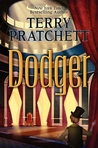
This book’s protagonist is based loosely on the Artful Dodger character from Charles Dickens’ novel “Oliver Twist.” Pratchett’s Dodger is a brave scamp with a gift for plunging into the middle of precarious situations. One such situation occurs when he rescues a young woman who’s being battered one night on a London side street. The girl, known only as Simplicity, we later find out was attempting to escape an arranged marriage to an awful chap who’s a member of a foreign royal family. Her husband has no intention of letting her go peaceably, and has power, resources, and goons at his disposal. The story is an attempt to resolve this issue in a way that is satisfactory to the girl, for whom Dodger grows fond.

Dodger is a tosher, which is one who scavenges in London’s sewer system in search of wedding rings that were washed down drains or coins that rolled into storm drains. The fact that he’s mostly collecting lost items may make him more palatable / likable than the pick-pocketing Dodger of Dickens’ work. That said, this version of Dodger isn’t above absconding with valuables that seem to be “lying around”–even if they happen to be “lying” on the owner’s desk in the owner’s house. However, it’s clear from the outset that Dodger has a working moral compass. His liberties with earthly possessions don’t interfere with his understanding of what is right and wrong when it comes to treating others as you would like to be treated. This makes for a character who seems more mischievous than felonious.

Like many modern works that are based on Victorian era fiction, this book not only borrows fictitious characters but also individuals from the real world. Pratchett weaves Charles Dickens, Benjamin Disraeli, Henry Mayhew, and Angela Burdett-Coutts into his novel. (If the latter two names don’t ring bells, the former among them was an advocate for the poor and the latter was the wealthiest woman in England at the time, a woman who opened schools for impoverished children.) Except for Dickens [and to some extent Burdett-Coutts], these characters don’t play major roles, but more help to make the reader feel they reside in the world of the novel. [However, the book is dedicated to Mayhew.] There are also other fictional characters, most notably Sweeney Todd—the butcherous barber of penny dreadful fame.

This novel displays generous helpings of Pratchett’s humor and skill in setting the reader into a world that would otherwise feel foreign. One needn’t have read “Oliver Twist” [or any other works] to make sense of the book. It stands alone. [It may be easier if you haven’t read “Oliver Twist,” because you won’t have an ingrown sense of the character.]

I’d highly recommend this book for readers who like light-hearted historical fiction. It’s funny and engaging.

View all my reviews

BOOK REVIEW: Cimarronin by Neal Stephenson, et. al.

Cimarronin: A Samurai in New Spain #1Cimarronin: A Samurai in New Spain #1 by Neal Stephenson
My rating: 4 of 5 stars

Amazon page

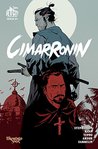
Cimarronin opens in Manila in 1632 with a masterless samurai (i.e. a ronin, hence the latter part of the name) about to commit ritual suicide. The ronin, Kitazume, is interrupted by a Catholic priest who Kitazume knows and who—it’s hinted—has the kind of nefarious past that one has trouble reconciling with the priesthood. The priest offers Kitazume a mission.

The opening hooks one. It raises several questions that the reader will want answered: Why is a Japanese samurai hanging out in the Philippines in 1632? Students of Asian history will recognize that Japan’s long warring period is a couple of decades past and there are a lot of warriors out of work. But is that all? Is the priest really a priest, and, if so, how does a blackguard end up a holy man? And most crucially, will Kitazume take the mission, and—if so—will he succeed (and will he be glad he did?) The reader always knows that the priest has something up his sleeve, but it’s only gradually revealed what that is.

We soon discover that Kitazume has some skill as a detective. This enhances our curiosity about the character. The higher echelons of law enforcement in feudal Japan were staffed by samurai, but it still adds another interesting dimension to the character.

The three book collection continues with the discovery that the priest is facilitating the transport of a Manchu princess to Mexico. (Philippines to Mexico, hence the “New Spain” subtitle reference.) The priest’s plot unfolds in the middle book, and we get a better picture of his scheme.

The second book ends with a fight with the Cimarrones—a bellicose, indigenous tribe (and the reason for the first part of the title,) and in the third and final book the Manchu Princess’s own scheme is revealed. The differing goals of the various major characters set up the potential for an excellent story. Kitazume has the simplest goal: to have a mission that makes life worthwhile and to conduct his life with some semblance of the virtue for which the samurai were known. The priest and princess weave a more complex web of scheming.

The story is peppered with flashback sequences that give us some of Kitazume’s backstory, and a substantial part of the third book is such backstory. The graphic artist uses a subdued scheme to make it readily apparent which panels are flashback and which are in the timeline of the story arc.

As this is the first three books of a larger collection, the ending is lacking (which is to say it’s not so much an ending as the set up for the story to unfold.) The story is much stronger in its beginning than its ending. The third book ends trying to entice one to read the concluding volumes more than it tries to wrap anything up. This situation also results in the fact that we don’t get a good picture of why Kitazume is the lead character in the story. I suspect that’s why there is so much backstory, to try to build sympathy and curiosity for the character while making him weak enough that his success is not apparent. At any rate, Kitazume doesn’t come off as the strongest or most competent character in the book by a long shot. Hopefully, this is so that he can pull out an underdog save in the end, but that’s just speculation.

I found this collection to set up an interesting story, but it doesn’t stand alone. It does have plenty of action and intrigue. If the historical fiction premise intrigues you, you may want to get the complete collection.

View all my reviews

BOOK REVIEW: Marvel 1602 by Neil Gaiman (Art: Andy Kubert)

Marvel 1602Marvel 1602 by Neil Gaiman

My rating: 5 of 5 stars

Amazon page

This is anachronism done right by Neil Gaiman. The title gives one the jist of this graphic novel’s theme. It’s the Marvel Universe circa 1602. There’s a big cast of Marvel characters in this collection of eight comics. However, those who don’t follow comics might not recognize some of the characters because they are decidedly less comic-esque in this take. The characters mostly go by their given names rather than their superhero nom de guerre and not one of them wears spandex—and even capes are fairly few and far between. While the cast is large, there’re just a few main players and some major Marvel superheroes play only minor or unheroic roles.

The principal heroes in this book are Nicholas Fury (as head of the Queen’s Intelligence Service), Carlos Xavier (principal of a school for mutants), Virginia Dare (the first girl born in the Roanoke Colony), Rojhaz (the–decidedly Caucasian but–Native American protector of Dare), Stephen Strange (close to his modern-day namesake), Matthew Murdoch (think Daredevil), and a smattering of other X-men, Avengers, and Fantastic 4 members.

The principal villains are King James I (as himself), Count Otto Von Doom (similar to the modern character), The Inquisitor Enrique (a Magneto-esque character), David Banner (advisor to James I and–it would appear–the gray Hulk), and Natasha (think Black Widow). Before one bemoans the fact that the slate of heroes seems much stronger than the slate of villains, it should be noted that there is a threat that far exceeds the likes of Von Doom.

The world of Marvel 1602 is quite similar to Earth 1602, but there are differences such as the existence of pterodactyls and dinosaurs in some locales. The plot includes political intrigue in the form King James I of Scotland’s desire to nudge an ailing–but beloved—Queen Elizabeth I out-of-the-way. We soon find out that three assassins have been dispatched to target Fury, the Queen, and Virginia Dare, but finding out who hired them and why takes up a fair piece of story line. There’s a substory that features Matthew Murdoch and Natasha on a mission to retrieve what can only be described as a McGuffin (a highly sought after artifact whose value and purpose remain completely unknown until a big reveal, but for which characters are none-the-less willing to lay their lives on the line on pure faith) that offers its own intrigue. There is also the matter of strange weather that increasingly comes to be considered a harbinger of doom (not Von Doom the character, but actual doom.) Ultimately, this is a bigger threat than is presented by any of the human villains, and it can only be overcome through a combination of Richard Reed’s brilliance, Nicholas Fury’s courage, and Rojhaz’s sacrifice of what matters most to him.

I enjoyed this graphic novel. First, having a top-rate writer like Gaiman was certainly a help. There was none of the juvenile / poorly written dialogue that usually plagues comic writing. Gaiman is his usual clever, witty self. Second, while the anachronisms often border on silly (e.g. 1602 Reed’s noodling out Einstein’s discovery of 300+ years later), they are intriguing and recognize real science. Third, the last being said, there’s a lot of effort put into making the comic appropriate for the era in which it’s set. It’s not just putting frilly shirts on modern-day characters. The blending of fact into the fiction is thought-provoking.

If you read graphic novels–even sparsely–this is one that you should definitely check out.

View all my reviews

BOOK REVIEW: Rules for Virgins by Amy Tan

Rules for VirginsRules for Virgins by Amy Tan

My rating: 3 of 5 stars

Amazon page

This Kindle Single is written in the form of advice by a Madam to the newest member of her brothel. It’s historical fiction, and is set ambiguously in the past. It is presumably set in China, but I don’t recall that that is ever explicitly determined.

The Madam shows a mix of maternal protectiveness for the girl and straightforward, harsh candor. She tells the young girl how to game the men, and how to get the most out of them. She instructs the girl in how to defend her virginity until such time as it is sold to someone who can afford to richly compensate them for it.

There is nothing in the way of a plot in the book. It does read just like rambling advice, so there is also not a lot by way of setting. We do get character development of the Madam, but not so much of the title character.

It’s well-written and seems to be well-researched as well. While I don’t know a great deal about the subject, it rings authentic. Despite the subject, the book isn’t gratuitous in its talk of sex. However, don’t be surprised that the entire work revolves “around” the intertwined subjects of sex and money.

View all my reviews