5 False Dietary Beliefs that Sabotage Weight Loss


5.) Vegetables are vegetables. If the potato is your go-to vegetable, you’ll probably have trouble shedding the pounds. That’s not to say that there is anything inherently wrong with potatoes. But, because of their high glycemic index value (i.e. they’re quickly digested and cause a sharp blood sugar spike), they should be lumped in with bread or rice when considering portions and meal make up. The same is true for sweet corn. Some people consider carrots (and carrot relatives) to be high glycemic, but one has to eat a pretty massive amount to have a problem. Most vegetables have a relatively low glycemic index score and are great foods to fill up on.


4.) Cola is mostly water, how bad could it be? At the right temperature, one can dissolve 2 kilograms (4.4lb.) of sugar in one liter of water. Wrap your head around that.


3.) I worked up a good sweat; now I can eat whatever I want. If you’re in the process of training for an ultramarathon or the Olympics, this might be true, but an hour in yoga class or run in the park doesn’t float you a free pass to kill it at Häagen-Dazs. There’s no getting around the math, the dietary half of the ledger is the 800 pound gorilla (no pun intended) of weight-loss. [That doesn’t mean that there aren’t many, many benefits to exercise, or that it doesn’t contribute to weight loss in more ways than one.] The Mayo Clinic has an excellent table of calories burned for a wide range of exercises and physical activities. You may be demoralized to note that the calories burned in an hour of Power Yoga are completely replenished by a medium size french fry.


2.) I will treat myself with sweets [or pizza.]  I’m not suggesting there’s anything wrong with treating oneself, but making food the treat sets a bad precedent. For many, this notion of food as reward or comfort source was introduced in one’s youth, and it can be extremely difficult to dislodge it later in life. One might try music or fun activities as alternative sources of reward.


1.) I shouldn’t have eaten that Snickers on Wednesday. This may seem like a contradiction of the previous item, but being doctrinaire about food creates its own problems. Specifically, sustainability may be a challenge–especially if one has had that “food as treat” story inculcated into one’s psyche. It’s not the once and while caloric splurge that kills most people, it’s creeping portion sizes.

Some people swear by a “cheat day.” Others say that that’s a bad approach because one might feel forced to cheat even when you’re really not feeling a desire for junk food. Some advocate an 80/20 rule, whereby 80% of the time one follows a strict dietary regimen, while the other 20% of the time one takes it more free and easy (though not totally insane.) Personally, I think different approaches work for different people, but I do agree that the dietary Nazi approach isn’t the way to go.

BOOK REVIEW: Better Balance by Salamon and Manor

Better Balance: Easy Exercises to Improve Stability and Prevent Falls (Harvard Medical School Special Health Report Book 6)Better Balance: Easy Exercises to Improve Stability and Prevent Falls by Suzanne E. Salamon
My rating: 4 of 5 stars

Amazon page


Balance is one of those qualities that one takes for granted until it fails. Actually, given our bipedal stance, it’s extraordinary that we aren’t falling down all the time. Achieving a stable upright posture takes a lot of complex anatomy and physiology operating flawlessly. I picked up this book because I believe a yoga teacher should be cognizant of the range of capacities for balance that might be seen while teaching. If one teaches students in their 20’s to their 40’s, the need for balance modifications and capacity building might not come up much. It’s when one deals with the very young as well as older students that one sees flawed balance in large measure. [And—let’s face it—the very young can fall down 30 times, pop right back up each time, and be all the stronger for it, and so mature students are the major concern.]

This isn’t the first book in this series of Harvard Medical School Guides that I’ve read and reviewed, and probably won’t be the last. (see: “Your Brain on Yoga,” “Guide to Tai Chi,” and “Low Back Pain.”) I’ve found the series to be beneficial because it presents scientifically sound information, but isn’t afraid to give alternative approaches—such as yoga and tai chi—their due when the studies show that said activities are of benefit. This book is no exception. At several points the authors mention tai chi as being beneficial, and the book includes a yoga balance workout as one of the six that it contains.

The book is organized into 13 sections (i.e. chapters.) The first chapter describes how our vestibular (inner ear), visual, and proprioceptive (the nervous system elements that track where one’s body parts are) systems interact to keep us upright.

Chapter 2 presents an overview of a range of conditions that affect balance. Some of these influence balance specifically and exclusively, but many are conditions that one might not associate with balance problems though they’ve been shown to increase the risk of imbalance. There are sections about which medications have side-effects adversely affecting balance as well as what your doctor may be able to do about balance problems.

Chapter 3 is a “Special Bonus Section” and is of particular importance to mature readers or those who care for said individuals. The topic is preventing falls, and this section describes common causes of falls and offers checklists of considerations for setting up the environments in which those with balance problems will be active.

Chapter 4 introduces various types of activities that improve balance, and chapter 5 is a brief guide to considerations relevant to beginning a balance workout such as whether to consult one’s doctor and what safety precautions should be considered.

In chapter 6, the authors propose how balance workouts can be merged into one’s overall fitness plan. A lot of this chapter is an introduction to exercise—e.g. how much is needed, and what the benefits are. Then there are some tips about how to smoothly merge balance with other exercises.

Chapter 7 presents more specific considerations for beginning balance workouts. Unlike chapter 5, this section provides information about equipment, warm-ups, and how to interpret the instructions for the workouts. The latter is beneficial because the workouts are in a one page per exercise format, and this section negates the need to be needlessly repetitive.

The next six sections (chapters 8 through 13) are various balance workouts that are organized in an easiest to hardest format. The first is a beginner’s workout, which is performed with a chair—used for sitting in some exercises and as a prop in others. The second is a standing balance workout that features simple static balance maneuvers. The level of challenge is similar to that of the first workout, except that one is without a chair prop. The third workout adds in movement to help maintain balance through steps and motion. The next workout is similar but utilizes another prop, a 360 step (a circular step of similar height to the more common Reebok rectangular step, but circular.) The penultimate workout uses a pseudo-balance beam. The author’s mention a product put out by Beamfit, but other manufacturers produce a similar product. It’s a low, dense foam beam that sits on the floor. The last workout utilizes classic Hatha Yoga poses, and features both expected poses like tree pose (vrksasana) and others such as down dog (adho mukha svanasana) that might come as a surprise.

There’s a resources section and glossary at the end. The book presents many graphics, most notably photos of each of the exercises in the six workouts.

I’d recommend this book for anyone who needs an overview of the problems of balance and what can be done about them. It’s short, readable, and user-friendly.

View all my reviews

BOOK REVIEW: Yoga Nidra by Swami Satyananda Saraswati

Yoga NidraYoga Nidra by Swami Prakashanand Saraswati
My rating: 4 of 5 stars

Amazon page


Yoga nidra literally means “yogic sleep,” and it’s a technique in which one systematically pursues a high degree of relaxation. Still, it’s a bit of a misnomer in that one doesn’t actually fall asleep. In theory, that is, most practitioners will have the experience of falling asleep at some point in practice. That’s because one is entering a hypnagogic state in which one is on the leading edge of falling asleep. It’s not always easy to stay on one side of that line (without being excessively mentally aroused.) The practice is typically done with a teacher who verbally instructs the students (live or via a recording)—because it’s quite hard to keep the sequence straight without an excessively high level of mental arousal—particularly for new practitioners.

This 8-stage practice has multiple purposes. One is simply to achieve a relaxed state. Note: it can be successfully used with individuals who suffer from insomnia, but with the notable risk that they may have trouble not falling asleep during the practice if they come to associate yoga nidra too strongly with sleeping. I know that I—who could never sleep in planes or on buses—found it useful for getting sleep when one’s mind tends toward an overly mentally aroused state. The technique is also used to tap into the subconscious. If you’ve ever noticed the strange imagery that pops up as one is going to sleep, you are witness to the subconscious at work.

The book is divided into three parts. The first part offers background on the topic. It describes both yogic and scientific explanations for the working of this practice and its sequential arrangement. The middle part describes variations on the practice, including scripts. While I mentioned that the basic approach consists of 8 stages that are sequentially arranged, there are many ways to vary the practice depending upon how much time one has and what one’s specific objective is. So the middle part describes several options including one optimized toward children (who have slightly different needs due to cognitive development.) [FYI: the eight stages are: 1.) Preparation for practice, 2.) Resolution (i.e. sankalpa), 3.) Rotation of awareness around the body systematically, 4.) Awareness of breath, 5.) Awareness of sensations /opposites, 6.) Visualization, 7.) Repeating one’s resolution, 8.) closing.] The final part delves deeper into scientific explanations of the state of yoga nidra and its health benefits.

There are four appendices that present research on yoga nidra with respect to: 1.) stress and heart disease, 2.) biofeedback, 3.) brain imaging, and 4.) altered states of consciousness. There is also a reference section arranged by topics. The book has many graphics from line drawn diagrams to color plates of brain scans (if one has a hard-copy or an e-format that supports them.)

I found this book to be extremely valuable. It’s definitely a guide book and its readability varies. It can be technical in places (but most laymen shouldn’t have a problem following it), and it can be repetitive in the middle where it’s mostly descriptions of variations on the practice. It does include stories in a few places, but is intended as a text rather than to entertain and so it’s not without some dry spots.

I’d highly recommend this book as a reference for those who teach yoga nidra. It will definitely expand upon (and help one keep straight) what one learned in teacher training and yoga nidra workshops.

View all my reviews

5 Exercises to Wed Your Yoga and Calisthenic Practices

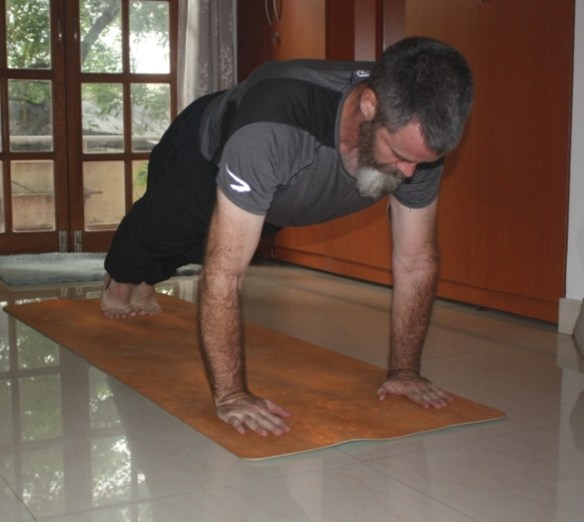
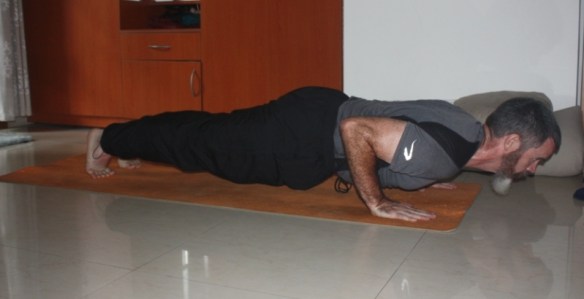
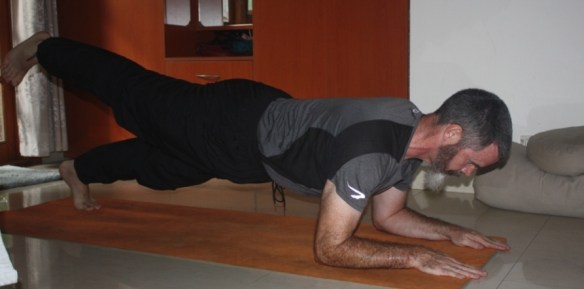
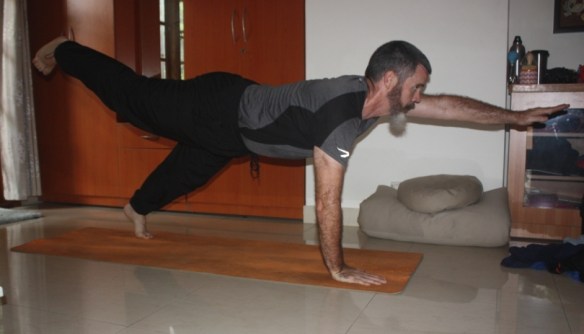
5.) Anything plank (a.k.a. adho mukha dandasana / santolanasana): Who knows how long planks have been a feature of yoga? Plank postures are a fixture in Hatha Yoga, playing a role in most versions of Surya Namaskara (sun salutations), and being used to both to build core strength and to prepare for arm balances.

Planks have also gained immense popularity with calisthenic practitioners. In my gym class days, sit-ups and crunches were the go to ab exercises. No more. Now many bodyweight fitness practitioners are ditching sit-ups and crunches altogether for a number of exercises deemed more effective–include many variations on the plank.

High plank (adho mukha dandasana)


Low plank (chaturanga dandasana)


Forearm plank variation with leg up


High plank variation with alternating limbs extended


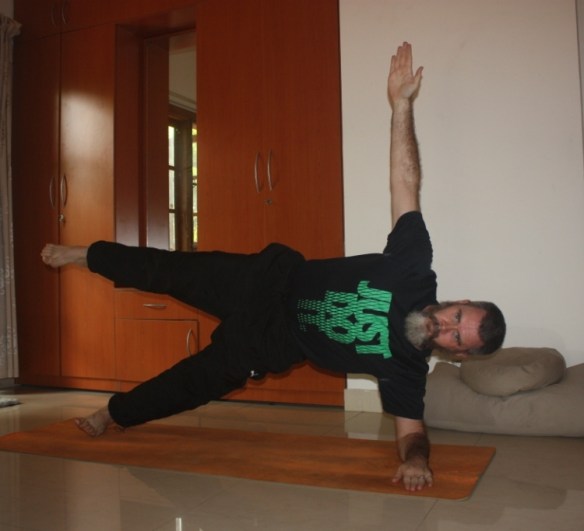
Side plank (vasisthasana)


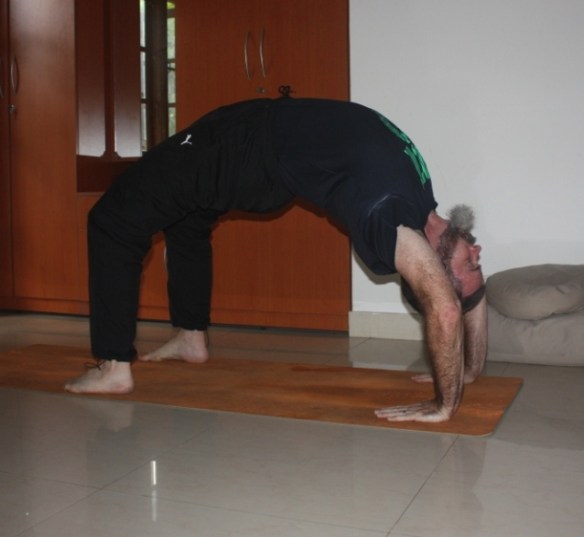
4.) Back bridge (a.k.a. Chakrasana): This is another yoga classic that’s being brought into calisthenics training in a big way. You may note a recurring theme in my selections for this post, exercises and postures (asana) that help to build shoulder joints that are strong, stable, and yet sufficiently flexible. This is a big challenge for bodyweight workout practitioners. One can get stability by bulking the muscles up, but if you don’t have the range of motion to achieve proper alignment, it’s not going to do one a lot of good.

The back bridge (chakrasana, or “wheel pose”)


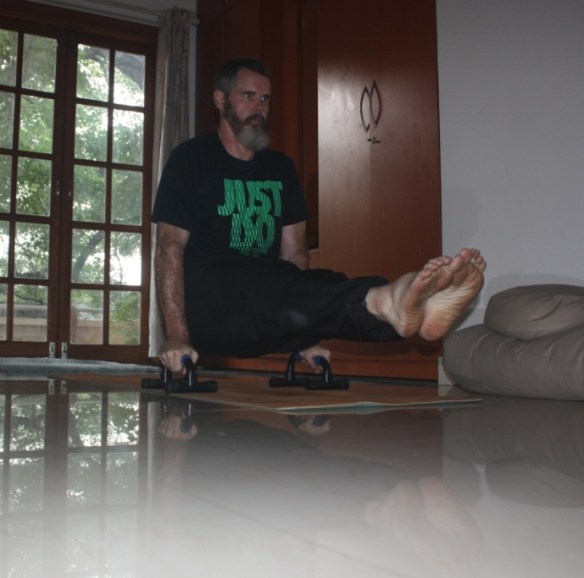
3.) L-sit (a.k.a. Bramcharyasana): Of course, the other recurring theme (besides building shoulder stability) is core strength. This exercise is both a yoga classic and is probably as old as gymnastics itself. Its Sanskrit name, Brahcharyasana, means celibate’s pose–but as far as I’m concerned that’s purely optional.

L-sit (Bramcharyasana)


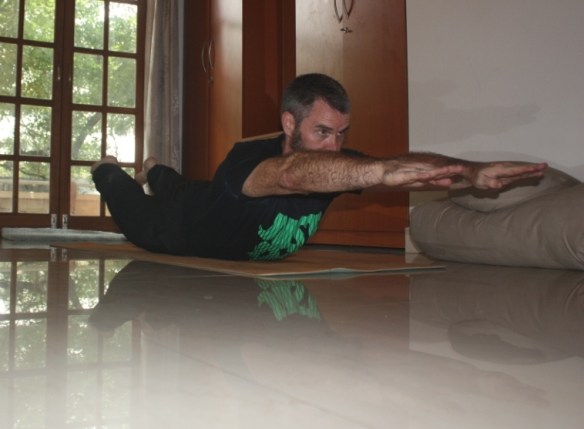
2.) “Supermans” (a.k.a. shalabasana [locust pose]): Another core exercise, but one that strengthens the back muscles.

“Supermans” (shalabasana)


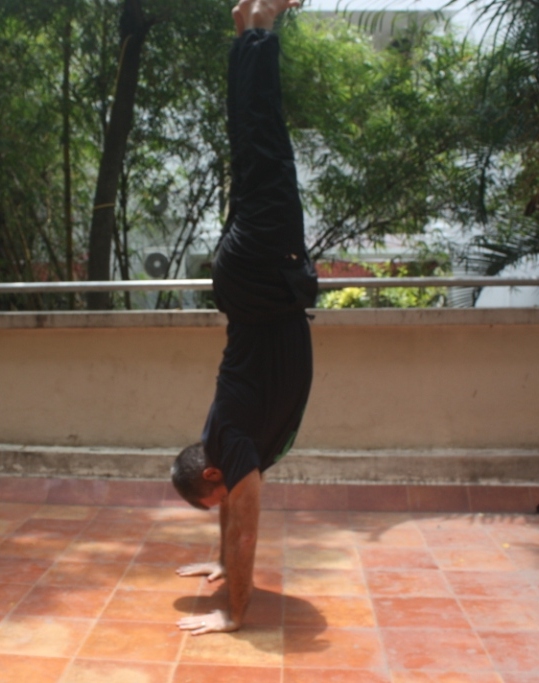
1.) Handstands and Handstand Preppers (a.k.a. adho mukha vrksasana): This practice isn’t just about looking impressive. As mentioned above, it’s hard to build shoulder joints that allow enough stability and range of motion to have the command of one’s body that one would like. Our shoulders are optimized to maximum mobility. That helped our ancestors to be awesome throwers of spears and rocks, but it makes it tough to support our weight in an inverted position. The handstand is a good way to build stability in the shoulders.

Handstand (adho mukha vrksasana)


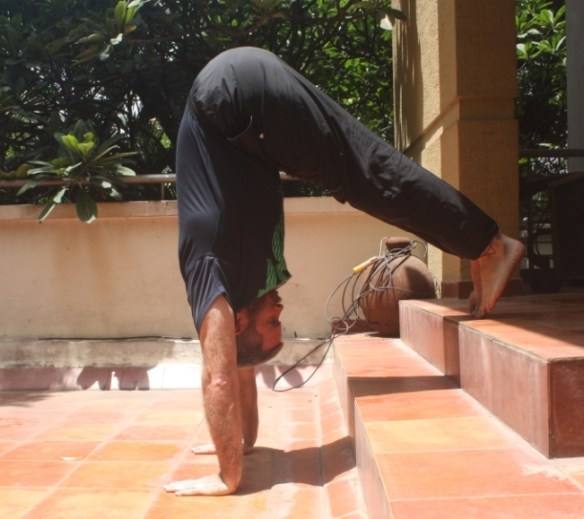
If it’s too hard, use your legs to stabilize you (but still try to get that straight up-and-down arm position)


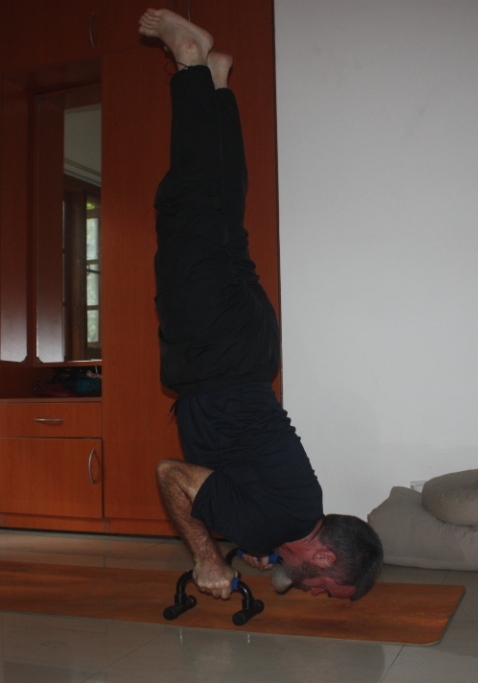
If it’s too easy, start doing push-ups

5 Interesting Respiratory Facts for Yoga Teachers


Pranayama (breath exercise) is a crucial part of yogic practice. While I may spend less time on the pranayama portion of my practice than the asana (postural) part on most days, I’ve come to view pranayama as at least as important. (i.e. It packs a lot of punch.) With that in mind, here are a few fun facts about respiration for you your consideration:


5.) Asthma Fact: People in richer countries are more likely to have asthma, but–within more wealthy countries–poor people are disproportionately effected. (Asthma is a condition in which lung tissue becomes inflamed, and thus it’s hard to breath.)

Source: Krucoff & Krucoff. 2000. Healing Moves. New York: Three Rivers Press. p. 288

Yogic Relevance: There’s at least some preliminary evidence that yoga practice can benefit asthma patients. Mekonnen, D. & Mossie. A. 2010. “Clinical Effects of Yoga on Asthmatic Patients: A Preliminary Clinical Trial.” Ethiopian Journal of Health Science. Vol. 20(2). pp. 107-112.


4.) Altitude Fact: At the summit of Everest, atmospheric pressure is about 30% of what it is at sea level.

Source: Coulter, H.D. 2001. Anatomy of Hatha Yoga. Allahabad: Himalayan Institute India. p. 96.

Yogic Relevance: The slow deep breathing you sometimes teach in pranayama courses could be a life-saver. Bilo G. et. al.  2012. “Effects of Slow Deep Breathing at High Altitude on Oxygen Saturation,” Pulmonary and Systemic Hemodynamics. PLoS ONE. Vol. 7(11): e49074. https://doi.org/10.1371/journal.pone.0049074.


3.) Lung Fact: If one extracted, flattened, and laid side-by-side the 300 million alveoli of the average person’s lungs, they would cover an area greater than the average one bedroom apartment. (Alveoli are the little sacks at the end of the bronchioles where oxygen and carbon dioxide are exchanged.)

Source: Hymes. A. 2009. “Respiration and the Chest: The Mechanics of Breathing.” in Science of Breath: A Practical Guide by Swami Rama. Honesdale, PA: The Himalayan Institute Press.

Yogic Relevance: Vital capacity (total amount of air one can breath in and out of those little sacks) is increased through yogic practice. Karthik, P.S. et. al. 2014. “Effect of Pranayama and Suryanamaskar on Pulmonary Functions in Medical Students.” Journal of Clinical and Diagnostic Research. Vol. 8(2). pp. BC04 -BC06.

Note: there has been confusion about the degree to which yoga helps VO2 max (maximum oxygen utilization), at least in comparison to other forms of exercise, because there has been mixed results in the literature. The consensus seems to be the effect–if any–isn’t large compared to cardiovascular exercises. The strength of the pump (i.e. the heart) seems to have more to do with this particular measure than the lung’s holding capacity. While VO2 max is an important measure for athletes, the fact that it may not be improved by yoga doesn’t mean yoga doesn’t offer many fine benefits for athletes. As I recall, this is dealt with at length in Broad’s book (i.e.  Broad, W.J. 2012. The Science of Yoga: The Risks and Rewards. New York: Simon & Schuster.)


2.) Nose Fact: Rhinologists (doctors specializing in noses) figure that the nose has around 30 functions in the breathing process (e.g. moisturizing and warming air, catching foreign matter, directing airflow, and much more.)

Source: In the aforementioned Swami Rama book Science of Breath in a chapter entitled, “Following Your Nose: Nasal Function and Energy” by Rudolph Ballentine, MD.

Yogic Relevance: Alternate Nostril Breathing (Nadi Shodhana) is shown to tone the parasympathetic nervous system (PNS, i.e. the part of the autonomic nervous system involved in rest & digest functions.)  Sinha, A.N., et. al. 2013. “Assessment of the Effects of Pranayama / Alternate Nostril Breathing on the Parasympathetic Nervous System.” Journal of Clinical and Diagnostic Research. Vol. 7(5). pp. 821-823.


1.) Pace Fact: At about 5 breaths per minute, most people’s thinking is clearer than usual.

Source: Brown, R. & Gerbarg, P.2012. The Healing Power of Breath. Boston: Shambhala Publications.

Yogic Relevance: The breath is our most powerful tool for controlling the mind. Vindicated!

BOOK REVIEW: Tai Chi Chuan Classical Yang Style by Yang, Jwing-Ming

Tai Chi Chuan Classical Yang Style: The Complete Form QigongTai Chi Chuan Classical Yang Style: The Complete Form Qigong by Yang Jwing-Ming
My rating: 5 of 5 stars

Amazon page


This book is one stop shopping for students of the Yang Style Tai Chi Chuan Long Form (i.e. 108 forms.) That’s not to suggest that it only describes the sequence of that form. It does that, but it also offers lessons in the history of the art, explanations of chi and qigong, and elucidation of the fundamentals of the art.

The book is divided into four parts. Chapter one examines the history of this martial art and places Tai chi chuan in the context of Chinese martial arts as well as the Yang Style within the context of Tai chi chuan. The nine sections of the first chapter also explore Tai chi chuan as a means to healthy living, and provide guidance to students on how to go about taking up the practice.

Chapter two consists of five parts that delve into the concept of chi (qi), or energy. This section mixes together mythology of traditional Chinese theory on chi with scientific explanations where science has something to say on the matter.

The third chapter describes the 13 postures of Tai chi chuan, which are a set of fundamentals that feature prominently in the martial art. This is a relatively brief section and is where the book becomes photo intensive.

The fourth chapter offers students guidance about the unarmed element of Yang Style of Tai chi chuan. While the capstone of the chapter is a systematic walk through the Long Form, there’s also coverage of some Yang Style fundamental movements as well as presentation of meditation practices taught in the system. It should be noted that this book doesn’t cover the sequence of the Yang Style Short Form (a.k.a. 24 Forms, or the Beijing Standard Form.) (I mention that because that’s the most popular form in the world and many students may want to learn about it specifically. This book offers many insights into the minutiae of the component forms, but doesn’t describe it as a sequence.) There is a fifth chapter, but it’s only a brief conclusion.

With respect to ancillary matter, like most martial arts books, it’s graphic-intensive. The bulk of the graphics are photos that are used in chapters 3 and 4 to clarify the movements and postures. Said photos have arrows and other figures drawn onto them to help clarify the movement involve. There are also a few line diagrams and maps, and chapter 2 has a many scientific photos, diagrams, and anatomical drawings.

There are three Appendices. The first provides a list of the forms of the Yang Style Long Form. The second is a glossary of the many Chinese terms mentioned in the book. The final Appendix provides information about the DVDs that are available to be used in conjunction with the book (there are markers throughout the book to provide suggestions of when students should turn to the video lessons.) There are end-notes of cited material, but I read the Kindle edition, and most of these were unavailable because Chinese characters didn’t convert to the electronic format. This was no big deal for me because I couldn’t read the Chinese reference material anyway, but if you read Chinese, you might opt for the hard copy of the book.

I learned the Yang Style short and long forms several years ago, and bought this book to provide some background and technical guidance. I found the book to be interesting and informative, and would recommend it—particularly if you’ve learned the Yang Style (but one may find the early chapters interesting even if one hasn’t.) The author uses a number of entertaining and educational stories and the book is readable and insightful for students of all levels.

View all my reviews

5 Neuroscience Fun Facts for Yogis & Yoginis

5.) IDEA: While our conscious mind feels like the sum of our mental world, in fact, it’s the tip of the iceberg of mental processes. Our decisions and actions are guided to a large degree by happenings below the waterline.

INTRIGUING EXAMPLE: In one study, interview subjects were randomly assigned to hold either iced or hot coffee. No attention was drawn to the coffee and it was set up as a mere accident of happenstance (the HR person directing the interviewees had her hands full.) The coffee was retrieved before the subjects made handshakes with interviewers. Unrelated to their verbal responses, those who had held the iced coffee were disproportionately described more in terms suggesting a cold personality (e.g. calculating, devious, etc.) and those who had held hot coffee were credited with a warmer personality.

RELEVANCE: Get your hands warm before you start making corrections.

REFERENCE: The coffee study is discussed by David J. Linden in his book Touch. However, there are many books on this topic, several that I’ve reviewed. In particular, I can recommend Eagleman’s Incognito and Mlodinow’s Subliminal.


4.) IDEA: Emotions play a crucial role in decision-making. We aren’t nearly so rationale and calculating as we think ourselves to be–particularly when there is uncertainty in the mix.

INTRIGUING EXAMPLE: Giovannni Frazzetto’s book describes cases of patients with lesions in their medial prefrontal cortexes who would deliberate ad nauseam and still couldn’t reach a decision.

RELEVANCE: This is why we don’t silence or stamp out emotions, but rather watch them dispassionately while avoiding a mental drift into a frenzy of illusion building.

REFERENCE: The Frazzetto book I referenced is: How We Feel, and it deals with anger, guilt, anxiety / fear, grief, empathy, joy, and love.  However, the patients described in his book were those of Antonio Damasio, and so you may want to check out Descartes’ Errorwhich I’ve heard good things about, but haven’t yet read.


3 .) IDEA: Experiences once thought to be supernatural, mystical, or fraudulent are increasingly being understood in scientific terms.

INTRIGUING EXAMPLE: For some, an Out-of-Body-Experience (OBE) is an impossible flight of fancy, while for others it’s a mystical / transcendent state beyond the physical realm. However, in recent years scientists have not only confirmed that people have these experiences, they’ve come a long way toward understanding such occurrences by actually inducing them via electrodes applied to the right angular gyrus. It seems that area of the brain is responsible for integrating sensory information from various senses, and its disruption creates an illusion of one’s consciousness floating outside the body.

RELEVANCE: As many have wisely advised, don’t spend a lot of time chasing siddhis–not only might it stunt your growth toward the ultimate goal, it might just be running after tricks of the mind.

REFERENCE: I highly recommend Anil Ananthaswamy’s The Man Who Wasn’t There. The book looks at the various ways in which “self” has been defined (one’s memories, one’s body, etc.) and it shows how neuroscience has learned a thing or two about the various dimensions of self, and how none of them fully defines an “I.” (i.e. The Buddhist conception of the self as illusion might turn out to be not far off the mark.)


2.) IDEA: Our brains can be rewired through practice and training. The property is called neuroplasticity, and it’s often described by the verse: “neurons that fire together, wire together.”

INTRIGUING EXAMPLE: You may have heard about  how London taxi cab drivers develop an enlarged hippocampus, which helps them meet the vast spatial memory needs required of the job. However, an even more fascinating example may be how some blind people have developed a capacity for echolocation–i.e. their mind registers changes as sound bounces off walls, curbs, and other obstacles.

RELEVANCE: One takes advantage of neuroplasticity when one works to be more kind and compassionate by recognizing and changing one’s behavior patterns.

REFERENCE: Fascinating reading on the topic can be gleaned from Kathleen Taylor’s book Brainwashing, but the most widely-cited book on the topic may be Norman Doidge’s The Brain That Changes Itself.


1.) IDEA: We have neural circuitry that predisposes us to spiritual belief and inclinations toward the sacred.

INTRIGUING EXAMPLE: The evidence suggests that it’s not so important who or what you believe in, but the more positive the message the better. People of religion have demonstrated both better and worse health outcomes–all else equal–and it seems linked to whether you have one of those smiting gods or a more compassionate one.

RELEVANCE: Belief and surrender–religious or secular–can play an important role in one’s personal development.

REFERENCE: Newberg and Waldman’s How Enlightenment Changes Your Brain deals with these issues in detail.

The Thai Yoga Bodywork / Yoga Nexus


[Note: This article was first posted on the IMOSHA website.]


It was October of 2013 and I found my way to the Meditation Hall at the Fireflies Ashram off Kanakapura Road outside Bangalore’s southern sprawl.  That morning, I’d begin learning the sequence of actions of the Chiang Mai style of Thai Yoga Bodywork (TYB.) I would struggle to remember that sequence as I awkwardly groped about trying not to drive my thumb into the bones or nerve junctions of my fellow students. But over the course of those ten days, I progressed to the point that my awkwardness was less apparent, and I could get through the sequence without forgetting much.


I’d arrived in India with a long list of activities to try and skills to learn as part of a plan of self-betterment. That TYB course was the first item on the list to be scratched off. I’d been in the country a little over a month.  The strange thing about that was that TYB was the activity farthest outside my comfort zone. I wasn’t a complete stranger to yoga or meditation when I arrived in India. And while I was new to the martial arts of Kalaripayattu and Muaythai, I’d practiced a Japanese martial art my entire adult life.  So while I wasn’t skilled at those arts, I had a level of transferable confidence to counterbalance my lack of skill. The same couldn’t be said TYB. It was all new. But that’s the magic of moving around the world, everything is outside your comfort zone, so you might as well go big or go home.


Small world.  A couple of years later, I’d be in that same Meditation Hall for the capstone weekend of my 500-hour yoga teacher’s course.  I remember lying in that Meditation Hall, resting after having learned the advanced cleansing practices (shatkarma) of hatha yoga. (By then there was an entirely new level outside my “comfort zone” as I’d purged my entire alimentary canal.) At any rate, the Fireflies Meditation Hall was just a piece of geographic connective tissue that linked my yogic and TYB educations. I’d like to discuss five more substantial links.


5.) Anxiety management:  Let me begin with a theme that I mentioned in my introduction. It’s an aspect of personal development that I’ve spent a lot of time working on recently, and that’s moving outside one’s comfort zone to dispassionately observe one’s anxieties.   Both Yoga and TYB present practitioners with opportunities to observe and tame anxieties in a safe way. In TYB, one’s anxiety might be about injuring the person one is working on, about doing a poor job, or it could even be just about touching strangers. People have various reasons—from various social anxieties to germophobia—for discomfort with physically touching people they don’t know well. (Being an introvert, I have a tinge of this discomfort that would likely be much worse if I hadn’t studied martial arts. But, having studied a grappling-centric martial art for so many years, I’d developed a bit of transferable confidence about being in close physical proximity with people I didn’t necessarily know well.)

Anxiety about injuring another


In yoga, the sources of anxiety are often gravity related (e.g. inversions and arm balances), but can be quite varied. I mentioned shatkarma as another example. And I’ve found external breath retentions from pranayama to be a potent area in my own personal practice.


Anxiety about injuring oneself


At any rate, what both Yoga and TYB do to help one take on one’s anxiety is to insist that one confront it in a mindful way. Just practicing forces one to experience the anxieties, but the crucial second ingredient is that one must keep one’s attention on the action—preventing one’s mind from engaging in the escalatory patterns by which it makes molehills into mountains. While it’s true that there are many other activities that this should be true of, it’s common in many fitness activities to practice distractions. People often blare portable music devices to drown out their body and mind as they exercise and practice other self-betterment activities. Such distractions aren’t an option in [good] TYB or Yoga instruction (Note: I say “good” because one can see a sad wave of distraction yogas out there that bury the sensations of practice in cute animals, alcohol, and—even–frat-house style raves.)


4.) Anatomical intuition: Both TYB and Yoga expand one’s understanding of the human body. A great feature for those who practice both systems is that the two systems are complementary. They present both overlapping and non-overlapping means to insight into the body. Yoga provides insight through all of one’s senses—not just the five we think of, but including proprioception (the sense by which a person is aware of the position of his or her own body parts and their movement) and balance. In other words, yoga allows one to see inside one’s own body as fully as possible. On the other hand, TYB offers the opportunity to learn about the wide range of variance in human bodies—feeling all their varied characteristics, strengths, and weaknesses.

Finding the limits of another


I think a yoga teacher can learn a great deal by practicing TYB. It encourages a greater understanding of the strengths and limitations of others. At the same time, TYB practitioners benefit from yoga’s high degree of intra-bodily awareness because the Thai style involves many assisted stretches that require strength, balance, and awareness.


Finding one’s own limits


3.) Appreciating the Slow: Modern life shouts at one to do everything faster. Yoga and TYB are two activities in which there isn’t any payoff for being faster, and, in fact, there are costs. In TYB, the massaged individual will find a fast tempo massage less relaxing. If one has ever been handled by a masseuse or masseur like a baker making bread, one knows exactly what I’m talking about. Hatha Yoga also emphasizes slow movement. Even when one is doing an active style like Ashtanga Vinyasa Yoga, there’s an emphasis on maintaining control of the body throughout, and that requires engaging musculature to counter the forces of gravity and momentum.

FYI- this is the aforementioned Meditation Hall during that first training


Sometimes slow is the only way to succeed


2.) Core stability and muscular endurance:  Both TYB and Yoga build and require core strength and muscular endurance. Bodywork is a physically demanding job. When one learns TYB, a great deal of attention goes into the minutiae of handling the client so as to minimize the stress and strain on one’s body. Still, there’s no way around the fact that one is manipulating another person’s body  and one has to bear that weight so that the client can be relaxed as one stretches them out or turns them over. Commonly, those people will be larger and heavier than the person delivering the massage.  Even if one isn’t doing TYB all day, one will likely feel it—perhaps all the more because one hasn’t developed that core strength and muscular endurance. Yoga can also help the TYB practitioner to keep supple in a job that can easily make a person sinewy.


On the other hand, yogis and yoginis can learn a thing or two about balance and control of the core from the challenging act of manipulating another person through their stretches.


1.) Attentiveness to Subtle Sensations:  In yoga teacher training, one is often shown Wilder Penfield’s homunculus. Penfield was a doctor who studied the functional organization of the brain, and particularly the sensory and motor cortexes (the parts that process sensations and commands to move body parts.) He was eager to map the motor cortex so that he’d know what portions of damaged or cancerous tissue could be removed without causing paralysis or the like.  At any rate, you’ve probably seen either a flat or 3-D version of the homunculus. It’s notable for its huge lips and hands and comparatively tiny chest and thighs. That’s because the size of a body part on the model doesn’t represent its anatomical size but rather its size in the brain, and our hands have a truly astounding piece of cerebral real estate.


What’s fascinating is that for all this capacity for feeling through our fingers, one has to practice to get the fullest out of that ability. In the beginning, it can be quite different to feel huge knots in the muscle during TYB sessions—even though our ability to differentiate tiny tactile differences is tremendous.  In yoga one isn’t so much engaged in feeling with one’s fingertips as one is with one’s internal sensory suite, but the point remains that we have a great deal of capacity that most people leave unused.


I suspect there are many more points of confluence between TYB and Yoga that haven’t occurred to me. If you’ve got one, feel free to comment below.

BOOK REVIEW: Anatomy of Hatha Yoga by H. David Coulter

Anatomy of Hatha Yoga: A Manual for Students, Teachers, and PractitionersAnatomy of Hatha Yoga: A Manual for Students, Teachers, and Practitioners by H. David Coulter
My rating: 5 of 5 stars

Amazon page


There are many books on anatomy for yoga, and I’ve read my share, but this is my favorite.

What did I like about it? First, Coulter examines the anatomy and physiology of breathing in some detail, and that’s an important topic that is overlooked by many others. A lot of yoga anatomy books stick exclusively to the musculo-skeletal system. Second, this book doesn’t mix science and pseudo-scientific mythology. Sometimes books shift from talking about arteries and veins to nadis and chakras in a manner that can be confusing and counterproductive. Third, the book discusses how postures can be safely varied for individuals with limits, as well as discussing the most advanced expression of postures for more flexible or skilled students.

What’s the catch? There must be a downside? Well the book is dense and it’s a challenging read. It’s not that the writer uses too many technical terms. That isn’t the case at all. In fact, Coulter is careful not only about using anatomical terms, but also avoids reliance on Sanskrit names as well. It’s just that there is a lot of material that one must read painstakingly while visualizing and–in some cases—tactically probing around one’s body (or someone else’s–if they’ll let you.) I don’t know that there’s much that could be done about this, given the desire to convey the material that the book does—and it’s valuable information. The book has a large number of graphics that mostly consist of anatomical drawings and photographs of the various versions of the postures. It’s possible that more graphics could have been used to reduce the amount of descriptive text, but—on the other hand—reading it slowly and carefully is a useful and productive exercise. And, if you’re not reading it for your RYT-500, you can take your time and read it section by section, as time permits, over the course of more than a year as I did.

The ten chapters of the book are mostly divided up by classes of posture (asana.) Chapter 1 is about “movement and posture” and provides the necessary background that one will need to understand the later chapters. Chapter 2 is on breathing–both the musculature involved and the physiology of it. The rest of the chapters are on core exercises, standing postures, back bends, forward bends, twists, headstands, shoulder-stands, and meditative postures, respectively.

The book has a glossary, a short bibliography, and two indexes (one by anatomical parts and the other by practices/postures.) I normally don’t bother to mention indexes, but in this case it’s useful to know because the book’s organization is by type of posture, and so it’s not always straight forward where various muscles or tissues are being covered.

As I say, I found this book to be tremendously informative. I recommend it for yoga teachers as well as intermediate / advanced practitioners.

View all my reviews

BOOK REVIEW: The Way of the Iceman by Wim Hof and Koen De Jong

The Way of The Iceman: How The Wim Hof Method Creates Radiant Longterm Health--Using The Science and Secrets of Breath Control, Cold-Training and CommitmentThe Way of The Iceman: How The Wim Hof Method Creates Radiant Longterm Health–Using The Science and Secrets of Breath Control, Cold-Training and Commitment by Wim Hof
My rating: 5 of 5 stars

Amazon page


Wim Hof is often presented as a freak of nature. If you’re flipping through the science channels, you might see a segment that shows him subjecting himself to extremely cold temperatures with no ill effects. This book is an attempt by Hof, and co-author Koen De Jong, to counter the proposition that he’s some sort of mutant (or—worse–that his demonstrations are cons) by offering a method by which anyone can achieve the same feats. It should be noted that long before Hof and YouTube came on the scene, there were people [notably Taoist and Tibetan Buddhist monks] performing similar acts.

Hof’s method (called the “Wim Hof Method” or WHM herein and in this book) consists of three components: cold training, breath exercises, and commitment building. The book explores this three-legged stool from both the scientific and practical dimensions. There’s one chapter on each of these elements that describes what it does to the body and how it contributes to well-being, and later chapters both describe what scientific studies have found so far and outline the approach by which the reader can explore the WHM on their own.

There’s a lot of front matter in this book (two forwards, a prologue, and an introduction), but the book more-or-less consists of seven chapters. The first of these is a mini-bio of Hof. It describes a fascinating event in Hof’s youth in which he was exposed to cold, as well as his travels to India in an attempt to find a yoga teacher. [As is the case with most people who come to India seeking to find that quintessential guru—i.e. a half-naked, weather-beaten, and forehead paint-streaked classical guru—he found that he had to wade through a sea of charlatans and shysters while never finding the true masters who are likely hidden away in caves in the Himalayas. Note: this is not to say that one can’t find excellent yoga instruction in India but it’ll likely be by someone fully clothed and not someone smoking pot on a ghat in Varanasi.] This resulted in Hof taking an experimental approach in which he studied the effects of various activities on himself (and such experimentation is what he advocates for others as well.) It should be noted that Hof didn’t invent this method from scratch—e.g. the breath component is based on Tibetan Tummo meditation.

As mentioned, Chapters 2 through 4 explore the three components of the WHM, i.e. cold training, breath exercise, and commitment building, respectively. These chapters describe the science of how these three elements generally (as opposed to a later chapter that describes studies in more depth) act upon the body. The commitment section describes a number of arduous feats such as climbing Kilimanjaro in a T-shirt and shorts, but also describes the role of diet (with particular emphasis on the fast-5 diet which is similar to, but not precisely, what Hof came to practice organically.)

Chapter 5 dives more deeply into the science than does the preceding chapters, and focuses on the studies in which Hof has participated in his attempt to facilitate a better understanding of his method.

The penultimate chapter suggests what the WHM might do for people in various classes, including: healthy people, athletes, and people suffering from various physical and mental ailments. With respect to the latter, there is discussion of exemplary cases as well as the possible means by which the training might act.

The final chapter is a brief outline of how the WHM can be put into practice by readers. There is also a sample log by which practitioners can chart their experience.

There are a range of graphics including line diagrams and photographs. Most of the photographs are inspirational shots of Hof in action, but there are diagrams and other graphics used to convey scientific ideas. There’s a recommended reading page as well as a works cited page. Both lists are small and confined to a few key sources of information, with the latter being the more scholarly works. There is also a glossary that may prove handy for some readers.

This book is illuminating and many stand to benefit from it. I found the approach of the authors to be sound; it’s basically “see for yourself.” This book could easily have been a sales brochure, and in some ways it is, but the fact that it emphasizes the science and the suggestion that the reader try the practice lends credibility. I’d highly recommend this book for anyone who wants to expand and explore the limits of their capability.

View all my reviews