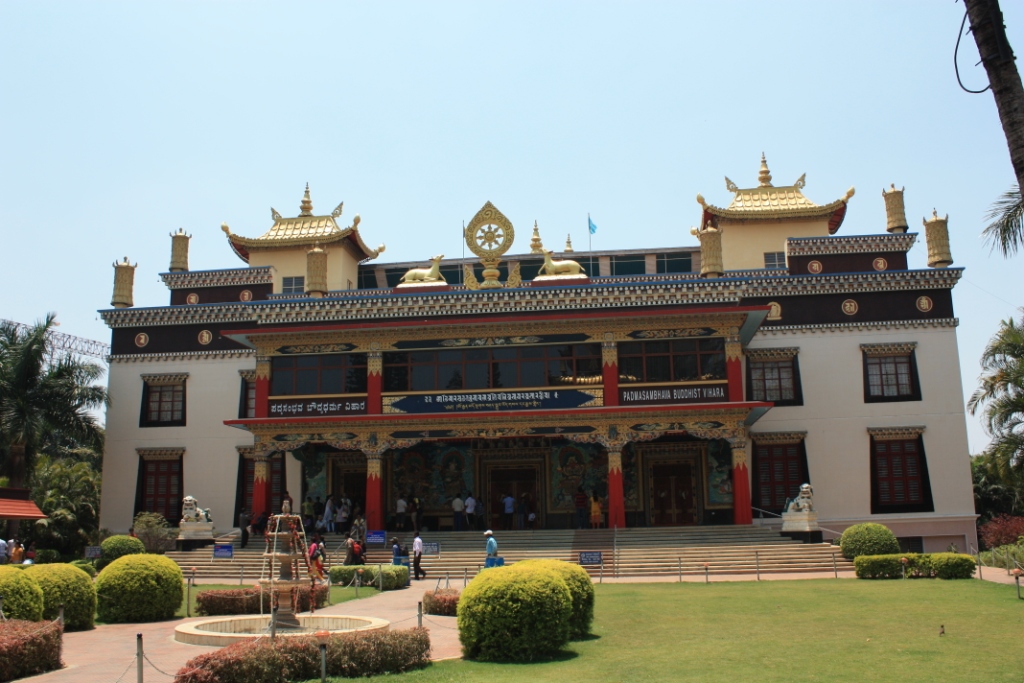
DAILY PHOTO: Padmasambhava Buddhist Vihara

Taken March 29, 2014 at Namdroling Monastery in Bylakuppe.
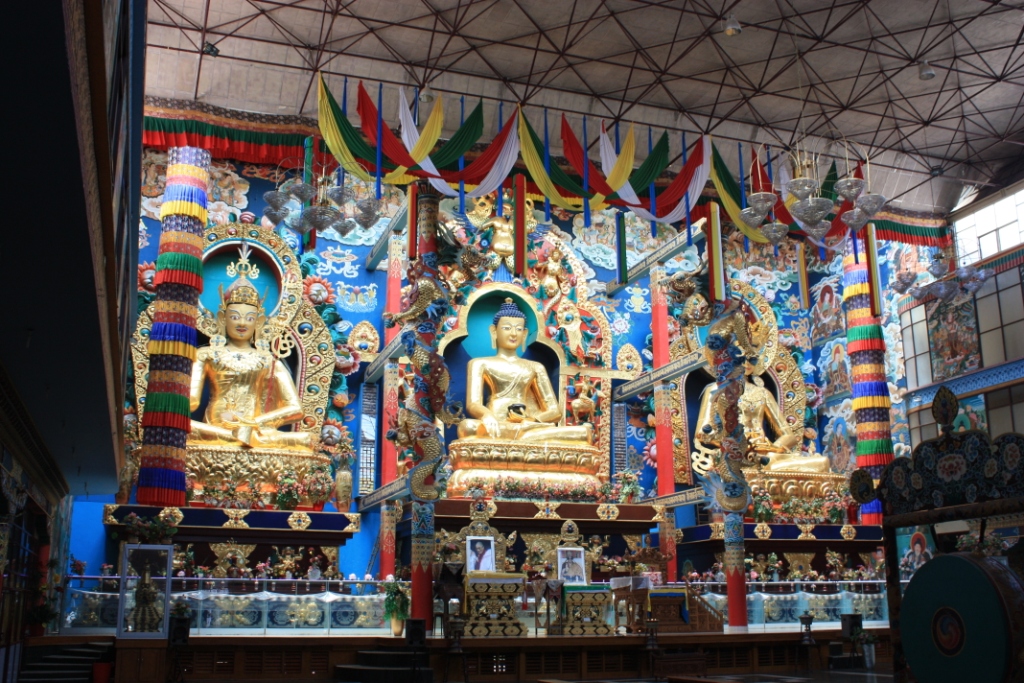
Taken March 29, 2014 at Namdroling Monastery in Bylakuppe.

IMG_1497

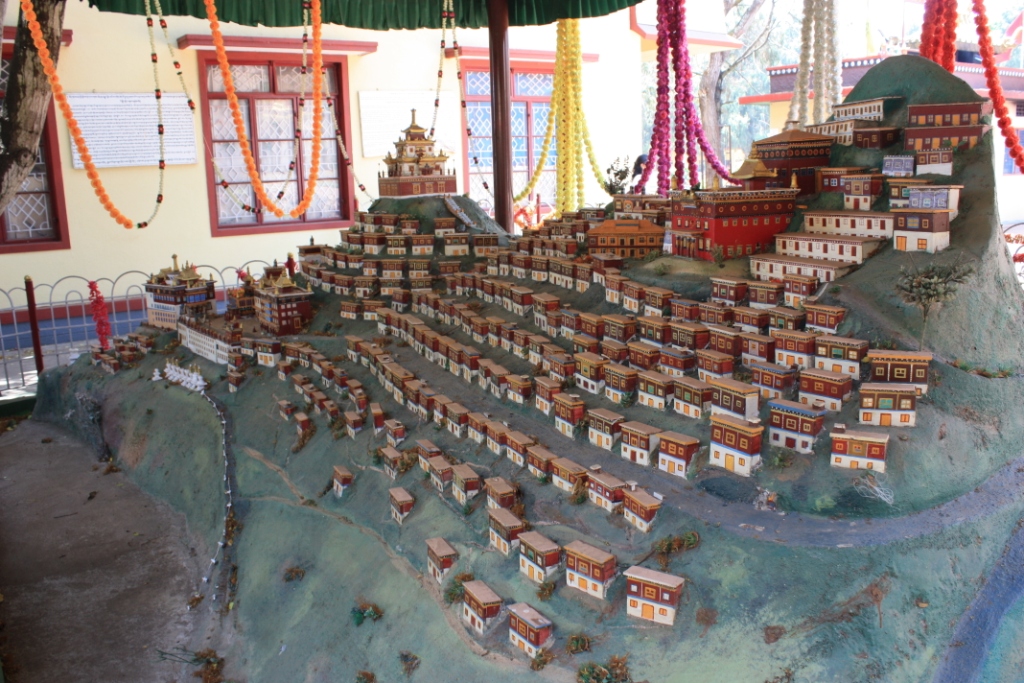
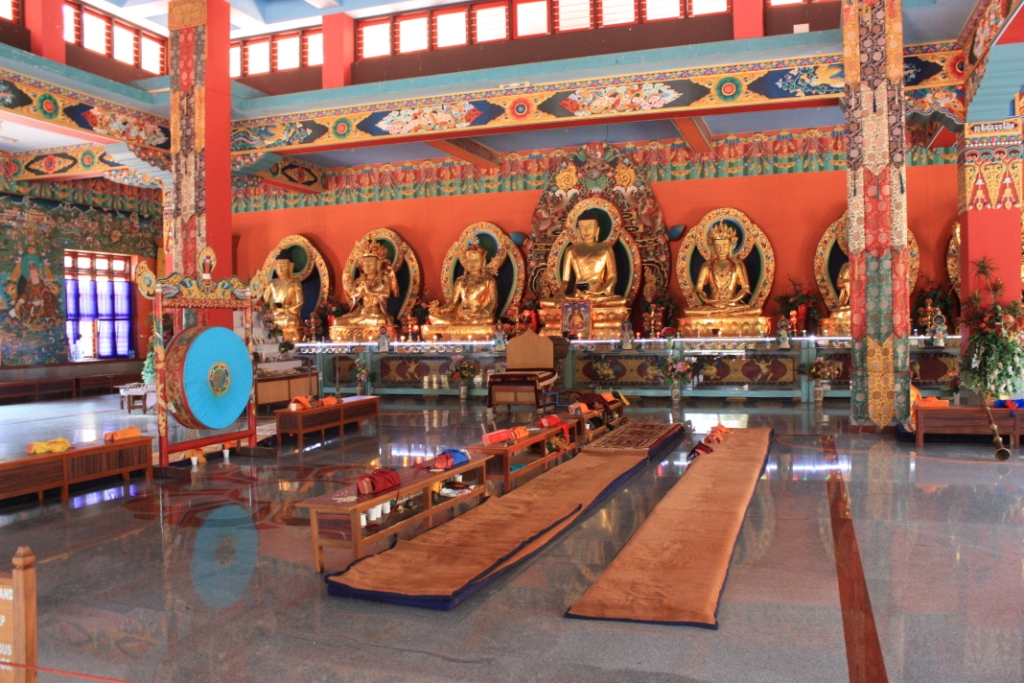
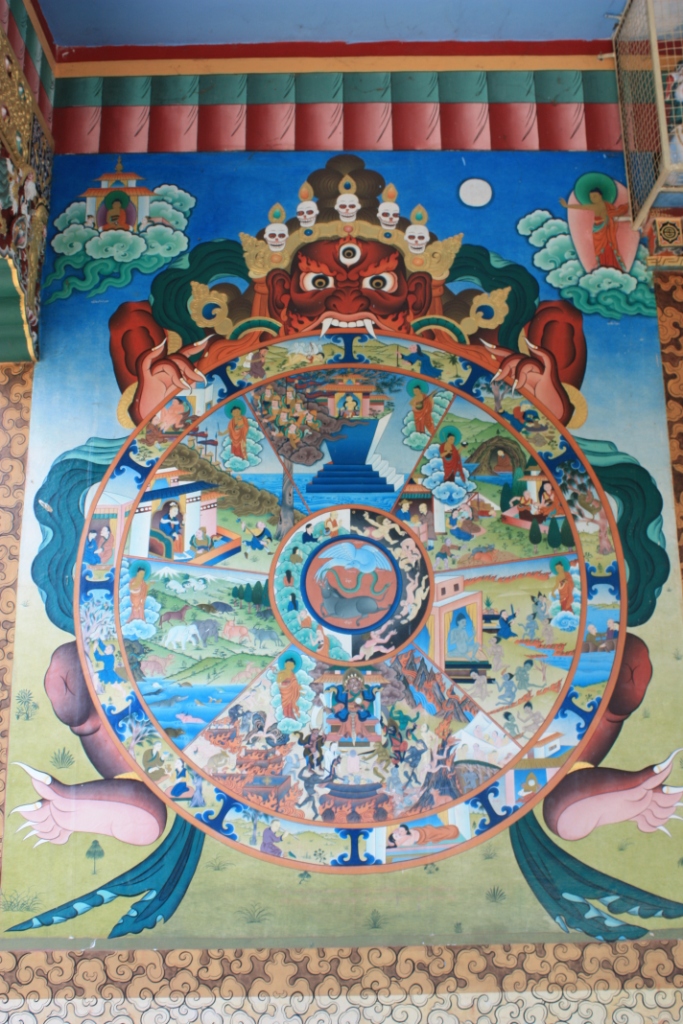
Namdroling Monastery is the largest teaching center of the Nyingmapa sect of Tibetan Buddhism in the world. It is located in Bylakuppe in southern Karnataka. Bylakuppe is a series of settlements that constitute one of the largest collections of Tibetans in Southern India (about 20,000 Tibetans live here.) This monastery was established by the Penor Rinpoche in 1963, after the Tibetan diaspora of 1959. The original monastery was a small bamboo temple, from that it has grown to a large campus of buildings.

This, the “Golden Temple”, is a must stop visit for travelers in southern Karnataka. For those with interest in Tibetan Buddhism, one may want to arrange a longer stay. Be aware that there are certain permitting requirements for visits longer than day visits.
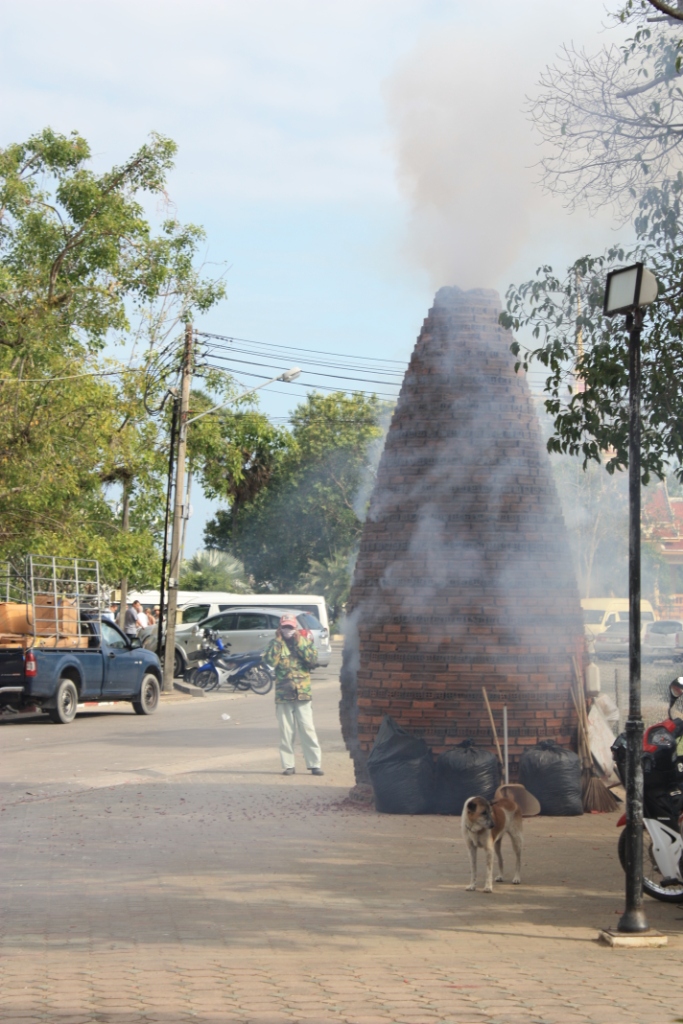
DAILY PHOTO: Driving the Demons Out? No.

Taken in January of 2014 at Wat Chalong.

Taken in January of 2014 at Wat Chalong.

At Wat Chalong there is a big, brick kiln that is shaped somewhat like a beehive. Loud and long strings of fire crackers are frequently set off in it. I had read that this was done to drive demons out. That turns out to be patently false, but it’s such an awesome explanation that I can see why it had traction. The firecrackers are actually set off to signify a prayer has been answered. (That makes much less sense than driving away demons… I know, right?)

True story: When I was there a guy actually stuck his head up into the kiln to see where they kept the fireworks. Natural Selection was not put to work that day, but I wondered what would have happened if a string went off just then.  On the other hand, the dogs seem to be able to completely ignore it. I know they’re probably deaf, but you’d think the falling paper would unnerve them.

BOOK REVIEW: The Miracle of Mindfulness by Thich Nhat Hanh

The Miracle of Mindfulness: An Introduction to the Practice of MeditationThe Miracle of Mindfulness: An Introduction to the Practice of Meditation by Thích Nhất Hạnh

My rating: 4 of 5 stars

Amazon page

This book by the renowned Vietnamese Buddhist monk, activist, and poet, Thich Nhat Hanh, offers pointers on how to live a life of mindfulness. Like most of Hanh’s works, this one is brief, concise, and the front and back matter account for about as much verbiage as the chapters themselves.

The seven chapters that make up the book proper examine mindfulness from various angles, with various approaches, and have a loose organization. The most readable of these chapters–owing to its narrative format–is the last, which retells a Tolstoy story about an Emperor who receives three questions and–unable to find suitable answers by offering a reward to his subjects–dons a disguise and visits a hermit sage. Needless to say, the sage (and life events) enlighten the Emperor, and the answers revolve around the theme of mindfulness. Among the most thought-provoking of the chapters is one that proposes that one take one day of the week to focus on mindfulness. Hanh offers advice on how to best select and structure such a day.

While the appended matter of some of Thich Hhat Hanh’s books can read like filler (intended to reach a page quota), that isn’t so much the case with this book. The most valuable of the appendices gives 32 exercises for building mindfulness. Many of these exercises are variations on a theme, and some are much more extensive than others, but it’s a crucial section and might even be called the heart of the book. Likewise, there are five sutra translations that will be appreciated by readers who are actually Buddhist. (Non-Buddhists may find the sutras to be a less colorful and more repetitive restatement of what Hahn has told them in the chapters. If one pays attention to the chapters and does the exercises, reading the sutra’s isn’t necessary for those who are not students of the religion.)

There is an odd postscript by one of Hanh’s students that is like those I’ve seen in other Hanh books. It’s an odd little testimonial. I put it in the filler category as anyone buying the book knows who Thich Nhat Hanh is and about the accolades he has received and, therefore, they don’t need a prologue telling them how awesome he is. It actually detracts from his persona as a wise man, because it makes one wonder who inspired the little ego trip. I suspect this is more a publisher desired addenda than an author inspired one, but, at any rate, it’s not useful. It can be interesting to hear about the war days, but there’s an outlet for that. Furthermore, I would think the place to tell us how awesome the author is would be at the beginning of the book–not the end. If one gets to the back matter, he must have done something to impress one.

I’d recommend this book for meditators, would-be meditators, and anyone who thinks that life is slipping through his or her fingers because of constant stress and a runaway mind.
View all my reviews

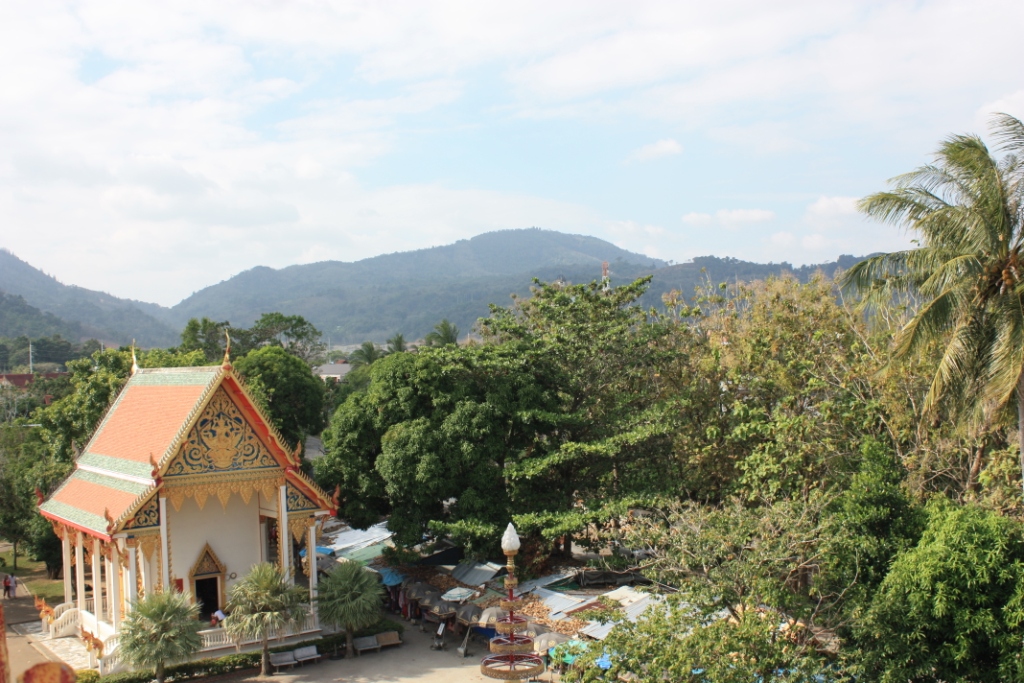
DAILY PHOTO: Temple in the Jungle

Taken in January of 2014 at Wat Chalong on Phuket.

Taken in January of 2014 at Wat Chalong on Phuket.

DAILY PHOTO: Golden Buddha of Rang Hill

Taken in January of 2013

Taken in January of 2013

This Buddha is located at Wat Khao Rang on Rang Hill, overlooking Phuket Town. His right hand mudra conveys that the spice is just right–but you may want to verify that with a Buddhist.

DAILY PHOTO: Buddha with Golden Parasol

Taken in October of 2012 at Angkor, Cambodia.

Taken in October of 2012 at Angkor, Cambodia.

I was just doing some research on 13th century Angkor, and so I figured I’d dig back to 2012 for a photo from my visit there.


Kalaripayattu and Single Point Origin Myths

I just began my study of Kalaripayattu this morning. Kalaripayattu is an Indian martial art that is named for the training space (kalari) in which it is conducted. It’s a very different martial art from others I’ve studied, and is a great learning experience—as well as an excellent workout. Kalaripayattu is said to be one of the oldest formal martial arts that has survived into the modern era. I have no reason doubt this. The art is documented in the 11th century by a historian who attributes its development to wars between the Chola and Chera kingdoms.

However, there’s another common claim that is much more controversial, and that’s that Kalaripayattu is the “mother of all [Asian] martial arts.” With all due respect, I’m skeptical of this claim—even if we don’t take it in the literal sense (i.e. Asia is a big place and there are almost certainly places where martial arts were established before contact with the Buddhist diaspora.) I obviously don’t base my skepticism on what I have been taught—as that is, at this point, a miniscule portion of the most basic of basics.

While I can offer no definitive proof to discredit the claim, I do have specific reasons to be skeptical. The theory of Kalaripayattu as the origin of martial arts is based on the legend of Bodhidharma. The legend says that the famous monk shared martial arts with the monks of Shaolin in conjunction with the Zen (Cha’an) form of Buddhism, and from Shaolin as Buddhism spread so did the martial arts. I’ve read myths about the origins of the Japanese martial arts that I’ve studied that place the beginnings of their ancestor arts with Chinese Buddhists fleeing persecution during the T’ang Dynasty (as well as later periods.)

The first problem with this theory is that historians have found it to be unsubstantiated and dubious. While the belief that Bodhidharma introduced the Chinese to martial arts is one of the most widely believed and cited pieces of martial arts lore, Meir Shahar in his book The Shaolin Monastery [http://www.amazon.com/The-Shaolin-Monastery-History-Religion/dp/082483349X] states that the evidence doesn’t support this popular belief. Specifically, the only historical documentation of this theory is a document that was written in the 1600’s that the author claimed was “discovered” from an earlier time—the problem is that the language usage isn’t consistent with the claim that the document was from a much earlier period, and there are many verified mistakes in the document.

Even if Shahar and other historians are wrong, the evidence that Bodhidharma came from southern India and that he studied Kalaripayattu specifically seems to be non-existent. There is at least one popular theory of Bodhidharma that puts the origin of this famous spiritual leader outside of India altogether. If the aforementioned Indian historian was right and Kalari developed during 11th century wars, then it’s late for the life of Bodhidharma by some 500 years.

The challenge is that it’s difficult to compare the modern martial arts and see definitive evidence of historic connections. Some will say, “But Kalaripayattu doesn’t look like Shaolin Kung fu (or any other subsequent arts) at all.” While it’s not true that they don’t look anything alike, it’s true that they look very different. However, what one has to keep in mind is not only did Kung fu continue to evolve in order to optimize to its circumstance, its predecessor system (whether Kalaripayattu or otherwise) would have continued to evolve as well. The Kalaripayattu of today most likely looks quite different from 11th century Kalaripayattu, but we can’t know how so in any detail. This could make for some pretty rapid divergence. Others may say, “But, hey, I do see the similarities in kicks and postures and so forth.” This may be true as well, but can one be sure that one of those commonalities is causal of the other? What if it’s just the constraints of the human body that make all martial arts similar at some level of granularity?

My intent is neither to destroy origin stories nor to discredit any martial art. Obviously, Kalaripayattu has a long history, and the fact that it survived to modern times is a testament to its value over that time. Combat is a harsh evolutionary environment, and things that don’t work for the situations they face are likely to die with the people who practice those systems. However, I think it’s important for warriors to not succumb to false fables because they must see the world as it is and not as they wish it to be.

BOOK REVIEW: The Novice by Thich Nhat Hanh

The Novice: A Story of True LoveThe Novice: A Story of True Love by Thích Nhất Hạnh

My rating: 5 of 5 stars

Amazon page

The Novice is the retelling of a Vietnamese folk tale about a young monk who is repeatedly wronged, but who always does the virtuous thing. As I read this book, I thought the story seemed familiar, and I realized that I read the same story as The Martyr by Ryūnosuke Akutagawa. Akutagawa does a much better job of story building. The Japanese writer doesn’t reveal to the reader that Lorenzo (his novice and the equivalent of Thich Nhat Hanh’s Kihn Tâm) is a female until the end—thus definitely resolving the claim that the young monk fathered a child out-of-wedlock and in contravention of vows f0r the reader at the same time as the characters in the story learn it.

Thich Nhat Hanh tells us that the novice is a female at the beginning, and he does so via backstory that serves both to give justification for why Kihn Tâm chooses to disguise herself and become a monk and to pile onto the injustice. We learn that Kihn Tâm’s female alter ego had been married, but the marriage ended with a false accusation of attempted murder of her husband. This backstory probably isn’t worth the drag for either of the aforementioned purposes—but the former is more justifiable than the latter.

What Thich Nhat Hanh lacks in gripping narrative structure, he gains in provoking thought. The Zen monk and poet gives the reader insight into how Kinh Tâm manages to be preternaturally virtuous. In The Martyr this is a black box affair. Hanh also encourages the reader to see Kihn Tâm’s accusers as the novice does, i.e. with compassion. Akutagawa does what any writer would do; he vilifies the accusers so as to make the story resonate with the average, petty, martyr-complex prone reader—as opposed to the enlightenment-aspiring reader. Hanh leaves the other monks in Kinh Tâm’s corner, i.e. when everyone else is condemning the novice, they still believe in her. In Akutagawa’s story, monastics are not inherently so perfect.

The book offers some interesting back matter. The most substantial of the appendices is an account by Sister Chan Khong of the works of Thich Nhat Hanh and his followers both during the war and afterword when they tried to establish a monastery in Communist Vietnam. The essay echoes the themes of loving-kindness and compassion that form the core of the novella, as does the essay by Hanh that brings the book to a conclusion. While this back matter is filler to make up for the fact that the story is not novel length, it nevertheless makes for interesting reading.

I’d recommend this book for those with an interested in Zen. If you’re looking for a good story, read Akutagawa’s The Martyr, but if you want to be inspired to compassion, read Thich Nhat Hanh.

View all my reviews

DAILY PHOTO: Wat Chalong Chedi

Taken in January of 2014 at Wat Chalong on Phuket in Thailand.

Taken in January of 2014 at Wat Chalong on Phuket in Thailand.

This tower houses the Buddha relic (a bone fragment) for which Wat Chalong is renowned. Below the chedi housing the relic there are many golden Buddha statues.

Visiting tip: Wear ear protection. They have a little kiln across from the main temple in which they regularly set off a huge amount of fireworks. It can be a bit deafening.

DAILY PHOTO: Seaside Shrine

Taken in January 2014 in Patong.

Taken in January 2014 in Patong.

Taken January 2014 in Patong

Taken January 2014 in Patong.

From this little shrine one could view Patong Beach across Beach Road. It’s a small but very active shrine at the North end of Patong Beach. There was often someone burning incense or making an offering.