Unknown's avatar

About B Gourley

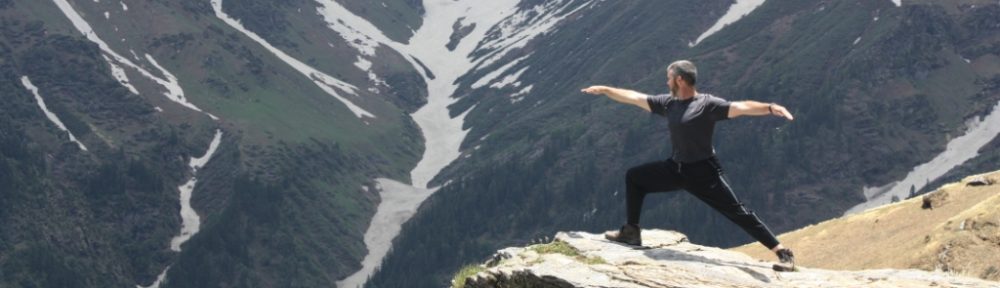
Bernie Gourley is a writer living in Bangalore, India. His poetry collection, Poems of the Introverted Yogi is now available on Amazon. He teaches yoga, with a specialization in pranayama, and holds a RYT500 certification. For most of his adult life, he practiced martial arts, including: Kobudo, Muay Thai, Kalaripayattu, and Taiji. He is a world traveler, having visited more than 40 countries around the globe.

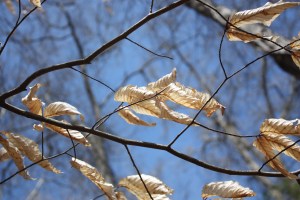
POEM: Lonely Oak


I
lonesome oak on a hill


having outlived your peers


your progeny denied the light
by scythe and mower blade alike


II
it’s said you speak by pheromone
but no whiff is caught when alone
your words disperse unsmelt
lost across a manmade veldt


III
if it’s any consolation
you have our unflagging admiration
you’re the model of stately poise
to all the little girls and boys


who swing about your stout limbs

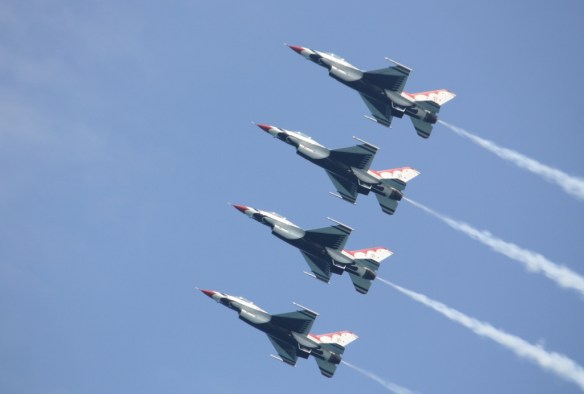
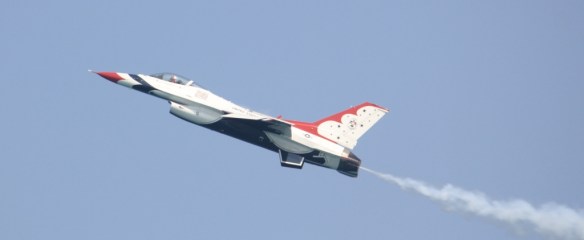
DAILY PHOTO: Thunderbirds, 60th Chicago Air & Water Show

Taken on August 19, 2018 in Chicago at the 60th Air & Water Show.

BOOK REVIEW: Chicago Poems by Carl Sandburg

Chicago PoemsChicago Poems by Carl Sandburg
My rating: 5 of 5 stars

This collection put Sandburg on the map as a literary figure. It opens with one of his most famous poems “Chicago” (i.e. “HOG Butcher for the World, Tool Maker, Stacker of Wheat…”) and – as the title suggests – the windy city is a recurring theme throughout the collection, and not just within the first of seven parts of the volume, which is eponymously named. Sandburg takes on the gritty and the glorious of Chicago. The collection includes about 140 poems of various lengths and styles.

The first part of this collection is by far the largest, consisting of about fifty poems, most of which are free verse or prose poems of short to intermediate length (a few lines to few pages per poem.) In addition to one of the most famous of Sandburg’s poems, “Chicago,” which opens the collection, there are a number of lesser known personal favorites in this part including: “Fish Crier,” “Happiness,” “Mag,” and “Mamie.”

The second part is called “Handfuls,” and – as the name suggests – it features short poems. This section begins with another of Sandburg’s most famous poems, “Fog” (i.e. The fog comes on little cat feet.”) The third part is entitled “War Poems” and it gathers together a few poems written during the First World War. My favorite is probably “Statistics” which takes an expectedly grim view of the nature of modern warfare with a bit of gallows humor. The other sections of the book are: “The Road and the End,” “Fogs and Fires,” “Shadows,” and “Other Poems (1900 – 1910.)”

Those who are familiar with Chicago will recognize the frequent references to streets and neighborhoods, but one needn’t be a Chicagoan to benefit from reading this collection. At times, the collection presents an edge of angry protest as Sandburg rails against Chicago as a place that grew opulently wealthy in the making of the modern world, but in which so many struggle to survive. However, it’s not all grim. Sandburg also dotes admiringly on the magnificence of the city. In fact, the theme presented in “Chicago” – a defense of the mixed nature of the city – can be seen exploded across the collection.

I enjoyed reading these poems. Sandburg uses both sound and imagery to evoke emotion. While he writes without rhyme and often without meter, he doesn’t abandon the sound quality (one need read no further than “Chicago” to hear this.) I’d recommend this book for all poetry readers.

View all my reviews

BOOK REVIEW: The Man Who Spoke Snakish by Andrus Kivirähk

The Man Who Spoke SnakishThe Man Who Spoke Snakish by Andrus Kivirähk
My rating: 5 of 5 stars

Amazon page


I read this book as part of my continuing effort to read at least one book from every country to which I’ve traveled. Kivirähk’s book came highly recommended for Estonia on a list by diplomats who were asked to provide a book that offers insight into the country where they served. At first blush, this book seems like an odd selection for such a purpose because it’s a fantasy novel (rather than the character-centric literary fiction that typically offers deep insight about the culture from which the book’s characters reside.) However, I came away from this book feeling that I had learned something about the Estonian national character, if while immersed in a question which has much broader applicability.

The book revolves around the tension between the forest people and the those who’ve moved to the villages. The main character is among the last of the people who live in the forest. Among the traditional skills he learns is how to speak a language called “Snakish,” which is not only the language of snakes, but which also serves as a kind of lingua franca (common language) among many of the species of the forest. A central question of the book is whether this man will be the last to speak Snakish – representing mankind’s expulsion from the natural realm. He is a boy at the beginning of the book, and as he’s learning Snakish, the only other speakers are advanced in age. In essence, the book explores whether the old ways will survive, and – in particular – the ways of humans living in nature instead of thinking themselves above it.

The villagers are enamored with all things foreign. They are passionate converts to Christianity. They gaze admiringly upon knights and monks. They take up any new technology that is introduced. (Needless to say, the time of the story is ambiguously pre-Industrial revolution, when agriculture and feudalism prevailed.) While the villagers look upon the forest people as backwards, just as people today might assume the forest-dwellers to be more superstitious and simpler, what we read is a twist in which the forest people find the villagers to be superstitious and woefully out-of-touch with the ways of nature. The villagers live in fear of nature because they have separated themselves from it, and – following the newly introduced Christian beliefs – they believe they are above nature and that all other creatures are under their dominion to do as they see fit. Of course, nature doesn’t yield easily to the desires of man, and the villagers are forced into the contradiction of thinking themselves superior to nature while at the same time being terrified of the creatures who live in the forest and – for that matter – the forest itself. The simple dichotomy of good and evil that foreigners have introduced is also in contrast with the more nuanced and, arguably, more sophisticated views of the forest-dwellers.

What the reader sees in this story mirrors what we have seen in our world, which is that mankind’s culture continues to leave a progressively bigger mark on the natural world – but not without a cost. On the other side of the coin, aboriginal ways are dying out. In a way, it’s the story of human development shrunk down to the scale of a few characters.

This is an excellent book, and I would highly recommend it for all readers. The story is intense and keeps one reading, but it’s thought-provoking at the same time as it entertains.

View all my reviews

DAILY PHOTO: Imposing Architecture on the U of Chicago Campus

Taken on August 14, 2018 in Chicago

POEM: Man Glued to Phone Spends Eternity on Elevator

A man joined me on the elevator.
He pressed no button, but rode along.
When I got off, I said, “See you later.”
The doors closed and reopened with a “bong.”


I turned to see if the elevator’s chiding
would wake the man from his phone-fueled languor.
And put him on the path of proper riding.
Or whether it’d take a more persistent clangor.


The elevator gave up, shut, and ascended
To this day, I can not help but wonder
whether the man’s reverie ever ended,
or whether the phone’s spell he’s still under.


And does he still spend his days in futile elevating?

POEM: Missed Mark

engine whine, in a dive

pray to god to be alive

when the bombs missed their mark

hit some pristine city park

turf and rubble, an ugly mess

wild-eyed people in distress

and trembling lips do confess

a fugue state born of savage stress

 as dreams of a peaceful past glide by

DAILY PHOTO: Ghanta Ghar, Jodhpur

Taken in November of 2015 in Jodhpur

DAILY PHOTO: Strange Bridges

Taken in August of 2018 in Ping Tom Park, Chicago

DAILY PHOTO: In Humboldt Park

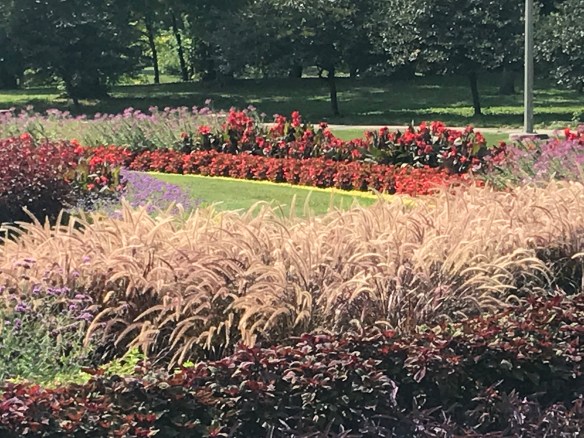
Taken on August 17, 2018 in Chicago. This park is named for my favorite 18th century German naturalist. I recommend Andrea Wulf’s The Invention of Nature.

004445C8-E742-4ADC-B10E-C69D660870FA0C5165FA-6CCB-495E-9CFC-E91528304F16399B9F60-00A4-44C8-8D21-BB847F2C23A97FED5148-C024-4519-A681-D55BEEAAE449