“Ascending Happiness Plateau” by Li Shangyin [w/ Audio]

At day's end, feeling ill-at-ease,
Riding a cart to the plateau.
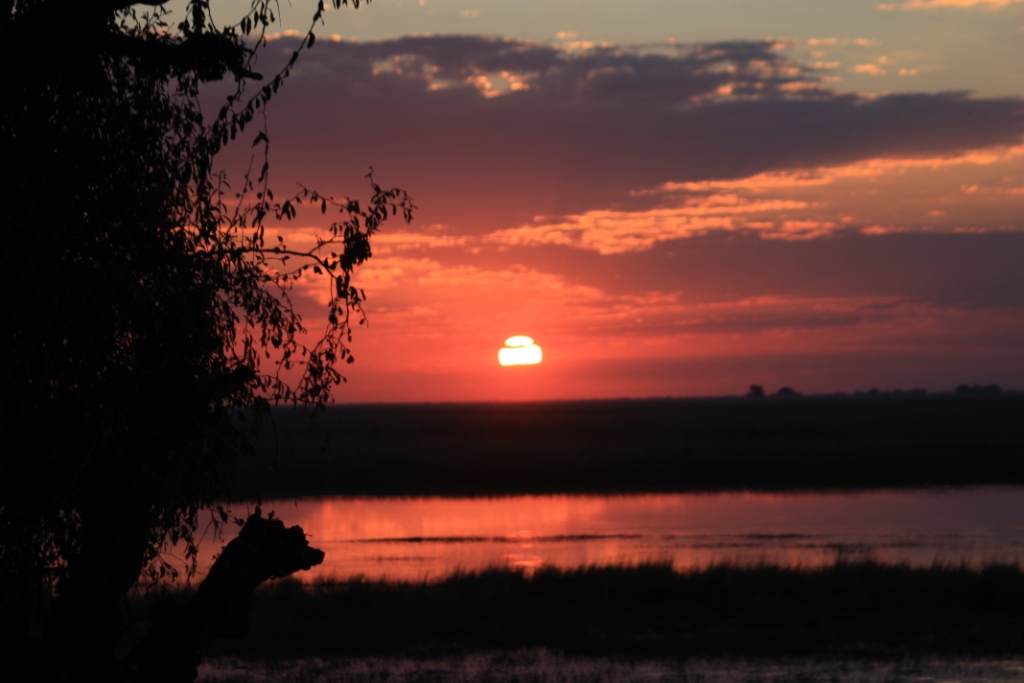
The setting sun fires glorious skies,
But a yellow dusk is coming.

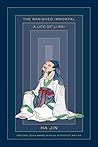
BOOKS: “The Banished Immortal” by Ha Jin

The Banished Immortal: A Life of Li Bai (Li Po)The Banished Immortal: A Life of Li Bai by Ha Jin
My rating: 5 of 5 stars

Amazon.in Page

Li Bai is considered to be one of China’s best poets of all time, writing during the Tang Dynasty (618-907 AD,) a time swole with poetic greats. However, it’s not just a prolific collection of extant masterpieces that make Li Bai worthy of a biography intended for a general audience. Li Bai was also a compelling character. He was, at once, a drunk and a genius; a swordsman of some skill and a card-carrying Daoist. It’s not just that he could edit drafts into brilliant poems, but he was said to be gifted at spontaneously spouting clever verse. He was constantly struggling to gain a post in government, but failed time and again. Even when his poetic renown became so great that he was given a post in the Imperial court, he was disappointed to find that it was largely ceremonial and that he would have no great impact on anything. He had a stunning fall from grace when he aligned with the wrong side during a civil war and was lucky to have been exiled rather than executed.

Ha Jin, a prominent present-day Chinese author best known for the novel Waiting, does an excellent job of exploring Li Bai’s life. What I particularly enjoyed is that Ha Jin (a poet himself) discusses how events in Li’s life spurred some of his great poems (which are often included in whole or in part.) Ha Jin is also careful to make clear when biographical accounts diverge, and there are many unknown or disputed details of Li’s life. In fact, there is a bit of a mythology around Li Bai, as one might guess from the title – which refers to a nickname bestowed upon the poet based on the belief that he was a Daoist immortal.

I’d highly recommend this book for readers of biography, those interested in Chinese history, or those who are intrigued by rebellious poetic souls.

View all my reviews

Drinking Alone by Moonlight by Li Bai [w/ Audio]

A pot of wine, under blossoms.
   I drink alone, no friends in sight.
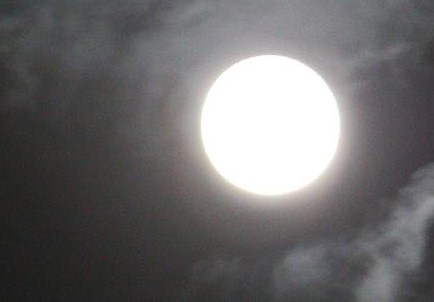
 I raise a cup to lustrous Moon:
   Me, Moon, and Shadow will make three.
 But Moon is a teetotaler.
   And Shadow just skulks at my feet.
 Still, Moon & Shadow are my chums.
   We need a bash before Spring's end.
 But my singing makes Moon recoil.
   And Shadow flops hard when I dance.
 At first, we have a grand old time,
   But we part ways when I drift off.
 We should keep this epic friendship rolling,
   and meet again in the River of Stars.

NOTE: I produced this “translation” / arrangement, using translations by Arthur Waley, Ezra Pound, and that of “The Anchor Book of Chinese Poetry” [ed. by Tony Barnstone and Chou Ping] to get varied takes on the source poem.

BOOK REVIEW: Poetry and Prose of the Tang and Song [Trans. by Yang Xianyi & Gladys Yang]

Poetry and prose of the Tang and SongPoetry and prose of the Tang and Song by Yang Xianyi
My rating: 5 of 5 stars

Amazon.in Page

This collection includes works from eighteen prominent poets and writers from the Tang (618-907 AD) and Song (960 – 1279 AD) Dynasties of China. Among the most famous of the included authors are: Wang Wei, Li Bai, Du Fu, Bai Juyi, Wang Yucheng, and Su Shi. The included works (mostly poems but including some brief prose writings) explore subjects such as nature, social justice, patriotism, travel, and drinking. If some of those topics surprise you, you’re not alone. I may be letting my biases show, but I was surprised by how much social outrage and humor was contained in these works from the China of 750 to 1,400 years ago. That said, most of the works do present the kind of sparse imagist depictions of natural scenes one would likely expect from Chines poets in days of yore. (Think haiku, but longer — though no less devoid of analysis or judgement.)

As someone who isn’t an expert on Chinese literature or even a speaker of any of the Chinese languages, I can’t comment intelligently on how precise the translations are. However, the English language versions contained in this volume are evocative, clever, and, occasionally, funny.

To give one an idea of the kind of humor, I’ll offer this quote from a poem by Xin Qiji:

Last night by the pine I staggered tipsily
And asked the pine, “How drunk am I?”
When I imagined the pine sidling over to support me,
I pushed it off saying, “Away!”


I enjoyed this collection, and would highly recommend it.


View all my reviews