BOOK REVIEW: Doom Patrol, Vol. 1: Crawling from the Wreckage by Grant Morrison

Doom Patrol, Vol. 1: Crawling from the Wreckage (Doom Patrol, #1)Doom Patrol, Vol. 1: Crawling from the Wreckage by Grant Morrison
My rating: 5 of 5 stars

Amazon.in page


I’d never heard of Doom Patrol until I recently saw a teaser for the television show (which have not seen.) That lack of familiarity made for a nice surprise. I was aware from said trailer that the team consisted of “broken” individuals, and that mental illness featured prominently in these characters’ makeup. What I didn’t know is the degree to which the Doom Patrol dealt in the strange and weird – and I do love tales of the weird. So, it’s a bizarre / dysfunctional team mashup (like “Guardians of the Galaxy” but less heroic and more mentally ill) that takes on the kind of psychedelic villains one might find in “Doctor Strange.” [I realize I’m crossing the DC – Marvel divide with my comparisons, but – owing to the movies – Marvel is much more broadly known at this point.]

I was familiar with Grant Morrison from one of my favorite Batman stories, “Batman: Arkham Asylum – Serious House on Serious Earth.” And this collection of seven “Doom Patrol” comics – while a little more brightly drawn and lighthearted – share the mind-bending surreality of that book. Though in this book the trippiness is supernatural.

The seven comics included in this volume include the four parts of the “Crawling from the Wreckage” story, plus: “The Butterfly Collector,” “The House Jack Built,” and “Imaginary Friends.” Robotman (Cliff,) Crazy Jane, and Rebis (an amalgam of Larry Trainor / Negative Man and Dr. Eleanor Poole) are the principal heroes of the “Crawling from the Wreckage story, though Joshua Clay (Tempest) and Dr. Niles Caulder play supporting roles. (Caulder is this team’s wheelchair-bound, genius leader. Yes, like in the X-men. While this team is less well known, it does go back to the early 60’s so I don’t know who copied who, but I know both sides seem to have snatched ideas on occasion – or maybe great minds do think alike.) The “…Wreckage” story involves the threat of an imaginary universe (Orqwith) spilling into the world as we know it. The team is established in the first two books, and we are introduced to the opposition in the form of “The Scissormen” (faceless villains that – literally – cut people out of this reality.) Then in the third and fourth installments Orqwith is introduced, and the heroes much go there to bring an end to the threat.

“The Butterfly Collector” and “The House that Jack Built” together present a story of Rhea Jone’s disappearance from the hospital. (Jone’s character is at times a member of the Doom Patrol known as Lodestone, but in this comic book she is mostly unconscious.) One of Crazy Janes’ personalities figures out how to open the portal that the kidnapper must have used. Crazy Jane and Robotman cross over to confront the villain, Red Jack. (Yes, sort of an “Alice in Wonderland” thing going on.)

In “The Butterfly Collector” we are also introduced to Dorothy, a hideous-looking little girl whose imaginings can come to life in the real world with disturbing consequences. The last book in the collection, “Imaginary Friends” imagines Joshua Clay watching Dorothy while everyone else is out. Joshua is a minor character in the other books in this collection, but in this one he is the hero of the hour. The story involves Dorothy’s imaginary friends who’ve come to exact vengeance. We learn that Dorothy developed these friends because she couldn’t make real friends owning to her appearance, but then she had to get rid of them when they got out of hand. Incidentally, tales of woe are a repeated refrain with this team. That’s what creates the team’s uniqueness. There’s an intriguing contradiction. Normally, a reader might envy a superhero, but with the Doom Patrol envy is not where the mind goes.

As I said, I love a good tale of the weird, and this was one strange tale after another. The book is both entertaining and also thought-provoking. If you enjoy comic books and graphic novels, this one is worth reading.

View all my reviews

BOOK REVIEW: The Incredible Hulk: Planet Hulk by Greg Pak

The Incredible Hulk: Planet HulkThe Incredible Hulk: Planet Hulk by Greg Pak
My rating: 5 of 5 stars

Amazon.in page


I was pleasantly surprised by the story arc and character development in this volume – which is to say it had both and they were well crafted. I often have a problem with comic books — in particular (and on-going series of any kind, in general,) and that’s that they often fail to be satisfying as self-contained stories. So much effort is put into keeping one reading that the climax and resolution – such as they are – feel like minor speed-bumps on the way to somewhere else. That wasn’t the case here. While the ending leaves open a route of continued story (as one would expect,) one sees the Hulk undergo a transformation across the events of this story. He’s shot away from the Earth, lands on the wrong planet, is forced to fight as a gladiator, escapes, fights his way across a world teeming with harsh adversaries, all the while building the respect of those around him until he is elevated to kingship.

Tough guy characters are notorious for remaining unchanged across a story arc. Hulk, being the ultimate tough guy, seems particularly unlikely to grow or develop. However, the Hulk who begins this story jettisoned into deep space by his superhero colleagues to avoid him causing chaos on Earth, feels different from the Hulk who assumes leadership of the planet Saakar at the volume’s end. Amid monsters, the Hulk is in his element and can be a better version of himself. On Earth he is a bull in a china shop, on Sakaar not everyone he meets is so delicate. Overpowered heroes are often hard to make interesting. However, a couple countervailing features make it easier to make Hulk more interesting than say, Superman. First of all, Hulk is overpowered in one dimension, i.e. power, and might be considered underpowered in other dimensions (i.e. intellect, pettiness, control, etc.) Second, there is an interesting game theoretic condition in which the Hulk just gets stronger the angrier he gets, and so he always presents an object lesson — that is, one can’t just fight fire with fire and get the better of him. Thirdly, and most importantly, no matter who the Hulk is fighting, his story is essentially man versus self. The outward opposition is secondary. Because of his past mindless destructiveness, he is uniquely able to understand the need to let bygones be bygones. This is nicely shown, and eventually challenged.

Movie buffs may wonder what this book has in common with the “Thor: Ragnarok” movie that features common elements. The answer is: not a lot. The Sakaar of the movie seems to be just a huge trash heap and a gladiatorial arena. The Sakaar of the comics is more fleshed out with agrarian areas and various indigenous peoples / species. There are a couple of common characters, including Korg and Miek, but they are only superficially the same character. (Korg is much more serious and Miek is a much more substantially developed character in the comic book.) Also, there is no Thor. The only other familiar hero from other comics that we see on Sakaar is the Silver Surfer – and only early in the story.

Besides the main story, provided by “The Incredible Hulk, #92 – 105” there is a “Planet Hulk Gladiator Guide” for the hardcore nerds the provides all sorts of detail regarding the geography planet Sakaar, biographical sketches of key characters, and the culture of various species on the planet. There is also another issue “Amazing Fantasy #15” that shows Amadeus Cho (on Earth) investigating what happened with his friend, Bruce Banner.

I enjoyed “Planet Hulk” considerably, and I look forward to reading the “World War Hulk” collection that was also written by Pak. The art was generally clear and conveyed action effectively, and I found the story quite intriguing.

View all my reviews

BOOK REVIEW: Batman: A Death in the Family by Jim Starlin, et. al.

Batman: A Death in the FamilyBatman: A Death in the Family by Jim Starlin
My rating: 5 of 5 stars

Amazon page


This collection gathers comic books first published in the late 80’s, telling the story of the demise of Jason Todd (the second Robin) and the rise of the third Robin, Tim Drake. There is an intriguing interactive element to the story of Todd’s death as readers were allowed to vote on whether the character would be killed off or not by way of a phone hotline. The challenge for DC was that when readers did decide to ax Todd the publisher couldn’t tell whether the decision reflected a preference for a lone-wolf Batman, or whether they just didn’t like Todd.

The reason it might have been the latter is that Jason Todd was written as a much more sassy, impudent, and disobedient Robin than his predecessor, Dick Grayson (i.e. who’d shed sidekick status to become Nightwing.) Todd’s teenage insolence can be seen in this story when Batman puts him on probation after some rash action while crime-fighting. Having found a clue that puts him on the trail of his birth mother, Todd goes on a global walkabout searching for her. With comic book convenience, Todd’s pursuit of meeting his mother brings him back across the path of a Batman who is out to stop the Joker. When Robin is asked to maintain surveillance on the Joker while Batman sets off to interrupt a convoy of poisonous gas, the seeds of self-destruction are sown.

This isn’t a Gotham-centric Batman story, but reflects the geopolitics of the 1980’s. Batman and Robin reunite in the Middle East, and the story proceeds to the United Nations as the Dark Knight attempts to end the Joker’s reign of madness. When the Iranians make the Joker their Ambassador to the United Nations, Superman is brought in to make sure an enraged Batman doesn’t do something that will cause an international incident. Superman’s role is neither extensive nor, given his vast powers, particularly interesting.

When DC was putting together this collection, they apparently thought that leaving the story with a bitter, despondent, and angry Batman wasn’t the way forward, and so they include the story of how Tim Drake becomes the third Robin. (Even though it makes for an odd narrative kink and tone shift.) Drake is a boy Sherlock Holmes. Having deduced that Batman is Bruce Wayne and noticing that Batman has become more reckless in the wake of Todd’s / Robin’s death, Drake stalks Dick Grayson in an attempt to get him to return to being Batman’s sidekick. Grayson isn’t interested in the demotion, and the guilt-ridden Batman has no desire to partner up again, feeling that he got the last one killed.

I enjoyed this collection. The fact that it includes powerful consequences gives it some emotional resonance and narrative tension. (Of course, in comic book fashion, Todd doesn’t stay dead, but that doesn’t happen until long after this run.) I found the shift to the “Teen Titans” books (i.e. the part involving Drake and Dick Grayson) makes for an odd turn-about in the story. But it’s understandable as it’s a dark story line otherwise. (I would have preferred more on the front end to show why I should care that a rash and disrespectful twit got killed doing what he was told not to. Long time readers will have some sympathies for Todd [his execution by readers was of a narrow margin, after all], but just based on this book one may feel Todd got what was coming.)

This book presents a crucial moment in the Batman canon, and should be read by any one interested in the Dark Knight’s story.

View all my reviews

BOOK REVIEW: Marvel’s Avengers: Infinity War Prelude by Will Corona Pilgrim

Marvel's Avengers: Infinity War PreludeMarvel’s Avengers: Infinity War Prelude by Will Corona Pilgrim
My rating: 4 of 5 stars

Amazon page


This two issue comic book was released in advance of “Avengers: Infinity War.” It revisits the events of previous movies adding a few snippets of new material here and there. Of the new material, much of it elaborates upon events that are known to have happened behind the scenes of earlier movies. Not surprisingly, given Marvel’s penchant for secrecy, there are only a few frames that offer insight into activities that a fan who’d seen all the preceding films would be in the dark about.

I’m assuming that anyone considering reading a prelude to “Infinity War,” by this point, has already seen that movie and relevant preceding films such as “Captain America: Civil War,” the first two “Avengers” movies, “Guardians of the Galaxy 1,” and “Doctor Strange.” If that’s not the case, and you want to avoid potential spoilers, stop now.

The first issue recaps “Captain America: Civil War” while providing insight into what happens with Captain America’s team in the wake of that film, at the end of which they find themselves on the wrong side of the law. Much of the issue is verbatim repetition of the events of that movie. There’s also elaboration about the Black Panther’s assistance to Winter Soldier (Sgt. Barnes) via his genius sister Shuri, as well as a scene showing what Captain America, Black Widow, and other team members are up to in the aftermath of the breakup of the Avengers.

The second issue consists largely of Wong schooling Doctor Strange on the powers of the infinity stones and their current whereabouts. Those who’ve seen all the films know that five of the six stones were accounted for before the third Avengers movie. Only the whereabouts of the soul stone remains in doubt. This book doesn’t solve that mystery and merely offers a cryptic comment about the soul stone’s power. As Wong is describing events, the reader is shown flashback scenes from the movies and post-credit scenes that explain where each stone is and how they were used in “Guardians of the Galaxy Vol. 1,” “Thor: The Dark World,” “Avengers 1 & 2,” “Doctor Strange,” etc.

If you are an intense fan who craves every new bit of information, you may enjoy combing through this comic book. Otherwise, it’s mostly of use for those who are planning on seeing “Infinity War” but who haven’t seen “Captain America: Civil War,” “Guardians of the Galaxy 1” (which contains a brief piece of exposition that clarifies the nature of the stones), or the previous “Avengers” films. I don’t know how big that demographic is, but I suppose new fans are coming along all the time. I wouldn’t recommend you purchase the prelude expecting anything new and earth-shattering. The art and dialogue are all well done and inline with the Marvel Cinematic Universe (MCU) films.

View all my reviews

BOOK REVIEW: Black Panther: A Nation Under Our Feet, Vol. 1 by Ta-Nehisi Coates

Black Panther: A Nation Under Our Feet Vol. 1 (Black Panther (2016-))Black Panther: A Nation Under Our Feet Vol. 1 (Black Panther by Ta-Nehisi Coates
My rating: 5 of 5 stars

Amazon page


This book contains the first arc of a three arc story written by Ta-Nehisi Coates, a 2015 National Book Award winner. The volume contains “Black Panther” (2016), #1-4, and—as a bonus—“Fantastic Four” (1961) #52, which is the edition in which the Black Panther was introduced.

The premise is that Wakanda is on the brink of coming apart at the seams, and there are nefarious forces afoot trying to spur a revolution. A mysterious woman, Zenzi, uses mind control unleash people’s rage. This results in an episode of violence that is the inciting incident for the story. But Zenzi isn’t working alone; she has a powerful ally named Tetu, who can control elements of nature.

Some background maybe useful for those unfamiliar with this character and / or who haven’t seen “Captain America: Civil War”–the movie in which Black Panther / T’Challa was introduced to the Marvel Cinematic Universe (MCU.) First, Wakanda is a fictional African nation. It’s quintessentially African with respect to culture, but it’s the most technologically advanced nation in the world. It achieved this first-world modernity and wealthy in large part because it possesses most of the world’s vibranium—a much desired, but fictional, metal. Vibranium can absorb huge amounts of energy and only become stronger. The metal is most famously known for being the material from which Captain America’s shield was made, but it crops up in Marvel stories quite frequently.

Second, the superhero Black Panther is the protector of Wakanda (though in some books—not this one—he does get drawn into global affairs) and is the alter ego of the Wakandan king, T’Challa. This duality is particularly relevant in this story line. On the one hand, the Black Panther must battle Zenzi and Tetu who are working together to bring the nation down. On the other hand, as King, T’Challa is forced to recognize his responsibility for the health of the nation, and he must be a good leader and not just a good fighter. There are the makings of an inner battle that must be fought concurrently with the battle against the enemies of the state. At the end of Volume #4, T’Challa is forced to face this through the words of a trusted maternal advisor.

In addition to the main plot in which the hero fights to keep the nation from collapsing, there are a couple of subplots. One involves an ex-member of the royal guard (i.e. the all-female Dora Milaje) using stolen technology to rescue her lover, another ex-member of Dora Milaje who was sentenced to death for killing a corrupt tribal leader. The two go on a spree of rescuing Wakandans. Another subplot involves T-Challa’s sister being trapped in a limbo between life and death called the Djalia—the plane of memory.

A word on the “Fantastic Four” comic book included: In it, T’Challa woos Reed Richards (Mr. Fantastic) into bringing the Four to Wakana by way of the gift of a flying car—a technology that seemed only slightly more feasible in 1961 than it does today. (Yes, I wrote that the way I meant it. In those days anything seemed possible. But after decades without a household jet-pack, we’ve become a more technologically pessimistic people… or is it just me?) Once in Wakana, the Black Panther battles the Fantastic Four, using not only his athletic prowess but also a series of technologies tailor-made against their powers. This makes it seem like the Black Panther was introduced as a villain, but he’s hunting them for the challenge rather than out of ill-will.

As would be expected from an award-winning author, this arc is well-written and sets up a fascinating story. As this is a comic book, I should also talk about the artwork, which was done by Brian Stelfreeze. However, I don’t know what to say beyond that I liked it well enough. I’m not particularly competent to speak on the subject–other than to say that it was generally easy to tell what was going on in the frames, and the action seemed to be well conveyed. I can’t speak at all to coloring as I read the Kindle edition in black & white (Not that I’d have anything interesting to say on the subject.)

I’d recommend this comic. There’s plenty of butt-kicking, but there’s also a thought-provoking tale of political intrigue.

View all my reviews

BOOK REVIEW: Captain America: Civil War by Ed Brubaker

Civil War: Captain AmericaCivil War: Captain America by Ed Brubaker
My rating: 3 of 5 stars

Amazon Page

Captain America has gone rogue. In the wake of the passing of a law that requires heroes to be registered and regulated, Steve Rogers (a.k.a. Captain America) leads a resistance movement. The arc conveyed in this four-book collection tells a story of the resistance at once battling S.H.E.I.L.D. Cape-Killers on the one hand and a HYDRA plot on the other. It should be noted that it’s at least as much a Winter Soldier collection as a Captain America one. In fact, the third book in the collection is the only one in which Steve Rogers / Captain America can be said to be the lead.

The books included are: “Captain America #22 [Civil War / The Drums of War, pt. 1],” “Captain America #23 [Civil War / The Drums of War, pt. 2],” “Captain America #24 [Civil War / The Drums of War, pt. 3],” and “Winter Soldier #1: Winter Kills.”

The first issue features Sharon Carter meeting with a S.H.E.I.L.D. psychiatrist, or so she thinks. Carter is the agency’s liaison with Captain America, and has developed a close relationship with him. While S.H.E.I.L.D. is trying to get her to exploit the relationship to bring in the Captain, others are manipulating Carter for their own nefarious purposes.

In the next issue, Bucky Barnes (i.e. the Winter Soldier) breaks into a secret facility at the behest of a disembodied Nick Fury in order tap into a fake robotic Nick Fury. Next, Winter Soldier takes on a group of “Cape Killers” (i.e. agents of the government working to bring down Captain America’s resistance forces using Tony Stark technology) in order to capture some of their technology.

In the third issue, Captain America breaks into a HYDRA facility on a mission that goes bad. When he’s discovered by Cape Killers, he’s “rescued” by Sharon Carter. During his infiltration, he learns something that will help him in his mission to defeat the Red Skull, if only he can succeed before the Red Skull destroys him.

In the final issue, the Winter Soldier is sent by a disembodied Nick Fury to interrupt a group of Young Avengers who think they are about to attack one of Tony Stark’s facilities when, in fact, it’s a HYDRA base. After a brief skirmish, the Winter Soldier succeeds in talking these young heroes out of their mission, only to be discovered. As a result, Bucky and his new group of young comrades are forced to take down the facility. The setting of the story on Christmas Eve, with flash backs to Christmas Eve 1944, are used to make the story more poignant.

As a collection, I didn’t care for this book. It didn’t provide a satisfying narrative arc. Though I’d say the individual issues were worth reading, and if the collection went a little further, it’d have something. But nothing is resolved at the end, and the jumping between Captain America and the Winter Soldier stories doesn’t provide the makings of character development. It’s a series of missions with varying objectives. The collection does offer quite a bit of action, much more than the “Iron Man: Civil War” collection that I recently reviewed. However, it doesn’t provide nearly as much of a story as that book, and is not as artfully grouped as the Iron Man collection. In summary, the tone setting and action are good, but it’s a collection of action that doesn’t go anywhere.

View all my reviews

BOOK REVIEW: Iron Man: Civil War by Brian Michael Bendis et. al.

Civil War: Iron ManCivil War: Iron Man by Brian Michael Bendis
My rating: 4 of 5 stars

Amazon page

With the “Captain America: Civil War” movie set to come out this year, one would have to be living under a rock to be unfamiliar with the basic premise of the Civil War story line. (Not that the movie will—or even can—follow the comic books exactly. But the gist is the same.” The government passes a Registration Act that would require superheroes to be registered, regulated, and trained. This splits the Marvel universe of heroes into two battling factions. (In the movies, it’s just the Avengers, but the comics include members of the Fantastic Four, X-men, etc.) One side, led by Tony Stark—a.k.a. Iron Man, supports the Registration Act. The other side, led by Steve Rogers—a.k.a. Captain America, staunchly opposes the new law. The four issues collected here offer insight into the mind of Tony Stark.

The four issues in this collection are: “Civil War: The Confession #1,” “Iron Man #13,” “Iron Man #14,” and “Iron Man / Captain America: Casualties of War #1.” Putting the issues in this order contributes to the somber tone of the storyline, as the chronological end of the events is put up front in the form of Stark’s confession. The start is a little like the very beginning of “Saving Private Ryan” (before the battle scene begins.) As with “Saving Private Ryan,” this opening does little to detract from the story and in fact builds immediate intrigue.

This isn’t the most action packed collection, but it is an emotional story line. Tony Stark is serious, somber, and sober (in both senses of the word.) This isn’t the cocky, witty playboy philanthropist one associates with Iron Man. It’s a man whose convictions are forcing him to fight his friends and comrades in arms. The irony of the situation is that Stark is certain the Registration Act is necessary because of people like him. In other words, if everybody was like his friend-turned-enemy Steve Rogers (i.e. a pinnacle of virtue) then the Act would be unnecessary.

There is some awkward expositional dialogue / monologuing in this book—a common problem among serial comic books. However, overall the story is engaging. If you want battle scenes, you may be disappointed, but this book makes one sympathize with Stark—even if you’ve previously thought him an arrogant douche.

View all my reviews

READING REPORT: May 1, 2015

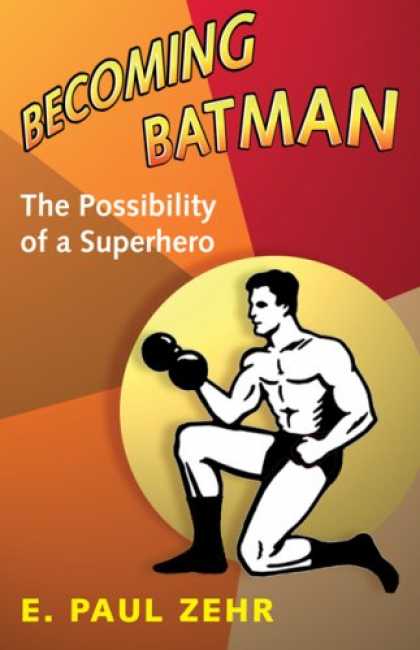
Becomingbatman

Most of my reading time this week was divided between two books, one of which was also a new purchase. The newly purchased book that I spent a lot of time with is E. Paul Zehr’s Becoming Batman. This book isn’t at all what one might expect from the title or the cover. If one were to notice that it’s put out by Johns Hopkins University Press, one might realize that it’s not a fanboy fantasy work. What it is is a book about the science of exercise and conditioning for athletes that uses “Batman” as a pedagogic tool to make more digestible scientific information like how our muscles grow or how we make our movement more efficient through practice. It’s a fascinating book if you are interested in science and martial arts (or movement arts more generally.)


Wired for StoryThe other book I’ve been tearing through is Wired for Story, which I wrote about last week. It’s a book that explains how human brains are wired to be intrigued by story, and how writers can put this information to good use.


Meeting the Dog Girls

The one book that I finished this week is Gay Terry’s Meeting the Dog Girls. This is a collection of short stories (some of which might be classified as flash fiction) that could be called tales of the weird or supernatural fiction. Most of the stories have a quirky sense of humor.


ZebrasUlcers_Sapolsky

I bought two other books this week, both of which have been on my reading list for a while. The first is Why Zebras Don’t Get Ulcers, by Robert Sapolsky.  As the title suggests, this book is about why humans are unique within the animal kingdom with respect to stress-induced illnesses. Stress reduction and mitigation have been an important question of inquiry for me as of late.


afterdark_murakami

The other book is Haruki Murakami’s After Dark. This will be the third or fourth book by Murakami I’ve read, and I enjoy his style. Ironically, this was the first book by Murakami that I noticed in the bookstore, but I never got around to reading it.

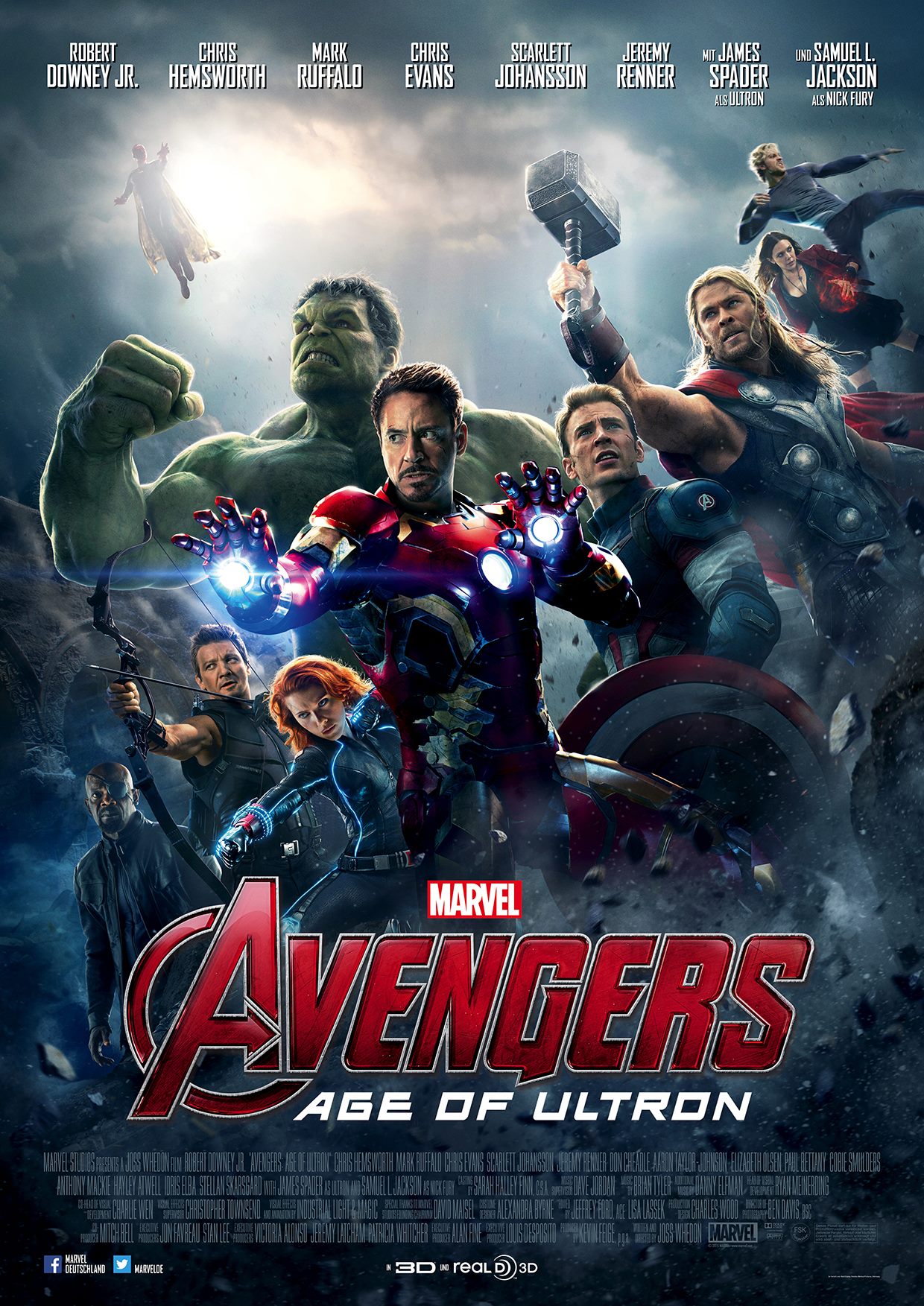
MOVIE REVIEW: Avengers: Age of Ultron

Avengers-Age-of-UltronAvengers: Age of Ultron opened across India today, April 24, 2015. This film is set sometime after the events of the second films in the Captain America and Thor solo “trilogies.” We know this because Thor is on Earth and the Falcon (in a cameo) makes an offhand comment indicating that he’s spending time looking for Bucky Barnes / Winter Soldier. Furthermore, we know it because the opening scene is the Avengers working as a team to take down Baron Von Strucker’s fortress (re: Captain America 2 end-credit scene) in a fight to obtain Loki’s scepter. This scene suggests that the team has been working together for a while in taking down Hydra bases of operation globally. (Many have jokingly inquired why Steve Rogers (Cap) wouldn’t have called in his avenging friends during the events of the Winter Soldier film.  This film reinforces, rather than solves, that riddle.) At any rate, that opening scene contains an awesome action sequence.

The core premise of the film will not come as a surprise to anyone who has seen the trailers for this film–not to mention the previous Marvel Cinematic Universe (MCU) films and post-credit scenes. Tony Stark (Iron Man) tries to “create a suit of armor around the world” and the program–dubbed Project “Ultron”–goes terribly awry.  After Ultron comes into existence, he quickly moves to co-opt the Maximoff twins (better known as The Scarlet Witch and Quicksilver.) Because the twins have an axe to grind with Tony Stark, they willingly side with Ultron. The Scarlet Witch is instrumental in Ultron’s plan. If you haven’t seen the trailers don’t finish this sentence, but for others it will be apparent that the Scarlet Witch’s mind control is used to pit some Avengers against either themselves or others.

The tone of this film is different from the first Avengers movie. In the first film much of the tension springs from unfavorable first impressions and standoffishness. Now the characters know each other and love-hate relationships are rife–some more loving and some more loathing than others. This may make it easier to relate to what’s going on between the major characters. The strained relationships inside the team remain an important factor, and are crucial to the films going forward–most notably Captain America 3: Civil War.)

While the trailers may have led one to believe this would be a big film for Natasha Romanov (aka Black Widow) given the flashback scenes, it’s actually Clint Barton (aka Hawkeye) who has a more pivotal and revealing role in this film. (Perhaps to the chagrin of the many who wonder why he’s even on the team.) However, the evolving relationship between Romanov and Bruce Banner gets a fair amount of screen time–though the need to pack a lot into the film given the huge cast makes this drama feel a bit thin. The twins and their tormented past are also critical to the tone of the film. They hold an event from the past against Stark, but they are ethical people at their core.

The Vision is the character that has been held closest to the vest by Marvel. I won’t say much about Vision to avoid spoiling anything other than that it’s an intriguing character. I was worried that either the way this character was created or the effect he had on the story would be a disappointment, but it wasn’t.

I think James Spader did an excellent job of playing Ultron–a character that vacillates between being childlike and being a grim psychopath. (One may not get the childlike part from the trailers, but this is a brand new intelligent entity, and so it’s clever to show that.)

Like the first Avengers movie, this one has its bit of deus ex machina (bolt from the blue solutions to once insolvable problems), but it’s not the perfection of story that makes these movies engrossing. (I didn’t find it as deus ex machina as the first film–though there is at least one moment that springs to mind.)

What sells these films is: a.) the witty dialogue;  b.) the stunning visuals of the action sequences; and c.) the tension between characters both friend and foe. (Probably not in the aforementioned order.) On those three items this film doesn’t disappoint.

I won’t even bother to recommend you see it, as I’m sure–like everybody else on the planet–you will.

BOOK REVIEW: Batman: Arkham Asylum by Grant Morrison

Batman: Arkham Asylum - A Serious House on Serious EarthBatman: Arkham Asylum – A Serious House on Serious Earth by Grant Morrison

My rating: 4 of 5 stars

Amazon page

This is the third, and probably last, installment in my “Happy 75th Anniversary, Batman” series of reviews. Batman: Arkham Asylum is an attempt to convey a nightmare on the page, and it succeeds both graphically and narratively. It’s quite different from other Batman comics in style and content. It takes the dark nature of the Dark Knight’s mythology to the extreme.

There are two story-lines woven together in Batman: Arkham Asylum. The main line involves Batman entering an Arkham Asylum being run by the inmates. There he finds himself pitted against his foes: the Joker, Two-Face, Scarecrow, and others. The other is the 19th century tale of Amadeus Arkham’s descent into madness.

As is common in the Batman mythology, psychiatrists are portrayed as walking the razor’s edge between sanity and insanity. For those who don’t read comic books, this is most readily exemplified by the character of Dr. Crane / Scarecrow in the first film of the Nolan trilogy, Batman Begins. I’m not sure whether the point is to create enemies that are so strong they can bend doctors to their will, or if there is a general disdain for psychiatrists—as one might see a dislike of lawyers in other stories.

Among the nightmarish elements of this work is the fact that Batman’s face is never seen clearly. The Dark Knight is always a vaguely and/or surrealistically silhouetted. There’s a mix of sharpness and haziness in the graphics. The Joker gets his own crazy scrawl font. The graphics are as creepy and strange as can be. On my low-end Kindle, the work was in black and white, which worked well. I did look at the sample pages, and the color version uses a lot of sepia and crimson.

Batman: Arkham Asylum asks us to consider whether Bruce Wayne / Batman is sane or just a lunatic with a moral code.

View all my reviews