
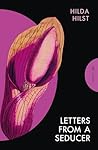
 Letters from a Seducer by Hilda Hilst
My rating: 5 of 5 stars
Publisher Site – Pushkin Press Classics
Release Date: May 27, 2025
This is an upcoming English translation of a 1991 novella from Brazilian author, Hilda Hilst, from what has been called her “obscene cycle.” It is mostly an epistolary novella in which a man, Karl, writes his sister, Cordelia, informing her about his recent sexual adventures and attempting to coax a confession out of her about her own activities long in the past. We never see any replies from Cordelia. (And that is part of what makes the book fascinating.) The only indication of her responses that we get are Karl’s references to Cordelia’s comments from her last letter in his present letter. However, we can’t necessarily be certain that even those occasional suggestions of dialog represent the truth.
To understand why one might have doubt, one must be aware of what else is going on in this book. There is one other narrative voice, and that is of Stamatius. Stamatius is in socio-economic terms the opposite of Karl. Karl being of the gentlemanly class — his behavior and letters to his sister notwithstanding — and Stamatius is a starving artist (a writer, to be precise.) The two men speak of each other, though always in deprecating terms. However, there’s reason to think the two men might be one. Stamatius, while condemning Karl’s sex obsession, also mostly engages in tales of his own sexual adventures as well as presenting those of others. In fact, the end of this novella is a collection of short vignettes of the nature one might see in a smutty letter magazine, only better (and sometimes poetically) written.
By the author’s own description, this novella is intentionally pornographic. While the same thing is said of Hilst’s The Obscene Madame D I did not find that book particularly graphic or sex-centric. This book, however, is quite graphic and if one took away references to sexual activities
nothing of substance would remain. (Not true of The Obscene Madame D.)
I found this book to be intriguing, despite the fact that it is quite sloppily arranged (presumably on purpose,) but it does present some splendid use of language (at least in this translation — the original is in Brazilian Portuguese) and character psychology.
I’d recommend this book for readers of literary fiction who don’t mind plotlessness and pornographicness.
View all my reviews



 Tiger Riding for Beginners