POEM: Mind Mob

my mind is a flash mob
living to kick and dance
to music’s wail & throb
IT plays a game of chance


when my mind is blown
IT does the blowing
when i’m in the flow
IT does the flowing


how cheap, IT is, they say
but rent ‘s not paid each 30 days
each time i roam the bill comes due
as i’m kicked back to end of queue

Batch of Haiku

water flows
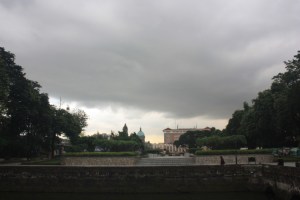
under stark skies
to open seas

exiles flee
train eating track
one way

late monsoon
winter gray skies
thick & low

pink blooms
hold through the cold
dogged bind

silent rites
acted out now
later lost

breathe & sway
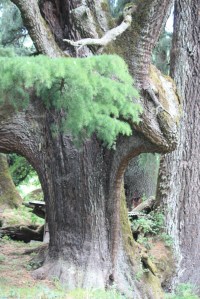
bath in forest air
samara rain

POEM: Portal Search

when I walk the city streets
i never look down at my feet
but my eyes do race and roam
seeking a secret route back home

i lost my way
one sunny day

and haven’t found the ragged, rustic door
that will drop me on that unmarked floor

where the elevators don’t stop

POEM: Little Words

there are little words
that cheep and squeak
and know not what secrets
that they keep


they think themselves
the lion’s roar
but they fly not,
falling to the floor


piling up into so much dust

BOOK REVIEW: Selected Early Poems by Robert Frost

Selected Early PoemsSelected Early Poems by Robert Frost
My rating: 5 of 5 stars

Amazon page


This is a collection of collections. It gathers the first three of Robert Frost’s books into one volume. “A Boy’s Will,” “North of Boston,” and “Mountain Interval” are all part of Frost’s early work and they came out in a relatively short span: 1913, 1914, and 1916, respectively. However, one can see definite shifts in the nature of the poems across these collections. The poems of the first collection feature many shorter poems that are rhymed and metered. The middle poems are longer, are largely unrhymed and of varied meter / unmetered, and are often written as extended dialogs that convey a story or a bit of tension from one. The last collection features Frost’s most famous poem, “The Road Not Taken,” and contains many poems that are similar to that one in that they have more of the lyric quality of “A Boy’s Will” but take the form of a short meditation.

The theme that cuts across these poems is rural New England life. Apple-picking, wall mending, visiting someone in a snowy scene– these are the kind of events that transpire in this work. Nature features in Frost’s poems, but is largely secondary to the human element—a setting not a subject.

I enjoyed this collection, and would highly recommend it for poetry readers.

View all my reviews

POEM: Sensation

i can feel my heartbeat
i shouldn’t feel my heart beat
but i’m sharply folded
when i stand and blossom
the warmth rushes through me
and the pins and needles
trickle through my body
subtle the sensation
time attuned sensation
now i know my heartbeat
subtle silent heartbeat

POEM: Holocaust Haiku

half a coffee
sits on an oak table
long cold


devil days
a line feeds the train
one way


madman rants
spittle flies in an arc
message lost

BOOK REVIEW: The Sun and Her Flowers by Rupi Kaur

The Sun and Her FlowersThe Sun and Her Flowers by Rupi Kaur
My rating: 5 of 5 stars

Amazon page


This is the second collection of free verse (with some prose) poetry and line drawn art by Rupi Kaur, an ethnically Indian Canadian poet. Like the first collection, “Milk and Honey,” this collection has been well received critically. The strengths of the collection include some beautiful, evocative, and unique use of language; the author’s willingness to lay it all on the line in a bold and brave fashion; and the often clever–if simple, verging on crude—artwork. Its greatest weakness is frequent restatement of clichéd notions and truisms that don’t stand up well juxtaposed to the more personal and illuminating lines.

The collection is divided into five parts, each of them reflecting a theme—while being tied together by the titular floral theme. “Wilting” is about breakups. This flows smoothly in tone into the second part, “Falling,” which is about sexual violence, depression, and the linkage between them. “Rooting” is about family and origins, and—in particular—the poet’s relationship with her mother. As an immigrant child who moved to Canada from Punjab while young, Kaur was more attuned to her new home than her parents—who were less at ease with their adopted homeland and more rooted to their ancestral home. The penultimate part, “Rising” is about love and relationships, and it takes the collection into brighter territory. “Blooming” is about feeling comfortable within one’s own skin, and—in particular—the female experience of it.

As hinted, the overall organization of the collection seems purposeful and intriguing. The two melancholy parts at the beginning are blended into the last two (more optimistic) parts by way of a chapter on roots and family. This bridging seems to be done on purpose to make a statement.

I enjoyed this collection, and would highly recommend it for poetry readers—particularly for those who enjoy free verse.

View all my reviews

POEM: Elephantine

That mammal stands a mile tall.
Far too proud to take a fall.

It lumbers on til days end,
nudging family round the bend.

Water hole. Day’s close. Circled up.
In the center stands a pup.

On infirm legs, the youth shakes
as adults stomp and earth quakes.

Predators stalk, but today’s odds
favor the prey and defy the gods.

POEM: Aokigahara (青木ヶ原)

a sinkhole of depression

whose dark gravity

pulls to the rim

those troubled souls

seeking midnight’s comfort