POEM: 3 Takes on Time

I

his dreamtime mind
floated to a forest
settling in the shadows
where time resides
only in shifting shapes


II

I saw a woman smudge a tear with her palm,

listening to an old song that wasn’t old to her,

a song that pulled dusky moments of angst to the forefront of her mind,

rocketing her into a reality eight miles back and decades distant.


III

oh, the monsters of long ago
trudging over ice and snow
such a lonely life

too much time was left to think
about being on the very brink
of extinction

POEM: Still Digging

I saw that nation when it was anew,

and all the dreams of countrymen, they flew.

But danced back to the Earth in flaky ash.

As the dictator donned his glitter sash.

He said, “The fault? You’ll find it five miles down

in the bowels of bunkers, underground.”

People went to digging with their spoons,

and cursed the worst while burning at high noon.

From day-to-day you’ll find that they still dig.

No need to build a gallows or a brig.

POEM: Plastic Brain

There’s an old-timey telephone operator inside my skull,

popping plugs and jacking them back in elsewhere,

but doing it like a Hindu deity — infinite arms all ablur,

and all I know is that the well-worn jacks get the fire.

POEM: Chasing Sages

Chasing sages down the street,

tripping to bow at their feet.

Oh no, poor soul, who’s lost his way,

his brain behind, his mind affray.

You can’t get to there from here

for it’s much worse than you fear.

Lao Tzu’s Way is closed today.

Try again when it thaws next May.

Maybe by then you’ll ‘ve seen the light,

bouncing your way from wrong to right,

feeling the weight of what you’ve heard,

having found the sound, and lost the word.

POEM: Non-linear Time

you’ve clocked me on atomic time
dragged me below the water line
but you don’t know from whence I’ve come
blank, teary-eyed, and feeling numb

weary from my endless travel
my throat parched, the sound of gravel
still you pull from me a charred word
but it feels distant and absurd

somehow he thinks that he will find
somewhere among the broken time
a time shard that tells the story
lost city, ditched and hoary
weary wanderer drowned down there
pulled from green waters by his hair

“but who was the evil culprit!”
i once heard screamed from a pulpit
the funeral for a future me
i heard the word i could not see
found by some old man of means
who could see behind the scenes

but to know the truth, he could not
secrets hide in bits time forgot

POEM: One Dead Cat

It’s come to my attention that I’m doomed.
I heard that a cat was killed by curiosity.

I realize that I’m not a cat —
not even a hepcat,
which sounds like it would be a cat with hepatitis,
but it’s really the ringing endorsement of a 1940’s jazz artist.
(I learned the term from Looney Tunes reruns in the 70’s,
alas, too late for the hipster seal of approval.)

But, I digress.

My point is that I’m vastly more curious than a cat.

Cats are only curious about two things:
1.) where is my food?
&
2.) why does this human act like it’s the boss of me?

But I digress once more.

My real point is that if anyone has received a lethal dose of curiosity,
even given my large body mass and super-feline capacity to neutralize toxins,
surely it’s me.

Curiosity is my defining characteristic, the sine qua non of my life.

I’m curious about the arcane, the anachronistic,
and all the subjects typically maligned as:
“dreadfully boring,”
“painfully tiresome,”
“excruciatingly tedious,”
and “soul-crushingly ho hum.”

I have a Master of Economics degree, for heaven’s sake.

Even my “interesting” graduate degree, the one in International Affairs,
largely involved the study of the obsolete tactics of a collapsed empire.

I’ve spent hours asking, “Who am I?”
out of curiosity about whether Sri Ramana was right,
and eventually a meaningful answer would coalesce.

I’m curious about everything there is to be curious about.

Is there a god, and, if so,
-is she pretty?
-does it have tentacles?
-is it a lonely job?

What is consciousness? Where is consciousness? Is consciousness? Conscious much?
-And can one ever know a thing by using that thing as one’s primary tool of investigation? Or is it like trying to fully know a house while locked in one of its closets? Plato’s cave and all that jazz.

What technological advancement will blow us to smithereens?
-And will it be the same one that got all those alien races who should be billions of years ahead of us, but who are radio silent and whose suns aren’t even partially blotted out by Dyson swarms. Or is the road of civilization strewn with technological landmines — each unique, but deadly?

I’ve climbed to the top of a mountain just to know what was on the other side.
Only to be answered by the rows of ridge lines stretching out into the grey distance,
which said to me, “Even this little blip of the universe is too big for you to know.”

BOOK REVIEW: Anarcha Speaks by Dominique Christina

Anarcha Speaks: A History in PoemsAnarcha Speaks: A History in Poems by Dominique Christina
My rating: 5 of 5 stars

Amazon page


This collection of poems, written by Dominique Christina and selected / arranged into a story by Tyehimba Jess, tells the story of a slave woman who was used for medical experimentation. Most of the poems are in the voice of this woman, Anarcha, and are conveyed in a slave dialect. However, a few are from the perspective of Dr. Marion Sims, the doctor who used Anarcha (and other slave women) for research and experimental procedures. Even without the cues in the poem titles, it’s easy to tell when these switches in voice occur because the doctor’s poems are in “proper” English, as opposed to Anarcha’s dialect. I should point out, while I can’t tell you how accurate the slave dialect is, I can say it presents no challenge to the reader’s understanding of the story or of the imagery or metaphor of the poetry.

The events described in these poems are based on a true story. Anarcha developed a fistula (a hole in bodily tissues that’s not supposed to be there) as a complication of carrying a child, and as a result suffered persistent bleeding. Anarcha’s owner handed her over to Dr. Sims to repair the fistula and stop the bleeding, which would require the development of a new procedure. Sims is often called the father of modern gynaecology, and was lauded with statues and honors. However, in recent years, his image has been tarnished by the fact that many of his advancements were only possible through the non-consensual examination of, and experimentation upon, slave women.

I should point out that, while reading this book has made me interested in learning more about the details of the story, I can’t really comment on the degree to which the poems accurately convey history. From the little I was able to garner from quick internet research, there are wide-ranging views on Dr. Sims and his research. Some think Sims belongs in Josef Mengele’s corner of hell. (Note for non-history buffs: Mengele is the Nazi doctor who experimented on Jews and other prisoners during the Second World War.) Others believe Sims was genuinely working to heal the slave women and wasn’t solely motivated to find a treatment for paying patients, and that — in the context of his times — he should be considered a fine, if fallible, doctor. I don’t know how much is know about what was in Sim’s mind or how it matched his behavior, but at a minimum he seems to have been much less delicate with his slave subjects than he would have been with his patients in terms of subjecting them to pain and humiliation.

I will say that the poems in Anarcha’s voice feel authentic, i.e. they feel like they convey truth about what would go through a person’s mind when put in her position. Her humanity is felt. In a few cases in the Dr. Sims poems, that authenticity feels like it breaks down, and one thinks, “no one sees themselves that way” – an instance of self-deification springs to mind. That said, perhaps it’s an accurate depiction. More than one doctor has been known to be colossally narcissistic on occasion.

That said, this is a poetical work and not a historical account, and so the beautiful language, clever metaphors, and emotional resonance of the work are what serve to make it a book that should be read. I would highly recommend this book for all readers. Even if you aren’t typically a poetry reader, you’ll find this free verse collection readable because of its story and the insightful view into the mind of Anarcha it presents.

View all my reviews

The Only Bad Poem is a Dead Poem, or: Random Thoughts on Meaning in Poetry

What makes a bad poem?

  • too cloying and / or angsty?
  • too cryptic and indecipherable?
  • uses too many words like “cryptic” and “cloying”?
  • composed by Paula Nancy Millstone Jennings, or a Vogon?*
  • reads like pop music lyrics from the 80’s?
  • doesn’t rhyme?
  • does rhyme, but in a Dr. Seuss-y kind of way?
  • a trochee got jammed amidst the iambic pentameter?

In my opinion (typically, not humble), the answer revolves around meaning and feeling. Poetry is a product of words, and for every other product of words, clarity of meaning is at the forefront of desirable traits.

Allow me to illustrate: Say one produces a business memo, and one hands copies around the conference table. If, having read the memo, not all readers are in agreement about its meaning, one has failed as a memo-writer. (Unless one or more of the readers is an idiot.)

However, if one produces a poem, hands copies around a table, and everyone agrees about its meaning, you’ve failed as a poet.

Like any blanket statement about poetry, that one is a lie. My point is that meaning is overrated as trait of poetry. Poems can be like Zen koan. If you can grasp the meaning intellectually some old monk will be there to cuff you upside your noggin (probably figuratively, your own inner angry Zen monk.)

So if conveying meaning is purely optional, what to convey? Feeling. Sounds, images, and even metaphors can evoke a feeling in one reader that’s different from the next reader, but evoke a feeling in each never-the-less.

So, just ask, will this poem make a reader feel some kind of way?

___________________________________________________________________

* This is a joke that only makes sense to those who’ve read Douglas Adams’s “Hitchhikers Guide to the Galaxy” books. If you haven’t, go read at least the first (same-named) book and come back. I’ll wait.

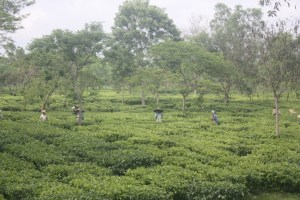
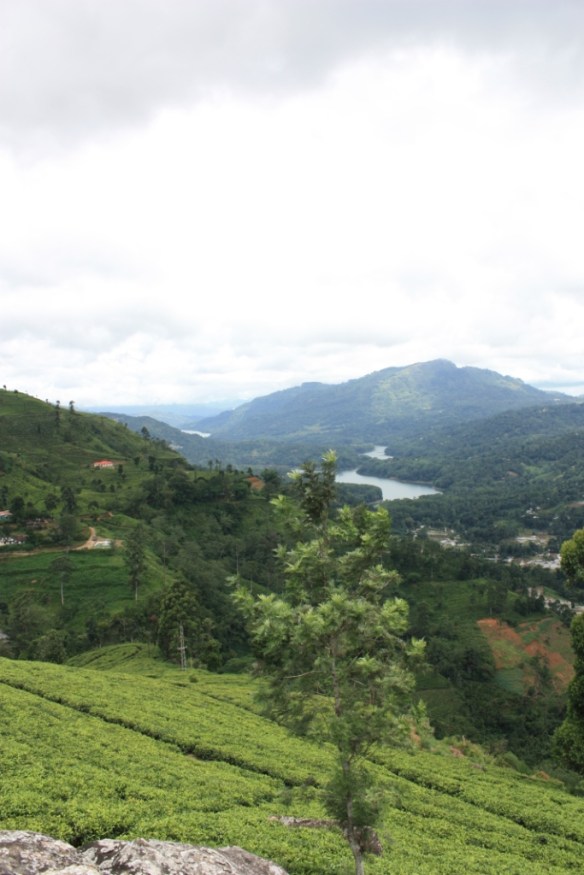
POEM: What Kind of Shrub?


What kind of shrub grows an Empire?

What kind of shrub shifts the well-laid tracks of global trade routes?

What kind of shrub doesn’t know whether to be of nature or man?

Its even green sings the song of nature, stretching in an unbroken landscape to the forest’s pristine chaos-

-except when in need of picking. Then its bright, almost glowing, fresh tips are the shade of a newly trimmed outfield, standing out against nature’s dark olive.

But, its flat-topped, close-cropped ‘do tells a tale that’s all man, as do the fine parts that section off the shrubs into labyrinthine patterns for the pickers to navigate.

And what kind of shrub, each day, draws hordes of humans with wicker baskets on their backs and conical hats that are to the Vietnamese Paddy Hat what a novelty sombrero is to a real sombrero.

What kind of shrub…

POEM: Witching Hour Wanderer

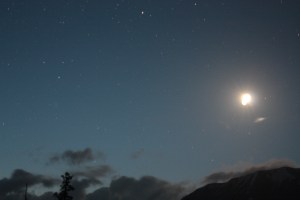
he lies beneath a winter’s night full moon
under the stretching silence of fresh snows
quiet, save for the Saw-whet’s beep-beep tune
as if the living were claimed by the shadows

somewhere boots will crunch on a crust of ice
out to find the lost and longing wanderer
who thought no cabin rafters could suffice
to fuel the fires of an ardent ponderer

two enter a race neither knows he’s in
with the crawling clouds that’ll douse the moonlight
and with river ice that’s getting thin
but mostly with the mean teeth of frostbite

would someone come for you in the witching hour?
then treasure him be he tender or dour