POEM: One Dead Cat

It’s come to my attention that I’m doomed.
I heard that a cat was killed by curiosity.

I realize that I’m not a cat —
not even a hepcat,
which sounds like it would be a cat with hepatitis,
but it’s really the ringing endorsement of a 1940’s jazz artist.
(I learned the term from Looney Tunes reruns in the 70’s,
alas, too late for the hipster seal of approval.)

But, I digress.

My point is that I’m vastly more curious than a cat.

Cats are only curious about two things:
1.) where is my food?
&
2.) why does this human act like it’s the boss of me?

But I digress once more.

My real point is that if anyone has received a lethal dose of curiosity,
even given my large body mass and super-feline capacity to neutralize toxins,
surely it’s me.

Curiosity is my defining characteristic, the sine qua non of my life.

I’m curious about the arcane, the anachronistic,
and all the subjects typically maligned as:
“dreadfully boring,”
“painfully tiresome,”
“excruciatingly tedious,”
and “soul-crushingly ho hum.”

I have a Master of Economics degree, for heaven’s sake.

Even my “interesting” graduate degree, the one in International Affairs,
largely involved the study of the obsolete tactics of a collapsed empire.

I’ve spent hours asking, “Who am I?”
out of curiosity about whether Sri Ramana was right,
and eventually a meaningful answer would coalesce.

I’m curious about everything there is to be curious about.

Is there a god, and, if so,
-is she pretty?
-does it have tentacles?
-is it a lonely job?

What is consciousness? Where is consciousness? Is consciousness? Conscious much?
-And can one ever know a thing by using that thing as one’s primary tool of investigation? Or is it like trying to fully know a house while locked in one of its closets? Plato’s cave and all that jazz.

What technological advancement will blow us to smithereens?
-And will it be the same one that got all those alien races who should be billions of years ahead of us, but who are radio silent and whose suns aren’t even partially blotted out by Dyson swarms. Or is the road of civilization strewn with technological landmines — each unique, but deadly?

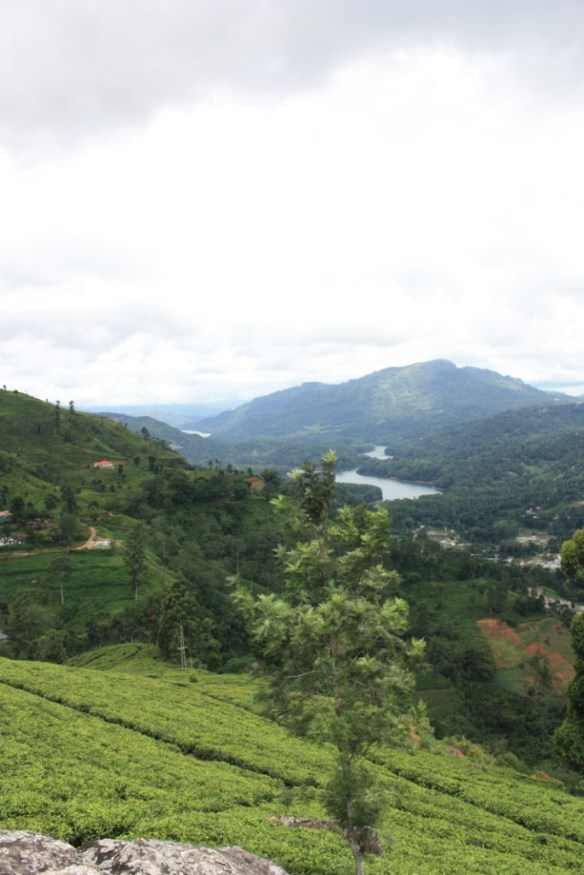
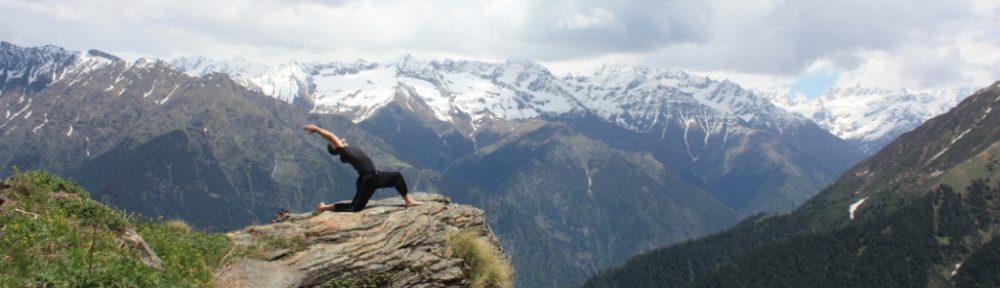
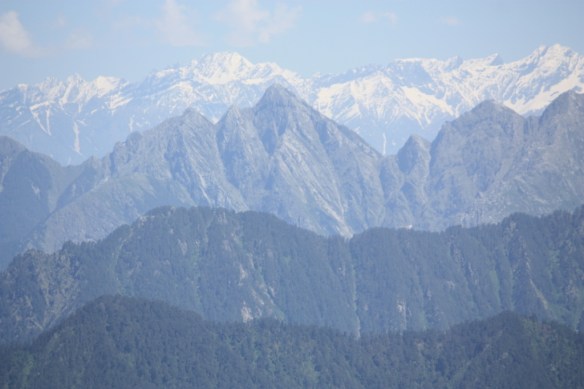
I’ve climbed to the top of a mountain just to know what was on the other side.
Only to be answered by the rows of ridge lines stretching out into the grey distance,
which said to me, “Even this little blip of the universe is too big for you to know.”
POEM: What Kind of Shrub?


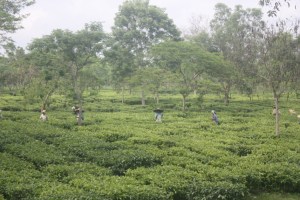
What kind of shrub grows an Empire?

What kind of shrub shifts the well-laid tracks of global trade routes?

What kind of shrub doesn’t know whether to be of nature or man?

Its even green sings the song of nature, stretching in an unbroken landscape to the forest’s pristine chaos-

-except when in need of picking. Then its bright, almost glowing, fresh tips are the shade of a newly trimmed outfield, standing out against nature’s dark olive.

But, its flat-topped, close-cropped ‘do tells a tale that’s all man, as do the fine parts that section off the shrubs into labyrinthine patterns for the pickers to navigate.

And what kind of shrub, each day, draws hordes of humans with wicker baskets on their backs and conical hats that are to the Vietnamese Paddy Hat what a novelty sombrero is to a real sombrero.

What kind of shrub…

POEM: Witching Hour Wanderer

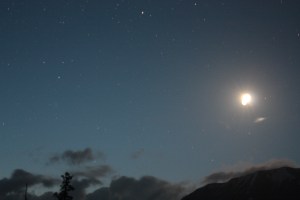
he lies beneath a winter’s night full moon
under the stretching silence of fresh snows
quiet, save for the Saw-whet’s beep-beep tune
as if the living were claimed by the shadows

somewhere boots will crunch on a crust of ice
out to find the lost and longing wanderer
who thought no cabin rafters could suffice
to fuel the fires of an ardent ponderer

two enter a race neither knows he’s in
with the crawling clouds that’ll douse the moonlight
and with river ice that’s getting thin
but mostly with the mean teeth of frostbite

would someone come for you in the witching hour?
then treasure him be he tender or dour

POEM: The Thaw Entwined, or: The Sunflower’s Wisdom

No. Snow and ice can’t rectify my mind.
Don’t pray I’ll flash fire it into a boil.
I’ll seize, sullen, frozen, as a gargoyle.
Frost will form on my eye, and I’ll be blind.
A thaw comes only in the state entwined.
If only I were gifted at that toil.
I watch Trussed Wonder’s melt begin to roil,
wondering how they knew which way to wind.
 
But nature graces those lacking talent.
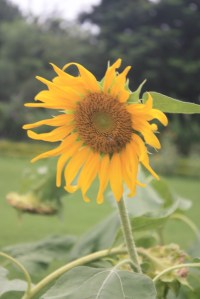
A sunflower’s wisdom is all one needs.
Making turning to the sun look gallant,
is the lazy thaw path to being freed.
 
There is no flash fried wisdom you shouldn’t shun,
but, perhaps, just revolve to face the sun.

POEM: Decay

People fear death,
but beyond death lies decay,
and one can rejoice in decay.

For to decay is
to be Santa handing out piles of gifts,
building blocks badly needed to make
stalks and sternums.

Becoming the dark, rich loam,
the color of coffee grounds,
from which shoots and leaves
sprout to chase the light.

Your gifts will keep giving
despite the people grieving
because you are a pile of
recyclables.

POEM: Surrender


The arrogance, shoving words into rows,
try to describe someplace only god knows.

A cube of rock, turned edge skywards,
loftily defying each, and all, of my words.

Jolie laide in its craggy perfection,
free from all vanity and dejection.

When it shrouds itself in cloudy veils,
it doesn’t do so because it quails.

It demands no awe and yet has mine.
It is the sacred, sans the shrine,
and, before it, I bow.

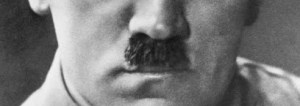
POEM: My Theory on the Long Shadow of Hitler’s Mustache

People once saw in it great panache,
but Hitler killed the toothbrush mustache.

Now no one would dare to wear it.

Except that groundskeeper from Magnum P.I.

who turned out to be the mysterious millionaire.

Maybe, his wealth was Nazi gold?

But that isn’t my theory of the long shadow of Hitler’s mustache.

My theory is that when the short mustache comes back in fashion,
great evil will sit upon our doorstep.

For it is more than a choice of facial hair,
it’s a barometer of remembrance
that lacks an indicator of the half-life
of evil’s stain upon our collective consciousness.


Or, maybe, it just looks stupid on your face.
As if you made a dreadful razor error
and tried to play it off as a plan
through use of symmetry.


In which case, someone should be charting
the rate of application for name change by
Hitlers, Himmlers, Goebbels, and Görings.

An Introvert’s Poem

Please don’t take this the wrong way,
but I wish you existed fewer hours per day.
 
It’s not that I don’t like your company.
 
It’s just that I wish your dosage were smaller.
It’s not like I wish you thinner, prettier, or taller,
 
I just wish there were less of you — temporally speaking.

POEM: Joker, or: Disruptive Forces

Among the brick rubble, down a side street from the temples encased in spiky, cuboid scaffolds, next to a bulging wall bolstered by beams knocked in at a slant, someone painted this graffiti of Heath Ledger’s Joker.

I stare at the maniacal face and can’t help but wonder whether someone painted it in the seven years between Ledger’s portrayal and the 2015 earthquake that broke Bhaktapur, or whether it’s a commentary on disruptive forces.

POEM: Dad’s Strange Lexicon

My father had a strange lexicon.

In second grade, we were playing a word-guessing game like the game show Password (if it were in a classroom of spastic 2nd graders.)

The word was: “BARN.”

I offered the clue: “HAYMOW.”

You can imagine the puzzlement in a classroom of mostly “city” kids raised on Richard Scarry vocabularies. I almost got beat up when my team — the losing team — decrypted my clue into “hayloft,” a clue that would’ve easily won the game.

Our house had a DOG-TROT. I know it was toward the middle of the house, but have no idea what its defining characteristic might have been. I do know that I never saw a single dog trot through the middle of our house because of the policy of “Outside for Animals – Inside for Humans” that reined in our household, except when a wily field mouse snuck in through the basement or a wood duck — distinctly lacking wiles — snuck its way down the chimney and into the wood stove.

I was told, with great conviction, that a “HAN-YAK” was second cousin to a “POT-LICKER.” As a child, I missed that these were terms of derision, and — I fear — I may have hung a slander upon my cousins by licking some marinara off the lip of a piece of cookware once upon a time.