BOOK REVIEW: Cat’s Cradle by Kurt Vonnegut

Cat's CradleCat’s Cradle by Kurt Vonnegut

My rating: 5 of 5 stars

Cat’s Cradle is Vonnegut at his most brilliant and witty.

The book follows a writer, John/Jonah, as he does research for a book on the Hiroshima A-bomb. To learn about the (fictitious) inventor of the bomb, the deceased Felix Hoenikker, he interviews  Hoenikker’s children and former supervisor. In the process he becomes entangled in global catastrophe in a way he couldn’t have imagined.

As it turns out, Hoenikker had invented another weapon of mass destruction, one that would make the H-bomb look like a firecracker. However, ice-9, as the weapon was designated, wasn’t intended as a weapon at all. Ice-9 turns all water into ice at temperatures below 114 degrees Fahrenheit. The idea was to make marshes crossable by Marine Corps units. It’s the failure to anticipate the ramifications of using such a chemical, i.e. the hydrologic cycle, that’s the central premise of this book.

A lot of the book deals with a fictitious religion called Bokononism. Bokononism is the cynical faith of the Island of San Lorenzo, and it perfectly reflects Vonnegut’s mildly misanthropic attitudes. The first sentence of the Book of Bokonon says it all, “All of the true things I am about to tell you are shameless lies.”

At the beginning of Cat’s Cradle we find out that John is a Bokononist, but that he’d grown up a Christian. Bokononism is prohibited on the island by the dictator, Papa Manzano. The reader comes to discover that not only is the prohibition a fraud designed to give the religion more sex appeal, but also that Manzano is a practitioner himself. This is just one of the quirky oddities that defines life on San Lorenzo.

It’s when John and all the Hoenikker children are assembled in San Lorenzo that the action really unfolds. Manzano is dying and turns the presidency over to Franklin Hoenikker (the non-midget son of the father of the bomb); Manzano later commits suicide in the oddest imaginable way. Franklin convinces John to take the presidency, but it becomes moot as the book approaches climax.

I’ll leave you with my favorite piece of Bokononist wisdom, “Peculiar travel suggestions are dancing lessons from God.” By the way, you should go to San Felix island off the coast of Chile. [Picked via a spinning globe.]

View all my reviews

BOOK REVIEW: Ishmael by Daniel Quinn

Ishmael: An Adventure of the Mind and SpiritIshmael: An Adventure of the Mind and Spirit by Daniel Quinn

My rating: 4 of 5 stars

A man answers an ad that says, “Teacher seeks pupil. Must have an earnest desire to save the world. Apply in person.” Expecting to find a charlatan, the man is surprised to find his new teacher is, in fact, a gorilla.

Like Socrates, this gorilla, Ishmael, uses questions to guide his pupil toward crucial knowledge. Ismael teaches his student to challenge some of his most deep-seated beliefs such as, the world was made for humans, humans are the ultimate culmination of biology, humans are inherently separate from (and above) nature, and that humans are fundamentally flawed in such a way as to make ruination of the planet inevitable.

The core of the book differentiates two human cultures. The author calls them the “takers” and the “leavers,” but they correspond to what we might call “us” and the “aboriginal peoples.” Takers are specialized, agricultural, and technologically advanced (if you’re reading this review on a computer and not chiseled on a cave wall, you, my friend, are a taker.)

The lives of “Leavers” aren’t that different from those of humans 10,000 years ago. They are tribal as opposed to (to borrow Desmond Morris’s term) super-tribal. [In a tribe everyone knows everyone else. Morris suggests that things go to shit –re: war, crime, and deviant behavior– in super-tribal societies.] Leavers live like animals in that they tend towards equilibrium within their ecosystem. Takers do not.

If you long for thrillers or potboilers, this isn’t the book for you. It’s a thinking person’s book. The nice thing about Ishmael’s use of the Socratic method is that one can think through the questions in parallel to the narrator’s discovery. In this way, the reader can install himself or herself into the conversation.

At the most generic level, the book’s value is in showing one how much one takes for granted. We can’t see forests for trees.

One may agree or disagree with the author, but either way one will be subjected to powerful food for thought. Some of the discussion may evoke a visceral emotional reaction that one may have trouble reconciling with logic, such as the discussion of the morality of feeding the starving.

The downside of the book is that the dialogue can be strained in places and it can get a bit repetitive. The latter serves to reinforce key concepts, but some of them feel as though they are reinforced inordinately. In making the narrating protagonist struggle, Quinn creates a lead who seems a bit dense sometimes. Also, as I indicated, the journey is by-and-large in the mind, and so the tension is limited. There is some drama when the narrator shows up one day to find that Ishmael has been evicted. However, this is resolved without too great a difficulty and they resume lessons with  Ishmael’s irritability being the only change to be seen. There is drama at the end that will remain unspoiled herein.

I’d recommend this book as a thought-provoking exercise for the mind.

View all my reviews

BOOK REVIEW: The Sun Also Rises by Hemingway

The Sun Also RisesThe Sun Also Rises by Ernest Hemingway

My rating: 4 of 5 stars

Get Speechify to make any book an audiobook

Whatever the blurbs or critics might say, this book is about the raft of men left in the friend-zone after brief dalliances with Lady Brett Ashley. One may have been led to believe it’s about the life of Jake Barnes. Barnes is the lead character, but he’s not the most influential character.

Besides Barnes, the list of men who fall hard for Lady Brett Ashley include, boxer Robert Cohn, the bankrupt Michael Campbell, and the bullfighter Pedro Romero. Oddly enough, the physically toughest, Cohn, is the one who falls the hardest. Barnes may be the strongest in this sense; perhaps because his relationship with Ashley is over before the novel begins. Barnes comes off as likable with a pragmatic “live and let live” nature. (He can maintain a friendship with a woman that he loves, a feat that seems beyond Cohn’s ability. Campbell is used to having lost everything, and so seems to bob comfortably in Ashley’s wake. We don’t reliably learn about how Romero takes it.)

As the blurb says, The Sun Also Rises is about a journey from Paris to Pamplona. In Paris, the cast of Lost Generation friends hang out in cafés. In Pamplona they attend bullfights. In between, Barnes goes fishing with friends.

In a broader sense, the book is about dissatisfaction and restlessness, and not only within Ashley. This is summed up nicely by Cohn’s words to Jake, “Don’t you ever get the feeling that all your life is going by and you’re not taking advantage of it?”

Of course, the book shines in its language. Hemingway’s lean buy meaty prose is readable and engrossing. The minimalist dialogue beautifully conveys the interaction of a group of intimate friends.

Here’s a great line that captures the character of Hemingway’s writing in this book, “The beer was not good and I had a worse cognac to take the taste out of my mouth.”

The book rises to crescendo with the Pamplona bullfights and Hemingway adeptly ends on a sad note apropos of the morning after a great party.

View all my reviews

BOOK REVIEW: Dracula by Bram Stoker

DraculaDracula by Bram Stoker

My rating: 4 of 5 stars

Dracula leaves Transylvania to find a new pool of victims, and the only thing standing between him and the people of London is Dr. Van Helsing and his cast of allies.

The novel begins with the arrival in Transylvania of Jonathan Harker, a real estate agent from England. Both Harker and his beloved wife, Mina, play an important role in unraveling the mystery of Dracula. Soon after a ghost ship rams into port, Lucy Westenra (a friend of Mina’s) begins to suffer an unusual illness. A Dr. Seward brings in Dr. Van Helsing who has a rare expertise in her particular ailment. Professor Van Helsing’s knowledge is essential to driving Dracula out of London and back to Transylvania. They pursue the vampire– resulting an a final show down.

Bram Stoker uses a series of journal entries, letters, and memos to convey the story. This is an interesting approach, and popular at that time, but it does have its limitations.

Dracula was written early in the age of science and reason. While it was an age of superstition, there is an attempt to elevate vampirism from a strictly supernatural phenomena to one in which science has something to say.

The 19th century language and approach to tension makes for a less gripping tale than one would likely see today, but it is still a very readable book.

View all my reviews

BOOK REVIEW: The Road by Cormac McCarthy

The RoadThe Road by Cormac McCarthy

My rating: 5 of 5 stars

Sparse and haunting.  The Road is about a father and son walking cross-country in search of a safe harbor in a post-apocalyptic world. The story pulls one in and leaves a tightness in one’s gut. Every person the duo comes across on the road must be treated as a dire threat, making them each other’s only thread of connection to humanity. One particularly powerful moment is when they get to the ocean and see nothing but ghost ships lolling in the water. To reach the end of the road, the end of one’s world, without a flicker of hope is crushing, but they make a left turn and keep going.

McCarthy uses description in vivid flourishes, but it’s the spartan dialogue that really creates the tone. I was distracted by the lack of quotation marks and dialogue markers at first, but with only two speaking characters McCarthy’s approach works just fine. One soon gets a feel for the unique voice of each, and then the minimalist approach works.

McCarthy cuts away everything that is non-essential. Some of these non-essentials, like names, we so take for granted that their absence helps create a somber tone.

If you don’t like sad stories, this one won’t be for you. I found the ending to be tragic, but some may see it as hopeful.

I haven’t seen the movie, but from the trailer and what I’ve heard, it’s a bit different. Hollywood not willing to take the risk of stripping it bare.

View all my reviews

BOOK REVIEW: Brave New World by Aldous Huxley

Brave New WorldBrave New World by Aldous Huxley

My rating: 5 of 5 stars

In Huxley’s utopianish dystopia, an individual’s fate is determined through a combination of genetic engineering, operant conditioning, and hypnopedia (sleep-teaching.) It’s a different dystopian vision than that of Orwell or Atwood; individuals are drugged and encouraged in unlimited promiscuity in order to pacify them and keep them believing that they are happy (without allowing exposure to alternatives by which they might contrast their lives.) Gone are the arts and religion as we know it, and science exists only as a shadow of its former self.

The book follows the story of a “Savage”, named John, brought from an Indian reservation on which this “Brave new world” is unknown. He cannot understand the “civilized” world, and to its occupants he is an interesting anomaly to be gawked at at cocktail parties.

The book ends on an upbeat note as the reader learns of a third world, a world beyond the Brave New World or the brutally impoverished aboriginal lands.

Everyone should read this book to learn that one can be killed with “kindness” as well as with sternness.

View all my reviews

BOOK REVIEW: The Comedy of Errors by Shakespeare

The Comedy of ErrorsThe Comedy of Errors by William Shakespeare
My rating: 5 of 5 stars

The premise is simple: mistaken identity. Twin boys separated at birth, neither knowing the other is alive, wander about Ephesus inadvertently wreaking confusion by their mere appearances. To add to the confusion (and hilarity), each of these men has a man-servant that is an identical twin of the other man’s servant. Servant and master confuse each other’s doppelgangers. There is a wife thought to be crazy by the man she only thinks is her husband. There is a merchant who is trying to collect from the wrong man.

It’s not the play’s leads, but rather Dromio of Syracuse (one of the identical servants) who I find to be the most clever and compelling character. Some of his witty lines are:

– “Was there ever any man thus beaten out of season?”
– “…she is spherical, like a globe; I could find out countries in her.”
– “…he must have a long spoon that must eat with the devil.”

If one can accept the strained credulity of the play’s premise, it’s an enjoyable and light-hearted read.

It may not offer the most clever of Shakespeare’s wordsmithing, but Shakespeare at his worst is pretty damn good.

View all my reviews

BOOK REVIEW: Something Wicked This Way Comes by Bradbury

Something Wicked This Way ComesSomething Wicked This Way Comes by Ray Bradbury

My rating: 4 of 5 stars

Bradbury creeps us out by showing us a carnival through the eyes of two young boys. The month is October, and the carnival arrives in the dead of night. Everything about this story is meant to make one ill at ease, but at first we don’t know they boys minds are just playing tricks on them. The author gradually reveals the carnival is pure evil.

The boys, best friends, end up in over their heads, and being pursued by the carnies. Believing his son’s fanciful tales of time-bending carousels and a hall of mirrors that distorts more than light, a father plays a key role in the battle to restore normality to their town.

The strength of this book is Bradbury’s use of language. The book exudes creepiness, and in doing so captures just the right tone.

The weakness is its ending (which I will not get into to avoid spoilers.) It falls a little flat, particularly given the great build up.

View all my reviews

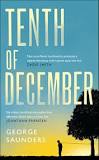
SHORT STORY REVIEW: Tenth of December by George Saunders

10thDecI’ve been reading the Best American Short Stories of 2012. Within this anthology is a story called Tenth of December by George Saunders; it’s also the title and concluding story of Saunders’s most recent collection.

This story interweaves two arcs, one of a boy and the other an old man. It’s this contrast between a man just starting life and another nearing its end that’s the focal point for the story. The lives of these two are brought together during a tragic winter event that leaves the reader uncertain as to whether either, both, or neither of the two will survive.

Saunders’s style is sparse, not in the manner of Hemingway but in a way that happily and freely abandons the sentence as the essential basic unit of writing –as opposed to occasionally letting phrases shine. The author also forgoes the traditional approach to noting dialogue. However, like Cormac McCarthy, Saunders makes himself clearly understood nevertheless.

Saunders displays a great sense of humor in this work. This is particularly noted as we are shown the boy at play during the piece’s introduction. I cracked up when it’s mentioned in boy’s internal monologue that he invented a martial art called Toi Foi, A.k.a. “Deadly forearms.”

The author masterfully captures the varied voice of boy and old man. The contrast between the playful youth and the reflective elder is a powerful commentary on the cycle of life.

BOOK REVIEW: Job by Robert Heinlein

Job: A Comedy of JusticeJob: A Comedy of Justice by Robert A. Heinlein

My rating: 4 of 5 stars

In “Job: A Comedy of Justice” the protagonist, Alexander Hergensheimer, finds himself randomly drifting from one alternative universe to another. After his initial shift, he’s joined by a lover, Margrethe, who knows him from her world as Alec Graham. The couple stay together through many other ill-timed world shifts, and are only separated when Hergensheimer finds himself in heaven. Facing the question of what he’d do to be reunified with the woman he loves, the novel really gets interesting.

As you may have expected, the name of the book is the Biblical name “Job” (i.e. rhymes with lobe) and not “job” as in an occupation.

Each time the couple shifts, they are poor anew. While geography remains unchanged, history and money are different from one world to the next. Hergenshiemer washes dishes to make a living because he can’t engage in his trade, preacher, in these worlds. He can’t do anything else without valid identification.

Just as Dante inadvertently convinces us that the first circle of hell is preferable to heaven (who wouldn’t rather be in the company of Socrates and Virgil than that of Jerry Falwell and Jimmy Swaggart,) Heinlein creates an afterlife that is a good deal more complex but also more just than the Biblical version.

I recommend this humorous and thought-provoking book.

View all my reviews