
Taken in November of 2019 in Diu; This church was converted to the Diu Museum, featuring Christian artifacts.

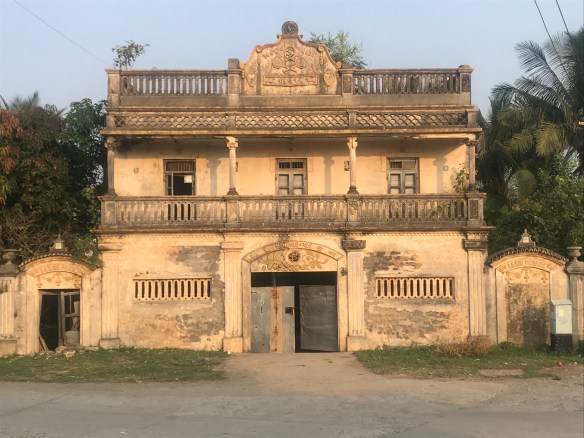
This church was owned by a hospital, but appears to be vacant / unused.

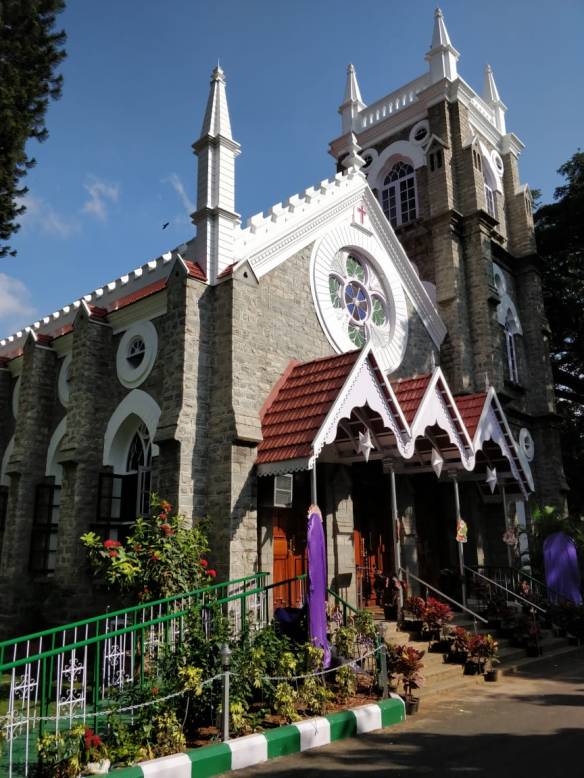
This church, St. Paul’s, is the only active church in Diu

Taken in November of 2019 in Diu; This church was converted to the Diu Museum, featuring Christian artifacts.
This church was owned by a hospital, but appears to be vacant / unused.
This church, St. Paul’s, is the only active church in Diu
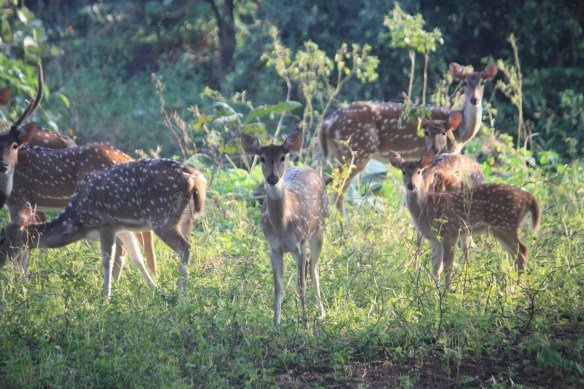
Taken on November 29, 2019 at Gir National Park
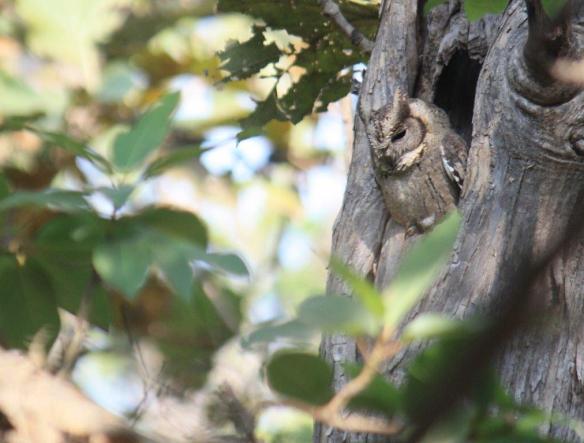
 Taken in Kolar in October of 2019.
 A Stranger Truth: Lessons in Love, Leadership and Courage from India’s Sex Workers by Ashok Alexander
My rating: 5 of 5 stars
In 2003, Ashok Alexander left a prestigious job at the advisory firm McKinsey and Company to head up the Gates Foundation’s HIV/AIDS prevention program for India. He had no experience in public health and faced an HIV prevention challenge on a scale and of a nature that hadn’t been seen before. This book describes his experiences — and sometimes those of others in Avahan (the Indian HIV Prevention program.) However, the emphasis isn’t on patting himself and his team on the back so much as pointing out the lessons they learned from the high-risk populations they served – mostly sex workers, but also their clientele, as well as intravenous drug users.
The nineteen chapters of this book are arranged into two parts. The first part (Ch. 1 thru 11) explores Alexander’s travels around the country to meet with various high-risk groups and learn about their needs. The second part (Ch. 12 thru 19) takes a deeper dive into the building of Mysore’s program, Ashodaya, which became a global educator on HIV prevention.
Part one offers insight into bits of India that most of us never see. When I mentioned that the problem in India wasn’t just it’s large size, but also the peculiar nature of the environment, that can be seen throughout these chapters. What do I mean by the peculiar nature? In India, not only is prostitution rarely practiced in brothels, but sex workers are largely indistinguishable from the general population. The biggest portion of the group is women in saris who look like much of the female population. Also, the societal stigma is great, which creates all the more incentive to not let your work be known. For these reasons, just finding the at-risk population was challenging, they were dispersed and hid in plain sight. There were also problems of thinking that ranged from politicians who wouldn’t admit there was potential for massive HIV / AIDS in India because they insisted that Indians don’t engage in any of the “immoral” acts seen elsewhere in the world, to johns who honestly believed that drizzling lime juice on one’s manhood would prevent infections.
Among the most intriguing chapters in part one are those that reveal the issues with long-haul truckers (the single biggest demand-side high-risk population), intravenous drug-users in the golden-triangle adjacent states of the Northeast (i.e. Manipur and Nagaland,) and one that explained the unique cultural traditions of the transgender populations in India. There’s also a chapter (Ch. 6) that discusses the leadership traits that were found among the sex workers.
Part II, which dealt with the Mysore program, also had its fascinating elements. Two of the chapters discussed the life stories of two particular sex workers (one female and the other male) who worked in the Ashodaya program. There was also a chapter that dealt with the discussion of violence. That might seem like a diversion, but apparently violence and lack of prophylaxis go hand-in-hand, and had to be dealt with together.
The book has an Appendix of general information on HIV / AIDS and its occurrence in India. Other than that, a few maps and annotations are the extent of the ancillary matter.
I found this book fascinating — if heartbreaking in places. As someone who’s lived in India for over six years, there was a great deal of insight offered into segments of the population of which I had little awareness. Even learning about the trucking industry (divorced from the sex work / HIV angle) was intriguing. I’d highly recommend this book if one is interested in the topics of: leadership, public health, or the unseen side of India. The author uses a narrative approach throughout to great effect.













 Tiger Riding for Beginners