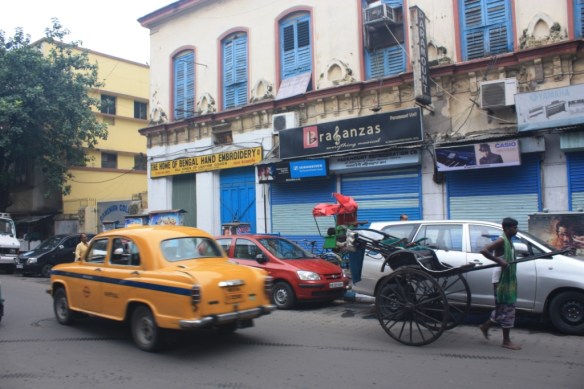
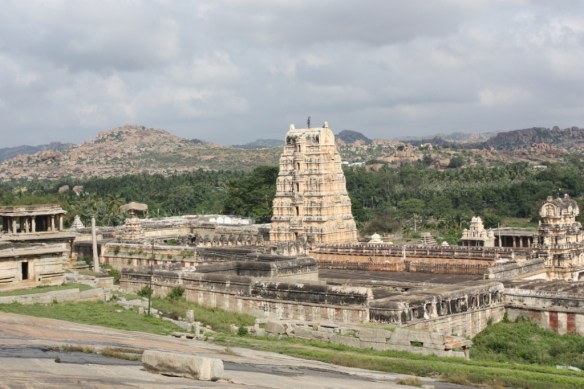
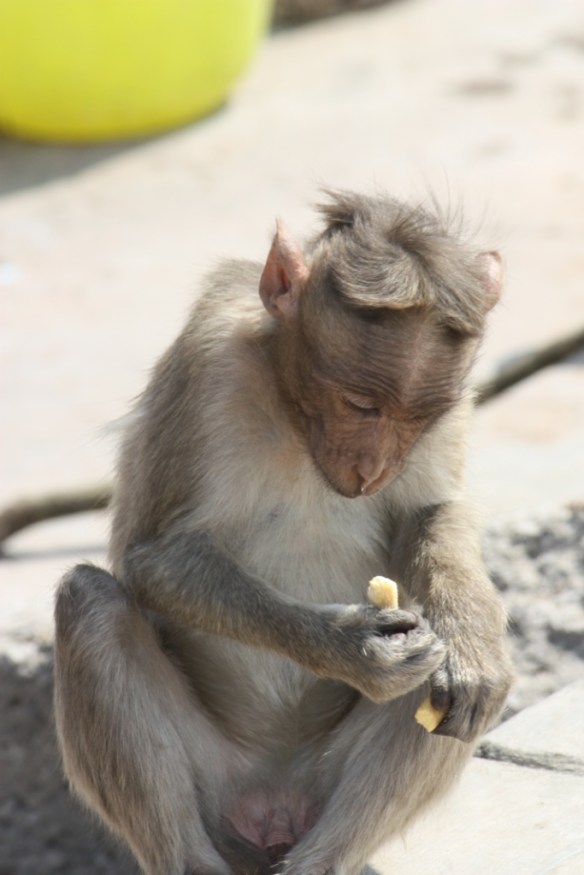
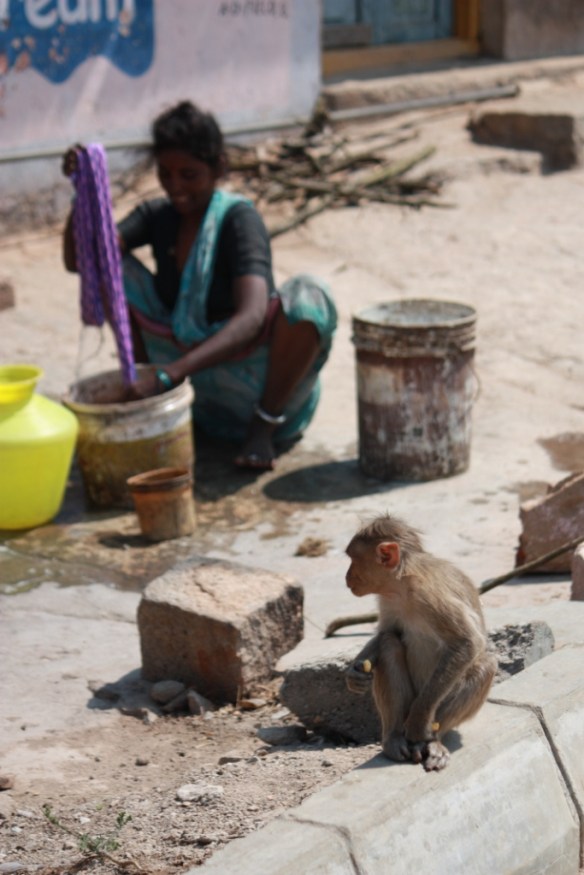
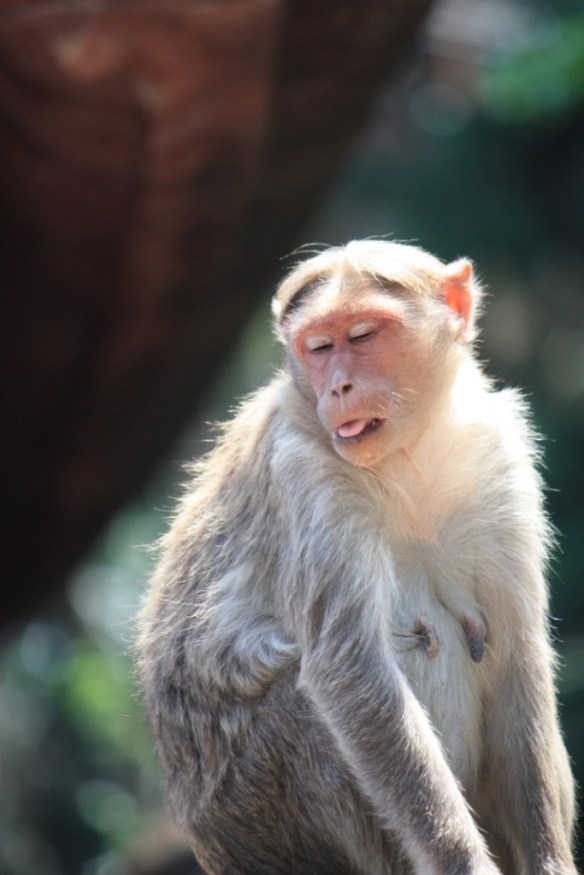
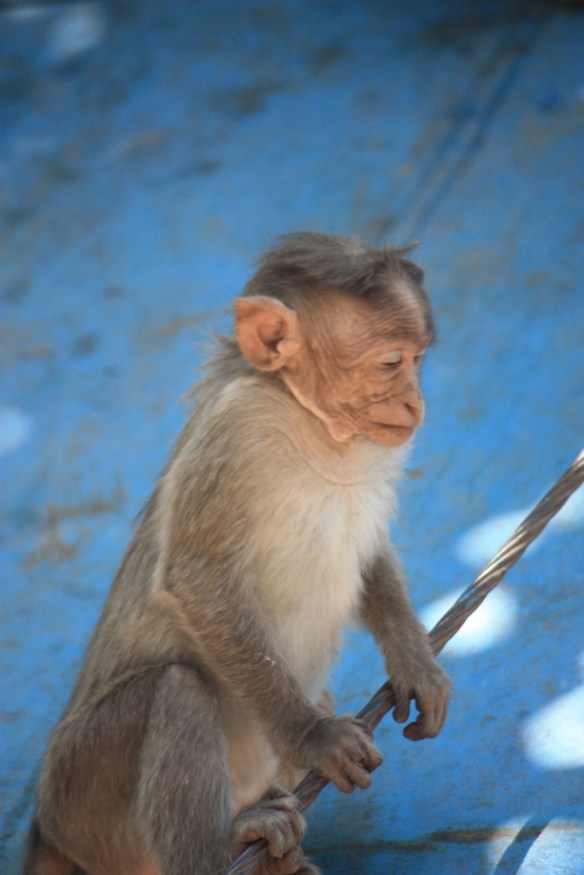
DAILY PHOTO: Macaque Shenanigans

Taken in March of 2014 at Nandi Hills

Taken in March of 2014 at Nandi Hills

IMG_1303

IMG_1342

IMG_1367

IMG_1483

IMG_1489

DAILY PHOTO: Pushkar Camel Fair Market

Taken in November of 2015 near Pushkar

Taken in November of 2015 near Pushkar

IMG_2205

IMG_2202

DAILY PHOTO: Cannon’s Over Jodhpur

Taken in November of 2015 in Jodhpur

Taken in November of 2015 in Jodhpur

IMG_2528 IMG_2643 IMG_2645 IMG_2646

Beyond the Golden Temple: What Else Is There In Amritsar?

Tourists go to Amritsar for two reasons:

1.) The Harmandir Sahib (i.e. the Golden Temple) and adjacent Sikh sites (e.g. Gurudwara Baba Atal Sahib)

IMG_3427


2.) As a jumping off point for the Wagah Border Crossing Retreat Ceremony:

IMG_3623


It’s quite possible that your guidebook doesn’t mention anything beyond those two, but if it does it’s probably the Jallianwala Bagh, which is a small park that serves as a memorial to a massacre conducted by a British military unit against peaceful protesters in 1919.

IMG_2843


It can be hard to justify a trip to a city in which all the sights can be packed into a day-trip when it’ll cost either a lot in time or airfare to get there. So the obvious question is whether there’s anything else worth seeing?


The next item on most people’s agenda tends to be the awesome food of Amritsar. And one definitely doesn’t want to miss out on the Punjabi Dhabas, food stalls, or taking a meal at the Golden Temple’s Langar Hall.

IMG_2829

IMG_2866


The next most important stop is the park in the southeast corner of the intersection of Mall Rd. and M.M. Malviya Rd. Much of what this area has to offer is more kitsch than photogenic, but the centerpiece is the Maharaja Rangit Singh Museum, which is small but genuinely impressive–including the well-maintained flower garden on the way in.

IMG_2940IMG_2930 IMG_2929


Near the museum there are some restorations of structures that were around when this was the location of the Maharaja’s summer palace. (The Palace itself was neither open nor restored at the time of our visit in the fall of 2015, but there were some smaller structures that were worth seeing.) The gate to the south of the park is the most well-restored/maintained of these structures.

IMG_2891 IMG_2972 

Now, the kitsch stuff isn’t without its virtue for amusement purposes at least, and you’ll see it as you walk around the area. The zoo of plastic animals is the best example.


IMG_2947


Although you might just be surprised to find some interesting real creatures.

IMG_2956


There are also a few other sights like Gobindgarh Fort (it’s restoration and opening was in limbo at the time of our visit, and apparently remains so) and a few temples if you’re not templed-out.  The City Hall is presently in decay, but looks like restoration was underway and it may one day be noteworthy.

IMG_2853


There are quite a few bazaars as well. I’d lean toward the narrow corridors near the temple as opposed to Lawrence Rd, which is more modern but is unimpressive.


You can always take the time to get some work done while you’re in town. For example, there is readily available curbside dentistry.

IMG_3070


But seriously, I enjoyed Amritsar and found it to be well worth the visit–even though it’s not particularly close / convenient to much else and it has limited attractions. Like Varanasi, Amritsar has its own unique feel that set it apart from India in general. While Varanasi was steeped in Hindu culture, I suspect Amritsar’s uniqueness has to do with the fact that the population is largely Sikh and, therefore, the people and culture are distinctive.

Top 10 Travel Locales of India

People sometimes ask what my favorite travel locations have been in India. While there remain a great many places that I have yet to see, in the past three years I’ve seen many of India’s iconic (and lesser known) hot-spots.  Here’s my top 10 list in ascending order.


10.) Mumbai: I’ll admit to a bias against big cities in my preferences. Indian cities are particularly noisy, smelly, crowded, and frenetic–none of which are characteristics I hold in high regard. However, Bombay has such a unique vibe. From old colonial mansions to shanty-town slums, it’s a city like no other.

The Taj Hotel

The Taj Hotel


9.) Coffee and Tea Plantations: No. 9 may lack specificity, but there’s a common beauty in these verdant, rolling hills–be they in Munnar (Kerala), Madikeri (Karnataka), or the more well-known Darjeeling (West Bengal.) Not only are the plantations scenic, they’re also a peaceful place to recharge.

Munnar, Kerala

Munnar, Kerala


8.) Khajuraho: This is a quick stop; there’s not a lot to keep one in town once one has seen the amazing set of temples and the art that adorns them. However, Khajuraho makes my list because I favor places that have their own feel, and the open eroticism of Khajuraho certainly stands in contrast to mainstream India.

Khajuraho art

Khajuraho art


7.) Agra (the Taj Mahal and Agra Fort): People are often surprised that the Taj Mahal doesn’t come in higher on my list. I’m not saying one shouldn’t see it, but it’s not among the most impressive sights I’ve seen in India. This memorial to love is probably the most well-known tourist site in India, so enough said.

The Taj Mahal

The Taj Mahal


6.) Amritsar: Guidebooks often portray Amritsar as a one-hit wonder, and that one hit is the Golden Temple (i.e. the Harmandir Sahib.) While the Golden Temple is certainly this town’s centerpiece, there’s more to see (not to mention to eat.) While each Indian state has its own cultural flavor, the Sikh character of Punjab makes it particularly true here.

The Golden Temple (Harmandir Sahib)

The Golden Temple (Harmandir Sahib)


5.) Kerala’s Backwaters: Adrift in the backwaters of Kerala is one of the most simultaneously relaxing and scenic experiences India has to offer.

A typical houseboat seen in the Backwaters

A typical houseboat seen in the Backwaters


4.) The Caves of Ajanta and Ellora: This is one of those places that one has to really want to see because it’s not easy to get to. Except for die-hard Buddhists, for whom it is considered an important religious site, relatively few travelers make it to these grand sites. They aren’t just caverns but rather entire temples and monasteries carved into the side of mountains.

The Ajanta horseshoe bend

The Ajanta horseshoe bend


3.) Varanasi: Varanasi is both iconic India and–at the same time–a place that has its own unique feel. There are the near-naked holymen, the maze-like back alleys, and the burning ghats where the departed are cremated and have their remains put in the sacred Ganges River.

A Brahmin conducting the Ganga Aarti, a daily Hindu ceremony conducted on the Ganges

A Brahmin conducting the Ganga Aarti, a daily Hindu ceremony that takes place at the main ghat along the Ganges


2.) Hampi: Until last summer, Hampi had held my # 1 spot for some time. Yes, there are the Vijayanagara temples and monuments, but– even if there weren’t–the environment in which this ancient city is nestled is otherworldly. Imagine red sandstone boulders precariously (re: impossibly) perched upon each other with cacti communities and a carpet of green in between.

Plus the ruins of a once great Empire.

Plus the ruins of a once great Empire.


1.) Himalaya: For peacefulness, beauty, and inspiration of awe, it’s hard to compete with the land of snows. Around every corner is some new vista to blow one’s mind. The shear grandiosity of these mountains make them my #1.

In the land of yogis

In the land of yogis


DAILY PHOTO: Burning Ghat from the Ganges

Taken in October of 2015 in Varanasi

Taken in October of 2015 in Varanasi


IMG_3947 IMG_3950 IMG_3956

DAILY PHOTO: Kochi Market

Taken in July of 2014 in Kochi (Cochin)

Taken in July of 2014 in Kochi (Cochin)

IMG_1033

DAILY PHOTO: Uncouth Chimp

Taken in November of 2013 at the Mysore Zoo

Taken in November of 2013 at the Mysore Zoo

BOOK REVIEW: The Yoga of Max’s Discontent by Karan Bajaj

The Yoga of Max's DiscontentThe Yoga of Max’s Discontent by Karan Bajaj
My rating: 4 of 5 stars

Amazon page

Max is a making a good living in New York City, but feels an inexplicable void that leads him to give it all up to travel to India in search of wisdom. This novel is a hero’s journey in which the quest isn’t for adventure (not in the usual sense) but for insight into his mind and a path to bliss. Along the way he finds a teacher and is assisted by others, but must ultimately find his own path. As is appropriate to such a quest, he faces hurdles within and without and it’s not always clear whether he will find what he’s searching for—or even whether it exists.

This book kept me reading. It had humor (particularly in the first part) and maintained awareness that it was a novel throughout. What I mean by the latter statement is that there is temptation for books that deal in spirituality to devolve into a muddle between story and self-help book. However, I think the author avoids that error and keeps advancing the story in a readable fashion. The descriptions of yogic practices don’t bog down the story. Those experienced with yoga will breeze right through said descriptions and know what’s happening, and those without such knowledge won’t lose much by grazing over such segments.

The book consists of 38 chapters divided into three parts. The first part covers the period during which Max moves from the US to India and seeks out a teacher. The second part describes his time studying yoga in a south Indian ashram. The final part is the period after which he’s achieved enlightenment, which he spends in the Himalayas.

I found the first two parts to the most interesting and enjoyable. The first part has all the humor and emotional turmoil one would expect from a well-developed and relatable human character. The descriptions of an austere life amid the harsh landscape of a south Indian ashram that comprise the second part make for a visceral read. Where the third part falls flat for me is that supernatural abilities are introduced, and that makes it more difficult to care about Max anymore. It’s a problem inherent in writing this type of story. While Max becomes wiser in the second section, that part doesn’t fall so flat because the life he’s living is so challenging. It’s certainly not that Max’s life is easy when he moves to the Himalayas, but by then he can speak languages he never learned and create sparks with his mind and as far as the reader knows he may be able to leap tall buildings in a single bound and other superman type magic. I suspect the author was aware of the risk of this because he backs away from having Max start a fire with his mind early in the third part and the last part unfolds much more quickly.

I’d recommend this book for anyone who’s interested in a story about personal transformation. Those who’ve spent time in India will find much that resonates and those who are considering (or curious about) such a quest will glean many insights from this book.

View all my reviews

DAILY PHOTO: Tibetan Murals in McLeod Ganj

Taken in June of 2015 in McLeod Ganj

Taken in June of 2015 in McLeod Ganj

IMG_2516 IMG_2577