Tag Archives: Hiking
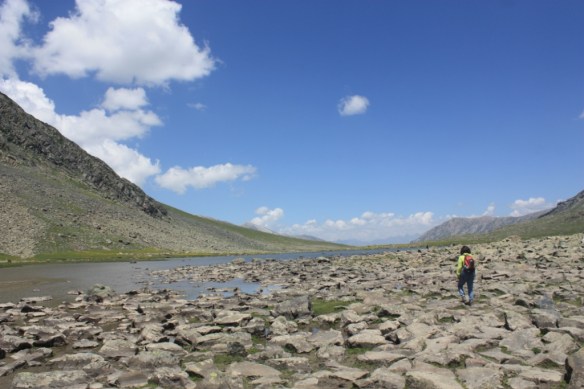
DAILY PHOTO: Mountain Lakes
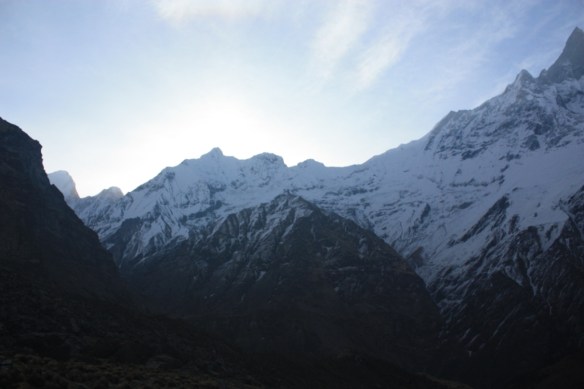
DAILY PHOTO: Snowcaps of Salkantay
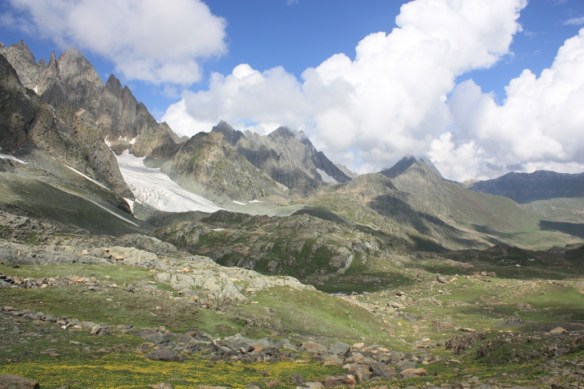
DAILY PHOTO: Mountains, Himachal Pradesh
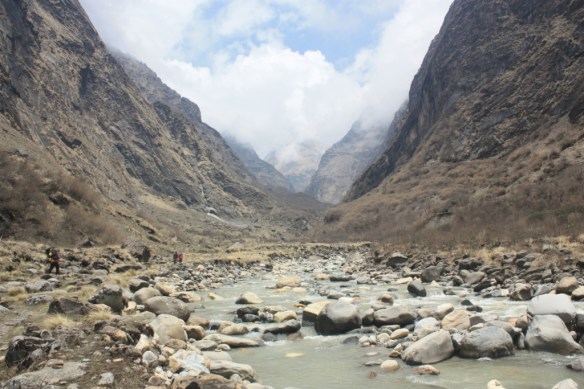
DAILY PHOTO: Mountain Slope with and without Trees
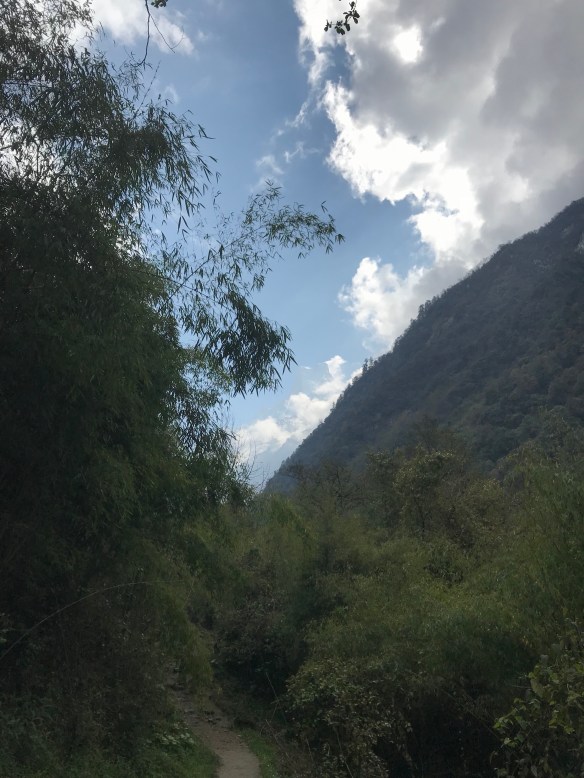
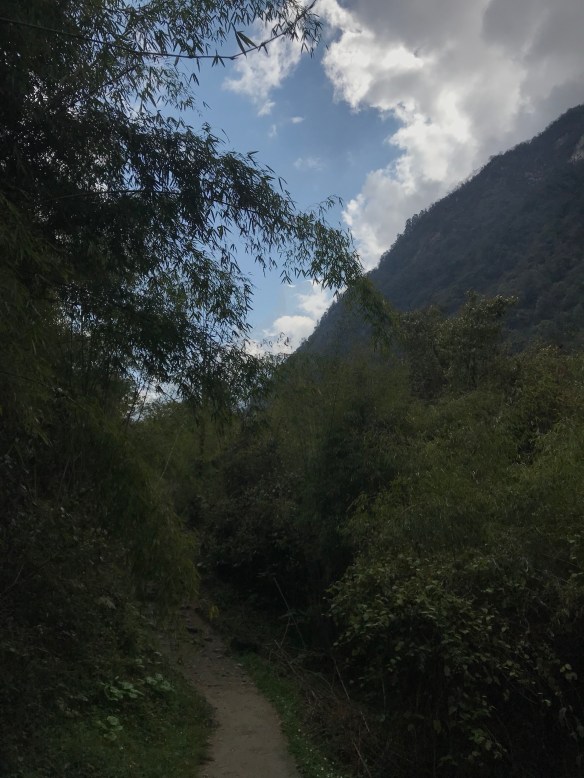
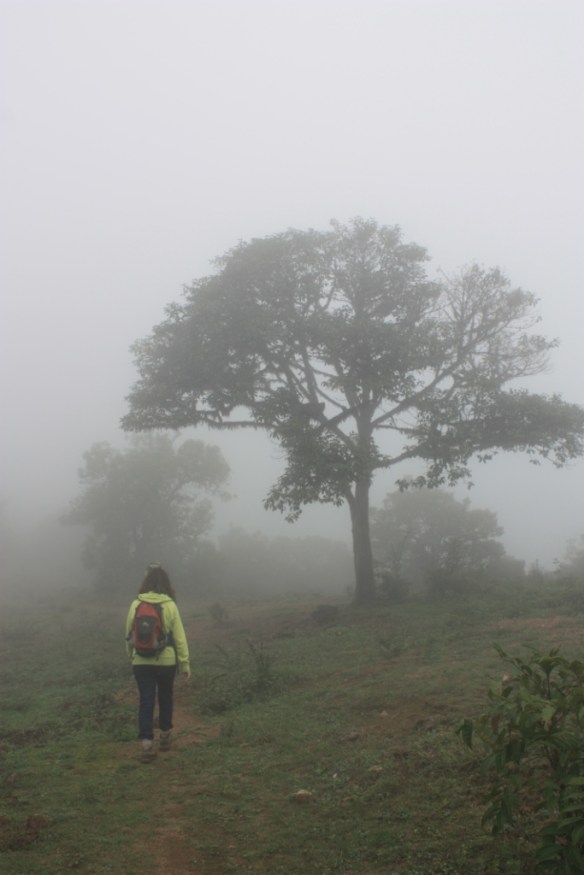
DAILY PHOTO: David Scott Trail, Meghalaya
I’m back after three weeks traveling about the Indian Northeast, i.e. the states of Meghalaya, Assam, Nagaland, and Manipur. And I’ve got a pile of pics.
The David Scott Trail is a hiking trail that was built as a carriage trail from Burma into India at the behest of the British colonial leader whose name it bears. Since it was made for traffic by animal-drawn carriages, it makes for easy hiking. It’s a scenic trail. It should be noted that (like most trails in India) it isn’t well-marked, however, the fact that it is wider than most trails and has old paving stones along much of the route makes it fairly easy to avoid getting lost.
We hiked only the section from Mawphlang to Lad-Maphlang. It’s an easy day hike.
BOOK REVIEW: Altitude Illness by Stephen Bezruchka
Altitude Illness: Prevention and Treatment by Stephen Bezruchka
My rating: 5 of 5 stars
I picked this book up after my third, and most recent, trek at high altitude. On each trek, I felt the altitude at some point along the trail, but the most troubling and persistent issue for me has been sleep disruption—what I learned in the book was called periodic breathing. That was one of several useful lessons I learned from this book.
Altitude illness is an odd affliction. There’s a clear logic to what is happening inside your body. There’s a lack of sufficient oxygen to get said oxygen distributed throughout your body by way of your body’s business as usual operations. Homeostasis is out of whack, and the body does a number of things at once to rectify the problem. Because of this, in practice the ailment is actually a range of disparate illnesses that can seem to act in an arbitrary manner. Different people feel altitude in different ways. Some have no problems if they acclimate a few days, but others hit a ceiling beyond which they can’t travel no matter what. One’s level of fitness has little to do with how well on acclimatizes. For some, like myself, it can be a nuisance, but for others it can turn into a threat to survival in a flash.
This book is a concise introduction to altitude illness that covers: acclimatization / adaptation [ch. 1], the various forms of altitude illness [ch. 2], prevention [ch. 3], diagnosis [ch. 4], treatment [ch. 5], the effects of altitude given common preexisting conditions [ch.6], and a guide to preparing for a high altitude jaunt [ch.7.] In addition to the chapters mentioned above, there are two final chapters that make for nice features. Chapter 8 presents case studies of various true instances of altitude afflictions. The cases not only make for interesting reading, but also may help one connect the dots as to what is happening with oneself or someone in one’s party. The last chapter is a frequently asked questions (FAQ) collection that helps to summarize and restate issues addressed in the main chapters. The FAQ may also help one find needed information more quickly, rather than having to flip through the entire book while someone is having trouble.
There are some graphics in the book. Most of the graphics are photos of high or extreme elevation environments—and mostly the latter. (fyi: The book calls 12,000 – 18,000 feet [3660m to 5490m] high altitude, and over 18,000ft [5490m] is extreme altitude.) There are also several tables and a line drawing or two. There’s a short bibliographic section that is nicely divided into two sections, one for health care professionals and the other for lay readers.
I found this guide to be useful and well-presented. It’s well organized, concise, and easy to navigate (bullet points are frequently used to good effect.) This is the kind of book that is meant to help you get to the information you need quickly. There’s not a lot of use of the narrative approach beyond the case study chapter and a few anecdotes in the chapters to liven the discussion. I don’t mean to make is sound dry, but it’s a book with a purpose and that purpose isn’t entertainment. The lack of extraneous information and the keeping of blocks of text small is a good idea for this kind of guide. Having said all that, it’s quite readable by a layman. Jargon is explained and there is a glossary. (There are only a few medical terms—e.g. edema (fluid build-up), ataxia (incoordination), and syncope (fainting)that one needs to be concerned with repeatedly.)
If you will be traveling at altitude (and remember that may not be high or extreme elevations, some people have problems at as low as 6000ft [1800m.]) I’d highly recommend this book. I’d further recommend one re-read it on subsequent high elevation travels. It’s a short book and is broken up into tight subsections.
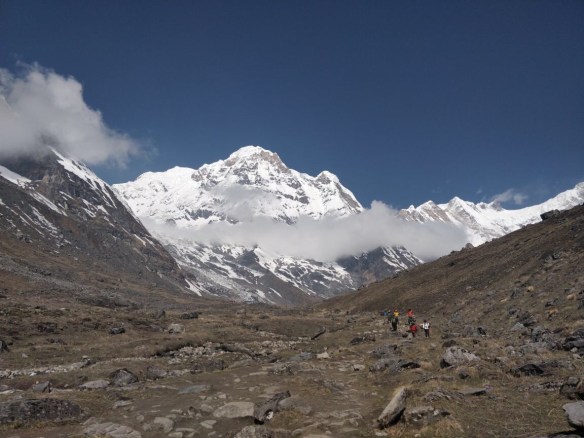
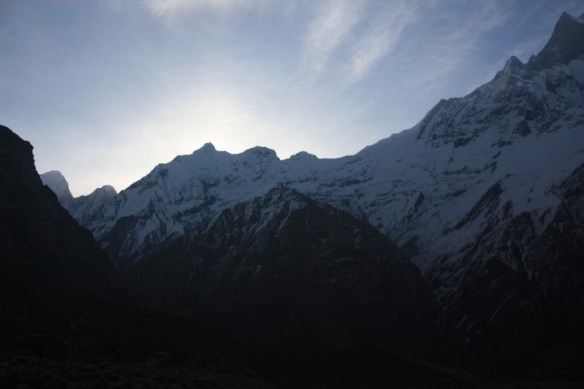
DAILY PHOTO: Mountain & Sky
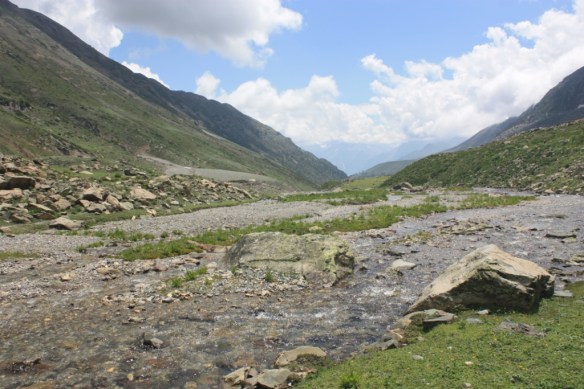
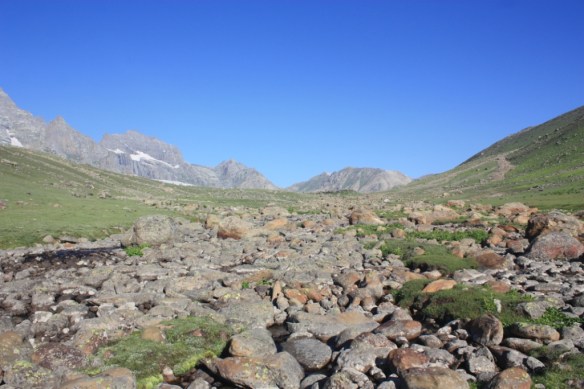
DAILY PHOTO: Kashmiri Creeks
DAILY PHOTO: Campsite Sheep-nanigans
On our Great Lakes of Kashmir trek this past summer, one night our campsite was across the creek from a maximum security sheep prison. I kid you not. At all hours of the night, beams of light would cut through our tent as roving guards made their rounds. And there was the occasional shrill whistle when the inmates would get out of line.