BOOK REVIEW: The Monstrous edited by Ellen Datlow

The MonstrousThe Monstrous by Ellen Datlow
My rating: 4 of 5 stars

Release Date: October 27, 2015

Amazon page

This is a story anthology offering tales of monsters—just not your everyday monsters. In her Introduction, Editor Ellen Datlow said her solicitation for stories asked for “unusual monster stories.” She wanted neither “human monsters” (i.e. no pedophiles or serial killers) nor was she interested in your classic Transylvanian Count Dracula. With this book’s 20 stories, the authors succeed in meeting Datlow’s request—in several cases spectacularly. Some of the stories are chilling, others are creepy, and two are even humorous, but all feature monsters that are out of the ordinary, or—at least—the monsters are in extraordinary situations.

Without further ado, I’ll offer a brief synopsis of, and comments on, the stories in this anthology:

1.) A Natural History of Autumn by Jeffery Ford: Set in Japan, a salaryman takes a girl-next-door escort to a remote onsen (thermal springs bathhouse and inn.) Neither of the main characters is what they seem, and, therein, lies the story’s appeal.

2.) Ashputtle by Peter Straub: A beloved kindergarten teacher describes her life and experience of the disappearance of a bright student. This story comes closest to violating the “no human monsters” proviso, but it creates a character so intriguing that you don’t necessarily care.

3.) Giants of the Earth by Dale Bailey: Miners stumble onto something unexpected deep within the Earth. This wasn’t one of the more engaging or memorable works, though it does have an intriguing premise.

4.) The Beginning of the Year without Summer by Caitlín R. Kiernan: A professor and a young, female townie chat by lakeside, and also a discovered book is returned. This is one of two southern gothic pieces, and is more engaging for the conversation between the intelligent professor and a more “common” young woman than for monstrous or supernatural elements.

5.) A Wish from a Bone by Gemma Files: An archeological team in a war zone stumble into more than they signed up for. Like a terrestrial Aliens movie with Sumerian evil spirits in lieu of aliens.

6.) The Last Clean, Bright Summer by Livia Llewellyn: A teenaged girl in a dystopian future travels with her parents to the sea for a rite of passage of an unexpected and haunting variety. This is one of the most visceral entries, and the author captures the teenage voice to great effect. This is in my top five stories from the anthology.

7.) The Totals by Adam-Troy Castro: A get-together between monsters to discuss quarterly figures and give out performance awards. This is one of the humor-oriented pieces—though not to the extent of the Monsters animated movies. The two humor pieces (the other being How I Met the Ghoul) offer two different angles on monster humor. This piece is set in a monstrous world, but juxtaposed against that eeriness is the work-a-day feature of a staff meeting. (The other story is set in our world—or at least a very mundane world reminiscent of ours—and draws its humor from the introduction of the monster into the midst in a very banal environment.)

8.) The Chill Clutch of the Unseen by Kim Newman: The last monster killer waits for the last monster to steam into town. This is one of the entries with a wild west feel to it. A common approach in this collection is to create unusual monster stories by putting monsters that may or may not be usual (in this case they aren’t) into settings and across from characters that one wouldn’t expect to see them.

9.) Down Among the Dead Men by Jack Dann and Gardner Dozois: A man discovers that his best friend in a Nazi concentration camp is a vampire. Referring to the previous entry (i.e. the Kim Newman story), this is an example of a typical monster (a vampire) given new life by placing it in a context that one would least expect to find it—a concentration camp. This was also one of my top five from this collection.

10.) Catching Flies by Carole Johnstone: A girl and her baby brother are removed from a household (by a DFACS-like entity) after their mother dies from mysterious causes. I mentioned a story done in the voice of a teenager. This is one of a few entries written in the voice of a child—which is very apropos for an anthology about monsters.

11.) Our Turn Too Will One Day Come by Brian Hodge: A man is called in the middle of the night, and asked to come and bring a shovel—which is, needless to say, never a good situation. The monsters, while fascinatingly described and unique, are almost superfluous to this story. The monsters appear only at the end, and it would be a highly readable story without them—though it would be in the wrong collection sans the monsters.

12.) Grindstone by Stephen Graham Jones: A man who’s been shot up is fleeing from something across desolate territory. This is the other entry with a very Western feel to it. This is also one of the shortest entries of the batch.

13.) Doll Hands by Adam L. G. Nevill: Set in a dystopian future, a laborer in a luxury building takes matters into his own (doll-like) hands when he can no longer accept the atrocities the super-wealthy patrons of the building are perpetrating. One of the great features of this story is that it creates visual imagery that one isn’t sure whether to take literally or just descriptively. For example, the lead baddie is an old, rich woman who’s described in avian terms. It’s clear that something has gone terribly wrong in this world, though there is strategic ambiguity as to what. This is in my top five.

14.) How I Met the Ghoul by Sofia Samatar: A reporter conducts an interview with a ghoul in an airport lounge. This is the other story that is more comedy than horror. The comedy is born of putting the monstrous creature in a mundane setting during a workaday interview. It’s not even the kind of hard-hitting story that a well-known journalist would take on, but more like a cub reporter doing a human interest featurette.

15.) Jenny Come to Play by Terry Dowling: A former Siamese twin, separated from her twin as a teenager, admits herself into a psychiatric hospital where her psychiatrist tries to separate fact from fiction and the twisted imaginings of insanity from reality. These Siamese twins shared no common organs, just muscle, and were ideal candidates for separation as infants. However, their father kept them conjoined (and much worse) so that they could be the main attraction in his cabinet of curiosities. Not only is this story in my top five, I’d have to call it my favorite of the bunch. It reminds me a little of the work of the novelist team Preston and Child at their best. It has the same combination of creepiness and dark foreboding, while keeping one in the dark as to what imaginable events have actually transpired.

16.) Miss Ill-kept Runt by Glen Hirshberg: A family drives through the night to go to stay with family as if fleeing an ill-defined threat. This is another of the stories done in a child’s voice and perspective, and it captures that voice well.

17.) Chasing Sunset by A.C. Wise: A young man flees across country in an attempt to escape a demonic father who is after his body. This story offers the most impressive use of language. It’s one of the most enjoyable pieces to read, and, while it didn’t quite make my top five, it definitely gets honorable mention.

18.) The Monster Makers by Steve Rasnic Tem: A grandfather teaches his grandkids the family magic of being able to make others turn into monsters. In a way this seems like a thinly-veiled allegory for how grandparents turn children into “monsters,” but it’s entertaining nonetheless.

19.) Piano Man by Christopher Fowler: A travel writer doing a story on New Orleans gets caught up in a local voodoo turf war. This is another Southern Gothic piece with post-Katrina New Orleans as the setting—with all its tragic, macabre undertones.

20.) Corpsemouth by John Langan: An American visits his ancestral home and old world family in Scotland and discovers that the “gibberish” last message of his dying father actually had a rather spectacular meaning. This story rounds out my top five. I found it to be engaging, highly readable, and with an intriguing premise.

This anthology is thrilling and readable, and I’d recommend it to anyone who wants to read about unusual monsters.

View all my reviews

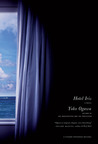
BOOK REVIEW: The Elephanta Suite by Paul Theroux

The Elephanta SuiteThe Elephanta Suite by Paul Theroux
My rating: 4 of 5 stars

Amazon page

The Elephanta Suite is a collection of three novellas that feature Westerners out of their league in India. As an American living in India, I suspect anyone who’s had this experience will recognize instances in which—for good, bad, or a mix of each—one is swallowed whole by some feature of India that one couldn’t possibly have anticipated. The novellas aren’t interconnected, except by way of the themes that run through them and Theroux’s trademark use of what I’ll call—for lack of a better term—cameo references. These aren’t his own cameo appearances in the book—as he’s also been known to do—but rather minor instances in which the lives of the characters in one story brush up against those in another.

The first of the novellas is called “Monkey Hill,” and it features a tourist couple who are staying at an upscale resort that’s near a town with a large Hanuman temple. (Hanuman is the “monkey-god” of Hinduism, a popular deity with a monkey-like face and a man-like body who features prominently in the epic entitled Ramayana.) The resort grounds also have monkeys, and so there are two potential meanings to the title. Like many wealthy travelers to India, the couple isn’t really experiencing India—though, like the characters in the other stories, they end up doing so in a major way by the story’s end. Experiencing India in unexpected ways is a central theme across the three works. The couple’s only real experience of India comes through each of their respective dalliances with locals that are carried out unbeknownst to the other. (I would point out that characters who aren’t particularly high in moral fiber are another prevailing theme across these stories, but really such characters are a hallmark of Theroux’s writing in general.)

“The Gateway of India,” as Bombay visitors might suspect, is set in that city and the waterfront attraction features prominently in the novel. The lead in this story is a business traveler who’s staying in the famous Taj Hotel in Mumbai. (The hotel overlooks the Gateway and was allegedly built by a pissed off J.N. Tata who was irate because, as a Parsi, he wasn’t allowed to stay in any of the upscale hotels because they exclusively catered to Westerners. As a “screw-you,” he built the most elegant hotel in the country at the time.) At the story’s beginning, our business traveler is a caricature of business travelers to India. He’s too scared to eat or drink anything that isn’t from a five-star hotel—and even then he’s wary. He’s filled with disgust whenever he rides through town or interacts with locals in the street. By turns, he’s transformed over the course of the story. Like the couple in “Monkey Hill” his introduction to the real India comes from a sexual liaison with a native. That said, this story features the most positive character transformation of the three stories. This is the one “feel-good” transformation of the three.

The final novella, entitled “The Elephant God,” begins in Mumbai, but is largely set in Bangalore. This story features yet another class of traveler to India–the backpacker. This lead is a young woman who is traveling on a tight budget while staying at an ashram. Beginning the story in Mumbai allows the reader to see how the backpacker loses her traveling companion, an issue that will prove crucial to the story’s resolution. As one might expect of a backpacker, our protagonist has had a truer experience of India than the wealthy protagonists of the other stories. She knows a little of the indigenous culture and how real people behave faced with real world events. In fact, there’s an intriguing piece of the story line that involves a job she gets teaching English to employees of a call center for a multinational corporation. [It should strain credulity that she’d be able to get a job on the visa she would have, but this is India.] At any rate, she begins to realize that—by teaching the call-takers to speak to American customers in a way that will make Americans comfortable—she’s essentially turning them rude—all their endearing deferential mannerisms fade in the face of her teachings. She feels bad about this. The titular reference involves an elephant and its handler (mahout) that she befriends. (In two years living in Bangalore, I’ve not seen an elephant living inside the city, but I can’t say that I found this aspect of the story unbelievable. I have seen, for example, the equally improbable camel or two.) The elephant isn’t a major feature of the story until the climax, though visits do recur.

I enjoyed these stories and would recommend The Elephanta Suite–particularly for any Westerners who have spent, or plan to spend, substantial time in India. The book may not surprise or inform such readers, but it’ll probably resonate with them.

View all my reviews

BOOK REVIEW: The Sky Unwashed by Irene Zabytko

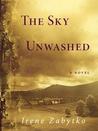
The Sky UnwashedThe Sky Unwashed by Irene Zabytko

My rating: 4 of 5 stars

Amazon page

The Sky Unwashed is a character-driven novel, telling the story of an elderly pensioner residing a few miles from the ill-fated Chernobyl nuclear plant. The protagonist’s name is Marusia, and she lives with her beaten-down son Yurko, his cheating wife Zosia, and the dysfunctional couple’s children (her grandchildren.)

The first part of the novel is a bit of a slog, though the character portraits of the adult family members may be enough to keep one intrigued if one enjoys being pulled into a dysfunctional Ukrainian village household. (The first part is a bit like “Jerry Springer—Ukraine Edition.”) Zosia’s unfaithfulness provides the main source of tension, but that tension is a quiet one between Marusia and Zosia. Yurko knows about his wife’s infidelity, but doesn’t seem to care–or doesn’t seem to be able to muster the energy to make the appearance of caring. Marusia, on the other hand, is the doting mother who feels that her doofus son could do better, but she bites her lip as she doesn’t feel it’s her place.

It’s the Chernobyl meltdown that kicks the novel into interesting territory. One is shown how tragedy can bring out the best and worst in people. Both Yurko and Zosia have jobs at the plant, but it’s Yurko who’s working when the incident occurs, and it’s he who gets a dose of radiation that will prove lingeringly fatal. Interestingly, the reader isn’t taken into the plant often. We don’t see Yurko fighting the fires, but rather we see the family in the village Starylis. We experience the family first noticing Yurko’s failure to return and then becoming increasingly concerned. We see the family noticing the subtle signs of something gone awry—like air that tastes of pennies.

Starylis’s occupants—including Marusia’s family–are eventually evacuated to Kiev. It’s here that we see how events press the once hostile family together before ultimately tearing them apart. The Zosia we found unpalatable in the first part is now seen in more sympathetic terms. We see her at her best and her worst, and we see that in sum she is a survivor. Her behavior, good and bad, is committed saving the remainder of her family—which is her children.

The truly visceral part of the novel is reached when Marusia opts to move back to Starylis, despite the fact that it’s abandoned. At first, the elderly woman is completely alone. It’s the eerie loneliness of an abandoned place that one once knew as a thriving community. Even the livestock Marusia left behind is long gone. Her daily ritual includes ringing the church bells to let any other stragglers know they aren’t alone. Eventually, she befriends a cat gone feral, and shortly thereafter others begin to trickle back to the village—virtually all of them women.

In retrospect it seems the author might not have been comfortable writing male characters. The only male character of note is Yurko, and he’s by far the most flat of the major characters—that’s probably on purpose and it feels true enough. The only other male character we get to know in any detail is quickly killed off. Given all the male-dominated works of literature, this isn’t necessarily a complaint or a problem—just an observation.

I’d recommend this book for the patient. If you need a hard and fast hook to keep you engaged, you’ll have trouble with this book. However, once one gets into the parts set in Kiev and the abandoned Starylis, you’ll find the book intensely engaging.

View all my reviews

BOOK REVIEW: A Tale for the Time Being by Ruth Ozeki

A Tale for the Time BeingA Tale for the Time Being by Ruth Ozeki

My rating: 5 of 5 stars

Amazon page

A struggling novelist named Ruth finds a watertight package containing a Hello Kitty lunchbox washed ashore on an island off the coast of British Columbia. Ruth’s initial assumption is that it’s debris from the March 11, 2011 tsunami that scoured a large swath of coastal eastern Japan out to sea. However, her husband, Oliver, who has more expertise in these matters, tells her that it’s unlikely that the box could cross the Pacific so quickly and that it would be jettisoned out of the currents that consolidate plastic rubbish into large debris fields like the Great Pacific Garbage Patch. When the lunch box’s contents turn out to include a teenage girl’s journal and a number of letters, it seems as though the mystery might be solvable.

The journal is written by a Japanese girl in turmoil named Nao. Nao grew up in American, her father working for a Silicon Valley computer firm until he lost his job. A major factor in Nao’s depression is that she has to return to her ethnic homeland of Japan as a stranger. Her formative years were spent in America, and she is out-of-place in Japan and—as a result—she falls victim to vicious bullying. Furthermore, her father is unable to find a job in Japan and becomes suicidal. The household has to tighten its proverbial belt because Nao’s father, Haruki #2, isn’t working and Nao’s mother has limited earning potential. (FYI: the “#2” refers to the fact that Nao’s father had an uncle for whom he was named who’d been a scholar forced to serve in a kami kaze squad during the war.)

Nao also becomes suicidal, but she is firm in her conviction that she will not fail like her father has done on two occasions. There’s one thing that she must do first and that’s to pen the story of her great-grandmother Jiko. Jiko is a centenarian Buddhist nun and the family matriarch on Nao’s father’s side of the family. Nao stays a summer with Jiko, and the old nun in all her wisdom becomes an anchor in the girl’s tumultuous life. With a level of narcissism appropriate to a teenager, Nao ends up telling us a story that’s more autobiographical than an account of Old Jiko.

A Tale for the Time Being interweaves two storylines. One line is Nao’s journal entries and letters from the lunchbox. The other line is Ruth’s journey as she reads the journal and becomes obsessed with discovering more about Nao and her family members. Eventually, Ruth’s investigation turns up information about Haruki #1 and Haruki #2 that Nao apparently didn’t know, and that both Ruth and the reader hope the girl will learn. Nao comes to idolize Haruki #1 in part because he was committed to his fate as a kami kaze. It’s not that she believed in the kami kaze objective (she identifies more as American than Japanese), but she sees Haruki #1’s commitment in contrast to her father’s behavior. Nao’s myth about her great-uncle turns him into a counterpoint to the father that she loves but thinks a pathetic loser. In a way, this novel is a cautionary tale about drawing conclusions about the virtues and vices of others without knowing their whole story.

Ozeki does a great job of creating characters multi-dimensional enough for us to become intrigued by. Just as Ozeki has her same-named secondary protagonist, Ruth, sitting on the edge of the seat wanting to find out what happened to Nao and her family, we—too–are pulled into that mystery. The challenging approach of weaving Ruth’s story into the journal’s contents works well.

Ozeki hints that there may be something supernatural about the world in which her characters inhabit. There’s a member of a species of crow that shouldn’t be on the American side of the Pacific who shows up at about the same time as the lunch box. Also, we can’t tell whether some of Nao’s stories are the wishful delusions of a tormented girl or whether they reflect some kind of subtle magic. It’s a similar approach to that of other literary fiction authors such as Haruki Murakami.

I’d recommend this novel. It’s gripping and readable.

View all my reviews

BOOK REVIEW: After Dark by Haruki Murakami

After DarkAfter Dark by Haruki Murakami

My rating: 5 of 5 stars

Amazon page

[Note to readers unfamiliar with Tokyo: There are a couple of facts about the city that one must understand for this book to make sense. First, while Tokyo is a city that’s always moving, the trains don’t run between roughly midnight and five am (your results may vary by station.) Second, because many people live far out in the suburbs and the cost of living is high, taxis aren’t an option for much of the population. These two facts add up to a slew of business for those industries that cater to the population caught out “after dark” (i.e. after the trains stop running–not after sundown) including: all-night diners, love hotels, c-stores, bars, pachinko parlors, bowling alleys, and manga bookstores.]

This novel takes place in Tokyo during the wee hours of a single night. Murakami satisfies a form of voyeuristic impulse by giving us a peek into the lives of a few of the people out and about while the masses are home slumbering, or—at least–whiling away insomnia-ridden hours in the privacy of their own homes.

The protagonist is a young college student named Mari. As she sits in a 24-hour Denny’s reading, Mari immediately triggers curiosity. She isn’t typical of the disheveled, boozy, or garish crowd out “after dark.” In a post-witching hour world of drunken salaryman, micro-miniskirted hostesses, tattooed yakuza gangsters, and nightlife-savvy travelers, the bookish young woman stands out. We soon learn that Mari didn’t miss the last train on accident, but rather is staying out all night on purpose to be out of the house. This further raises the level of intrigue.

In the Denny’s, Mari is approached by a gregarious young man named Takahashi who is grabbing a quick snack before going back to his nighttime hobby of jamming in a jazz band. Takahashi introduces himself as someone who already knows Mari from a party. He’s a couple years older than the young woman, and was a classmate of Mari’s sister, Eri. The party at which he met Mari was mostly attended by kids the age of Eri and himself, and Mari was just along for the ride with her more popular sister.

Eri is another major character in the book, although her mysterious presence is mostly in a sleeping state. Eri, unlike the plain Mari, is drop dead gorgeous, and has been doing modeling jobs since she was a child. Takahashi is but one of the young men infatuated with Eri—though we get the feeling that Takahashi realizes that Eri isn’t in his league. He’s a pragmatist—if begrudgingly so. The rest of the book hinges on this chance encounter between Mari and Takahashi.

Suspicions that the grim hours of circadian disruption are the domain of crime and vice are confirmed when a bulky former female wrestler turned love hotel manager, named Kaoru, rushes into the Denny’s seeking Mari. Kaoru is an acquaintance of Takahashi (who has since left the diner to play jazz) and she is seeking Mari because Takahashi told her that Mari spoke fluent Chinese. A Chinese prostitute was beaten up at the love hotel, the Alphaville, and Kaoru needs to talk to the foreign woman to get to the bottom of the matter. Kaoru’s investigation is in part driven by the fact that the Chinese hooker’s John dashed on the hotel bill, but the former wrestler also has a soft spot for the beaten girl and wants to do the right thing by her—though Kaoru knows the police can’t be involved because the Chinese working girl will, at a minimum, be deported by the authorities, or, worse, be punished by the Chinese mafia who pimp her.

As with a few of Murakami’s other books, this book might be labeled “slipstream.” Slipstream is a genre that blends mainstream literary fiction with supernatural elements / speculative fiction. However, the scenes that aren’t realist generally involve the sleeping Eri in her room by herself. So, it may be that Murakami is just conveying the hazy and illusory world of sleep and life at the edge of sleep. I’ll leave it to the reader to make their own interpretations of this. There are also coincidences that could strain credulity, but this may just be an attempt to convey that the world of Tokyo “after dark” is a small pond.

I’d highly recommend this novel. Murakami gives us likable characters and one can see why said characters are draw to each other despite their very different existences. Then he puts them into situations that demand resolution. It’s a short, readable, and interesting novel.

View all my reviews

BOOK REVIEW: Gotham Writers’ Workshop: Writing Fiction by Various

Writing Fiction: The Practical Guide from New York's Acclaimed Creative Writing SchoolWriting Fiction: The Practical Guide from New York’s Acclaimed Creative Writing School by Alexander Steele

My rating: 4 of 5 stars

Amazon page

This workbook-style guide to writing fiction is put out by the well-known New York City creative writing school. With 11 chapters, it delivers lessons on all the elements of fiction including: character development, plotting, establishing point of view, honing description, building realistic dialogue, varying pacing, establishing voice, determining a work’s theme, and carrying out revisions. It also has a chapter that goes into the business of writing (as opposed to the craft of writing which is the bailiwick of the first ten chapters.)

There are a couple of features of this book that set it apart from the vast canon of writers’ guides. First, this isn’t a single author work, which means the reader has access to a much broader pool of experience than one would in a single author text. It also means that an author can be assigned a topic according to his or her strengths as a writer.

Second, across the chapters, they use Raymond Carver’s Cathedral as an example work, and they provide that story in an appendix for those who haven’t read it. It’s not that the authors exclusively use this short story for examples. But it’s useful to have a common story and to include it because there are so many great stories and novels available that no matter how well-read one’s readership, there will be works that some haven’t read. (e.g. Much as I should’ve, I haven’t yet read nor seen the movie Gone with the Wind–a common exemplary work because it’s a beloved book, a movie, and because pop culture references [e.g. The Simpsons] have made the gist of it available to even those slackers who’ve neither read the book nor seen the movie.) There’s a reason why writers’ book authors often use movies to describe story elements, because there are many fewer movies than books and vastly fewer good movies—thus a higher likelihood of a common experience. Yes, there are a few works common across most school curricula, but there’s no better way to ensure that a book doesn’t get read thoroughly than to assign it as required reading.

A third useful feature of this book–but not one that is in any way unique to it–is that it offers writing exercises throughout to help build one’s skills through practice. This is where the value of such a book truly lies. The advice such books offer are almost always the same—sometimes hackneyed but almost always valuable. (A lot of tired advice is tired because it bears repeating owing to the constant infusion of new writers who repeat the same errors.) A final useful element of the book—but also one that features in many similar guides—is a checklist in the appendices that allows one to rapidly consider the book’s key questions as they apply to one’s own writing project.

I’d recommend this book as one of the most useful writers’ guides that I’ve read.

View all my reviews

READING REPORT: February 27, 2015

I finished three books this week.

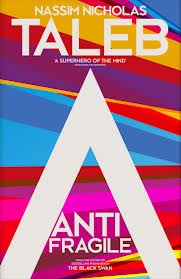
Antifragility

The first of these is Antifragile, the latest offering by Nassim Nicholas Taleb, whom you may know from Black Swan and Fooled by Randomness fame. While it’s his latest book, it came out a couple of years ago and I started it over a year ago.  The premise is that some entities become stronger when exposed to stressors and disorder,  and there are ways to nurture this tendency to be antifragile. While the ideas and many of the examples are fascinating, I put it down for a long time because Taleb is prone to rambling diatribes. After about the 1oooth time reading about how much he loathes the 98% of professors (we get it already), you may be ready to set it down as well.  [To be fair, Taleb probably gets a hundred death threats a year from enraged social science scholars whose life’s work will appear ridiculous to anyone who understands the gist of Taleb’s arguments in this and his preceding two books.] Taleb is a first-rate thinker who has delivered some very important messages about the misapplication of statistics, I’m not sure why he feels compelled go all Howard Stern about it–though it does probably sell a few extra copies and I suspect he is genuinely that way.


pyjamagameMark Law’s The Pyjama Game is in part a micro-history of the martial art and sport of judō, and in part is an accounting of his own experiences in taking up judō at the ripe age of 50. For me the history and evolution of judō is where the book is at its most interesting. However, if you don’t have any martial arts experience–or even if you don’t have any grappling-centric training experience–you may find Law’s discussion of testing and randori (free form training, the grappling equivalent to sparring) intriguing, or invaluable if you’re considering taking up judō, jujutsu, or sambo.


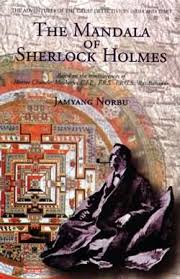
mantraSherlockHolmesThere is apparently a cottage industry of writers putting out their own Sherlock Holmes novels, and–in particular–writing about Holmes’s gap years. For those unfamiliar with the literary history of Sir Arthur Conan Doyle, at one point he got sick of writing these crime fiction novels and killed off Sherlock Holmes. However, there was such a clambering for the master detective that Doyle resuscitated Holmes. These gap years in which Holmes was believed dead have proven fertile soil for writers who wish to write their own spin on where Holmes went and what he did when he was traveling incognito. I saw a press post for a new one the other day in which Holmes goes to Japan. The Mandala of Sherlock Holmes, however, speculates that Holmes traveled to Bombay, and from there to Tibet and eventually to Shangri La. It’s an intriguing premise and offers some good travelogue type description of setting–however as a story it’s not as artfully executed as the Arthur Conan Doyle books.


I bought four books this week, two of which–in part–because they’ll help me complete the Book Riot 2015 Read Harder Challenge, which I will talk about below.


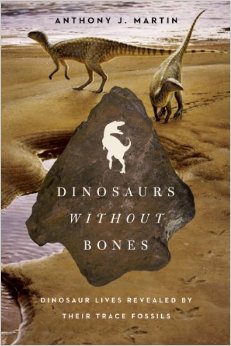
Dinosaurs_wo_Bones

Admittedly, I bought this book, Dinosaurs Without Bones,  not because the subject jumped out at me (though I’m sure it will prove thrilling) but rather because I knew the author about a billion years ago (I know; I should take geological time more seriously when mentioning a book of this subject.) At any rate, we trained at the same martial arts school in Atlanta, Georgia. That disclaimer being made, the topic looks fascinating and I’m eager to learn more about paleontological detective work.


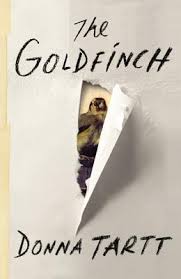
GoldfinchThe Goldfinch won the 2014 Pulitzer Prize for Literature, and so it meets an unchecked requirement for the Book Riot Challenge (recent award winner of one of the major literary prizes.) Honestly, if it weren’t for my desire to complete the challenge, I might have read Tartt’s The Secret History first. The latter books seems a little more up my alley, but I”m eager to see what this critically acclaimed novel has to offer. If it’s engaging, I’ll go back and pick up her first novel.


AMillionShadesofGray

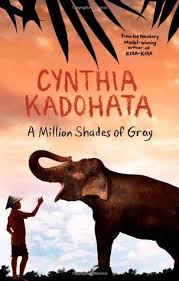
No A Million Shades of Gray isn’t a mommy porn book 20,000 times more intense than E.L. James’ book. On the contrary, it’s an intriguing YA book about a teenage elephant handler who escapes into the jungle with his elephant to escape war-torn Vietnam. This book will hit on an unchecked category on the Book Riot Challenge (i.e. YA book)


Life of Pi

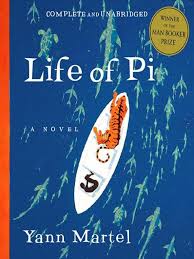
Life of Pi is a book that I intended to read long before the movie came out, but still haven’t gotten around to it. It was cheap on Kindle, and so I picked it up. I’ve seen the movie, so it’ll be interesting to compare, given how visual the movie was.


I’m almost halfway through the Book Riot 2015 Read Harder Challenge. The 19 books I’ve completed thus far this year include books in 11 of the 24 categories, including:


3.) Short story collection or anthology: a.) 999: New Stories of Horror and Suspense, and b.) I Have No Mouth And I Must Scream


6.) By someone of another gender: a.) Tears in Rain, and b.) Principles of Tibetan Medicine


7.) Takes place in Asia: a.) Quarantine in the Grand Hotel, and b.) The Mandala of Sherlock Holmes


10.) A micro-history: Yoga Body: The Origins of Modern Postural Practice


12.) A science fiction novel: a.) Tears in Rain, b.) The Martian


17.) A collection of poetry: Leaves of Grass


18.) A book that was recommended: Key Muscles of Hatha Yoga


19.) A book originally published in another language: a.) Tears in Rain (Spanish), b.) Quarantine in the Grand Hotel (Hungarian)


20.) A graphic novel or comic book collection: The League of Extraordinary Gentlemen (Vol. 1)


23.) A book published in 2014: The Martian


24.) A self-improvement / self-help book: Zen Mind, Strong Body


READING REPORT: February 13, 2015

Welcome to a special Friday the 13th edition of the Reading Report. What’s so special about it? If you’re not deluded by superstition, then not much. If you are superstitious, reading this post may cause you to suffer a plague of locusts (or whatever plagues your particular geographic area.)


Now that we’ve gotten rid of the illiterate ninnies, we can get down to discussing books.


I finished two books this week–one nonfiction and one fiction. I’ll be posting book reviews within the next couple weeks.


The nonfiction book was called Yoga Body: The Origins of Modern Posture Practice. The author’s intriguing and controversial thesis is that yoga as it’s practiced in studios around the world today nothing to do with traditional Indian yoga, but, instead, owes it’s existence to European calisthenics and bodybuilding systems and the Indians that borrowed from them. I didn’t find the author’s argument compelling for a number of reasons that I’ll get into in my review. This isn’t to suggest that I’m certain he’s wrong. He may be right, but the way he constructed his argument left a great deal of room for doubt.


TLEG_Vol1

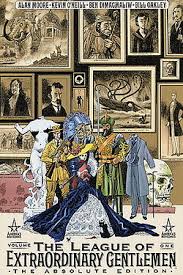
The fiction book was a graphic novel entitled The League of Extraordinary Gentlemen (Vol. 1). For those of you who haven’t seen the movie featuring Sean Connery, this comic book gathers together a team of protagonists from 19th century science fiction and adventure novels. The team consists of Mina Harker (of Bram Stoker’s Dracula), Allan Quatermain (of H. Rider Haggard’s King Solomon’s Mines), Captain Nemo (a Jules Verne recurring character), Dr. Jekyll/Mr. Hyde (Robert Louis Stevenson’s title characters), and Hawley Griffin (of H.G. Wells’ The Invisible Man). One needn’t have read all those classic stories to follow this book, but being a fan of 19th century tales of the fantastic definitely makes it more fun. The story depicted in this volume has nothing to do with the movie plot.


mantraSherlockHolmes

I’m more than halfway through a couple of books that I mentioned in earlier Reading Reports, they are Why Do People Get Ill? and The Mandala of Sherlock Holmes.  I read chapters 7 through 9 of the former book, which had to do with the expression of symptoms, the heart as a symbol and that symbol’s expression in illness, and the impact of mother’s experiences on infants and children. In the latter book, Holmes has arrived in Tibet, and the plot thickens. The author is Tibetan, and so has some unique insights. However, some chapters advance the story with action, and others are almost like travelogue.


I’m still early into reading two books that I’ve previously mentioned. The first is Zen and the BrainIn this book I’ve transitioned out of the part explaining Zen and the author’s experience of that tradition, and am now into the part that lays down the basic neuroscience. While the author writes in a readable style, for a neuroscientist, this is still challenging reading because of its scientific nature and the complexity of the brain. However, the chapters I read recently both raise some fascinating questions and provide useful information. The chapter I just finished dealt in part with the neurochemistry of addiction. I like that this book is divided up into short chapters. This is beneficial for taking in such complicated information. I need frequent think-breaks to ruminate on what I’ve read.


pyjamagame

The second is The Pyjama Game. After a slow start, the last two chapters have contained some fascinating information. One of these chapters dealt with the history of jujutsu, particularly as Japan transitioned from medieval to modern. The other chapter outlined Kanō Jigorō‘s development of judō.


I bought three books this week.


The first is entitled Healing Moves, and is by a married couple consisting of a fitness writer and a cardiologist. This book addresses a topic that is a prevailing theme in my nonfiction reading as of late, which is what movement, exercise, and physical activity can do to improve one’s health (not just one’s fitness.)

HealingMoves


The second book is Greatest Ever Boxing Workouts.  This book presents information about what boxers like Mike Tyson, Manny Pacquiao, and Floyd Mayweather do to prepare for fights. It’s a follow-up to an earlier book that included fighters like Muhammad Ali and Roy Jones Jr.

BoxingWorkouts


Finally, I just got a short story collection on Kindle Daily Deal the other day entitled Lovecraft’s Monsters.  This isn’t a collection of H.P. Lovecraft stories, but rather is an anthology of stories inspired by Lovecraft’s work.

LovecraftsMonsters

READING REPORT: February 6, 2015

I polished off three books this week. That’s not as impressive as it might seem; they were all slim volumes. I’ll do reviews on these books in the near future, but a few words about each will suffice here.

The first was Zen Mind, Strong Body; a book about which I had mixed feelings. It’s by a calisthenics expert named Al Kavadlo, who is a personal trainer, author, and YouTube phenom. On the positive side, Kavadlo is a sharp guy with many useful insights into bodyweight exercise and fitness in general. Additionally, Kavadlo eschews the snake-oil salesmanship that is rampant in the fitness world.

On the other hand, the book is basically a rehash of blog posts, and the “new / first time seen pictures” aren’t useful for learning the exercises because they’re mostly just the author standing in random places with his shirt off. Furthermore, there’s no such consolidating theme to the book as is suggested by the title. I think it just has that title (a take-off on DT Suzuki’s classic work on Zen) because “The Best of Al Kavadlo’s Blog Posts” doesn’t scream “buy me.” I thought a little extra value-added could have been provided for the people who paid for the book, but you will learn from it.

The second book was Quarantine in the Grand Hotel. This novel brings satire and humor into a locked-door mystery. It was written by a Hungarian author in the 1930’s, but remains a readable and enjoyable book.

IHaveNoMouthThe third book was the short story collection by Harlan Ellison that I mentioned I would begin this week. I Have No Mouth and I Must Scream consists of seven stories that are nominally in the genre of science fiction, but could also be classified as tales of the strange. This book was first published in 1967. Ellison writes stories in a readable style, though one that can sometimes be called “trippy.” If I were going to award a “book of the week” for the book that I found most engaging, it would be this one.

I only got a couple of chapters each into the Mo Yan novel Life and Death Are Wearing Me Out and the epic poem The Aeneid. The former is readable has a fascinating premise, but the latter–not unexpectedly– is a little more of a chore to read (but is a classic and seems worth the difficulties.)

Having finished off some nonfiction in the preceding week, I made room to resume reading a book that I started a couple of months ago entitled Why Do People Get Ill? A two-man team consisting of a psychoanalyst and a neuroscientist joined together to write this book. It examines the role that stress and the mind play in illness. Yes, things like germs (i.e. bacteria and viruses) cause illness. However, that’s not the whole story, and a couple of key questions remain. First, how come some people can be repeatedly exposed to causative factors and their bodies knock out disease leaving them asymptomatic. Second, how come others readily come down with ailments–sometimes even when they haven’t been exposed to causative factors. To put matters in scholarly terms, germs may be a necessary condition for disease, but they are rarely a sufficient condition.

WhyDoPeopleGetIll_Leader&Corfield


I didn’t do much yoga or martial arts specific reading this week. However, today I finally began The Pyjama Game, which is a book about Judō that I mentioned in one of my previous Reading Reports.

I purchased four books this week, all on Kindle and mostly on sale.  Those books, which I’m sure to be discussing and reviewing on later dates are:

TheThreeStigmata

The Three Stigmata of Palmer Eldritch: Because I’m a huge PKD fan, and this is said to be one of his best books–of his books that I haven’t yet read. This was in the Kindle Monthly Deals.

FirstHubby

First Hubby: This will be my first Roy Blount Jr. book, but I did enjoy him on that NPR game show (i.e. Wait Wait… Don’t Tell Me!) This was also a Kindle Monthly Deal as I recall.

Ikkyu_Berg

Ikkyu: Crow with No Mouth: This is the story of a Zen master who lived in Kyoto in the 15th century. He sounds like a fascinating man, and was also a skilled poet. This one wasn’t on sale, but neither was it expensive at the usual price.

TheElementsThe Elements: This book is a Kindle Daily Deal as I’m writing this. I love me some science. I did have to look through the sample pages before buying. Even though it was inexpensive, I was concerned that it might not have much usefulness on my black&white, base-model Kindle because the graphics are an important part of the book. However, it looked like there was enough text explanation to be worth the $2.00–even if the graphics don’t show up well.

And that was my week in books.

BOOK REVIEW: The Martian by Andy Weir

The MartianThe Martian by Andy Weir

My rating: 5 of 5 stars

Amazon page

If you like suspenseful science-fiction, humor, and are fascinated by science, you must read this book. I’m not kidding.

The premise is a simple cast-away story, except that it takes place on Mars—an environment in which a human can’t last for seconds without a lot of properly functioning technology. Astronaut Mark Watney is left for dead when a severe storm blows in, impaling him with a piece of metal, knocking out his vital statistics monitor, and blowing him into a drift. Having lost visual contact with Watney, showing no vital statistics, and facing the toppling of the crew’s escape vehicle by high winds, the mission commander decides that she can’t risk the lives of the entire crew to cart Watney’s body back home. The thing is; Watney isn’t dead.

The book is a rollercoaster ride of highs and lows associated with events that nearly kill Watney—either in an instant or by making his long-term survival impossible. The botanist / engineer must figure out how to survive for four years (until the next Mars mission is due—if it doesn’t get cancelled) with less than six months of supplies. (The mission was supposed to be one month but was aborted in the first week, but there were five other crew members whose rations were left behind.) If you think Tom Hanks had it bad in Cast Away, imagine having to produce food on Mars.

This book taps into the visceral feeling that works so well in the movie Gravity (but Weir does more homework on the science.) For tension, it’s hard to beat being adrift in space, utterly isolated from one’s species—or any species for that matter–and knowing you will die when your resources run out.

The main character, who is the only character for the first six chapters or so, is intensely likable. Mark Watney is funny, intelligent, self-deprecatingly humble, and can confidently problem solve in the midst of any crisis. If there’s a critique of the realism of this story (as sci-fi goes it is extremely realistic), it’s that Watney is preternaturally skilled at adapting to complete solitude. However, I don’t deduct for this, because if it showed him at the depths of despair that someone in his circumstance would inevitably go through, it wouldn’t be nearly as pleasing a book to read. If you’ve read a lot about sensory deprivation and / or what happens to prisoners over long stints in solitary confinement, I’d suspend the disbelief that might come from that knowledge and just accept that Watney is exceedingly good at saying, “Pity-party over. It’s time to make this work.” In short, humorous Watney is just a lot more fun to read than would be a despondent astronaut.

I think I’ve been clear that this is an outstanding book, and everyone should read it. I guess if you absolutely hate science (of any kind–because there’s botany, biology, physics, chemistry, engineering, etc. all rolled up into this book), you may find that it’s hard to stick with the glut of scientific / engineering discussions coming at you. Still, you shouldn’t hate science that much—what the hell is the matter with you. Weir writes in a readable style and the reader doesn’t get awash in minutiae. (For example, Watney even names the unit kilowatt-hour/sol [sol=a Mar’s day] the “Pirate-ninja” to make it more palatable and humorous.)

Read it. You’ll like it. Also, don’t wait because the movie is supposed to come out in the Fall.

View all my reviews