BOOK REVIEW: The Goldfinch by Donna Tartt

The GoldfinchThe Goldfinch by Donna Tartt
My rating: 5 of 5 stars

Amazon page

Theo Decker is thirteen years old when, during a visit to an art museum, a bomb explodes–killing his mother and defining the course of his life into adulthood. There are the obvious impacts on the life of a child separated from a loving and responsible parent. Furthermore, Decker feels guilty because he and his art-loving mother only stopped in the museum on the way to a meeting with the Principal. Theo’s dad had flown the coup before the book’s start, and is an alcoholic gambler in addition to being a deadbeat dad. The lack of a reliable family member who can (and wants to) take Theo puts tremendous stress on the boy, encouraging him to fall into the same patterns as the father he despises.

Theo spends the remainder of his adolescence in a mix of homes: a caring and wealthy (but in many ways dysfunctional) household where he feels his outsider status, his father’s neglectful Las Vegas home where he makes a solitary friend—Boris–of similar circumstance, and, finally, the home of a wise craftsman to whom Theo is connected only indirectly by the events of that fateful day. No matter whether he is in a good home with a responsible and respectable guardian or in his father’s white trash estate, there’s always a cloud of uncertainty over the boy’s life.

There’s also an unexpected way in which Decker’s life is defined by the bombing. Waking up amid the debris and dust, he tries to help an old man in the last minutes of life, only to witness the man’s death. Shaken, fearful, and unable to find his mother, Theo stumbles his way out through the back of evacuated museum having absconded with a small but famous painting, Carel Fabritius’s “The Goldfinch.” He knows he should return the painting, but the fact that it was one of his mother’s favorites and that he doesn’t want to rock the boat and get sent to an institution leads him to keep it. Furthermore, as much as he loathes the idea of being like his father, he shares his old man’s tendency to get himself into pickles because of a desire to be liked that is so extreme that it keeps him from taking responsibility for his actions and encourages him to self-medicate to deal with the stress of always having dark clouds overhead. The journey of the book, which takes us from the bombing to Decker’s life as a 20-something adult, is all about whether his own innate goodness in combination with the positive role models (living and deceased) around him will allow him to shake off the demons his father never could.

Tartt wrote this book masterfully. The fact that it won the 2014 Pulitzer Prize is more praise than I can heap on it. The book actually opens with an adult Theo Decker in an Amsterdam hotel room, afraid to go outside for reasons the reader isn’t yet let in on. Later we discover that this is chronologically near the story’s resolution, and it serves as a brilliant hook. For the entire book, that hook is set and the question of why resounds in the back of one’s mind.

It’s a rare 800+ page book that doesn’t drag, but this one pulls one through beautifully. This is in large part owing to the character development of all the major characters, and there are quite a few important characters in a book of this scope. While some are cads (e.g. Theo’s dad and his girlfriend “Xandra”) and some are virtuous to a fault (e.g. Hobie, Theo’s guardian from age 15 onward), one sees enough depth to experience the humanity of them all: the good in the bad and the bad in the good. Other than the lead—and possibly inclusive of him—the most fascinating character is his best friend, Boris, who features prominently in Theo’s Las Vegas years as well as during the novel’s climax and resolution.

The other factor that keeps the tension on is the dysfunctionality of many of these characters. There’s always drama to be had. In fact, when things are looking up in the novel is when the reader gets the biggest sense of foreboding, a feeling that the bottom will inevitably fall out. We know the bottom will drop out because Decker has set himself up for it to—and not entirely unwittingly. We just don’t know how until the book’s end.

I’d highly recommend this book for all readers of fiction. Don’t let the large page count and suggestion of stuffiness (art, antiques, and high society New York all featuring prominently in the book) dissuade one. It’s readable and engaging, and it offers the same authenticity then describing Boris and Theo smoking pot and eating sugar on bread for dinner as it does when it’s talking about the sale of a fake 18th century armoire.

View all my reviews

BOOK REVIEW: A Million Shades of Gray by Cynthia Kadohata

A Million Shades of GrayA Million Shades of Gray by Cynthia Kadohata
My rating: 4 of 5 stars

Amazon page

This young adult (YA) novel is set in the Central Highlands of Vietnam during the last few years of the war. The lead character, Y’tin, is an adolescent whose life ambition is to be an elephant handler, a dream which he’s well on the way to achieving and which he’d be a shoo-in for if he didn’t live in war-torn times. His life is complicated by the fact that his father has worked for the American Special Forces (as a tracker), and the war is turning in the favor of the North.

When US forces withdraw and South Vietnamese forces are overrun, Y’tin escapes into the jungle with a couple of other boys and their elephants. Almost immediately a fault line freezes out Y’tin. The three boys had been close friends in the village, but under the stress of jungle life, the other two resent that Y’tin’s father worked for US Special Forces and that Y’tin, himself, had once gone on mission with the Americans. They believe that this is what has brought the war to their village. On the other hand, they recognize that Y’tin is more gifted in jungle craft than they, especially tracking, because of the education of his father.

Because of these skills, Y’tin is chosen to go back on a mission to reconnoiter their village, and he finds it’s been bombed out and nobody is to be seen. This leaves it unclear how many of the villagers escaped versus being executed by the North Vietnamese forces—but he does know many were killed. [Incidentally, the title comes from Y’tin’s view of the jungle after seeing the remnants of his village—i.e. instead of being a million shades of green, all he can see is gray.]

Besides telling the story of Y’tin’s adventures in surviving the war, the novel pivots on Y’tin’s role as a mahout—and ultimately as a protector of the elephants. Y’tin finds himself in a position in which his dream is no longer tenable, and he must decide whether take a heroic risk to save the elephants or hold on to his dream in the face of unfavorable odds.

The book is only a little over 200 pages arranged into 14 chapters, and—as would be expected of YA fiction—is readable. The book’s strength is in building a lead character who’s interesting by virtue of his mix of worldly naiveté and jungle [local] wisdom and giving him intense challenges and dilemmas. Weakness? The strict chronological progression results in a slow start in which the author spends a chapter establishing that the lead character loves elephants without anything interesting happening. However, if one gives the book til the second chapter, things start happening.

I’d recommend this book for readers of fiction, and particularly those interested in YA fiction and stories of war.

View all my reviews

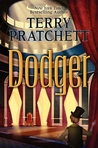
BOOK REVIEW: Dodger by Terry Pratchett

DodgerDodger by Terry Pratchett
My rating: 5 of 5 stars

Amazon page

This book’s protagonist is based loosely on the Artful Dodger character from Charles Dickens’ novel “Oliver Twist.” Pratchett’s Dodger is a brave scamp with a gift for plunging into the middle of precarious situations. One such situation occurs when he rescues a young woman who’s being battered one night on a London side street. The girl, known only as Simplicity, we later find out was attempting to escape an arranged marriage to an awful chap who’s a member of a foreign royal family. Her husband has no intention of letting her go peaceably, and has power, resources, and goons at his disposal. The story is an attempt to resolve this issue in a way that is satisfactory to the girl, for whom Dodger grows fond.

Dodger is a tosher, which is one who scavenges in London’s sewer system in search of wedding rings that were washed down drains or coins that rolled into storm drains. The fact that he’s mostly collecting lost items may make him more palatable / likable than the pick-pocketing Dodger of Dickens’ work. That said, this version of Dodger isn’t above absconding with valuables that seem to be “lying around”–even if they happen to be “lying” on the owner’s desk in the owner’s house. However, it’s clear from the outset that Dodger has a working moral compass. His liberties with earthly possessions don’t interfere with his understanding of what is right and wrong when it comes to treating others as you would like to be treated. This makes for a character who seems more mischievous than felonious.

Like many modern works that are based on Victorian era fiction, this book not only borrows fictitious characters but also individuals from the real world. Pratchett weaves Charles Dickens, Benjamin Disraeli, Henry Mayhew, and Angela Burdett-Coutts into his novel. (If the latter two names don’t ring bells, the former among them was an advocate for the poor and the latter was the wealthiest woman in England at the time, a woman who opened schools for impoverished children.) Except for Dickens [and to some extent Burdett-Coutts], these characters don’t play major roles, but more help to make the reader feel they reside in the world of the novel. [However, the book is dedicated to Mayhew.] There are also other fictional characters, most notably Sweeney Todd—the butcherous barber of penny dreadful fame.

This novel displays generous helpings of Pratchett’s humor and skill in setting the reader into a world that would otherwise feel foreign. One needn’t have read “Oliver Twist” [or any other works] to make sense of the book. It stands alone. [It may be easier if you haven’t read “Oliver Twist,” because you won’t have an ingrown sense of the character.]

I’d highly recommend this book for readers who like light-hearted historical fiction. It’s funny and engaging.

View all my reviews

BOOK REVIEW: Things Fall Apart by Chinua Achebe

Things Fall Apart (The African Trilogy, #1)Things Fall Apart by Chinua Achebe
My rating: 4 of 5 stars

Amazon page

Things Fall Apart is about a man who conducts his life ever trying to distance himself from his father. In the process, he sows the seeds of his own destruction. Residing in the small (fictional) Nigerian village of Umuofia in the late 19th century, Okonkwo strives to be hyper-masculine in everything he does. As a young man he becomes a village wrestling champion and, when it comes time to start farming, he’s driven to be the best farmer possible in order to pay off his debts and to be as wealthy as possible. He feels that his father, who was constantly in debt and negligent in his familial duties, was weak and effeminate. On the one hand, Okonkwo’s drive is respect worthy, but, on the other, his need to appear strong in the extreme comes off as a bit pitiful.

There are a couple of crucial events in Okonkwo’s life in which his need to appear manly results in great inner distress. The first occurs when it’s determined that a young man who’s been staying with Okonkwo’s family must be killed. (The young man was sent to Umuofia as a settlement for a wrong between the young man’s father and an Umuofia resident.) Okonkwo has been a father to the young man. Even when a village elder tells Okonkwo to have no part in the killing owing to being like a father to the boy, Okonkwo feels he must participate lest he be seen as effeminate. Of course, Okonkwo is wracked with guilt because he murdered a boy who’d been like a son to him. Later, an accidental discharge of Okonkwo’s firearm kills an innocent young man. The worst part of this for Okonkwo is that an accidental killing is seen as a “woman’s offense.” As punishment, Okonkwo and his family are sent in exile on another village for seven years. Okonkwo isn’t so much torn up by killing another innocent as by the fact that the way it happened makes him look girly in the eyes of others—or so he believes.

Besides the character portrait of Okonkwo, the book is also a commentary on the nature of colonialism and proselytizing missionaries. The first part of the book is set in a pre-colonial state, but in the latter half the rapidly developing tensions between the missionaries and the local villagers is featured. When Okonkwo and his family return to Umuofia after seven years, he finds that white men have built a church and are actively seeking to turn the villagers away from the indigenous beliefs. Of course, for Okonkwo this is just too much, and he can’t believe others are putting up with this. (Adding to his torment is the fact that his son is one of the converts—possibly because that son himself wants to distance himself from the father who murdered his best friend [the boy from the other village.]) Okonkwo is ultimately unable to tolerate that the world has become something so different from what he believes is right, and to continue living means to steer away from the path that he has locked his life into.

This short and thought-provoking book is a great window into pre-colonial Africa and the clash of worldviews that colonization brought. It’s also a cautionary tale about not having sympathy for the failings of one’s father—not to mention the weakness inherent in our own humanity.

View all my reviews

BOOK REVIEW: Anno Dracula by Kim Newman

Anno DraculaAnno Dracula by Kim Newman
My rating: 5 of 5 stars

Amazon page

Anno Dracula is set in a world subsequent to the events of Bram Stoker’s Dracula. In the world of Anno Dracula, Dracula kills Van Helsing (not the other way round) and becomes more powerful than ever. In fact, the Count has married himself into line to become king. Vampires flourish in the open and their numbers are swelling. But a few of them are being gruesomely murdered. In Newman’s work, the vicious Whitechapel murders attributed to Jack the Ripper target young, “turned” working women of Whitechapel. The killings attract attention and become politically charged. The book’s plot revolves around the investigation by an unlikely duo, Charles Beauregard (human) and Geneviève Dieudonné (Vampire elder), into the murders.

Newman creates a fascinating world that blends not only his own characters (e.g. Beauregard and Dieudonné), but also characters from other popular works set in the 19th century as well as from our own history. Some of these borrowed characters are important to the story, others are mere cameos, and still others are references to the departed or imprisoned. Among the book’s fictional pantheon are those from works by Robert Louis Stevenson, Oscar Wilde, H.G. Wells, Sir Arthur Conan Doyle, and—of course—Bram Stoker. Bram Stoker lends the critical character of Dr. John Seward to the book, although there are references to most of that book’s major characters. (You’ll miss some connections if you haven’t read Dracula, but you’ll still be able to follow the story.) The next biggest contributor of characters is Sir Arthur Conan Doyle. Mycroft Holmes, Inspector Lestrade, and Professor Moriarty are all present in the flesh, though the latter plays a small role, and others—including the great detective, himself—are referenced throughout.

Many of the real world characters are literary greats (poets, playwrights, and novelists) including George Bernard Shaw, Lewis Carroll, Alfred Tennyson, and Oscar Wilde. However, also included are political figures, royalty, and—of course—the victims of Jack the Ripper. This mixing of the literary and historical worlds lures book-lovers further down the rabbit hole.

If this book seems like a murder mystery, it’s not. One of the interesting elements of Newman’s approach is that he reveals the killer from the outset. While we know who the killer is from the book’s opening, we don’t know whether or how he will be brought to justice—or what precisely justice means in this case. The book is more about the web of intrigue that surrounds the murders than it is about the murders. Ultimately, the book takes in a much bigger picture than a few murders in the seedy side of London.

Anno Dracula is intriguing and readable. If one has read Dracula, the various Sherlock Holmes stories, The Strange Case of Dr. Jekyll and Mr. Hyde, The Island of Dr. Moreau, and other contemporary literature, it’s all the more enjoyable for the way it artfully places these all in the same universe. I’d highly recommend this book for readers of the classic popular fiction.

View all my reviews

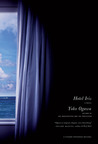
BOOK REVIEW: Hotel Iris by Yoko Ogawa

Hotel IrisHotel Iris by Yōko Ogawa
My rating: 4 of 5 stars

Amazon page

Hotel Iris follows a Japanese girl’s dangerous liaisons with a mysterious older man. Unlike 50 Shades of Grey, with which Ogawa’s novel shares the theme of a young woman’s introduction into a sadomasochistic relationship, the female lead, Mari, is attracted to a man who isn’t handsome, rich, or successful. Mari’s motivations are more intriguing and complex. This makes her relatable to a smaller demographic, but potentially more interesting to a much larger one.

As I fear I’ve made this book sound like hard-core erotica (i.e. word porn,) I should point out that it’s really character-driven literary fiction. There are only a couple of scenes that involve sexual activity—granted those are intense and graphic. However, what readers who stay with this short book are seeking to understand is what about this young woman’s life creates such an attraction for an old man who—in conjunction with the prostitute he hired—gets kicked out of the hotel at which Mari works. Mari’s motivation is far from obvious, and thus the reader is left trying to assemble a puzzle.

The biggest piece of this puzzle may be that Mari’s beloved father passed away years before, leaving her in both the care and employ of her over-protective and cold mother. The Hotel Iris is a small seaside hotel of a middling nature in an area that thrives or dives at the whim of tourists. Mari’s parents had owned the hotel, but now it’s just her mom. Mari, her mother, and one housekeeper share the workload. Mari’s mother believes the customer is always right, but she also has questionable morals in dealing with customers (i.e. if she can get away with cheating them, she will.)

In addition to trying to figure out what drives Mari, the reader also wants to learn whether the girl will make it through alright. The man she is having a dalliance with, who we know as “the translator” because he translates from Russian to Japanese and vice versa, is painted as an unsavory character. But the reader doesn’t know whether he’s a mostly harmless pervert or a killer with a cabin on a remote and scantly-populated island. He has dark appetites, but how tight his grasp on reality is remains uncertain.

I found this book to be highly readable. It’s short, well-written, and keeps the reader questioning. The Japanese penchant for grotesquerie is an unabashed feature of the book. I’d recommend it… just not for your church’s book club.

View all my reviews

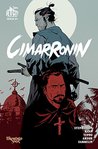
BOOK REVIEW: Cimarronin by Neal Stephenson, et. al.

Cimarronin: A Samurai in New Spain #1Cimarronin: A Samurai in New Spain #1 by Neal Stephenson
My rating: 4 of 5 stars

Amazon page

Cimarronin opens in Manila in 1632 with a masterless samurai (i.e. a ronin, hence the latter part of the name) about to commit ritual suicide. The ronin, Kitazume, is interrupted by a Catholic priest who Kitazume knows and who—it’s hinted—has the kind of nefarious past that one has trouble reconciling with the priesthood. The priest offers Kitazume a mission.

The opening hooks one. It raises several questions that the reader will want answered: Why is a Japanese samurai hanging out in the Philippines in 1632? Students of Asian history will recognize that Japan’s long warring period is a couple of decades past and there are a lot of warriors out of work. But is that all? Is the priest really a priest, and, if so, how does a blackguard end up a holy man? And most crucially, will Kitazume take the mission, and—if so—will he succeed (and will he be glad he did?) The reader always knows that the priest has something up his sleeve, but it’s only gradually revealed what that is.

We soon discover that Kitazume has some skill as a detective. This enhances our curiosity about the character. The higher echelons of law enforcement in feudal Japan were staffed by samurai, but it still adds another interesting dimension to the character.

The three book collection continues with the discovery that the priest is facilitating the transport of a Manchu princess to Mexico. (Philippines to Mexico, hence the “New Spain” subtitle reference.) The priest’s plot unfolds in the middle book, and we get a better picture of his scheme.

The second book ends with a fight with the Cimarrones—a bellicose, indigenous tribe (and the reason for the first part of the title,) and in the third and final book the Manchu Princess’s own scheme is revealed. The differing goals of the various major characters set up the potential for an excellent story. Kitazume has the simplest goal: to have a mission that makes life worthwhile and to conduct his life with some semblance of the virtue for which the samurai were known. The priest and princess weave a more complex web of scheming.

The story is peppered with flashback sequences that give us some of Kitazume’s backstory, and a substantial part of the third book is such backstory. The graphic artist uses a subdued scheme to make it readily apparent which panels are flashback and which are in the timeline of the story arc.

As this is the first three books of a larger collection, the ending is lacking (which is to say it’s not so much an ending as the set up for the story to unfold.) The story is much stronger in its beginning than its ending. The third book ends trying to entice one to read the concluding volumes more than it tries to wrap anything up. This situation also results in the fact that we don’t get a good picture of why Kitazume is the lead character in the story. I suspect that’s why there is so much backstory, to try to build sympathy and curiosity for the character while making him weak enough that his success is not apparent. At any rate, Kitazume doesn’t come off as the strongest or most competent character in the book by a long shot. Hopefully, this is so that he can pull out an underdog save in the end, but that’s just speculation.

I found this collection to set up an interesting story, but it doesn’t stand alone. It does have plenty of action and intrigue. If the historical fiction premise intrigues you, you may want to get the complete collection.

View all my reviews

BOOK REVIEW: The Monstrous edited by Ellen Datlow

The MonstrousThe Monstrous by Ellen Datlow
My rating: 4 of 5 stars

Release Date: October 27, 2015

Amazon page

This is a story anthology offering tales of monsters—just not your everyday monsters. In her Introduction, Editor Ellen Datlow said her solicitation for stories asked for “unusual monster stories.” She wanted neither “human monsters” (i.e. no pedophiles or serial killers) nor was she interested in your classic Transylvanian Count Dracula. With this book’s 20 stories, the authors succeed in meeting Datlow’s request—in several cases spectacularly. Some of the stories are chilling, others are creepy, and two are even humorous, but all feature monsters that are out of the ordinary, or—at least—the monsters are in extraordinary situations.

Without further ado, I’ll offer a brief synopsis of, and comments on, the stories in this anthology:

1.) A Natural History of Autumn by Jeffery Ford: Set in Japan, a salaryman takes a girl-next-door escort to a remote onsen (thermal springs bathhouse and inn.) Neither of the main characters is what they seem, and, therein, lies the story’s appeal.

2.) Ashputtle by Peter Straub: A beloved kindergarten teacher describes her life and experience of the disappearance of a bright student. This story comes closest to violating the “no human monsters” proviso, but it creates a character so intriguing that you don’t necessarily care.

3.) Giants of the Earth by Dale Bailey: Miners stumble onto something unexpected deep within the Earth. This wasn’t one of the more engaging or memorable works, though it does have an intriguing premise.

4.) The Beginning of the Year without Summer by Caitlín R. Kiernan: A professor and a young, female townie chat by lakeside, and also a discovered book is returned. This is one of two southern gothic pieces, and is more engaging for the conversation between the intelligent professor and a more “common” young woman than for monstrous or supernatural elements.

5.) A Wish from a Bone by Gemma Files: An archeological team in a war zone stumble into more than they signed up for. Like a terrestrial Aliens movie with Sumerian evil spirits in lieu of aliens.

6.) The Last Clean, Bright Summer by Livia Llewellyn: A teenaged girl in a dystopian future travels with her parents to the sea for a rite of passage of an unexpected and haunting variety. This is one of the most visceral entries, and the author captures the teenage voice to great effect. This is in my top five stories from the anthology.

7.) The Totals by Adam-Troy Castro: A get-together between monsters to discuss quarterly figures and give out performance awards. This is one of the humor-oriented pieces—though not to the extent of the Monsters animated movies. The two humor pieces (the other being How I Met the Ghoul) offer two different angles on monster humor. This piece is set in a monstrous world, but juxtaposed against that eeriness is the work-a-day feature of a staff meeting. (The other story is set in our world—or at least a very mundane world reminiscent of ours—and draws its humor from the introduction of the monster into the midst in a very banal environment.)

8.) The Chill Clutch of the Unseen by Kim Newman: The last monster killer waits for the last monster to steam into town. This is one of the entries with a wild west feel to it. A common approach in this collection is to create unusual monster stories by putting monsters that may or may not be usual (in this case they aren’t) into settings and across from characters that one wouldn’t expect to see them.

9.) Down Among the Dead Men by Jack Dann and Gardner Dozois: A man discovers that his best friend in a Nazi concentration camp is a vampire. Referring to the previous entry (i.e. the Kim Newman story), this is an example of a typical monster (a vampire) given new life by placing it in a context that one would least expect to find it—a concentration camp. This was also one of my top five from this collection.

10.) Catching Flies by Carole Johnstone: A girl and her baby brother are removed from a household (by a DFACS-like entity) after their mother dies from mysterious causes. I mentioned a story done in the voice of a teenager. This is one of a few entries written in the voice of a child—which is very apropos for an anthology about monsters.

11.) Our Turn Too Will One Day Come by Brian Hodge: A man is called in the middle of the night, and asked to come and bring a shovel—which is, needless to say, never a good situation. The monsters, while fascinatingly described and unique, are almost superfluous to this story. The monsters appear only at the end, and it would be a highly readable story without them—though it would be in the wrong collection sans the monsters.

12.) Grindstone by Stephen Graham Jones: A man who’s been shot up is fleeing from something across desolate territory. This is the other entry with a very Western feel to it. This is also one of the shortest entries of the batch.

13.) Doll Hands by Adam L. G. Nevill: Set in a dystopian future, a laborer in a luxury building takes matters into his own (doll-like) hands when he can no longer accept the atrocities the super-wealthy patrons of the building are perpetrating. One of the great features of this story is that it creates visual imagery that one isn’t sure whether to take literally or just descriptively. For example, the lead baddie is an old, rich woman who’s described in avian terms. It’s clear that something has gone terribly wrong in this world, though there is strategic ambiguity as to what. This is in my top five.

14.) How I Met the Ghoul by Sofia Samatar: A reporter conducts an interview with a ghoul in an airport lounge. This is the other story that is more comedy than horror. The comedy is born of putting the monstrous creature in a mundane setting during a workaday interview. It’s not even the kind of hard-hitting story that a well-known journalist would take on, but more like a cub reporter doing a human interest featurette.

15.) Jenny Come to Play by Terry Dowling: A former Siamese twin, separated from her twin as a teenager, admits herself into a psychiatric hospital where her psychiatrist tries to separate fact from fiction and the twisted imaginings of insanity from reality. These Siamese twins shared no common organs, just muscle, and were ideal candidates for separation as infants. However, their father kept them conjoined (and much worse) so that they could be the main attraction in his cabinet of curiosities. Not only is this story in my top five, I’d have to call it my favorite of the bunch. It reminds me a little of the work of the novelist team Preston and Child at their best. It has the same combination of creepiness and dark foreboding, while keeping one in the dark as to what imaginable events have actually transpired.

16.) Miss Ill-kept Runt by Glen Hirshberg: A family drives through the night to go to stay with family as if fleeing an ill-defined threat. This is another of the stories done in a child’s voice and perspective, and it captures that voice well.

17.) Chasing Sunset by A.C. Wise: A young man flees across country in an attempt to escape a demonic father who is after his body. This story offers the most impressive use of language. It’s one of the most enjoyable pieces to read, and, while it didn’t quite make my top five, it definitely gets honorable mention.

18.) The Monster Makers by Steve Rasnic Tem: A grandfather teaches his grandkids the family magic of being able to make others turn into monsters. In a way this seems like a thinly-veiled allegory for how grandparents turn children into “monsters,” but it’s entertaining nonetheless.

19.) Piano Man by Christopher Fowler: A travel writer doing a story on New Orleans gets caught up in a local voodoo turf war. This is another Southern Gothic piece with post-Katrina New Orleans as the setting—with all its tragic, macabre undertones.

20.) Corpsemouth by John Langan: An American visits his ancestral home and old world family in Scotland and discovers that the “gibberish” last message of his dying father actually had a rather spectacular meaning. This story rounds out my top five. I found it to be engaging, highly readable, and with an intriguing premise.

This anthology is thrilling and readable, and I’d recommend it to anyone who wants to read about unusual monsters.

View all my reviews

BOOK REVIEW: The Elephanta Suite by Paul Theroux

The Elephanta SuiteThe Elephanta Suite by Paul Theroux
My rating: 4 of 5 stars

Amazon page

The Elephanta Suite is a collection of three novellas that feature Westerners out of their league in India. As an American living in India, I suspect anyone who’s had this experience will recognize instances in which—for good, bad, or a mix of each—one is swallowed whole by some feature of India that one couldn’t possibly have anticipated. The novellas aren’t interconnected, except by way of the themes that run through them and Theroux’s trademark use of what I’ll call—for lack of a better term—cameo references. These aren’t his own cameo appearances in the book—as he’s also been known to do—but rather minor instances in which the lives of the characters in one story brush up against those in another.

The first of the novellas is called “Monkey Hill,” and it features a tourist couple who are staying at an upscale resort that’s near a town with a large Hanuman temple. (Hanuman is the “monkey-god” of Hinduism, a popular deity with a monkey-like face and a man-like body who features prominently in the epic entitled Ramayana.) The resort grounds also have monkeys, and so there are two potential meanings to the title. Like many wealthy travelers to India, the couple isn’t really experiencing India—though, like the characters in the other stories, they end up doing so in a major way by the story’s end. Experiencing India in unexpected ways is a central theme across the three works. The couple’s only real experience of India comes through each of their respective dalliances with locals that are carried out unbeknownst to the other. (I would point out that characters who aren’t particularly high in moral fiber are another prevailing theme across these stories, but really such characters are a hallmark of Theroux’s writing in general.)

“The Gateway of India,” as Bombay visitors might suspect, is set in that city and the waterfront attraction features prominently in the novel. The lead in this story is a business traveler who’s staying in the famous Taj Hotel in Mumbai. (The hotel overlooks the Gateway and was allegedly built by a pissed off J.N. Tata who was irate because, as a Parsi, he wasn’t allowed to stay in any of the upscale hotels because they exclusively catered to Westerners. As a “screw-you,” he built the most elegant hotel in the country at the time.) At the story’s beginning, our business traveler is a caricature of business travelers to India. He’s too scared to eat or drink anything that isn’t from a five-star hotel—and even then he’s wary. He’s filled with disgust whenever he rides through town or interacts with locals in the street. By turns, he’s transformed over the course of the story. Like the couple in “Monkey Hill” his introduction to the real India comes from a sexual liaison with a native. That said, this story features the most positive character transformation of the three stories. This is the one “feel-good” transformation of the three.

The final novella, entitled “The Elephant God,” begins in Mumbai, but is largely set in Bangalore. This story features yet another class of traveler to India–the backpacker. This lead is a young woman who is traveling on a tight budget while staying at an ashram. Beginning the story in Mumbai allows the reader to see how the backpacker loses her traveling companion, an issue that will prove crucial to the story’s resolution. As one might expect of a backpacker, our protagonist has had a truer experience of India than the wealthy protagonists of the other stories. She knows a little of the indigenous culture and how real people behave faced with real world events. In fact, there’s an intriguing piece of the story line that involves a job she gets teaching English to employees of a call center for a multinational corporation. [It should strain credulity that she’d be able to get a job on the visa she would have, but this is India.] At any rate, she begins to realize that—by teaching the call-takers to speak to American customers in a way that will make Americans comfortable—she’s essentially turning them rude—all their endearing deferential mannerisms fade in the face of her teachings. She feels bad about this. The titular reference involves an elephant and its handler (mahout) that she befriends. (In two years living in Bangalore, I’ve not seen an elephant living inside the city, but I can’t say that I found this aspect of the story unbelievable. I have seen, for example, the equally improbable camel or two.) The elephant isn’t a major feature of the story until the climax, though visits do recur.

I enjoyed these stories and would recommend The Elephanta Suite–particularly for any Westerners who have spent, or plan to spend, substantial time in India. The book may not surprise or inform such readers, but it’ll probably resonate with them.

View all my reviews

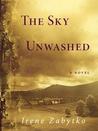
BOOK REVIEW: The Sky Unwashed by Irene Zabytko

The Sky UnwashedThe Sky Unwashed by Irene Zabytko

My rating: 4 of 5 stars

Amazon page

The Sky Unwashed is a character-driven novel, telling the story of an elderly pensioner residing a few miles from the ill-fated Chernobyl nuclear plant. The protagonist’s name is Marusia, and she lives with her beaten-down son Yurko, his cheating wife Zosia, and the dysfunctional couple’s children (her grandchildren.)

The first part of the novel is a bit of a slog, though the character portraits of the adult family members may be enough to keep one intrigued if one enjoys being pulled into a dysfunctional Ukrainian village household. (The first part is a bit like “Jerry Springer—Ukraine Edition.”) Zosia’s unfaithfulness provides the main source of tension, but that tension is a quiet one between Marusia and Zosia. Yurko knows about his wife’s infidelity, but doesn’t seem to care–or doesn’t seem to be able to muster the energy to make the appearance of caring. Marusia, on the other hand, is the doting mother who feels that her doofus son could do better, but she bites her lip as she doesn’t feel it’s her place.

It’s the Chernobyl meltdown that kicks the novel into interesting territory. One is shown how tragedy can bring out the best and worst in people. Both Yurko and Zosia have jobs at the plant, but it’s Yurko who’s working when the incident occurs, and it’s he who gets a dose of radiation that will prove lingeringly fatal. Interestingly, the reader isn’t taken into the plant often. We don’t see Yurko fighting the fires, but rather we see the family in the village Starylis. We experience the family first noticing Yurko’s failure to return and then becoming increasingly concerned. We see the family noticing the subtle signs of something gone awry—like air that tastes of pennies.

Starylis’s occupants—including Marusia’s family–are eventually evacuated to Kiev. It’s here that we see how events press the once hostile family together before ultimately tearing them apart. The Zosia we found unpalatable in the first part is now seen in more sympathetic terms. We see her at her best and her worst, and we see that in sum she is a survivor. Her behavior, good and bad, is committed saving the remainder of her family—which is her children.

The truly visceral part of the novel is reached when Marusia opts to move back to Starylis, despite the fact that it’s abandoned. At first, the elderly woman is completely alone. It’s the eerie loneliness of an abandoned place that one once knew as a thriving community. Even the livestock Marusia left behind is long gone. Her daily ritual includes ringing the church bells to let any other stragglers know they aren’t alone. Eventually, she befriends a cat gone feral, and shortly thereafter others begin to trickle back to the village—virtually all of them women.

In retrospect it seems the author might not have been comfortable writing male characters. The only male character of note is Yurko, and he’s by far the most flat of the major characters—that’s probably on purpose and it feels true enough. The only other male character we get to know in any detail is quickly killed off. Given all the male-dominated works of literature, this isn’t necessarily a complaint or a problem—just an observation.

I’d recommend this book for the patient. If you need a hard and fast hook to keep you engaged, you’ll have trouble with this book. However, once one gets into the parts set in Kiev and the abandoned Starylis, you’ll find the book intensely engaging.

View all my reviews