10 Things I Learned from Yoga Teacher Training

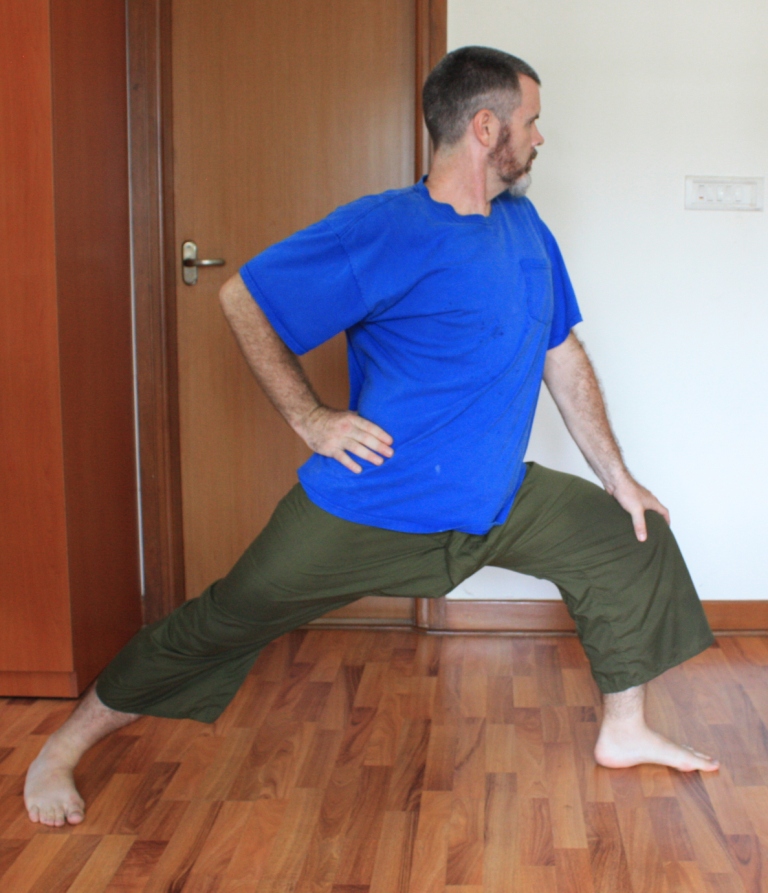
1.) Use your words. Don’t demonstrate unnecessarily. I came to teaching yoga in a backward way. It started with me doing my personal practice with my wife a few times a week. We were pretty much just practicing together, though I took the lead based on greater experience and knowledge of yoga. Eventually, a couple of other people began to join these makeshift sessions. I remember looking up and seeing a person doing parivrtta trikonasana (revolved triangle pose) in a dangerous manner. This was my first glimpse into the importance of keeping eyes up if you take on the role of helping someone with their practice.

Having a relatively high level of flexibility and many years of movement training (in the form of martial arts), I generally don’t have that much trouble mimicking postures and following corrective guidance. However, having gotten away from teaching for a little while, I quickly forgot how low the average level of bodily awareness is. Truth be told, I’d probably have been hard-pressed to explain what was so dangerous about that individual’s alignment at the time. I just had an intuitive notion that it wasn’t his skeleton or the correct muscles that were holding him up. I’ve since been working hard to move beyond an intuitive understanding. I’ve been voraciously reading everything about anatomy and body-reading that I can get my hands on–studies above and beyond the requisite anatomy instruction of the course–which itself was substantial.

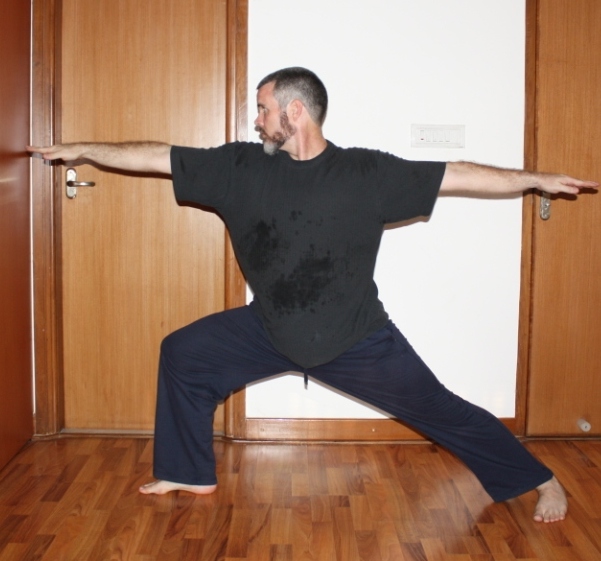
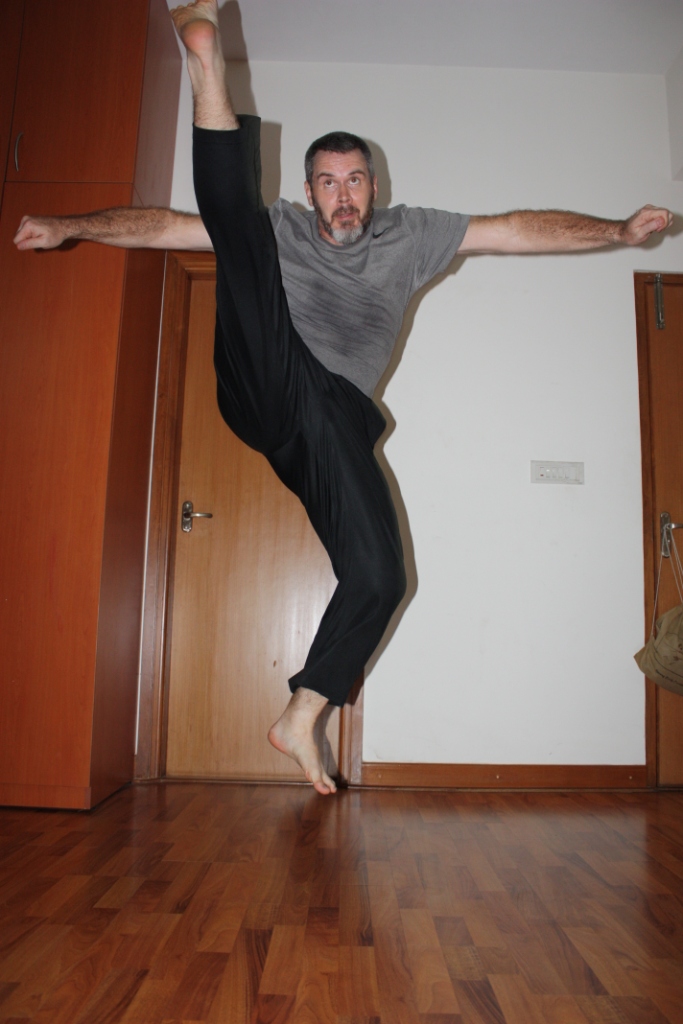
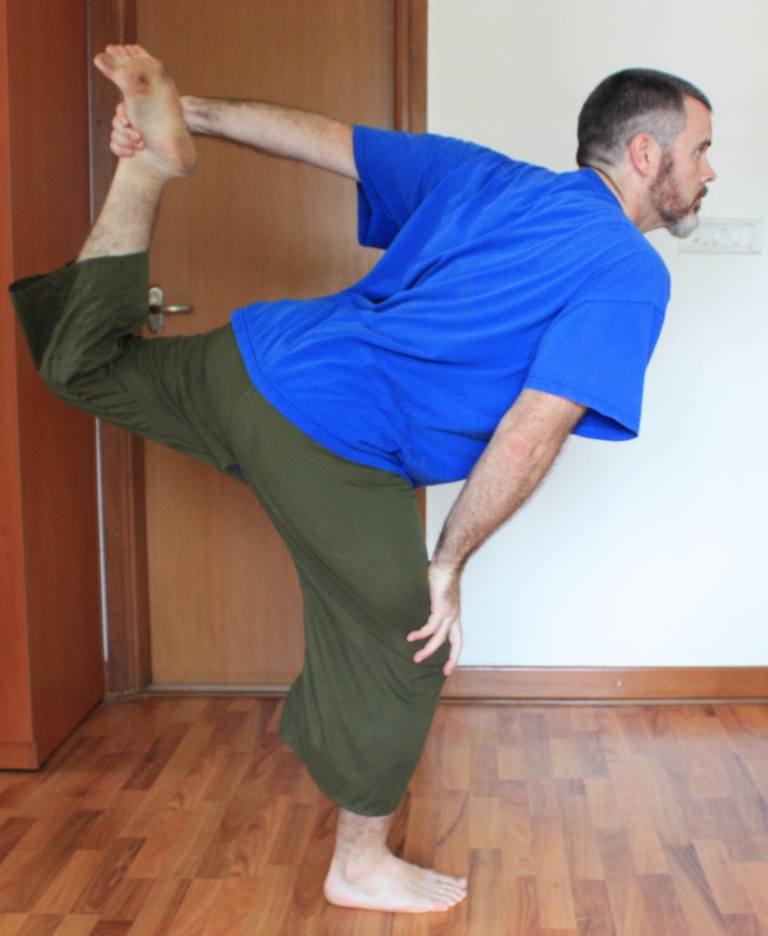
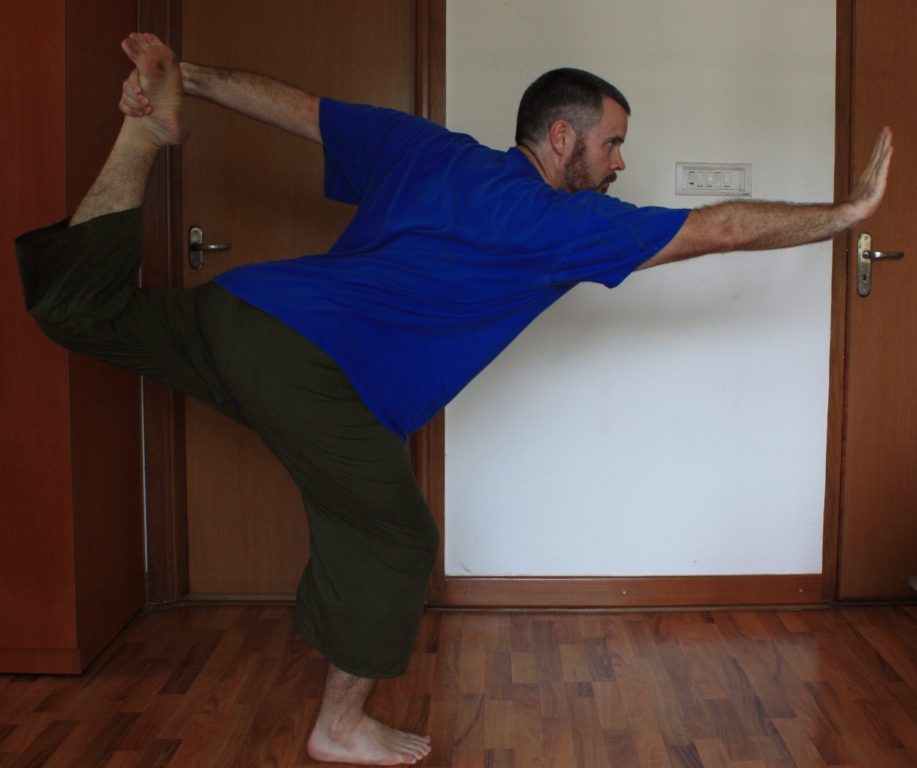
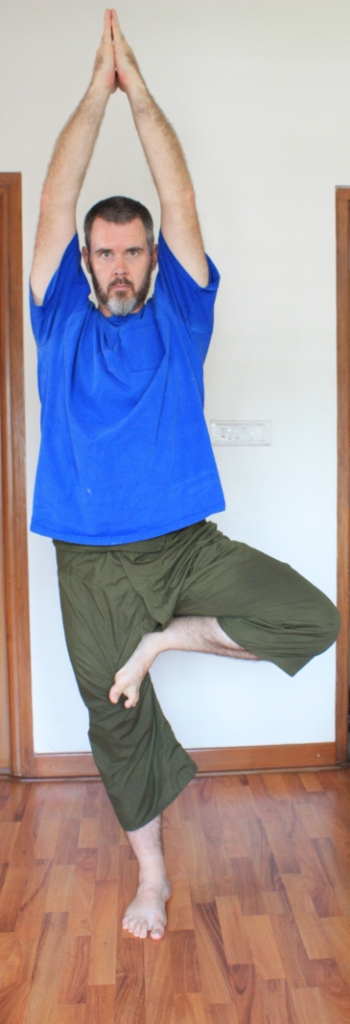
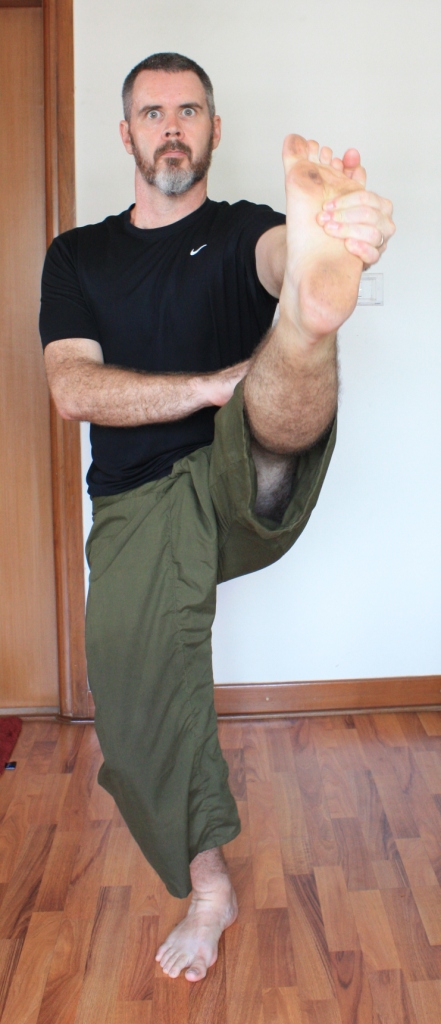
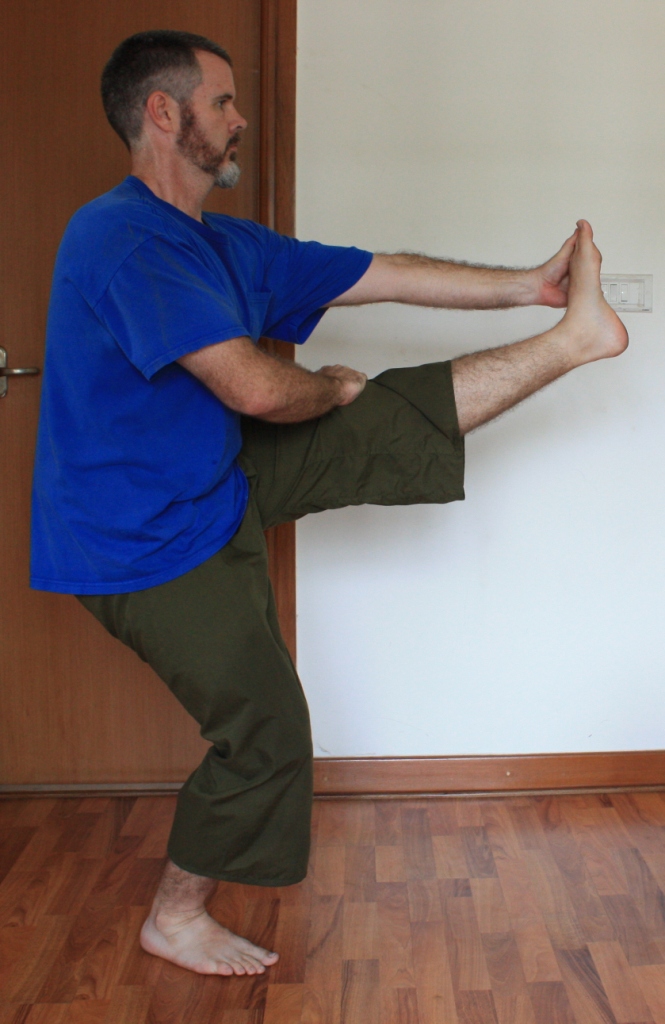
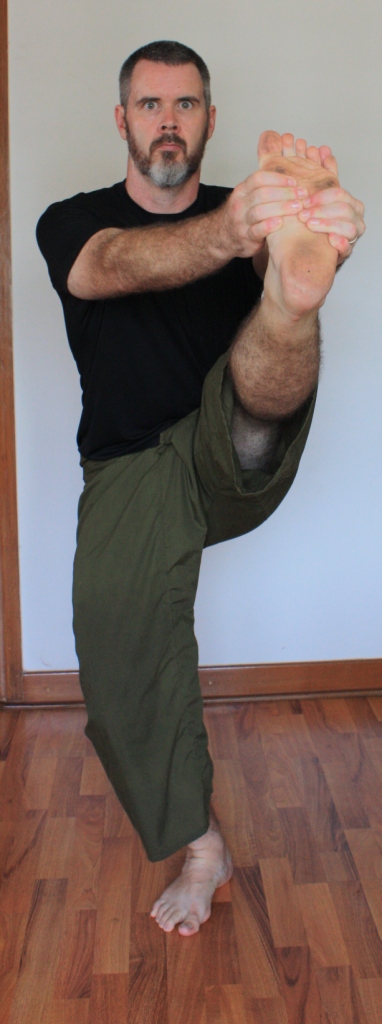
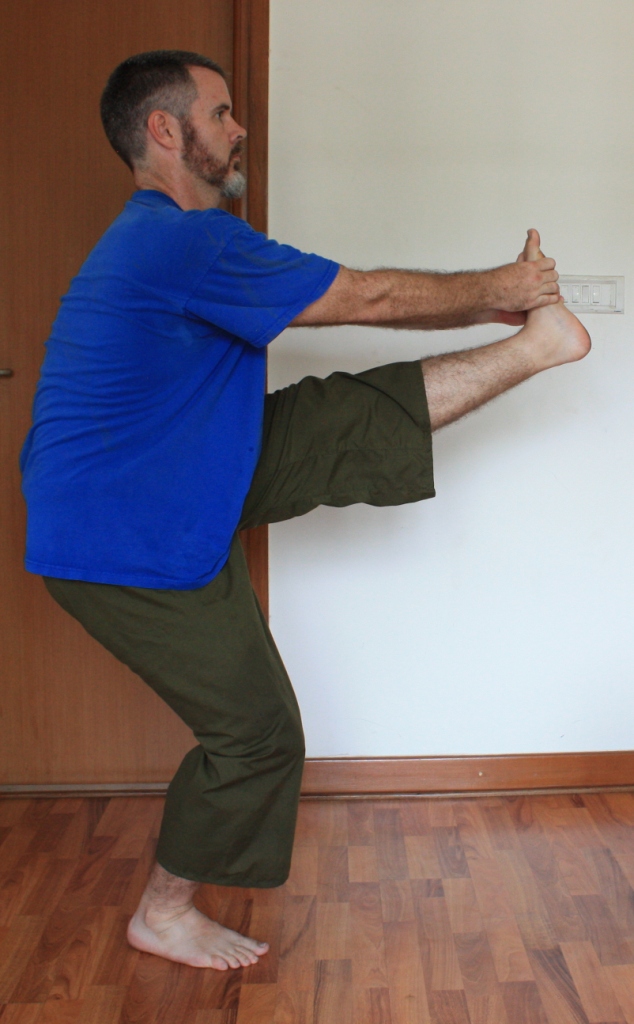
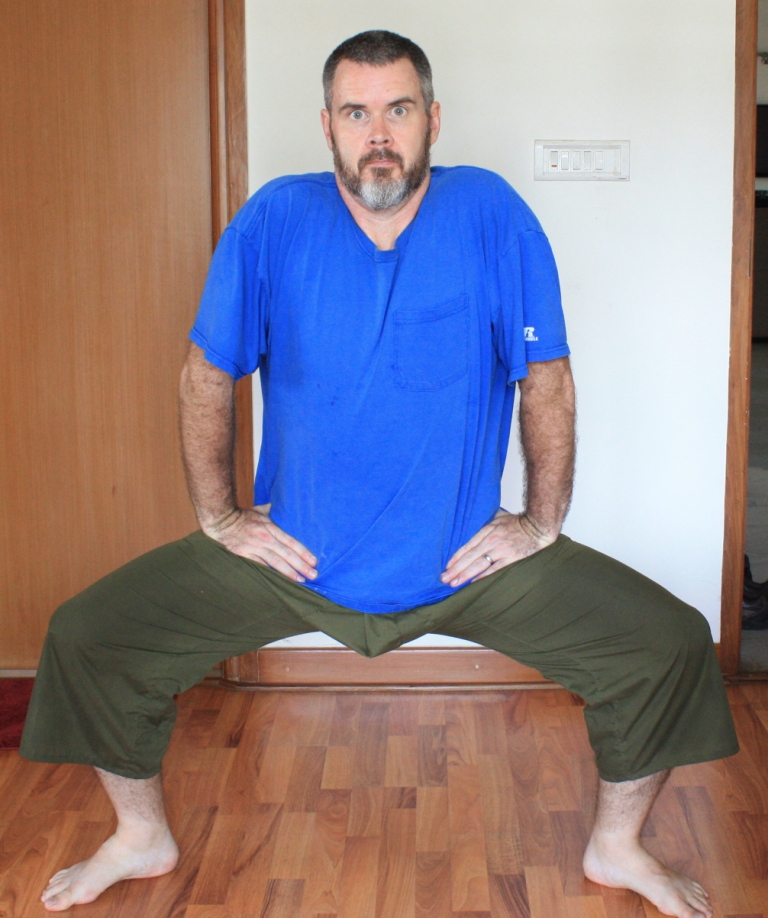
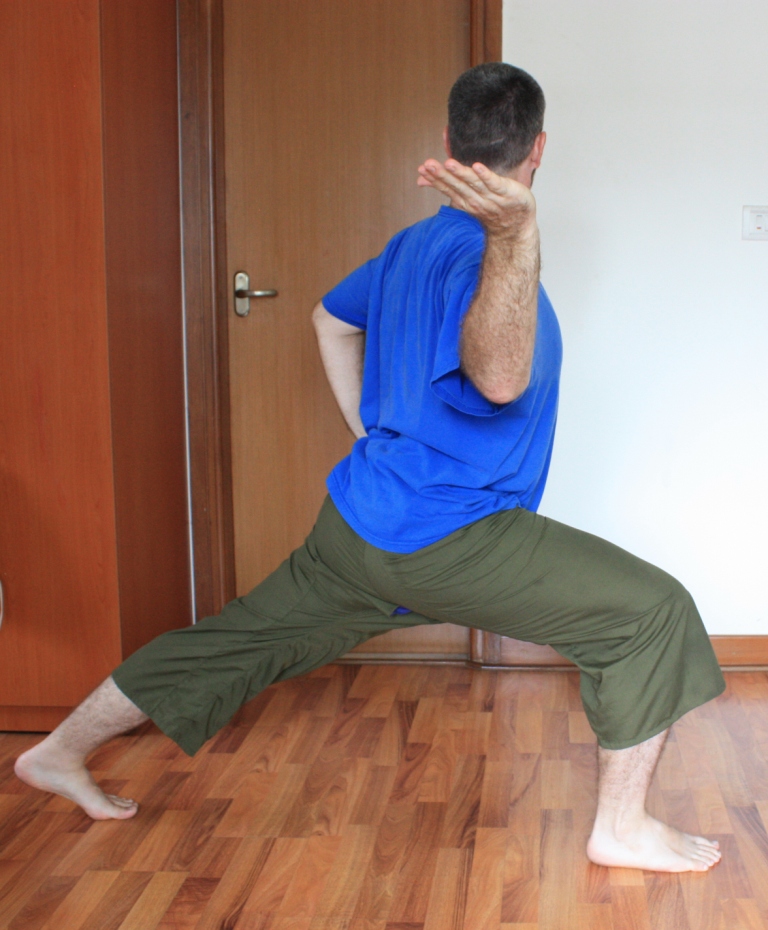
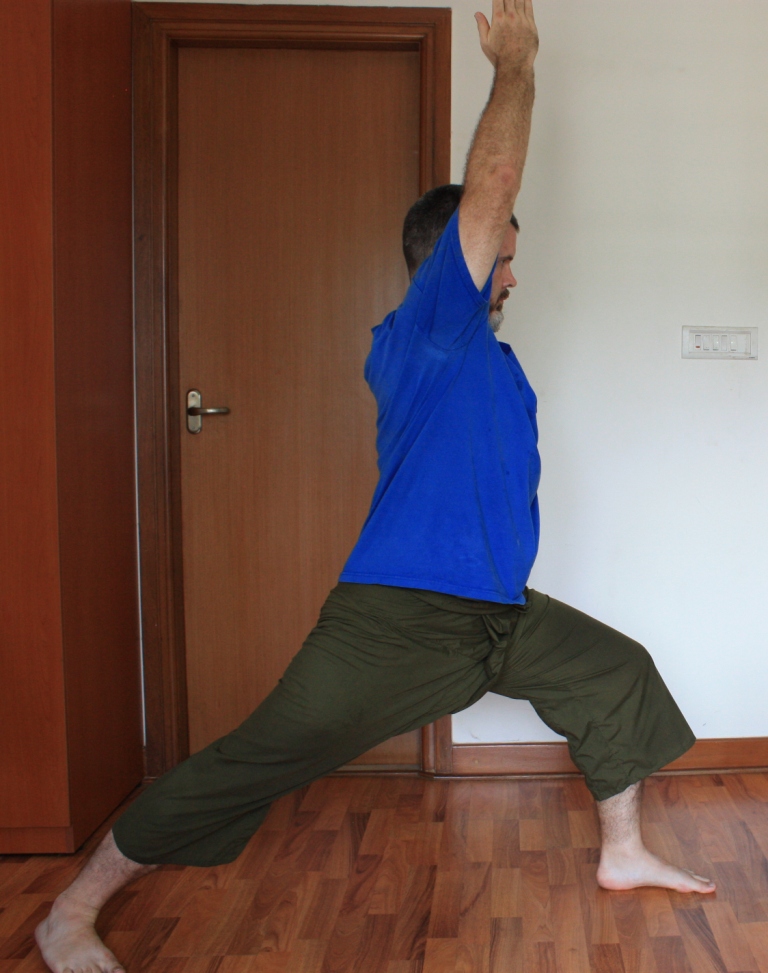
IMG_12822.) Demonstrate in a smart (and not narcissistic) manner. Of course, demonstration does have its role when you have individuals who’ve not seen the movement or posture before–and if it’s a difficult posture to explain or likely to result in injury if instructions are misinterpreted. Such demonstration is best done with students watching and before they begin to move into the posture. Having only a small, closed group, whose capabilities are known to me, I’ve learned that it’s better for me to demonstrate in a manner that the participants are capable of doing while maintaining safe and stable alignment.

Of course, if one has a class of students with wide-ranging capabilities–or unknown capabilities–one will want to demonstrate as close to the idealized form as one can, so that the more proficient students can work toward that ideal. However, having struggled to master difficult asana (postures), there can be an incentive to show off one’s capability for the sake of… well showing off. If one demonstrates an idealized form that one’s students are incapable of performing, there’s a risk they’ll do something dangerous in an attempt to emulate that form.

3.) Lazy yogis aren’t without virtue. The primary purpose of practicing asana could be said to build a body with which minimal effort is required to maintain a given posture–be it a meditative seated pose or simply standing. Most people have subtle misalignments in their bodies of which they aren’t even aware. They may have chronic or occasional pain that they aren’t remotely aware is tied to being out of alignment.These misalignments end up costing a person a lot of extra effort and pain over the course of a lifetime. Being conscientious about one’s posture is the first step to fixing these problems, and if one spends all one’s time driven to master the next piece of mega-contortionism or acrobatics without learning to be a little lazy, one is missing the point of yoga.

4.) Props aren’t just for old ladies with bad hips. When I started yoga teacher training, I’d never used a block, strap, or bolster, and chairs only for sitting. Since then, I’ve learned a lot from the asana with props training both in the teacher training course, and by attending and observing such courses of my own volition. I think there’s a widespread notion that props are for those who lack the flexibility to do proper yoga and that such classes are exclusively for those people trying to ease into yoga. What one might not realize is that one ends up holding postures much longer in such a class, that one is usually discouraged from using the prop any more than one has to, and that props don’t always make asana easier.

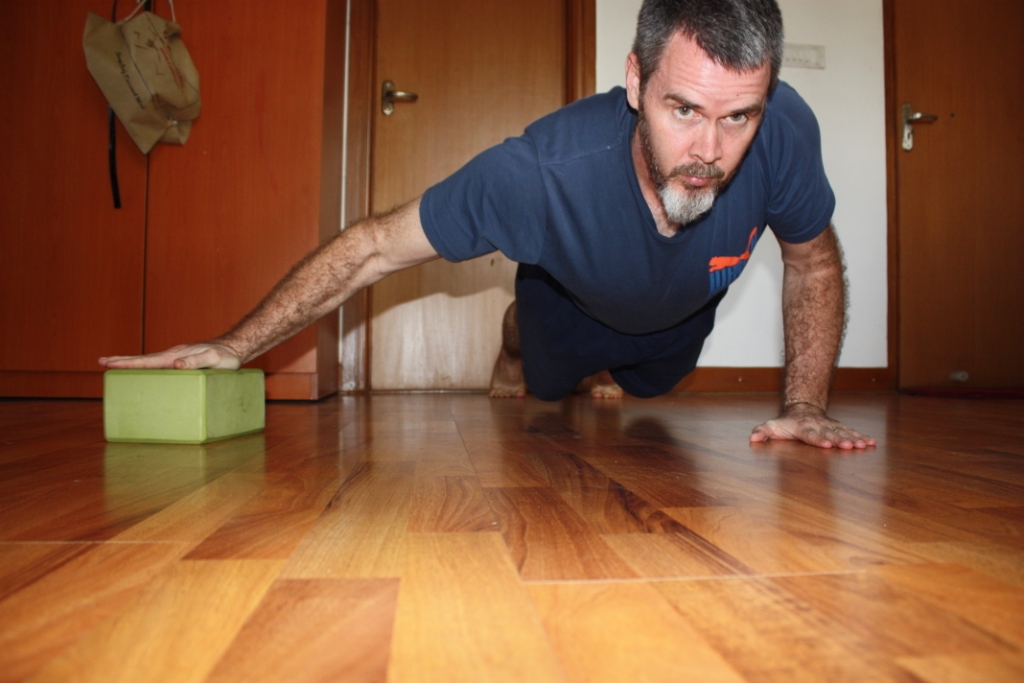
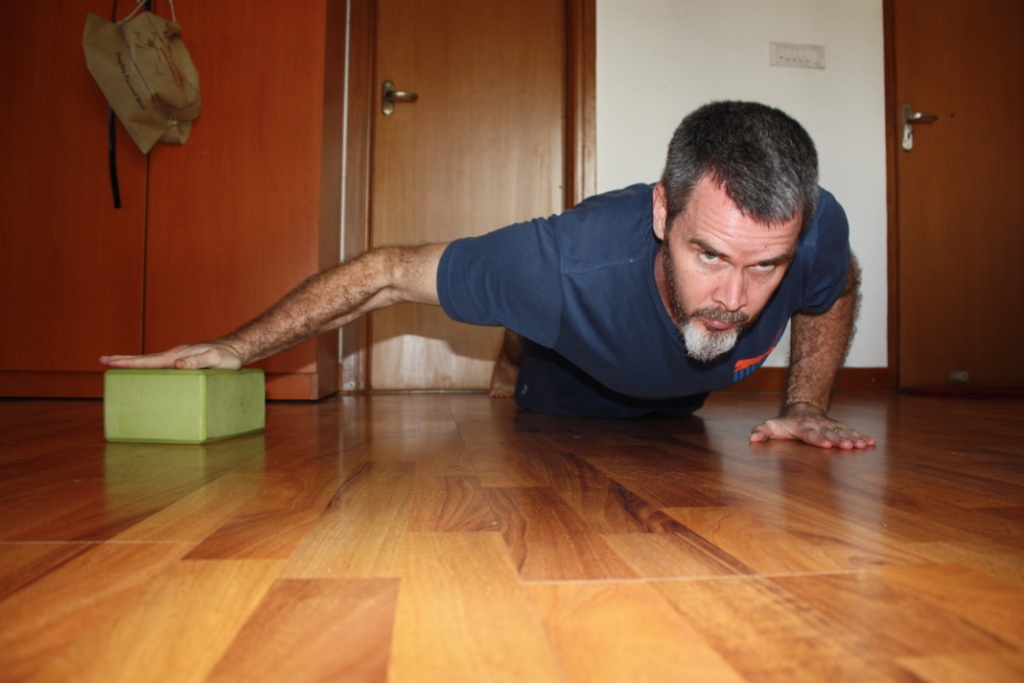
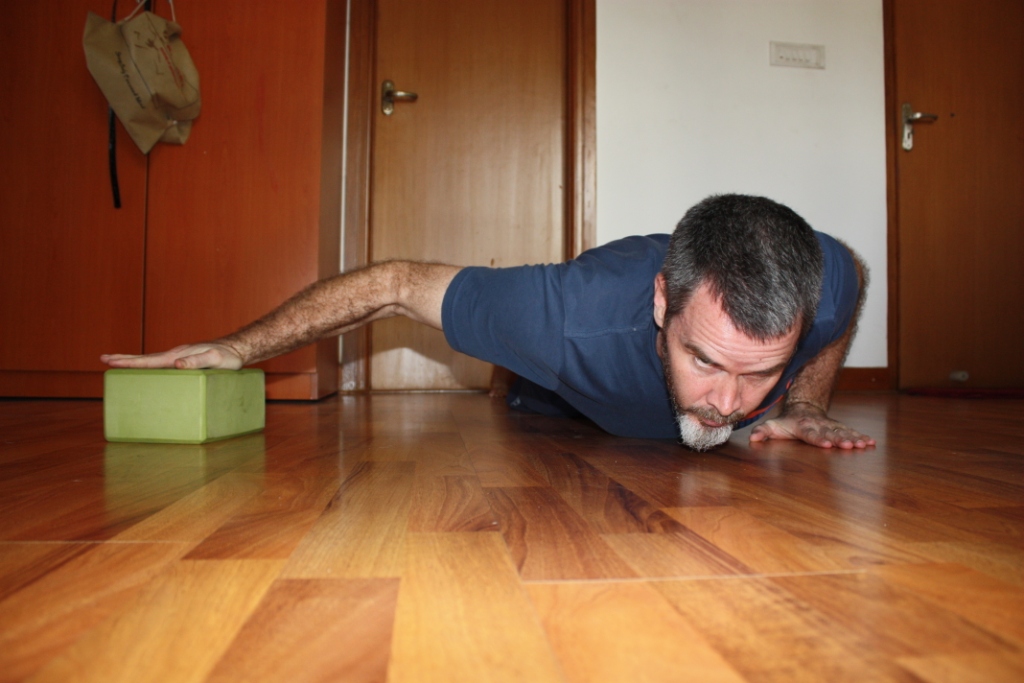
I’m pretty flexible in most of my musculature, but I found that there were areas in which my alignment could definitely be improved by using a prop now and again.

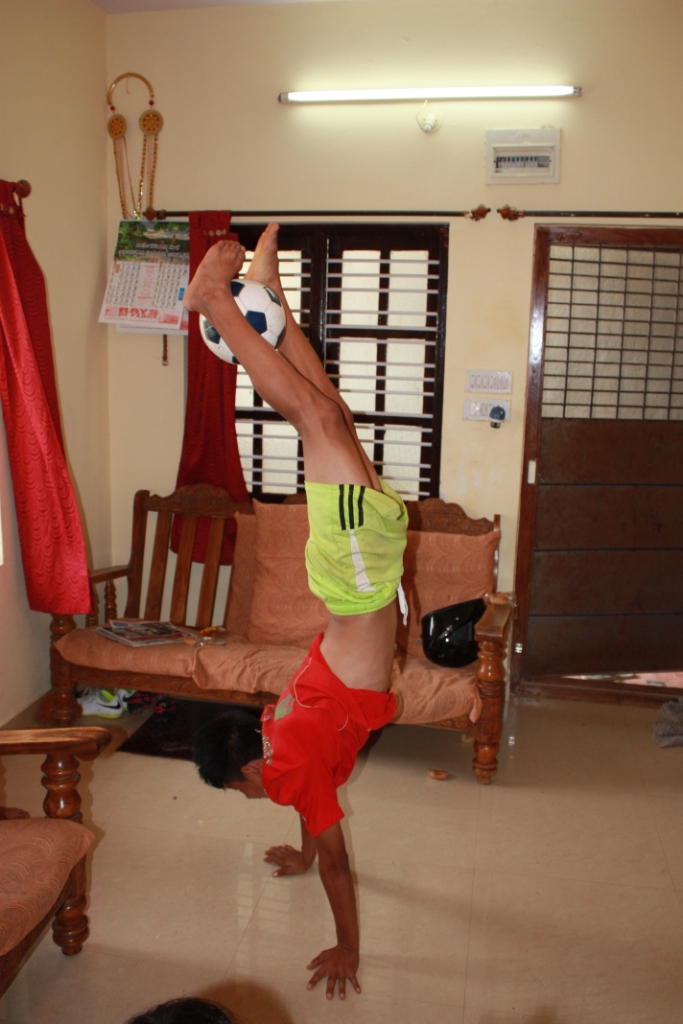
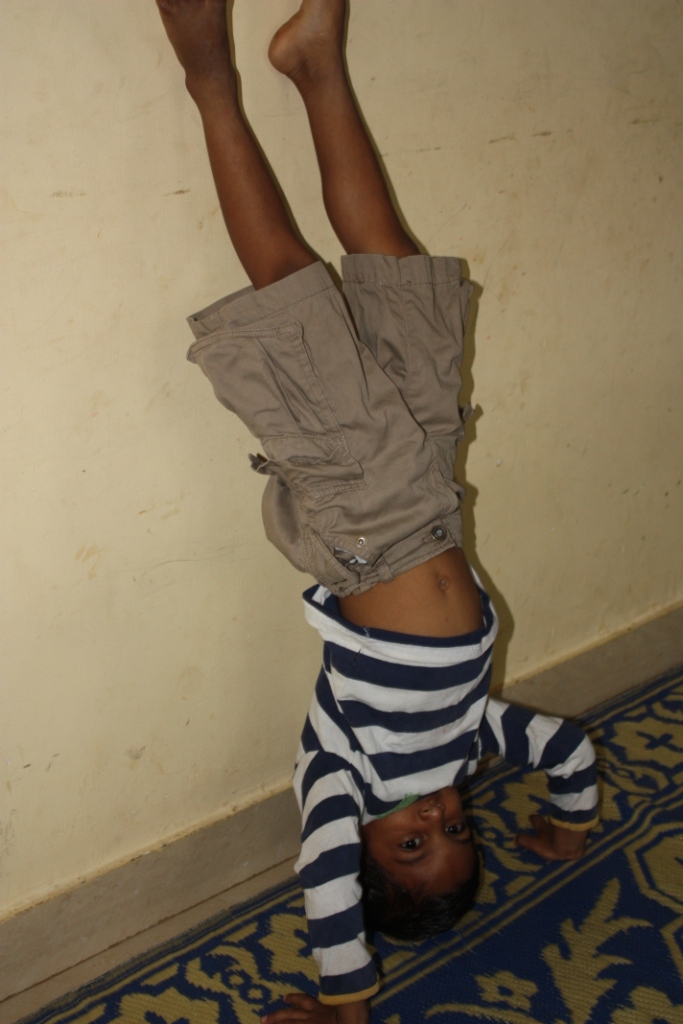
Obviously, this isn't the aforementioned 4 year old boy, but rather one of the young men who could do a handstand while playing soccer.

Obviously, this isn’t the aforementioned 4 year old boy, but rather one of the young men who could do a handstand while playing soccer.

5.) Kids are born yogis. Among the course requirements beyond the studio/classroom was charitable teaching for a nonprofit organization. Our group was fortunate to find an orphanage that was interested in having us. However, we were faced with a challenge. Kids weren’t exactly a demographic we were trained to teach–and yoga isn’t an activity one associates with childhood exuberance. We knew we’d have to make it exciting and challenging to keep their interest, but we also didn’t know what their capabilities would be. Furthermore, we had a wide age range with which to contend. Some of the kids went to elementary school and some to college, as well as those grades in between.
It turned out that even the youngest–a boy of four–was ready to take on all that we could throw at him. Before we even began teaching he eagerly showed us his headstand.

6.) Sadhana is most productive when it’s least cerebral. Sadhana is one’s personal practice–away from the studio. We have to report our experience of 50 hours of Sadhana as part of the “beyond the studio” requirement. It took me a while to get into the grove of this. The act of having to think about and record one’s personal practice can definitely be a buzz-kill. There’s a risk of it turning something fun into a bureaucratic chore. Ultimately, I gave up on trying to capture everything. I get the most out of sadhana when I experiment and play with the flow. Sometimes things flow; sometimes they don’t, but there’s a certain degree of playfulness to it. I don’t like either writing down a sequence and practicing it, or writing it down as it comes to me on the mat.

7.) Avoid teacher – student pitfalls. An instructor in any fitness domain is in a challenging position. One needs to push the student to be the best that they can be. Students expect as much. That’s why they come to gyms and studios rather than just working out at home. Being pushy is part of the instructor’s value added. At the same time, one doesn’t want to push a participant into an injury or even let them push themselves into an injury–if you can avoid it.

Here’s a common interaction. A new student comes to class. Testing the water, the teacher tells them to do a task or posture in a more intense way (i.e. lower, faster, deeper, longer, etc.) One of two things can happen. The student either appears to comply or they don’t. If they don’t comply, it could be because they really think they did comply (new students may have horrible body awareness and lack proprioception [it’s a word; look it up.]) It could be because they are scared to try (new students may have very poor understanding of what their bodies are capable of.) Or, it could be because they really can’t (i.e. they may have a skeletal constraint or a past injury, etc.)

If the student doesn’t appear to try, there’s a risk that the teacher will just forget about trying to challenge that person. Call this pitfall #1–giving up. That person may then come to feel ignored or molly-coddled if they do begin to gain bodily awareness and or confidence that they aren’t going to tear in half like wet newspaper. That is, if they haven’t quit by then.

If the student does give a good-faith effort, the teacher is pleased and will continue to try to keep pushing them harder. This works out great for all concerned until eventually the student does begin to run up against their limits. When they do, there’s the risk that the teacher will begin to think they’ve become lazy (Pitfall #2–mistaking the wall for laziness, which reverts to pitfall #1.) If one has a student that doesn’t seemed challenged at first, one can almost believe their potential is limitless, but they will hit walls eventually. It’ll take time for them to get over the walls they can, and some they never will.

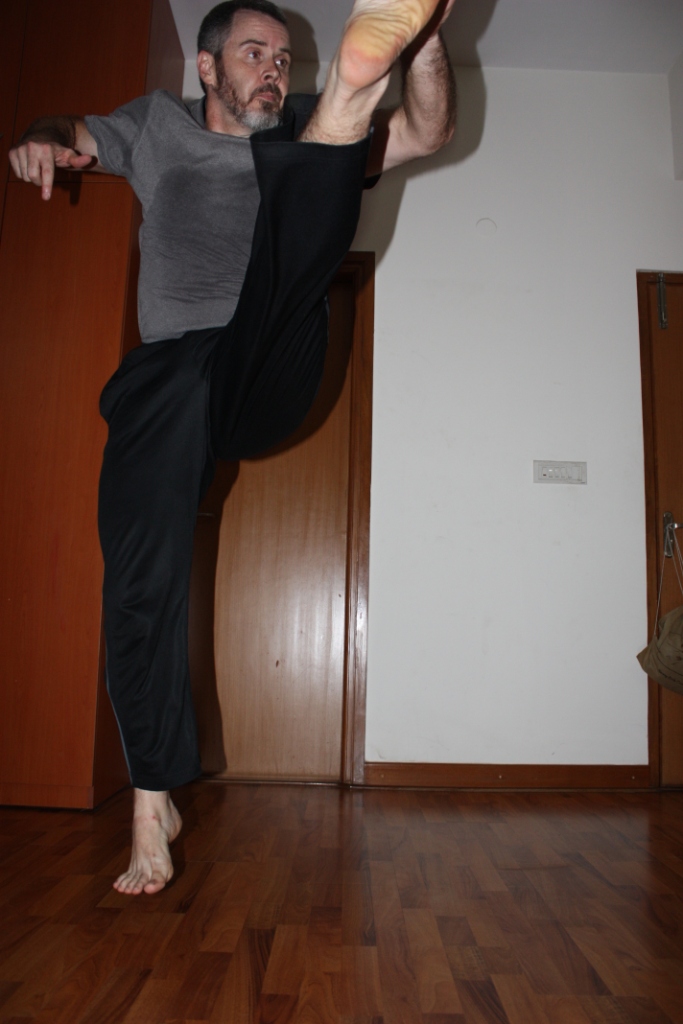
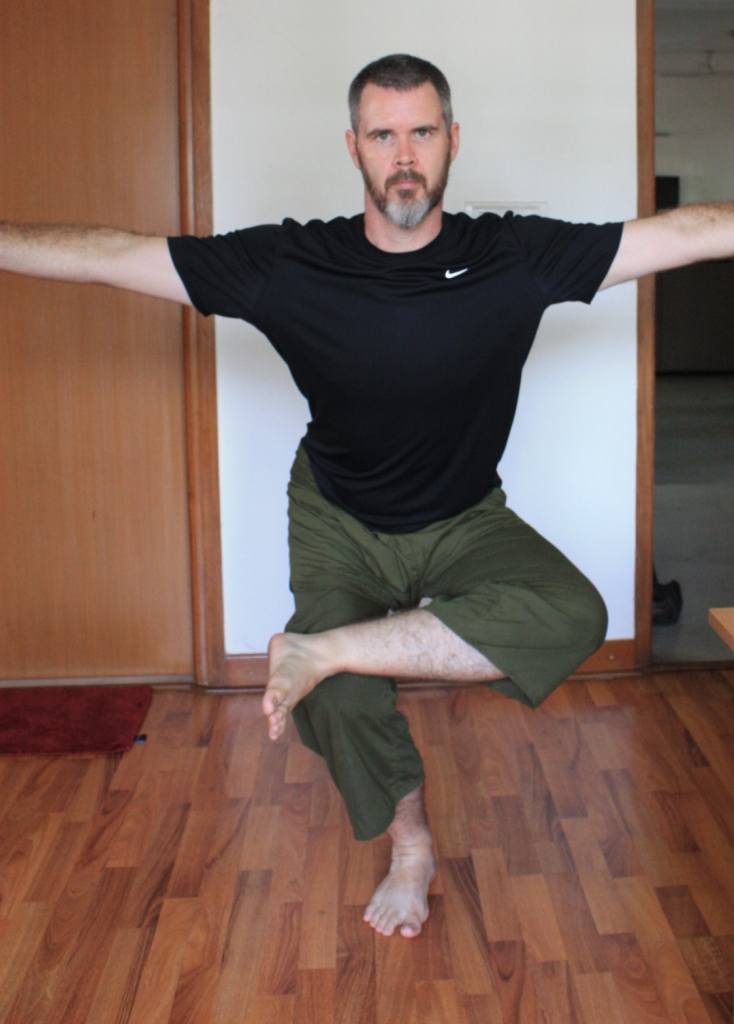
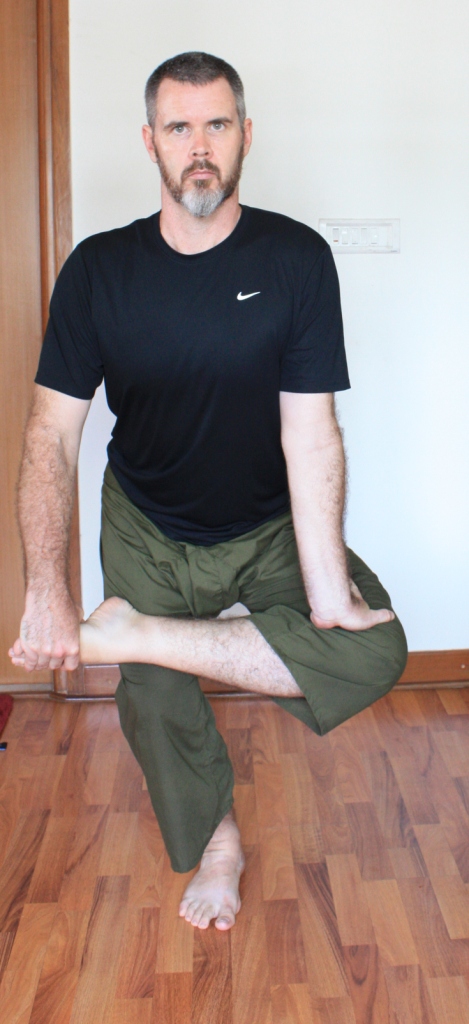
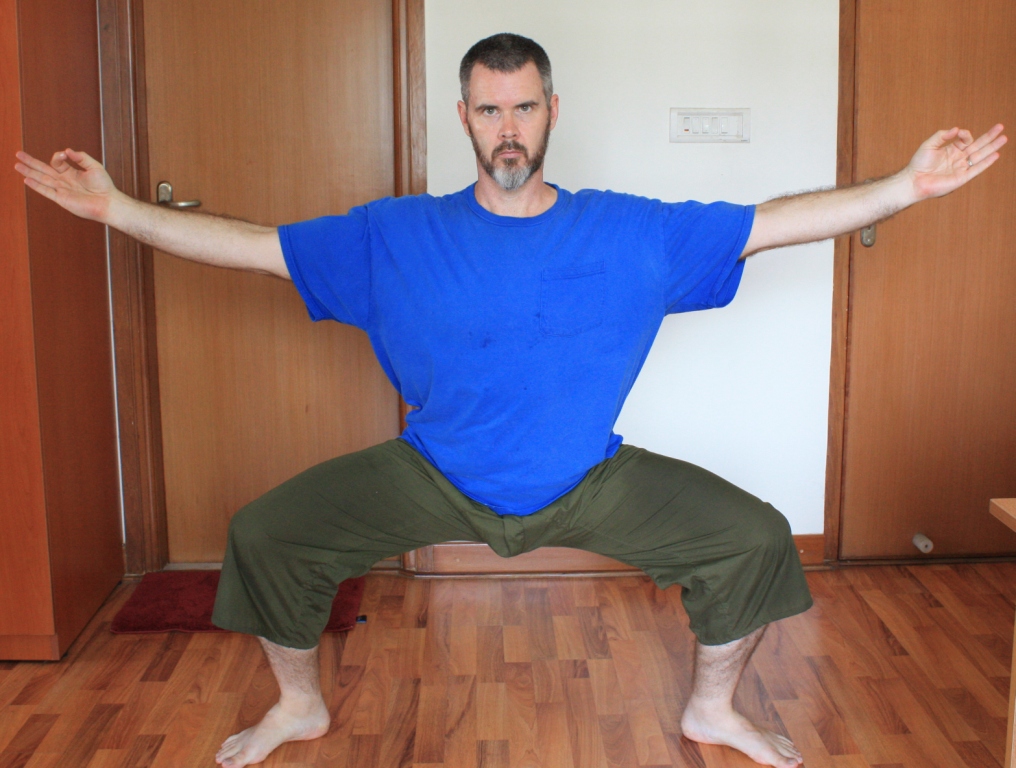
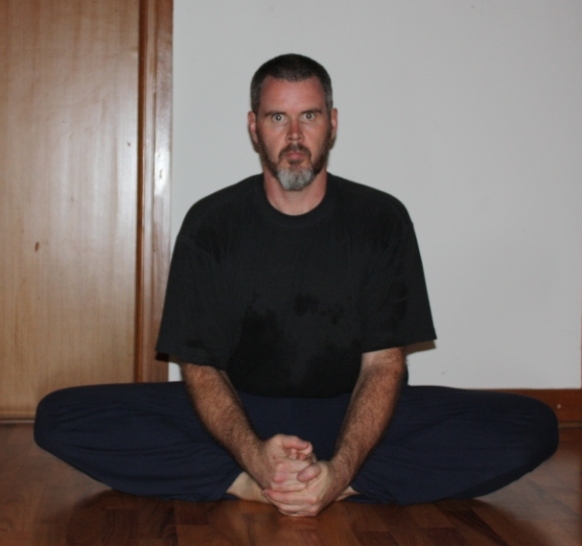
IMG_15498.) People do yoga for many different reasons. Most yoga practitioners are at least vaguely aware why the true believers practice yoga. For the believers, it’s all a road to Samadhi, or liberation from suffering. Of course, there are others who just want to be in better shape and to de-stress, and don’t really believe in Samadhi. Most yogis and yoginis seem to do a good job of tolerating people with other goals, but they don’t necessarily understand each other and their optimal path to where they are going can be quite different.

There are some pretty doctrinaire approaches to yoga out there. Is Power yoga yoga? It has “yoga” right there in the name, but it’s a source of controversy–even though it’s probably among the more yoga-esque of the Western Yoga offshoots. If you’re Bikram Choudhary no one is doing proper yoga unless it’s his patented 26 asana sequence in a room with precise heat and humidity specifications. Some people think you should only practice one sequence until you’ve mastered it, and others believe variety is the spice of life.

I guess the point is to be honest about one’s views on yoga, so that students can make up their own minds about whether one’s objectives align with their own.

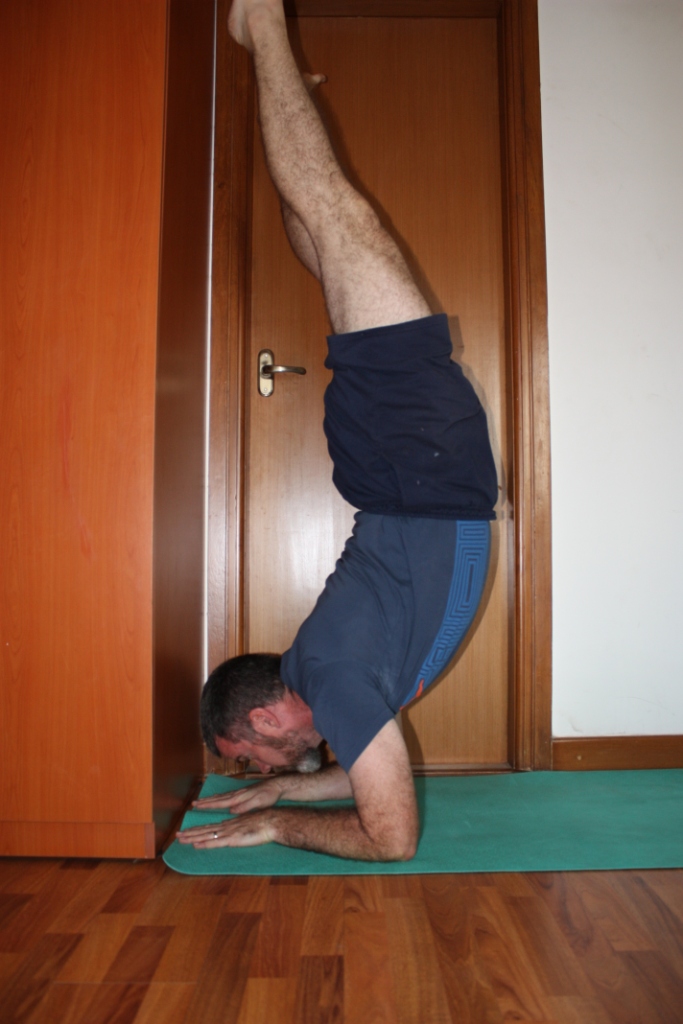
9.) Beware of blaming the usual suspects. I have a problem doing certain arm balances. The assumption might be that either a.) I lack the upper body strength, or b.) that I’m afraid of losing balance and falling on my face. Those are the usual problems. I probably wouldn’t be diagnosed with the former based on appearance and performance of other asana (e.g. planks and whatnot), but I might be of the latter. However, countless break-falls done over many years has left me pretty much unafraid of falling from six inches off the floor. The actual culprit? I have one wrist with a poor range of motion (90-degrees of extension on a good day.)

10.) Water in the nose is not nearly as horrible as it would seem. Most people know that there are breathing exercises (pranayama) in Hatha Yoga in addition to the asana. However, some may be unaware that there are a series of cleansing practices (shatkarma or kriya) associated with Hatha Yoga as well. We had to practice some of these, but the only unnerving one we had to learn was jala neti, in which water is poured in one nostril in such a way as to make it come out the other nostril. I imagined it being like the horrible experience of getting a nose-full of sea water while swimming in the ocean. However, I found it entirely harmless. There was no burning, stinging, or feeling waterlogged in the nasal cavity. I will definitely do it again, which is more than can be said for some of the shatkarma practices.

Tradition v. Modernity in Fitness and Movement Arts


TheScienceofYoga_BroadOne of my favorite professors (and I had a lot of them) was in the Religious Studies department of Indiana University in Indianapolis (IUPUI.) Among the lessons he taught us were the various forms of fallacious reasoning applicable to the discipline. He did so in a way that was both erudite and folksy, often in a humorous way.


While I don’t remember the formal names he gave these concepts or their technical definitions, I do remember the more colorful variations. One was the “firstist-is-bestist” fallacy in which it’s assumed that the old ways are inherently superior because bad ideas die out, and young ideas are at least as likely to be crap as not. This is sometimes called “appeal to tradition.” Over a sufficiently long time horizon this assumption may prove true (i.e. the time horizon beyond which Keynes warned we’d all be dead), but we know that wrong ideas can live on for centuries.


Another was the “outhouse” fallacy, which says that because pre-modern man didn’t have indoor plumbing they must have been complete idiots, and we should assume newer is better. This is sometimes called the “appeal to modernity.”  While there is some advantage to having access to the compiled knowledge of history, this doesn’t keep people from coming up with idiotic ideas regularly.


What made me think about these conflicting fallacies is that I’ve been reading a lot about the science of yoga–and other systems of movement–lately. Specifically, I was reading The Science of Yoga by William Broad. During the 20th century, yoga went from not giving a whit about science to trying to show that it wasn’t at all at odds with science–if not that it was grounded in science. (Note: this statement could be applied to many of the old ways—e.g. religions—which sought to prove themselves consistent with scientific evidence out of fear that–in the age of rationality–to be inconsistent with scientific observation would be death to old beliefs.) While the hucksters and con men seeking to bilk people out of money through shows of yoga “magic” have lost power (though some still exist and prey on the gullible regularly), this isn’t to say that science has yet won the day entirely.


Chapter two of Broad’s book discusses the findings of the scientific community on whether yoga has any merit as aerobic exercise. (The consensus is that it doesn’t.) Now, one would think that the whole yoga community would be pleased that academia has for the most part shown that yoga has a range of positive benefits that make it a worthwhile endeavor when practiced safely and conscientiously, but some have been unwilling to accept that yoga isn’t excellent cardio on top of all its unambiguous benefits. The established consensus is being ignored and a single seriously flawed study (small sample size, no control group, and—while peer-reviewed—the author was the journal editor) is cited, that one—of course—suggests that yoga meets all one’s cardio needs.


It’s easy to follow the incentives. For example, if one runs a yoga studio one would like to be able to say that yoga is a panacea for all of a person’s health needs. People are busy and lazy, and if someone else can sell them a silver bullet then they’ll lose business.  If one gives the matter thought, it becomes hard to imagine an exercise panacea. Consider a list of health goals that includes reduced stress, improved balance, greater flexibility, more strength, and enhanced cardiovascular capacity. One should see that some of these goals are at odds with each other. The first three goals—at which yoga excels–require holding a static position for a time while engaging in deep and controlled breathing. The fourth goal, strength enhancement, (which yoga achieves only in a limited way) requires repeated alternation of stressing and relaxing a muscle. And cardio, the fifth goal,–for which yoga is less than helpful–requires rapid and sustained motion so as to cause the heart to be stressed.


Of course, individuals have tried to rectify yoga’s cardio deficit by creating yoga styles that add speed and repetition. If one does five sun salutations per minute for 45 minutes, then—congratulations–you are now getting cardio and strength building. Unfortunately, you are now losing out on the first three goals of stress reduction, balance enhancement, and flexibility improvement. Those three things requiring holding poses while engaging in relaxed and controlled breathing. So the question is whether one is happy having sacrificed the benefits yoga does better than everything else in a desire to have yoga gain benefits that other exercise systems probably still do better.


The old systems of movement and exercise, be it yoga or chi kung, have shown themselves to have merit. However, the mechanisms by which that merit is achieved (or the nature of the merit) are often not what the system’s mythology suggests. There’s no need to fear science, but one should be ready to embrace what is shown true and set aside what is shown to be false.


On the other hand, this modern idea that we can have our cake and eat it too by throwing together disparate systems, which often have conflicting goals and modes of operation, needs to be reevaluated. All of these fads have been created where someone crams together tai chi and yoga or yoga and jazz dance or Zen meditation and parkour and they think they have the ultimate system based on a more complete picture of modernity, and what they’ve got is a muddle.


What we need is the tested merit of tradition without its voodoo, and the compiled knowledge of modernity without its hubris.


DAILY PHOTO: A Walk in the Park

Taken in the summer of 2008 in a small park in Beijing's Central Business District

Taken in the summer of 2008 in a small park in Beijing’s Central Business District

Beijing has workout equipment all over the place–mostly in parks, but sometimes just by the side of the road. One sees the same sorts of things in Bangkok, and even Phnom Penh has exercise equipment on the river front strip of park.

BOOK REVIEW: Secrets of Self-Healing by Dr. Ni

Secrets of Self-Healing: Harness Nature's Power to Heal Common Ailments, Boost Your Vitality,and Achieve Optimum WellnessSecrets of Self-Healing: Harness Nature’s Power to Heal Common Ailments, Boost Your Vitality,and Achieve Optimum Wellness by Maoshing Ni
My rating: 4 of 5 stars

The Secrets of Self-Healing title is a little bit of a misnomer. This book is not so much a collection of secrets as an overview of Traditional Chinese Medicine (TCM.) This is probably not so much an attempt to defraud as it is a sound marketing strategy. In America one can sell something as a “secret” even if it’s been done for 3000 years in the open– if it’s from China.

The book is divided into two parts. The first (between 1/3rd to 1/2 of the book)includes an overview of such topics as yin/yang, the five elements, nutrition, herbs, supplements, exercise [qi gong], and acupressure meridians. It also includes information about how to diagnose problems from external cues (i.e. examining the face, tongue, and hands in particular.)

The second part is an ailment-specific reference section. For 65 of the most common ailments, the book gives six-part advice on diet, home remedies, dietary supplements, herbal remedies, exercise, and acupressure.

It mixes some modern medical science in along the way, where it is useful.

I found this book to be approachable and informative.

View all my reviews