When I was one-and-twenty
 I heard a wise man say,
 "Give crowns and pounds and guineas
 but not your heart away;
 Give pearls away and rubies
 but keep your fancy free."
 But I was one-and-twenty,
 No use to talk to me.

When I was one-and-twenty
 I heard him say again,
 "The heart out of the bosom
 Was never given in vain;
 'Tis paid with sighs a plenty
 And sold for endless rue."
 And I am two-and-twenty,
 And oh, 'tis true, 'tis true.
Wine comes in at the mouth
 And love comes in at the eye;
 That's all we shall know for truth
 Before we grow old and die.
 I lift the glass to my mouth,
 I look at you, and I sigh.
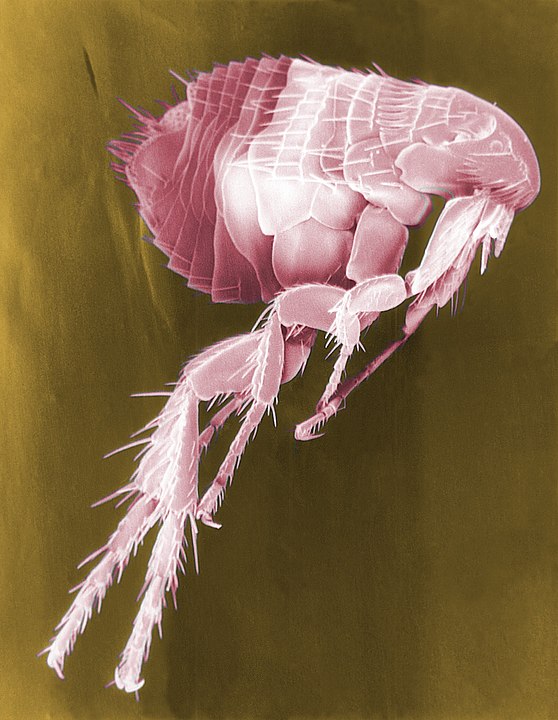
Mark but this flea, and mark in this,
 How little that which thou deniest me is;
 It sucked me first, and now sucks thee,
 And in this flea our two bloods mingled be;
 Thou know'st that this cannot be said
 A sin, nor shame, nor loss of maidenhead,
  Yet this enjoys before it woo,
  And pampered swells with one blood made of two,
  And this, alas, is more than we would do.

Oh stay, three lives in one flea spare,
 Where we almost, nay more than married are.
 This flea is you and I, and this
 Our marriage bed, and marriage temple is;
 Though parents grudge, and you, w'are met,
 And cloistered in these living walls of jet.
  Though use make you apt to kill me,
  Let not to that, self-murder added be,
  And sacrilege, three sins in killing three.

Cruel and sudden, hast thou since
 Purpled thy nail, in blood of innocence?
 Wherein could this flea guilty be,
 Except in that drop which it sucked from thee?
 Yet thou triumph'st and say that thou
 Find'st not thy self, nor me the weaker now;
  "Tis true; then learn how false, fears be:
  Just so much honor, when thou yield'st to me,
  Will waste, as this flea's death took life from thee.
I leant upon a coppice gate
 When Frost was spectre-grey,
 And Winter's dregs made desolate
 The weakening eye of day.
 The tangled bine-stems scored the sky
 Like strings of broken lyres,
 And all mankind that haunted nigh
 Had sought their household fires.

The land's sharp features seemed to be
 The Century's corpse outleant,
 His crypt the cloudy canopy,
 The wind his death-lament.
 The ancient pulse of germ and birth
 Was shrunken hard and dry,
 And every spirit upon earth
 Seemed fervourless as I.

At once a voice arose among
 The bleak twigs overhead
 In a full-hearted evensong
 Of joy illimited;
 An aged thrush, frail, gaunt, and small,
 In blast-beruffled plume,
 Had chosen thus to fling his soul
 Upon the growing gloom.

So little cause for carolings
 Of such ecstatic sound
 Was written in terrestrial things
 Afar or nigh around,
 That I could think there trembled through
 His happy good-night air
 Some blessed Hope, whereof he knew
 And I was unaware.
How do I love thee? Let me count the ways.
 I love thee to the depth and breadth and height
 My soul can reach, when feeling out of sight
 For the ends of being and ideal grace.
 I love thee to the level of every day's
 Most quiet need, by sun and candle-light.
 I love thee freely, as men strive for right;
 I love thee purely, as they turn from praise.
 I love thee with the passion put to use
 In my old griefs, and with my childhood's faith.
 I love thee with a love I seemed to lose
 With my lost saints. I love thee with the breath,
 Smiles, tears, of all my life, and, if God choose,
 I shall but love thee better after death.
Bright star, would I were stedfast as thou art --
 Not in lone splendour hung aloft the night
 And watching, with eternal lids apart,
 Like nature's patient, sleepless Eremite,
 The moving waters at their priestlike task
 Of pure ablution round earth's human shores,
 Or gazing on the new soft-fallen mask
 Of snow upon the mountains and the moors --
 No -- yet still stedfast, still unchangeable,
 Pillow'd upon my fair love's ripening breast,
 To feel for ever its soft fall and swell,
 Awake for ever in a sweet unrest,
 Still, still to hear her tender-taken breath,
 And so live ever -- or else swoon to death.













 Tiger Riding for Beginners