I knew a simple soldier boy
 Who grinned at life in empty joy,
 Slept soundly through the lonesome dark,
 And whistled early with the lark.

In winter trenches, cowed and glum,
 With crumps and lice and lack of rum,
 He put a bullet through his brain.
 No one spoke of him again.

You smug-faced crowds with kindling eye
 Who cheer when soldier lads march by,
 Sneak home and pray you'll never know
 The hell where youth and laughter go.
The world is too much with us; late and soon,
 Getting and spending, we lay waste our powers; --
 Little we see in Nature that is ours;
 We have given our hearts away, a sordid boon!
This Sea that bares her bosom to the moon;
 The winds that will be howling at all hours,
 And are up-gathered now like sleeping flowers;
 For this, for everything, we are out of tune;
It moves us not. Great God! I'd rather be
 A Pagan suckled in a creed outworn;
 So might I, standing on this pleasant lea,
 Have glimpses that would make me less forlorn;
Have sight of Proteus rising from the sea;
 Or hear old Triton blow his wreathed horn.
The splendour falls on castle walls
          And snowy summits in old story:
     The long light shakes across the lakes,
          And the wild cataract leaps in glory.
 Blow, bugle, blow, set the wild echoes flying,
 Blow, bugle; answer, echoes, dying, dying, dying.

O hark, O hear! how thin and clear,
          And thinner, clearer, farther going!
     O sweet and far from cliff and scar
          The horns of Elfland faintly blowing!
 Blow, let us hear the purple glens replying:
 Blow, bugle; answer, echoes, dying, dying, dying.

O love, they die in yon rich sky,
          They faint on hill or field or river:
     Our echoes roll from soul to soul,
           And grow for ever and for ever.
 Blow, bugle, blow, set the wild echoes flying,
 And answer, echoes, answer, dying, dying, dying,
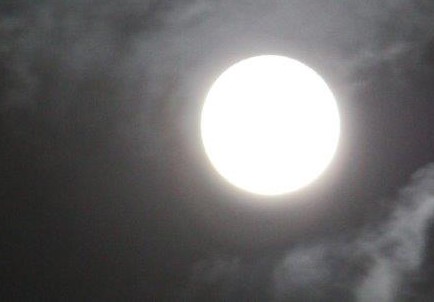
White in the moon the long road lies,
   The moon stands blank above;
 White in the moon the long road lies
   That leads me from my love.

Still hangs the hedge without a gust,
   Still, still the shadows stay:
 My feet upon the moonlit dust
   Pursue the ceaseless way.

The world is round, so travellers tell,
   And straight though reach the track,
 Trudge on, trudge on, 'twill all be well,
   The way will guide one back.

But ere the circle homeward hies,
   Far, far must it remove:
 White in the moon the long road lies
   That leads me from my love.
NOTE: This poem is sometimes titled by its first line or an abbreviated form, thereof. So, it’s sometimes called: “White in the Moon the Long Road Lies.”
When I consider how my light is spent,
 Ere half my days, in this dark world and wide,
 And that one Talent which is death to hide
 Lodged with me useless, though my Soul more bent
 To serve therewith my Maker, and present
 My true account, lest he returning chide,
 "Doth God exact day-labour, light denied?"
 I fondly ask. But patience, to prevent
 That murmur, soon replies, "God doth not need
 Either man's work or his own gifts; who best
 Bear his mild yoke, they serve him best. His State
 Is Kingly. Thousands at his bidding speed
 And post o'er Land and Ocean without rest:
 They also serve who only stand and wait."
NOTE: This poem is sometimes called “Sonnet 19,” sometimes “On His Blindness,” and sometimes “When I Consider How My Light Is Spent.”
I remember rooms that have had their part
  In the steady slowing down of the heart.
 The room in Paris, the room at Geneva,
 The little damp room with the seaweed smell,
 And that ceaseless maddening sound of the tide --
  Rooms where for good or for ill -- things died.
 But there is the room where we (two) lie dead,
 Though every morning we seem to wake and might just as well seem to sleep again
  As we shall somewhere in the other quieter, dustier bed
  Out there in the sun -- in the rain.
When you are old and grey and full of sleep,
 And nodding by the fire, take down this book,
 And slowly read, and dream of the soft look
 Your eyes had once, and of their shadows deep;

How many loved your moments of glad grace,
 And loved your beauty with love false or true,
 But one man loved the pilgrim soul in you,
 And loved the sorrows of your changing face;

And bending down beside the glowing bars,
 Murmur, a little sadly, how Love fled
 And paced upon the mountains overhead
 And hid his face amid a crowd of stars.









 Tiger Riding for Beginners