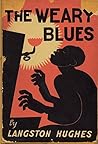
BOOKS: “The Weary Blues” by Langston Hughes

The Weary BluesThe Weary Blues by Langston Hughes
My rating: 5 of 5 stars

Available online — Lehigh University

Langston Hughes was one of the greats of 20th century American poetry, and The Weary Blues was his first collection (1926,) containing some of his most beloved (and anthologized) pieces, including: “The Negro Speaks of Rivers” and “I, too, sing America” [a.k.a. Epilogue; which plays off Whitman’s “I Hear America Singing.”] I’ve always loved how Hughes used the rhythm of repetition and the technique of standing in for the everyman (as he famously did in “The Negro Speaks of Rivers,” but in other of his poems as well.) He also had a gift for concision.

These sixty-nine poems deal in a wide range of themes including race, travel, love, etc. Music, be it Jazz or Blues, is an ever-present force in Hughes work. In addition to the aforementioned classics, among my favorite pieces from the collection are: “Winter Moon,” “March Moon,” “‘The Night is Beautiful'” [a.k.a. Poem,] “When Sue Wears Red,” “Water Front Streets,” “Long Trip,” “Seascape,” “Suicide’s Note,” “Songs to the Dark,” and “Lament for Dark Peoples.”

I’d highly recommend this collection for poetry readers.

View all my reviews

Red in the Blues Blues

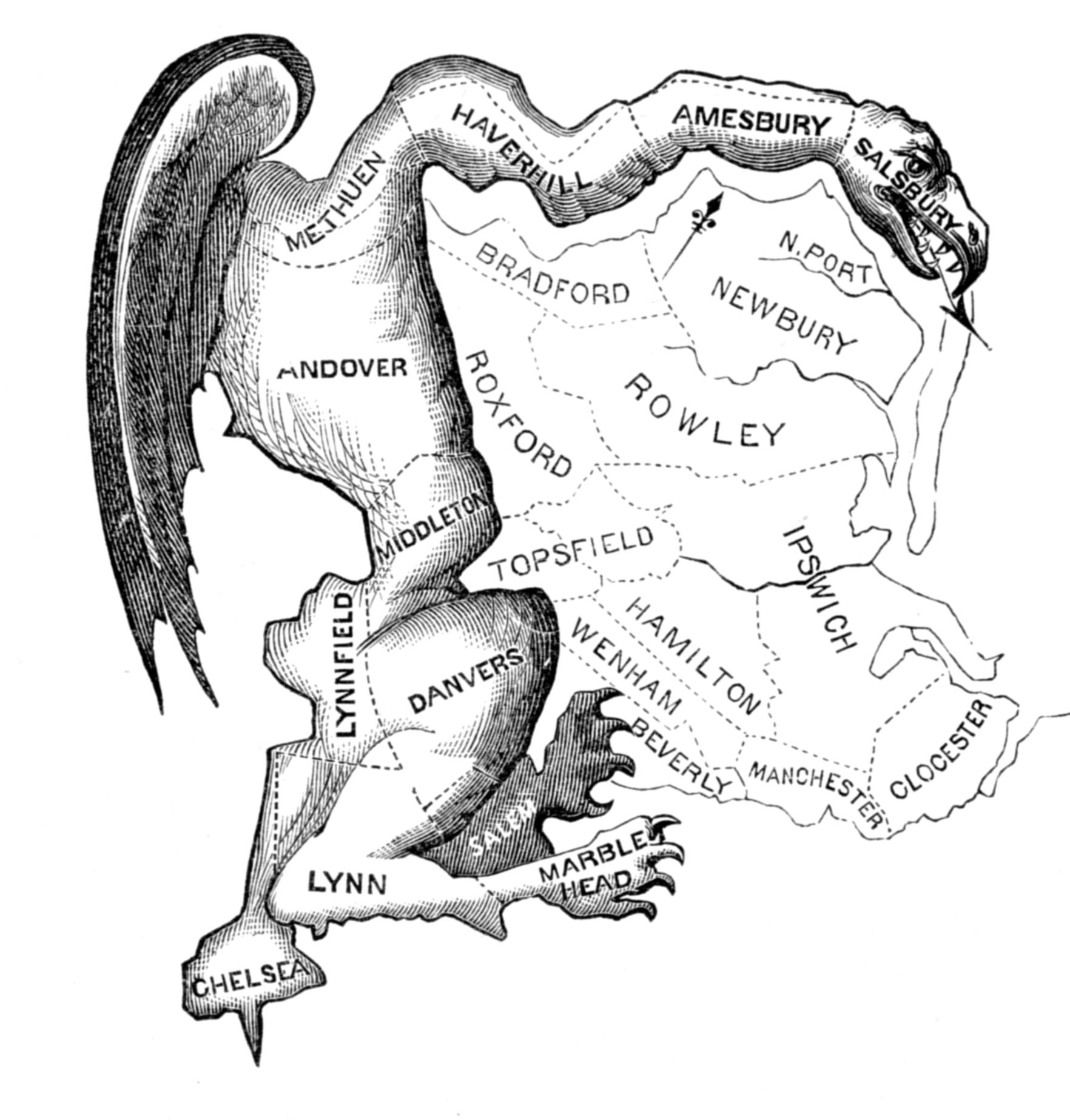
Boston Centinel political cartoon (1812)
by Elkanah Tisdale
They gerrymandered the district;
got all this red up in my blues.
They gerrymandered the district;
got all this red up in my blues.
They did it all after midnight,
so it wouldn't make the evening News.

No Christmas in April Blues [Blues Poem]

The dust is risin' down that dirt road;
someone is comin' my way fast.
The dust is risin' down that dirt road;
someone is comin' my way fast.
Hope it's not the f#@kin' tax man.
Maybe it's Santa Claus, at last.