
DAILY PHOTO: Downtown Debrecen

Aranybika Hotel

The Aranybika (Golden Bull) Hotel is one of the most prominent landmarks of Debrecen, Hungary. The Golden Bull is alternatively an important edict of 1222 or a soccer team. The hotel was built in 1915 in the secessionist style.

Debrecen is the second largest Hungarian city at 200,000+ residents. In 2002, I attended an intensive language course affiliated with the University of Debrecen. The building in which I was taught was  near this square, across and down the street.

If you are interested in learning Hungarian, I’d highly recommend the school I attended, the Debreceni Nyári Egyetemen.

DAILY PHOTO: Trinity College at Cambridge

Gazebo in a courtyard.

Gazebo in the Trinity College Courtyard

This photo was shot on a drizzly day in 1989 at Trinity College, Cambridge University. It was converted from a film photo to digital, hence the sepia sky.

DAILY PHOTO: Atlanta from Centennial Olympic Park

The Westin and Georgia Pacific Towers

The Westin and Georgia Pacific Towers

A piece of Atlanta’s skyline as seen from Centennial Olympic Park. The cylindrical tower is the Westin, and the brown angular tower is the Georgia Pacific building. To the far left is the new American Cancer Society building and the red brick building is The Tabernacle (a music venue, not a church.)

DAILY PHOTO: Chapel in Velemér, Hungary

Árpád era chapel

Árpád era chapel

This chapel sits on a solitary plot at the edge of a woods near Velemér. Velemér is a tiny village in the Őrség, which is a region on Hungary’s western border. The church dates back to 1360. The inside is covered with murals that have been restored after having been plastered over due to religious restrictions in the 18th century. The church had to be extensively repaired in the 19th century as a result of deterioration from the late 18th to early 19th century, but is now well-maintained.

DAILY PHOTO: Danube Bank in Budapest, Hungary

The steeple is Matthias Church in the Castle District

The steeple is Matthias Church in the Castle District

The Danube River flows through the middle of Budapest. Budapest was originally two cities that grew together. The hilly west bank (seen here) was Buda, and the flat east bank was Pest. High in the background one can see such tourist attractions as the Fisherman’s Bastion and Matthias Church.

DAILY PHOTO: Old Town of Tallinn, Estonia

Looking over the old town toward the Gulf of Finland

Looking over the old town toward the Gulf of Finland

The Estonian capital is a study in contrasts. The old town is medieval, yet fully wired for wi-fi. While it’s historical, it’s not one of those highly homogenized historical districts. The colors are varied and vibrant. One can see the iconic, silo-shaped towers and the steeples from many churches. In the background sit the cruise ships at port. The port is one of the vestiges of the Soviet era, a concrete monstrosity that will be built over soon enough– if it hasn’t been already. Outside the historic district, modern glass and steel buildings are shooting up all over. In the old town one spies the trappings of wealth; just outside it one witnesses poverty.

Where in the World Photo Game #11

WitW #10 (Temple) was Wat Chiang Man in Chiang Mai, Thailand.

The museum inside may be one of the most underrated sights in the city in which it resides.

Where was I?

Where was I?

Where in the World Photo Game #10

WitW #9 (Stockade marker) was at Andersonville, Georgia (an infamous Confederate Civil War Prison.)

Here’s one for those who know their religious architecture.

Where Was I?

Where Was I?

Where in the World Photo Game #5

The answer to the previous question #4 (wine casks) was Tokyo, Japan (Meiji Shrine)

WitW#5 is a US-centric question. I took the photo below in the 1990’s.

Where was I?

Where was I?

Angkor Photos, Part 3

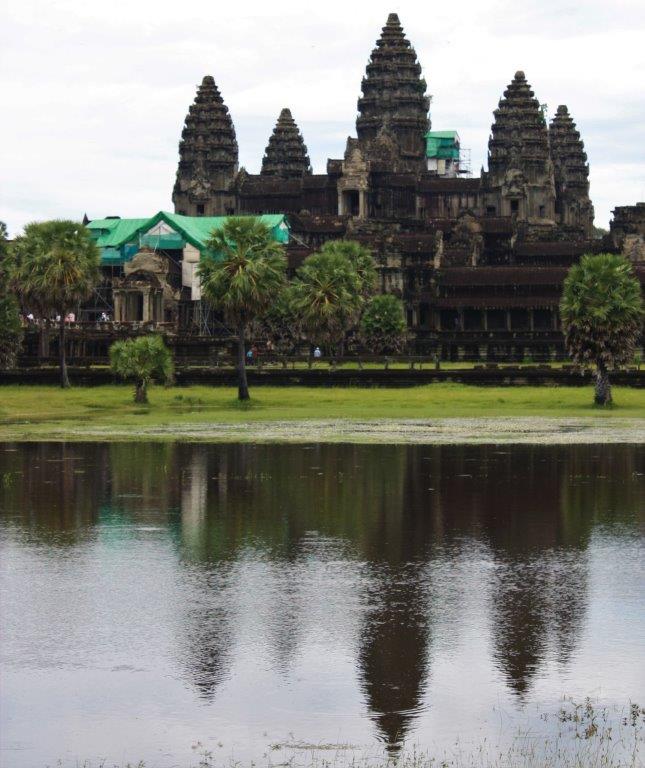
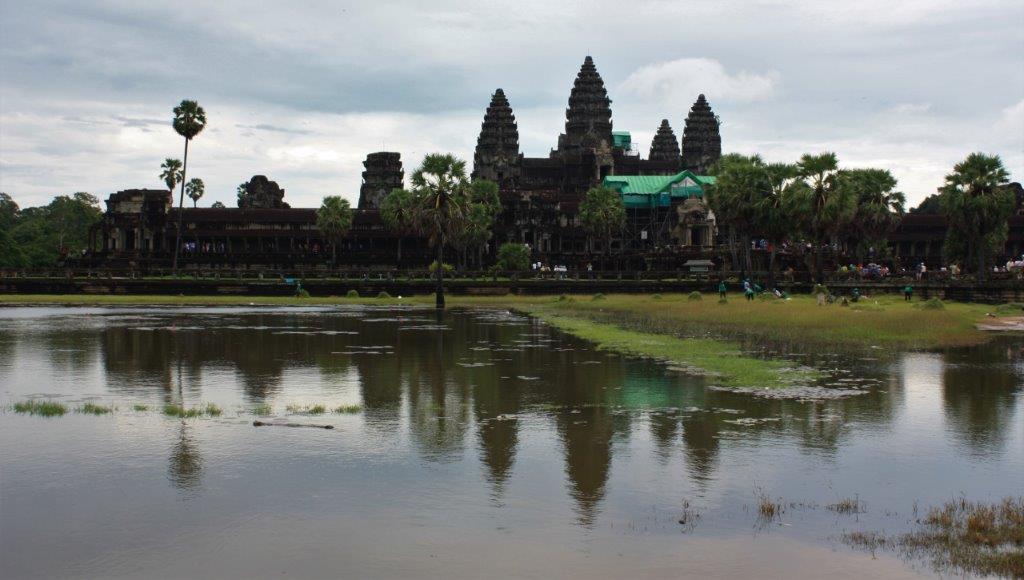
This is the third installment of photos from Angkor that I took in October 2012. Unlike the previous two installments, each of which included photos from multiple sites, all of these photos come from the Angkor Wat. (While most people think of the entirety of the ancient city as Angkor Wat, in reality Angkor Wat is just a portion (granted a big and important portion) of what was the city of Angkor. “Wat” means temple, and this was the main (though by no means the only) temple in the ancient Khmeri capital.

This is part of a massive bas relief  battle scene

This is part of a massive bas relief battle scene

You can see where someone gouged out a cube of the wall (lower right.)

You can see where someone gouged out a cube of the wall (lower right.)

One of the courtyards of the main temple building

One of the courtyards of the main temple building

There are hundreds of these bodaciously ta-ta'd maidens on the site.

There are hundreds of these on the site.


Courtyard as seen through a window with a couple pillars remaining

Courtyard as seen through a window with a couple pillars remaining

Ornate wall carvings abound

Ornate wall carvings abound

Between theft from the French, vandals, and the Khmer Rouge, most Angkor Wat Buddhas lack heads

Between theft from the French, vandals, and the Khmer Rouge, most Angkor Wat Buddhas lack heads


Another wall carving

Another wall carving roughed out

The main walk. There is a bridge across this moat which is contiguous with this grand walk.

The main walk. There is a bridge across this moat which is contiguous with this grand walk.

These are symmetrically located to either side of the main walk.

These are symmetrically located to either side of the main walk.

Temple facade

Temple facade


Wet season was just ending when we visited. Standing water was ubiquitous.

Wet season was just ending when we visited. Standing water was ubiquitous.

Escargot like these may have been why the French colonized this country.

Escargot like these may have been why the French colonized this country.