
Taken in November of 2015 in Jodhpur

Taken in November of 2015 in Jodhpur

The view up S. Wentworth Ave (Chinatown’s main drag) toward the Willis Tower [formerly Sears Tower]

Ping Tom Park Pavilion

The Nine-dragon Wall of Chicago Chinatown

Pui Tak Center; Taken in Chicago’s Chinatown on August 2, 2018
city at the end of time
sprawling to the shoulders of reality
spilling into the sea
sprouting vents from the ocean floor
to breathe the collective exhalation
a planetary breath
bubbling toward the surface
but lost in churning seas
and wind tears through urban canyons
that crackle the surface
as seen from the satellite sphere
glints from a glassy past now subdued
plasma windows play a bucolic reality
that residents pretend is true
we are a mole people
in the under-story of a mechanized canopy

Oh, the glorious monotony
of mountain skies
an azure dome
in rare air highs
over the brome
And, too, the lake
glassy tranquil
float duck and drake
in mile high chill
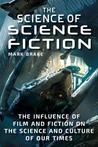 The Science of Science Fiction: The Influence of Film and Fiction on the Science and Culture of Our Times by Mark Brake
My rating: 4 of 5 stars
This book grew on me. The reason I didn’t like it at first has to do with how the title sells the book in the wrong direction. When one sees the title “The Science of Science Fiction” one expects a book like those by Michio Kaku (e.g. “Physics of the Future” or “Physics of the Impossible” – or perhaps like Kakalios’s “The Physics of Superheroes.” In other words, one is expecting a book that teaches one about science through examples of science fiction, i.e. using science fiction to make science interesting and relatable. If you are expecting that kind of book, I suspect you’ll be disappointed.
The book doesn’t go into any depth on scientific issues. Instead of a book about the nexus of science and science fiction, one gets a book about the nexus of the history of science fiction, the history of science, trends in scientific progress, and trends in science fiction. (The confusing title is a little bit justified, therefore, given the broad territory of the books “niche,” but it could lead to confusion.) If you are interested in questions such as which came first the fictional atomic bomb or the real one, you’ll be reading the right book. If you are interested in whether or not quantum entanglement can be used for an ansible (faster than light communication) or how fast Superman has to jump to orbit the planet, you’ll find this book a disappointment.
The book is divided into four parts and has many brief chapters in each. Most of these chapters take as their lead a recent work of science fiction (usually a movie) though the book is at its strongest when it’s teaching the reader about the history of science fiction and how that history was influenced by – and influenced – real world events.
The first part is about space. It considers such questions as whether we will see alien visitor or invaders, the likelihood of parallel universes, and when we can expect to colonize other worlds.
The second part is entitled “time” and it considers the many ways time has been explored through science fiction. The time machine is considered from several dimensions and through movies such as the “Terminator” series and “Looper.” However, other time-related plot devices are also given scrutiny, such as precognition.
The third part is about machines and the interaction between man and machine. What can we expect from the rise of artificial intelligence (AI) and robots? The reader learns about the earliest use of the term robot and how historical science fiction compares to the realities coming to fruition.
The fourth, and final, part is entitled “Monster” and it investigates the realm of biology. Can monsters or supermen be created through super-serums or genetic modification? What are the limits of the human body and mind? These are the type of questions that are investigated.
There are no graphics, notes, or back matter in this book. However, I did read a review copy, so your results may vary.
If you are interested in the history of science fiction and how science fiction relates to scientific progress and the effect of science on culture, then I recommend this book. As I said, if you’re wanting to learn about science through the lens of examples from science fiction, then this is probably not the book for you. As I said, the book is at its strongest when it explores the history of science fiction.
 Running Anatomy 2nd Edition by Joseph Puleo
My rating: 4 of 5 stars
This book explores anatomy (and to a lesser degree physiology) as it pertains to running, and shows how one can strengthen anatomy to increase one’s performance as a runner.
I will divide the book up into three parts, though that division is not explicitly made by the authors. The first three chapters discuss running fundamentals. Chapter 1 explores the nature of movement in running. The reader learns about the phases of the running gait and the muscle activation relative to said phases. The second chapter focuses heavily on the anatomy and physiology of the cardio-vascular system and the impact it has on muscle performance. Chapter 3 discusses external factors that can influence running performance such as air temperature, humidity, terrain, and altitude.
The second part of the book consists of the middle five chapters, and gets to the heart of the subject. These chapters investigate the role of musculature in running and show numerous exercises that can be used to strengthen said muscles as well as describing the activation of muscles in those exercises. Starting from the ground up, these chapters proceed as such: feet and ankles, legs, core, shoulders and arms, and chest and back. One might not think that the upper body is critical to running, but the authors demonstrate otherwise.The exercises selected assume the availability of a full range of fitness equipment: machines, free weights, as well as elastic bands and BOSU – though some bodyweight exercises are included.
The third part of the book explores some odds and ends that are crucial, but not covered in earlier chapters. Chapter nine explains how to avoid injuries. Running is an activity that offers plenty of opportunity for repetitive stress injuries because it’s an endurance activity involving iterated actions. Chapter ten explores alternative training programs (e.g. training in the swimming pool or on treadmills), and the pros and cons of such activities. The last chapter is about gear, and – not unexpectedly – much of it is devoted to shoes and questions such as whether one needs orthotics. It should be noted that the authors are firmly in the camp that favor footwear. (There are many advocates of barefoot running in recent years.)
There are many color drawings that show which muscles are activated by movements. The drawings are clear and effective. There is an index of exercises at the end that makes it easy to find various exercises.
I’d recommend this book for runners and trainers who are interested in how muscles can be strengthened and stretched to increase performance and minimize the risk of injury.
 Marvel’s Avengers: Infinity War Prelude by Will Corona Pilgrim
My rating: 4 of 5 stars
This two issue comic book was released in advance of “Avengers: Infinity War.” It revisits the events of previous movies adding a few snippets of new material here and there. Of the new material, much of it elaborates upon events that are known to have happened behind the scenes of earlier movies. Not surprisingly, given Marvel’s penchant for secrecy, there are only a few frames that offer insight into activities that a fan who’d seen all the preceding films would be in the dark about.
I’m assuming that anyone considering reading a prelude to “Infinity War,” by this point, has already seen that movie and relevant preceding films such as “Captain America: Civil War,” the first two “Avengers” movies, “Guardians of the Galaxy 1,” and “Doctor Strange.” If that’s not the case, and you want to avoid potential spoilers, stop now.
The first issue recaps “Captain America: Civil War” while providing insight into what happens with Captain America’s team in the wake of that film, at the end of which they find themselves on the wrong side of the law. Much of the issue is verbatim repetition of the events of that movie. There’s also elaboration about the Black Panther’s assistance to Winter Soldier (Sgt. Barnes) via his genius sister Shuri, as well as a scene showing what Captain America, Black Widow, and other team members are up to in the aftermath of the breakup of the Avengers.
The second issue consists largely of Wong schooling Doctor Strange on the powers of the infinity stones and their current whereabouts. Those who’ve seen all the films know that five of the six stones were accounted for before the third Avengers movie. Only the whereabouts of the soul stone remains in doubt. This book doesn’t solve that mystery and merely offers a cryptic comment about the soul stone’s power. As Wong is describing events, the reader is shown flashback scenes from the movies and post-credit scenes that explain where each stone is and how they were used in “Guardians of the Galaxy Vol. 1,” “Thor: The Dark World,” “Avengers 1 & 2,” “Doctor Strange,” etc.
If you are an intense fan who craves every new bit of information, you may enjoy combing through this comic book. Otherwise, it’s mostly of use for those who are planning on seeing “Infinity War” but who haven’t seen “Captain America: Civil War,” “Guardians of the Galaxy 1” (which contains a brief piece of exposition that clarifies the nature of the stones), or the previous “Avengers” films. I don’t know how big that demographic is, but I suppose new fans are coming along all the time. I wouldn’t recommend you purchase the prelude expecting anything new and earth-shattering. The art and dialogue are all well done and inline with the Marvel Cinematic Universe (MCU) films.


