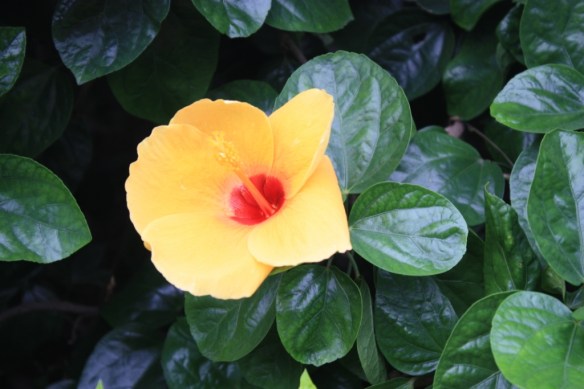
Taken in December of 2015 in Hanoi




Taken in Hoi An in December of 2015

Taken in Jodhpur in November of 2015 at Pal Haveli in Jodhpur
 Kalaripayat: The Martial Arts Tradition of India by Patrick Denaud
My rating: 4 of 5 stars
There’s a dearth of books on Indian martial arts, in general, and Kalaripayattu, specifically. The few books that do exist, such as Ranjan Mullaratt’s “Kalari Margam” (a fine book which I’ve previously reviewed), focus heavily on the techniques of the martial art. Denaud builds a niche by writing perhaps the only English-language book yet that turns its focus on other aspects of the art, including the art’s history, philosophy, customs, psychology, and its influence on–and interaction with–other systems both in India and abroad (e.g. yoga, Kathakali, Ayurvedic massage, and Tai Chi.)
After three forwards by luminaries and an introduction, the book consists of seven chapters. The chapters cover the history and mythology of the art, Kalaripayattu as a martial art (weapons and techniques in general terms), the psychological aspects of the art, the art’s relationship with Ayurvedic practices—particularly massage, its relationship to other elements of Keralan culture, the results of interviews with modern-day masters, and the influence of India and Kalaripayattu on foreign martial arts.
When I picked this book up, I was somewhat expecting that it would contain little in the way of intriguing and relevant information, and that it would be stuffed with generally known background information. I’ve come across far too many books on topics for which there’s little information, and have become well-acquainted with the many methods by which authors pad out a pamphlet’s worth of information into a book. However, I was pleasantly surprised by how much information on Kalaripayattu this book contained, and how relevant the background seemed. While there’s a fair amount of background, the book doesn’t feel padded. Granted, I can’t be certain how much of this information is accurate. I know common myths are repeated that are now believed to be false (e.g. Bodhidharma spreading Kalaripayattu to Shaolin), but I saw nothing that seemed like pure fabrication (though I’d be unlikely to recognize such a thing.) Denaud does cite his sources (not in bibliographic format, just by attribution of authors and texts) on most occasions and it certainly wrings authoritatively.
I’d recommend this book for individuals interested in martial arts, and the history of martial arts. It’s a rare glimpse into various aspects of Kalaripayattu. Also, some people who are interested in south Indian culture more than martial arts may also find it worthwhile.
 Boxing Fitness: A Guide to Get Fighting Fit by Ian Oliver
My rating: 4 of 5 stars
How does one skip rope, work the pads, or avoid nipple rash? If you think that boxing would be a fun way to get fit, this would probably be a useful book for you. Oliver shows a range of fitness practices—many specific to boxing, but others that are used in a number of sports and fitness activities—that will help one improve one’s fitness.
The reader will gain insight into bagwork, padwork, and boxing drills–from beginner to advanced. While the book’s emphasis isn’t on boxing technique, there’s a minimal discussion of the basics of footwork and punching designed to allow a reader to safely begin practice of bagwork and padwork. One also learns about roadwork, the basics of weightlifting as it’s useful for boxers, calisthenics, and other exercise routines that boxers use. It’s a small book and, therefore, doesn’t go into great detail on any particular subject. However, it does offer useful tips in a concise form.
There’s a chapter on equipment, but throughout the book the author gives advice on equipment as it’s relevant to the discussion at hand. The same is true of safety tips. There’s a chapter on injury and illness, but you’ll find insights into how to avoid injuries woven throughout.
I liked the approach of this book. While it shows one the age-old practices of fighters, it also describes more recent developments. In other words, it’s neither crusty and obsolete, nor does it try to re-invent every wheel in order to prove itself cutting edge. I also appreciated the author’s pragmatism—e.g. emphasizing the benefit of a strong core over that of six-pack building and suggesting dietary practices that are sound and simple rather than fads and fables.
Graphics include black and white photographs throughout a few diagrams. Most chapters have photographs, and they are generally sufficient to convey the necessary information without being overwhelming.
While this is a book of the basics, I found it to be a beneficial read and I appreciated the way it was arranged and the way information was conveyed. I’d recommend it for anyone interested in fitness for combative sports or who thinks boxing would be a good way for them to stay motivated to get fitter.
 The Harvard Medical School Guide to Tai Chi: 12 Weeks to a Healthy Body, Strong Heart, and Sharp Mind by Peter Wayne
My rating: 5 of 5 stars
This book provides an overview (and a laymen-friendly literature review) of the scientific findings about tai chi, and it helps a beginner get started in his / her own practice. (Tai chi, short for tai chi chuan, is a Chinese martial art that is called an internal–or soft–style.)
The authors achieve an impressive tightrope act. And they manage to do it in a way that reads sincerely, while at the same time providing useful information for all readers. Often books on the science of Eastern health-enhancing activities (e.g. tai chi, chi gong, or yoga)–even if they are positive on the results of such activities—take digs at people’s beliefs about ideas like chi, prana, meridians, or chakra as the authors attempt to distance themselves from such beliefs. On the other hand, books that cater to the spiritually inclined—even when they are couched in scientific terms—may resort to third-hand anecdotes about the supernatural powers of some ancient master or report methodological train wrecks that support their views alongside sound studies, as long as the latter don’t present any evidence contrary to their belief system. In short, such books often talk in scientific lingo while showing a complete lack of understanding of the scientific method. In this book, Wayne manages to navigate these rocky shores because he’s both a scientist and a longtime tai chi practitioner who genuinely accepts that there may be more at work in the practice than science fully understands. Thus, he knows the importance of testable hypotheses and when a study needs to be validated by more a robust follow-up study, but he also reports on the traditional beliefs and isn’t adverse to writing about studies evaluating the benefits of spirituality (note: showing that being spiritual has benefits doesn’t mean that the benefits result from anything spiritual or supernatural.)
The book has 14 chapters divided into three parts. The first part introduces the reader to tai chi, describes the dimensions along which tai chi has been shown to offer benefits (the authors call these “the 8 active ingredients of Tai Chi,” relating them to pharmacological medicines), and explains how tai chi can be simplified for beginners (even the short form sequences take a while to be memorized—let alone building any grasp of the intricacies of said forms.) The second part consists of six chapters that report the findings of studies on the health effects of tai chi, as well as discussing the possible mechanisms of those benefits. The topics discussed in this section include: increased balance, bone density, pain mitigation, cardiovascular health, mental performance, psychological well-being, and sleep quality. The book’s last part suggests ways in which the reader can build a tai chi practice. The five chapters in this section deal with the interactive practices of tai chi (tai chi isn’t just the solo forms that you’ve seen elderly people do in the park), integrating tai chi with other health and fitness practices, the potential for practicing tai chi at work, the role of tai chi in creative practices, and tai chi as a practice of lifelong learning (this last chapter gives beginners tips about how to start a practice.) There is also an afterword about how tai chi might play a part in building improved health and well-being in the present era.
I found the book to be well-organized to achieve its objective. It’s packed with food for thought. Neophytes will find a lot of benefit in this book, but I suspect even advanced practitioners can glean insights—particularly if said advanced practitioner hasn’t been reading up on the scientific findings. Humor, quotes, and stories are used to lighten the tone and illustrate key points. There are some photos and other graphics where needed (mostly in chapter 3), but they are relatively sparse for a book on a practice like tai chi. (That’s not a complaint. I think there are far too many attempts to teach movement arts through books—an impossible task—and not enough effort put into conveying the kind of ancillary information that is transmissible in book form.)
I’d recommend this book for anyone who’s interested in knowing more about the health benefits of tai chi, and moving beyond the platitudes often heard but seldom evaluated.

Taken in November of 2015 in Pushkar