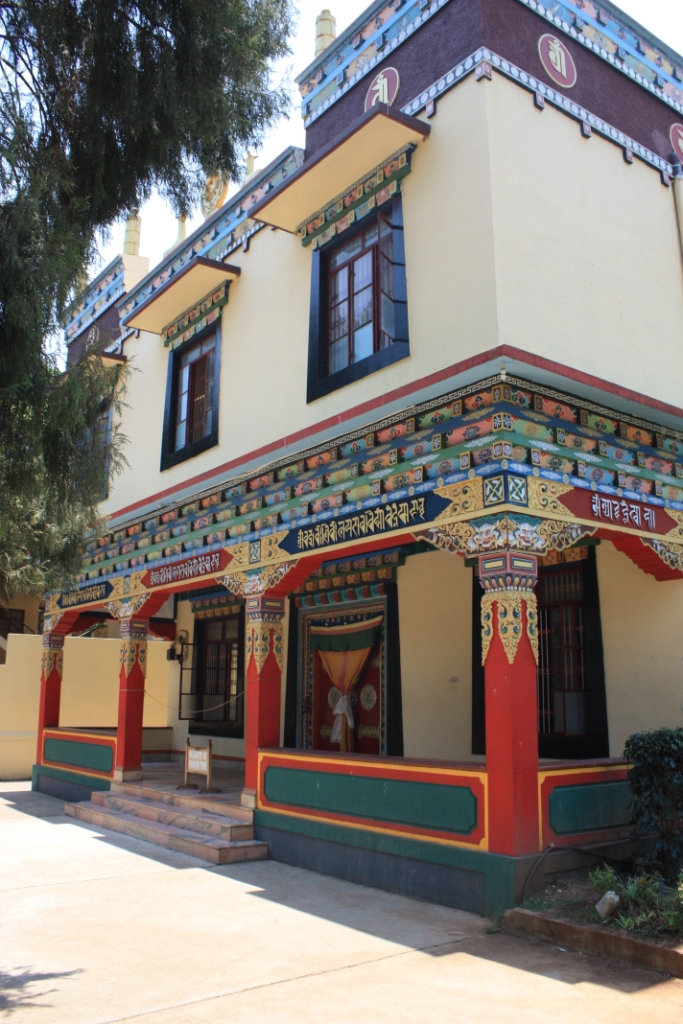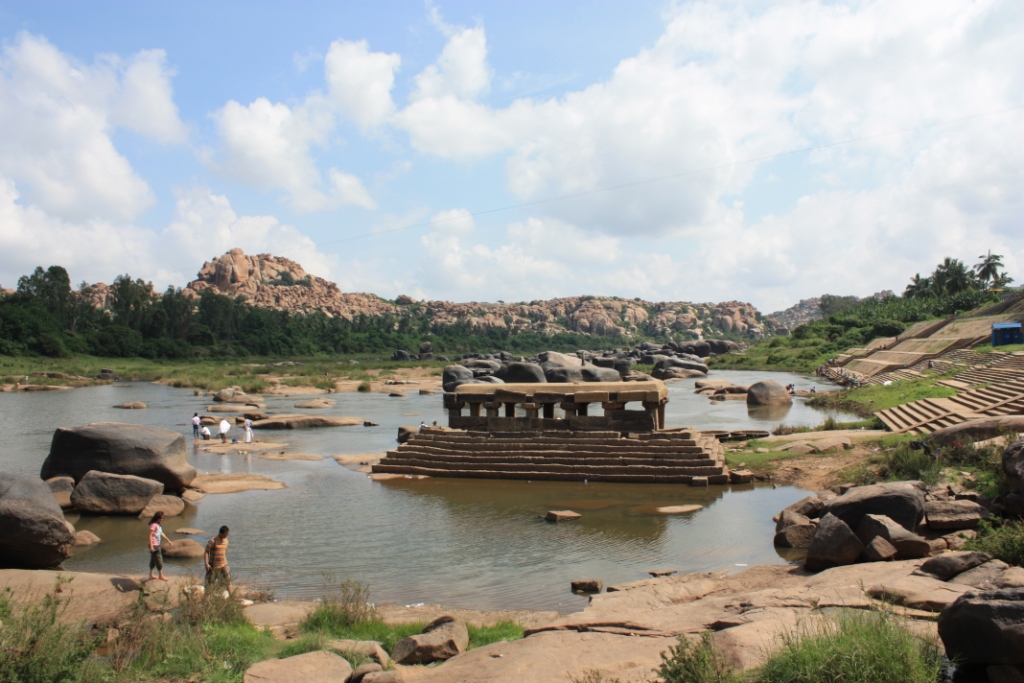
Taken in January of 2014 at Wat Chalong on Phuket in Thailand.
This tower houses the Buddha relic (a bone fragment) for which Wat Chalong is renowned. Below the chedi housing the relic there are many golden Buddha statues.
Visiting tip: Wear ear protection. They have a little kiln across from the main temple in which they regularly set off a huge amount of fireworks. It can be a bit deafening.
Earlier in the month I took a few Krabi Krabong classes during my two-week visit to Tiger Muay Thai in Phuket, Thailand. For those who are unfamiliar, Krabi Krabong is a Thai martial art that focuses on weapon fighting. However, Krabi Krabong is what one might call a comprehensive martial art. That is, there are a number of different weapons utilized, and there is also an unarmed component. (It’s apparently unclear whether Krabi Krabong was practiced in conjunction with Muay Boran [the old Thai boxing style that predates Muay Thai] or whether they were always independent. Some of the weapons used in Krabi Krabong are sword (singly and in pairs), sticks (singly and in pairs), long staff, shield (used in conjunction with sword or club), halberd, and clubs worn on the forearms called mai sawk (the latter look vaguely reminiscent of the Okinawan tonfa, but upon closer inspection are quite different and are not designed to be spun freely like tonfa.
While I saw the instructor work with both staff and mai sawk, what we learned were double club techniques that the instructor did with double sword as well. The use of twin short weapons is common in Krabi Krabong. Working with two independently operated weapons is fairly new for me. In Japanese martial arts the use of weapons in such a way isn’t that common. Miyamoto Musashi advocated using the long and short swords in unison, and there are a few sword schools that teach this. I learned the fundamentals of one such school, Jinen-ryūNi-tō-jutsu, but never practiced enough to develop any skill with it. So it took some effort just to get the basic warm-up drills down (e.g. spinning both sticks simultaneously with each stick going in the opposite direction. It’s a piece of cake if they are both going the same direction.) Of course, in any martial art one is likely have to drill a lot of movements where one is doing two or more different things with different limbs at the same time, but it can still be a challenge finding a grove with double weapons.
In most cases what we were doing was moving one stick through a guard position as the other was attacking. This creates a set of exchanges of strike and counter that feels fast.
I learned four basic forms. The first was just alternating downward angled hits at neck level. The second alternated downward strikes first at neck level and then at knee level. (When I was looking through Youtube videos on Escrima–which I’ve heard has dual stick fighting that looks similar to that of Krabi Krabong–I did see a single-stick Eskrima drill that looked quite similar.) The third form also involved two neck and two knee strikes, but it didn’t look like the previous form because it involved a spinning maneuver such that the last two strikes were to the outside of opponent’s same knee with the first one being a forehand hit and the second being a backhand strike coming off the spin. Spinning techniques were brand new to me. Contrary to what one sees Tom Cruise do in Last Samurai, spinning maneuvers (and other “fancy” techniques) are anathema to the Japanese mindset. The fourth form was head strike – knee strike on the same side and then the same on the other. (So unlike form 2 which was head – head – knee – knee, this was head – knee – head – knee.) We then ran these forms together in various orders.
I see the value in drilling this way to ingrain coordination. However, as someone who is relatively slow but has a decent command of range, I’m not sure how comfortable I would be utilizing the approach we practiced as my go-to tactic. In other words, there was a lot of staying at a range the opponent could strike one and relying on being able to get the guard/block/parry in place. This has the advantage of keeping one in striking range as well, but you’ve got to be confident you’ll have the upper hand in speed. Of course, I saw a minuscule part of the system, so maybe there’s more making the opponent reach out for one among the techniques (or maybe we were practicing them wrong and the instructor was just worried about us getting the basic movement down.)
It was definitely an interesting, educational, and humbling experience.
In Kuala Lumpur we came across this little wooded area to the side of an office tower. Planted among the trees were these curvy, ornately painted benches.
As I’ve mentioned before, being a weary traveler on occasion, I’m frequently dismayed by artists who take up valuable and precious bench space with their bronze creations. This on the other hand, was a magnificent find, art that one could sit down on and rest one’s feet. As you can see, the benches were quite popular.
Taken in December of 2013 at Baan Krating in Phuket
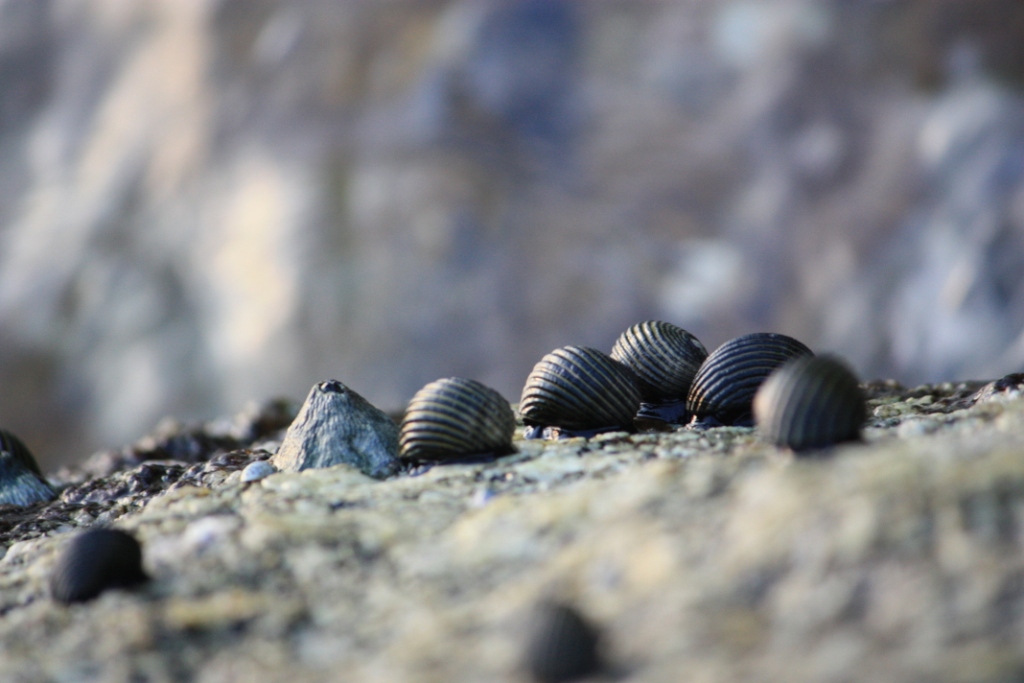
If you’re looking for a nice quiet place to stay on Phuket, Baan Krating offers a good option. It’s on the southwest tip of the island down by Nai Harn Beach. This is taken on the footpath to a quiet section of beach it shares with an adjacent property. It does have another–even quieter–private section of beach, but that is even more rock strewn with razor-sharp shells and conical barnacle casings.
While it may sound like sacrilege to some, if you’re like me you reach the point when it’s enough already with the beach. That raises the question of what there is to do on Phuket if you need a day away from having sand in every bodily crevice and feeling punished by the sun. One should definitely assign a day to Phuket Town. A lot of your Phuket Town day will rightly be spent admiring the many Chinese shrines in the area (there are about five big ones.) [This, too, can be a break if your Thai travels have left you burnt out on the gleaming, golden Theravadan Buddhist temples.] However, Phuket Town also has interesting secular architecture–some of it run down, but much of it nicely restored.
Taken January 26, 2014 at Lal Bagh Gardens in Bangalore.
The Crystal Palace at Lal Bagh gardens, which is normally roped off and empty, has been packed brimming with flowers for the annual Republic Day Flower Show that ends today.
It would be slightly more enjoyable if security wasn’t threatening to wallop one with a stick if one loiters for a second. You can see it as many times as you can fit in a day, but you must keep moving along. It’s a one way flow, so if you don’t have the desire to go through twice (once on either side) I’d recommend going on the south side (farthest from the main entrance.) For some reason the crowd was about half on that side (probably because no one anticipated the layout would make you do two half loops instead of one full loop.) Why they did it, I have no idea, but the flowers were pretty.
In 1888 this wasn’t a tourist market, but a run-of-the-mill city market. Now it’s a crafts market selling gee-gaws, tchotchkes, knick-knacks, as well as expensive artworks to foreign visitors.