
Taken in June of 2015 in McLeod Ganj




Taken in July of 2015 in McLeod Ganj

Taken in March 2013 at Namdroling Monastery in Bylakuppe, India
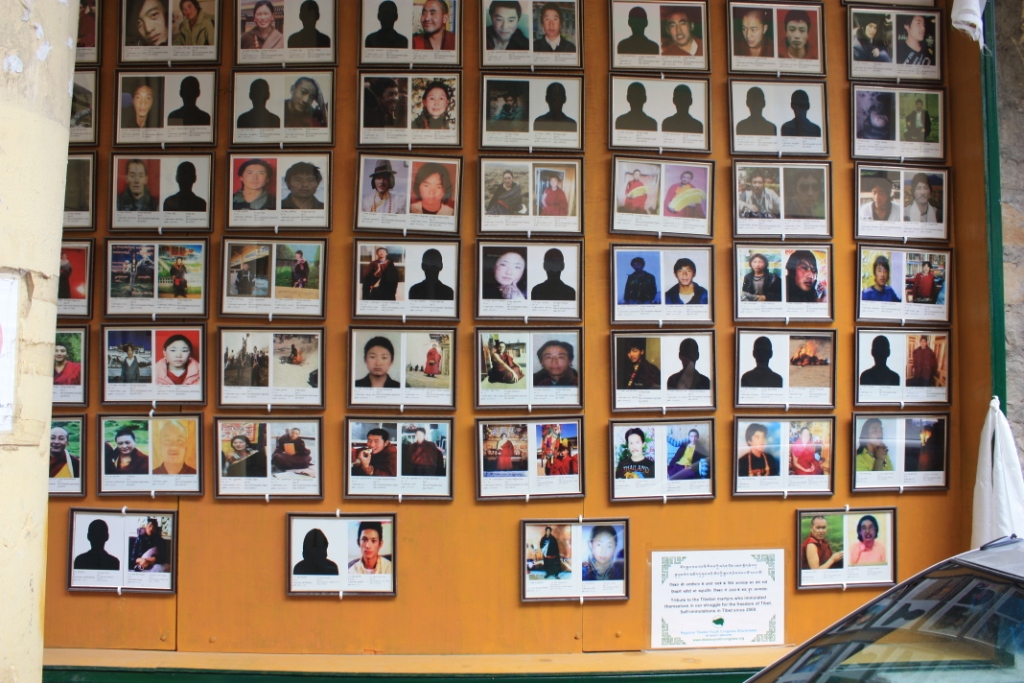
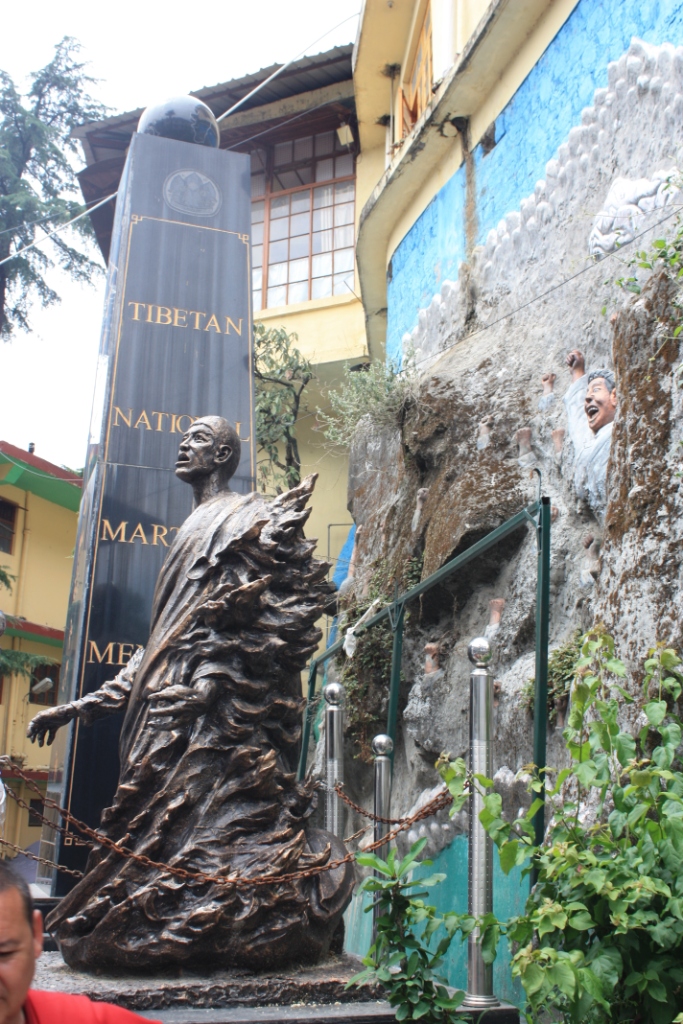
Taken at the Dalai Lama’s Temple (Tsug la Khang) in McLeodganj on June 22, 2015
In the Dalai Lama Temple complex, Tsug la Khang, there’s a monument to Tibetan self-immolators that is located right across from The Tibet Museum (which, incidentally, has its own memorial wall inside.)
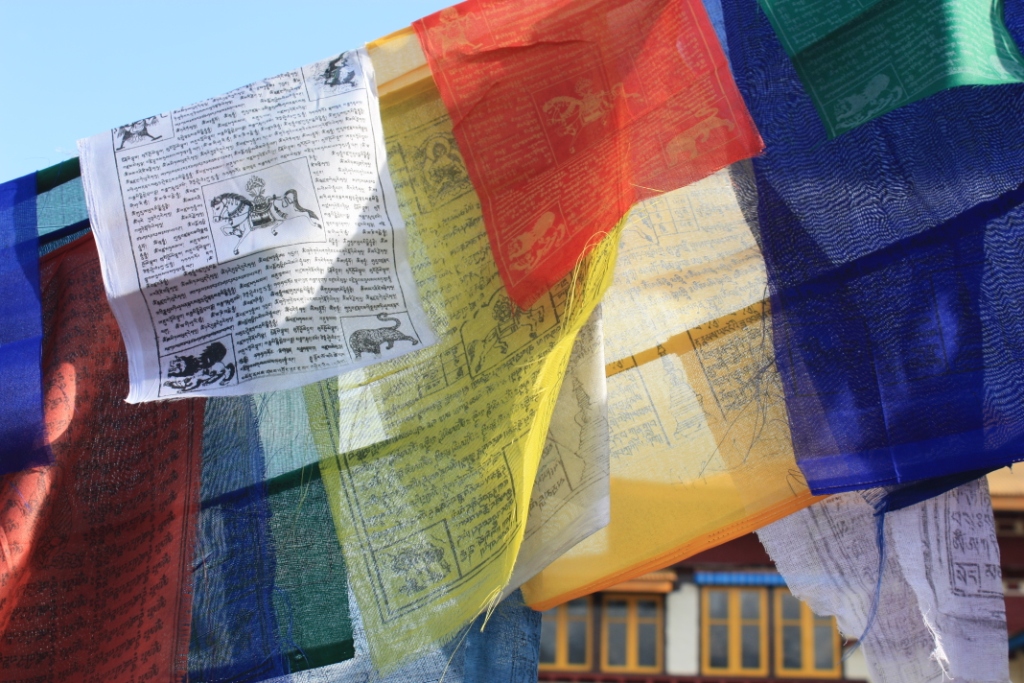
Taken on June 16, 2015 in Manali at Gadhan Thekchoking Gompa
Now heavily associated with Tibetan Buddhism, colorful prayer flags are believed to have originated with Bon–an indigenous religion of Tibet that predated Buddhism’s arrival.
Traditionally, the color progression from left to right is blue, white, red, green, and yellow (i.e. as seen in the top row), but variations can be seen.
Besides monasteries and temples, one will often see strings of flags out in natural settings on mountains.
The day and time of placement of the flags is considered carefully because it’s believed that if they are hung at inauspicious times they may bring bad fortune instead of the desired compassion and peace.
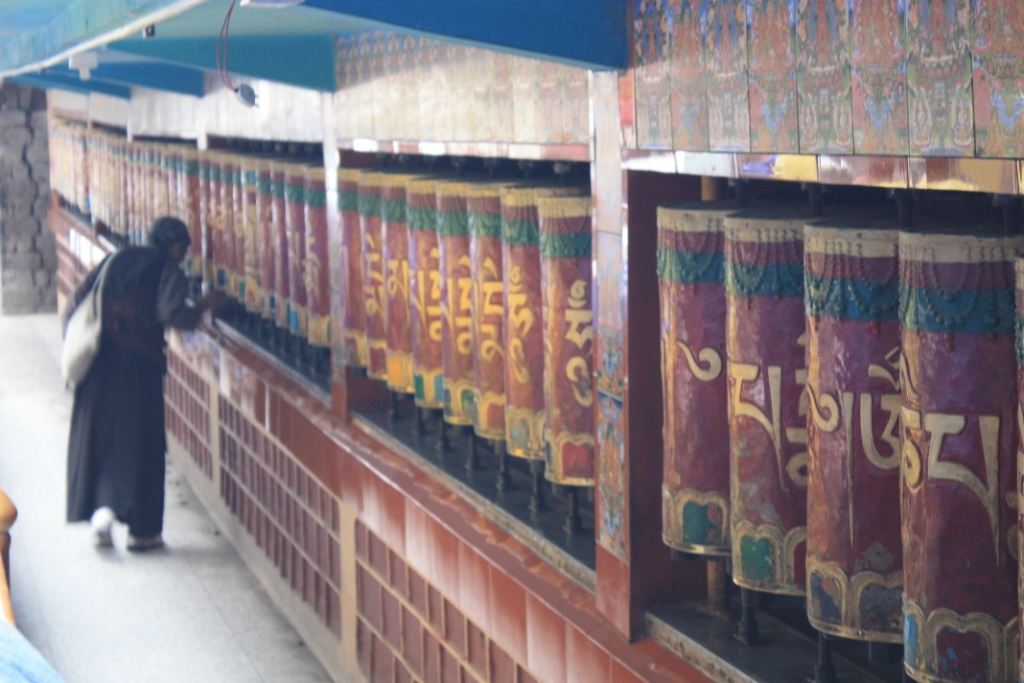
Taken on June 23, 2015 in McLeodganj
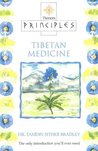 Principles of Tibetan Medicine by Tamdin Bradley
My rating: 3 of 5 stars
Full disclosure: let me first state that I’m a scientific-minded person and skeptic by nature, and if you’re expecting a review by a true believer, you may be disappointed.
A couple of questions may arise from the disclosure above. First, why do I feel I need to make such a commentary? Well, because this is a book about a system of medicine (i.e. gso-ba rig-pa) that developed within a country that was isolated for centuries and in which every aspect of knowledge was infused with and influenced by religious belief—both pre-Buddhist and Buddhist. Because of this, while some of the advice offered is surely sound, some of it is—from a skeptic’s point of view—bat-shit crazy. For example, there are herbal and dietary preparations to aid in digestion that may be completely sound and reasonable, and then there is the idea that Zombie spirits (one of 18 types of evil spirits) cause constant shivering.
The second question is, “If I’m not a believer, why read the book and review it?” For one thing, as I indicated above, I don’t think that just because the beliefs behind the “theory” of this system of medicine are baseless, it means that there is nothing in the book that is true or of value. The theory is that there are three kinds of energy (Loong, mKhris-pa, and Bad-Kan) and that excesses or deficiencies cause health problems. But it’s a 2500 year old system of healing; certainly they learned a thing or two in the process. It’s quite possible that they have learned things that scientific medicine has not. (Consider for example, Tibetan Buddhist monks have repeated and verifiably demonstrated capabilities—i.e. consciously controlling autonomic systems, that Western medicine would have thought impossible.)
The analogy that I always use is with kid’s Christmas presents. Parents hide the presents, and tell the kids that if there’s any tampering with them the kid won’t get anything but a lump of coal (you say that was just my parents?) Anyway, the kids find the packages, but are afraid to invasively tamper with them. Therefore, they feel the heft of them, they shake them, and they listen to said shakes. From that limited investigation, they develop a theory. The theory may be spot on, it may be completely wrong, or over several gifts it’s probably a combination of wrong and right. However, the question of whether the present does what it’s supposed to (i.e. bring joy) is not closely connected to the child’s theory, because it’s based on the parent’s observation of what the kid likes. That, my friends, is why systems of healing that are based on notions that are empirically wrong sometimes produce good results.
Second, while I’m a believer in science, I don’t always believe that Western medicine (rooted in science as it may be) consistently does a good job. Part of this is the fault of economists, policy types, as well as lazy patients who’ve created a system in which medicine only pays off if it can cut one open or give one an expensive medication. This leaves room for alternative systems of medicine that may not be so scientific, but that allow for the fact that changing patient behavior is often key to improving health.
I’ve taken a long time to get to the actual review, but I thought the reader should know from whence this reviewer was coming. The book is a little under 200 pages long. Its 11 chapters are logically oriented, and it’s easy to navigate the book. The author writes in a readable style, and jargon and foreign terminology aren’t a problem. It doesn’t have an index, but each chapter is broken up into many smaller subunits–so finding what one is after shouldn’t be hard.
The chapters cover the history of Tibetan Medicine, the nature of gso-ba rig-pa, the theory of Tibetan Medicine, causes of illness, human anatomy and physiology (not of the physical body as we know it), common diseases and illnesses, treatment techniques involving changing diet and behavior, medicinal treatment, representative case histories, and the nature of the Tibetan Medicine physician.
It’s not clear who the target audience for this book is. It’s not a self-help book as the implication is that the patient should see a doctor of Tibetan Medicine and not self-prescribe. Furthermore, while the book provides a good overview of Tibetan Medicine, it’s not an all-inclusive description by any means. The book seems to have been written primarily to make individuals aware of Tibetan Medicine and to give enough insight into the system that readers can differentiate it from Traditional Chinese Medicine or Indian Ayurvedic Medicine, both of which display similarities and differences.
I’d recommend this book if you’re interested in alternative approaches to healing, or if you’re interested in Tibetan culture in detail.
 The Voice of the Silence: Being Extracts from The Book of the Golden Precepts by Helena Petrovna Blavatsky
My rating: 3 of 5 stars
According to Helena Blavatsky, the three “fragments” that make up The Voice of the Silence are her translations of three tracts from The Book of Golden Precepts, of which there are 90 and she had memorized 39. The Book of Golden Precepts is said to include both Buddhist and pre-Buddhists views on spirituality.
Blavatsky was one of the founding members of the Theosophical Society, an organization that proposed and advanced a certain brand of mysticism. Mystic traditions are those which believe that one must look inward to find the divine, i.e. to know god. The Theosophical approach isn’t without controversy. Blavatsky’s allusion to a secret path to wisdom and the suggestion that most of the world isn’t ready for the high level teachings sits in contradiction to a Siddhartha Buddha who was transparent. Buddhists have been known to claim that in as much as an idea is a teaching of the Buddha, it wasn’t secret, and in as much as a teaching was secret, it wasn’t the work of the Buddha. But there is disagreement. Some believe that what Blavatsky is presenting is high level Mahayana Buddhism, but others think that it’s a hodge-podge of Kabbala, esoteric Buddhism, and yogic teachings.
The first “fragment” is also titled “The Voice of the Silence.” This section suggests that there are three stages to one’s journey: ignorance, learning, and wisdom. It states that one must take care to not to be distracted from the path by sensual inclinations or by desire. The path described mirrors the advanced stages of Patanjali’s eight-limbs. In other words, she discusses a progression from pratyahara (not explicitly named, but described as the withdrawal of sensory input), dharana (concentration), dhyana (meditation), and Samadhi (liberation.)
The second part is entitled “The Two Paths.” Liberation and renunciation are the two paths in question. The central topic of this chapter is Karma, and the questions of action versus inaction that are also discussed in the Bhagavad-Gita.
The third part is “The Seven Portals.” These seven doors through which one must pass on the way to wisdom are essentially the same as the six paramita of Buddhism with an additional one, Virag, inserted between the third and fourth spot. The portals are Dana (generosity), Shila (a.k.a. Sila, or virtue), Kshanti (patience / perseverance), Virag (illusion conquered), Virya (energy), Dhyana (contemplation), and Prajna (wisdom).
A nice feature is a “glossary” at the end of each of the fragment that explains some of the terminology and concepts. While this is called a glossary, it’s not one in the usual sense, i.e. it’s not in alphabetical order and is not exclusively definitions. It would better be described as chapter notes. The idea is to convey the information that a lay reader may need, but which the author / translator doesn’t want to muddle the text with.
I think this book is worth a read. It’s short, and for a work written in the 19th century it’s quite readable—that doesn’t mean that the message is always clearly conveyed—whether on purpose or accident.
Note: While I read this on Kindle for a nominal price, it’s available on the web free of charge (see here.)
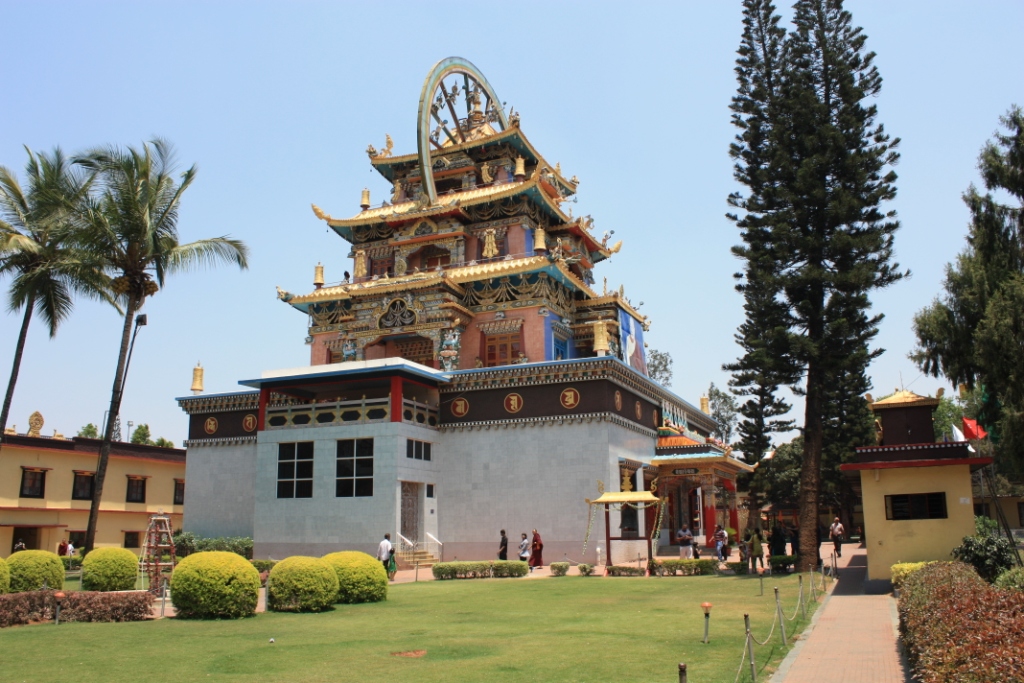
Taken in March of 2014 at Namdroling Monastery.
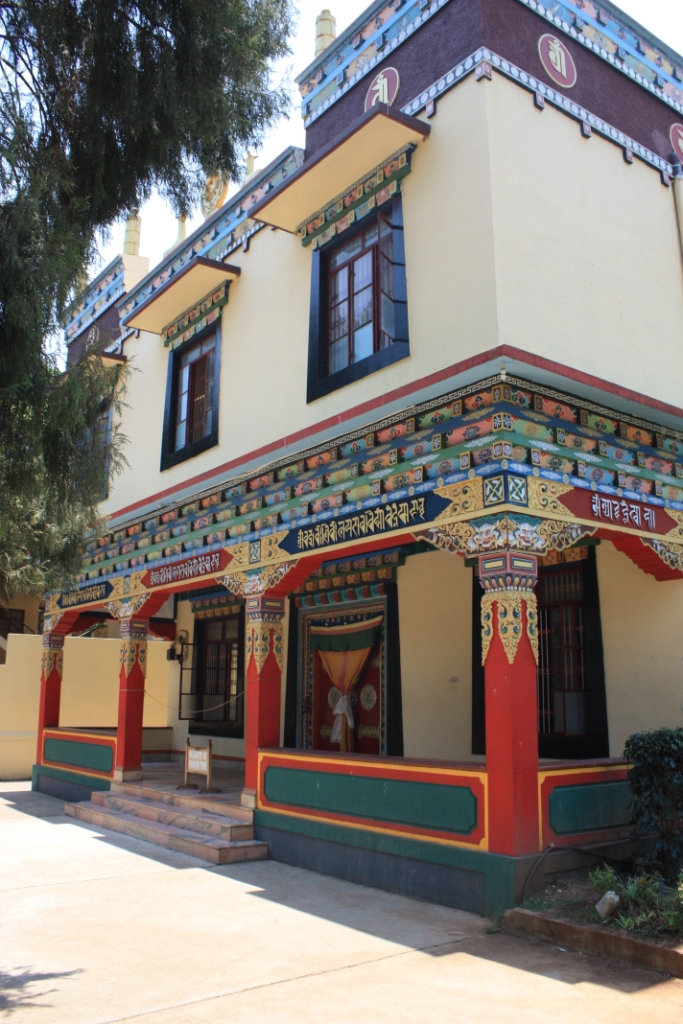
Taken in March of 2014 at Namdroling Monastery.


 Tiger Riding for Beginners