BOOK REVIEW: Training and Conditioning for MMA ed. by Dias / Oliveira / Brauer & Pashkin

Training and Conditioning for MMA: Programming of ChampionsTraining and Conditioning for MMA: Programming of Champions by Stéfane Beloni Correa Dielle Dias
My rating: 5 of 5 stars

Amazon.in Page

Release Date: September 15, 2022 [It may already be out in some formats and markets]

Get Speechify to make any book an audiobook

This book provides an overview of fitness building for Mixed Martial Arts athletes. It covers program design, athletic assessment, nutrition, exercises and conditioning practices, and injury prevention methods. On the positive side, it’s not only comprehensive, but – also – presents some of the best and latest methods in combative sports training based on sound scientific research. On the other hand, the book does assume a certain level of understanding of sports science, and it gets pretty deep in the weeds with respect to technical detail and to scientific and specialty jargon. If one doesn’t have such background, one may find some of the content (particularly the early chapters) a bit daunting. That said, it offers an excellent reference for those who are interested in methods and sports science not just for MMA, but for combative sports, in general.

The book uses color photographs throughout. I found the photos to be clear, well-sized, and well-lit. While there is definitely an attempt to keep the number of photos to a reasonable level, they do offer multiple angles where necessary and – generally – give enough pictures to make the action clear. There are also tables after each of the methods sections to give a handy summary of sets, reps, and scheduling suggestions for various exercises. In the early chapters, the ones that convey more technical content, there’re charts, graphs, and diagrams as needed. There’s an extensive bibliography, though it should be noted many if not most of the references are not in English. (The team of editors and contributors is large and international.)

This book offers an excellent reference for coaches, trainers, and athletes. While it does get quite technical, it’s great that it offers insight into cutting edge science and training methods.


View all my reviews

5 Fun Facts about Breathing

Annapurna, Nepal; Taken in May of 2018

5.) The Death Zone may be a myth, or — probably more accurately — everyone may have their own personal death zone:

It’s widely stated as fact that above 8,000 meters (26,000 feet) every human being is dying, no human can acclimatize, and the race is on to get back below that altitude before the body is damaged beyond its ability to repair itself. This hard-limit is widely publicized in reputable, mainstream publications such as National Geographic. There’s a certain logic to such a limit. In response to the diminished pressure of oxygen, the body produces more hemoglobin (that’s acclimatization), but the bloodstream can only take up so much hemoglobin.

Mark Horrell, in his mountaineering blog, challenges the idea of a one-size-fits-all hard limit, and provides anecdotal examples that contradict the 8,000 meter cap.

4.) Sticking one’s face in water allows one to hold one’s breath longer:

Sensory cells in the face and nostrils sense wetness and this sensation triggers a slowed heartbeat (bradycardia) and constriction of blood vessels (vasoconstriction) so as to reduce blood flow to the extremities.

A more detailed explanation can be read here.

3.) Mouth-to-mouth resuscitation works because our lungs only capture about 20% of the oxygen in each inhalation:

If we had super-efficient lungs, our exhalations wouldn’t contain enough oxygen to sustain the patient receiving cardiopulmonary resuscitation (CPR.)

This and many other fascinating respiratory facts can be found on the Crash Course videos on the subject.

2.) In two weeks time the breath you’re exhaling right now will have spread out around the globe.

Sam Kean’s book, Caesar’s Last Breath, discusses this subject in great depth. In fact, the title is a reference to the fact that in each breath it’s likely that one inhales a molecule of Caesar’s dying breath.

1.) When you lose weight, most of it (84%) is lost in exhaled carbon-dioxide:

This may not be a question that ever occurred to you, but I bet you find it fascinating once it’s brought to your attention. It’s not like when you cut 5 kg, there’s a fat pile sitting somewhere. More about this subject can be learned here.

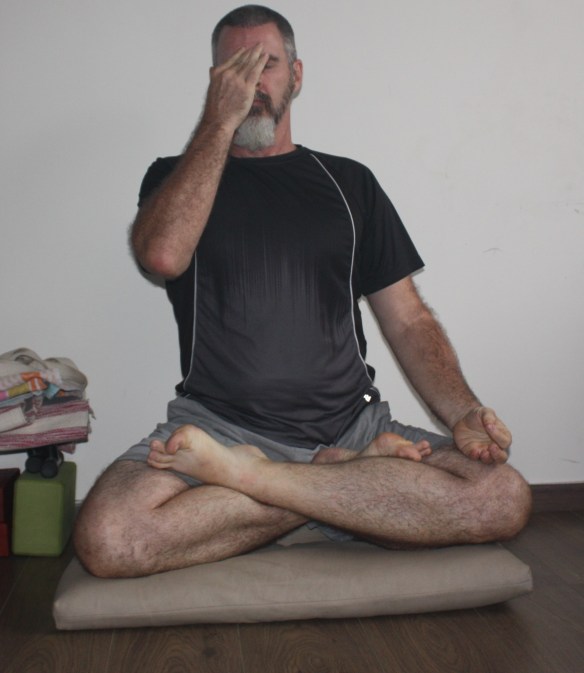
Nadi Shodhana; Alternate Nostril Breathing

The Most Dangerous Combative Sport? Study Shows Boxing Beats MMA for Brutality

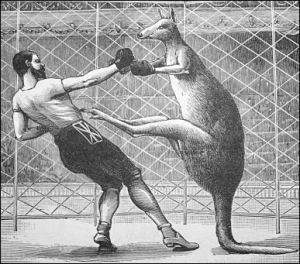
kangaroo_boxingA study by researchers at the University of Alberta found that while mixed martial arts (MMA) fighters are more likely to suffer minor injuries, boxers are more likely to suffer severe injuries like concussions or detached retinas. The study, to appear in the print edition of the Clinical Journal of Sports Medicine, involved 1181 mixed martial artists and 550 boxers who’d fought in Edmonton between 2003 and 2013. This was all fighters who fought professionally in that city in those two sports.

This finding seems counter-intuitive, given that so many more methods of delivering mayhem are allowed in MMA and the protection is less at least with respect to gloves.

Gloves may be an important factor. This isn’t a result from the aforementioned study, but it’s an idea put forth by MMA boosters. It goes like this, “Yes, the lightweight MMA glove offers less protection to the one being hit, but it also offers less protection to the hand of the one delivering the hit, and, ergo,  an MMA fighter is more likely to moderate his / her punches to avoid the (in this case ironically-named) ‘boxer’s break’ to the bones of said fighter’s hand.”

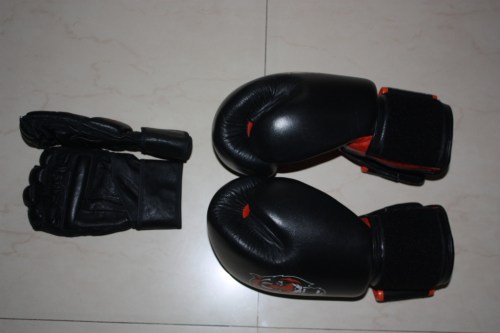
MMA style gloves on the left and 16oz. boxing gloves on the right

MMA style gloves on the left and 16oz. boxing gloves on the right (the same hand fits inside.)


I haven’t seen any rigorous scientific studies of whether the argument above has merit. There was a National Geographic Fight Science episode that made a comparison of gloves, but it was looking at a little different question. It studied how much force barehand, MMA glove, and boxing glove delivered to a heavy bag. Incidentally, it found minimal difference in force delivered between the two types of gloves, which at least might help to hush those who make a big deal about MMA’s “thin gloves.” However, this doesn’t tell us whether fighters put the same level of force into hitting a bony target when wearing the two types of gloves. Still a YouTube clip of the test is below for your information.


There are other explanations for why MMA fights might be less prone to cause concussions and severe head injuries. For example, there’s less time spent at an optimal distance to deliver strikes with maximal force. Once fighters are in close, there’s less room to get strikes up to speed. Once fighters are on the ground, putting a lot of body weight into a strike may be impossible. While submissions, whether chokes or joint locks, may seem brutal to the home viewing audience, it’s not clear that they result in major injuries to anything but the fighter’s self-esteem. (Though this might be an area that needs to be factored into studies.)

I’d like to see how muay thai compares to the two sports covered in the aforementioned study. I suspect it’s the only combative sport that might beat out these two. (All the nastiness of boxing, none of the close range grappling, plus elbows and shins to the side of the head.) Though, who knows?  Judoka do seem to land on their heads an unfortunate percentage of the time.

I’m curious about what you think about which combative sport is most damaging, and why?

FYI: The citation for the study mentioned above is:
Karpman, Shelby, et al. 2015. Combative Sports Injuries: An Edmonton Retrospective. Clinical Journal of Sports Medicine. To be published. Available on-line at: http://journals.lww.com/cjsportsmed/Abstract/publishahead/Combative_Sports_Injuries___An_Edmonton.99628.aspx. Last accessed: November 13, 2015