BOOK REVIEW: Gulp by Mary Roach

Gulp: Adventures on the Alimentary CanalGulp: Adventures on the Alimentary Canal by Mary Roach
My rating: 5 of 5 stars

Amazon page


This week I’m [improbably] doing two book reviews about works devoted to the human digestive tract. (Before you conclude that I’ve got a colon fetish, let me explain that I was spurred to this research by life events. I did some advanced yoga cleansing practices and wanted to learn more about the science of what was going on down below.) In addition to this book, Mary Roach’s “GULP,” I’ll be soon posting a review of Giulia Enders’s “GUT.” The two books have more in common than their monosyllabic titles beginning in “gu” and the fact that they each came out within the past couple years. They’re both light-hearted romps down your digestive tract. However, they’re also different in several key ways. GULP is quirkier; GUT is perkier, but more importantly the two books have different thrusts (yes, there’s just that much interesting stuff to learn about digestion (and the lack thereof)—which make the two books complementary. Cutting to the chase, I’d recommend both books, but if you only read one book about your alimentary canal this year, I hope my reviews will help you determine which one is for you.

Explaining how Roach’s book is “quirkier” will tell one a lot about Roach’s book and how it differs from Ender’s work. (And since Ender’s writing style could be described as quirky itself, it’ll help clarify that as well.) By “quirky,” I mean that Roach’s book is built around a set of narrow questions that address topics of a bizarre or strange nature. In GULP one will read about whether your pet really wants “paté in beef gravy” [spoiler: it does not], whether the story of Jonah and the whale is BS, how smugglers use their digestive tracts illicitly, what are the benefits of Fletcherizing (chewing your food more thoroughly—much more thoroughly), whether Thanksgiving dinner can split one’s stomach open (like it feels it does), and what’s the worst case flatulence scenario.

This isn’t to say that one doesn’t learn something about the basic science of digestion as one is reading about extreme cases of tasting skill, stomach fistulas, flatulence, constipation, and overeating. One does, but this book isn’t organized to educate one about the alimentary canal systematically and generally. It’s a work of creative nonfiction designed to make the reader keep saying “huh, I never would have thought” and it does an outstanding job of it. You may not have given much thought to some of these topics, but you’ll be craving answers by the time you get past the chapter heading. There’s a reason that Roach’s works top the charts of pop science books. She finds the interesting questions and the most fascinating examples.

There are 17 chapters in GULP, and while they collectively take one on a tour of the alimentary canal, Roach devotes more space to some parts than others. She spends more time on what goes at the head end (smelling, tasting, chewing, and salivating) than does Enders. Also, please don’t think the book is low brow or that it appeals to the lowest common denominator (8-year-old boys?) when I tell you that there are three chapters on various dimensions of flatulence.

As I said, you may not have thought much about some of these questions, but you’ll learn something nonetheless. A prime example can be seen in the chapter on smuggling via the digestive tract. I’d read stories of cocaine mules dying when a condom burst in their stomach, but I had no idea about the extent to which items and materials are smuggled down there. It’s not just drugs. One guy was explaining how he smuggled knives. Really. Knives. Plural.

There are a few topics that are well covered by both books. Take, for example, constipation. Roach elucidates the topic using the case of Elvis Presley and others who’ve been literally terminally constipated. (Ender’s—on the other hand—considers the everyman’s constipation, though with amusing drawings and commentary.)

I’d recommend this book for readers interested in learning more about how their food makes its way through—particularly if you like learning about the strange cases.

View all my reviews

BOOK REVIEW: Emperor of All Maladies by Siddhartha Mukherjee

The Emperor of All Maladies: A Biography of CancerThe Emperor of All Maladies: A Biography of Cancer by Siddhartha Mukherjee
My rating: 5 of 5 stars

Amazon page

Dr. Mukherjee describes his Pulitzer Prize winning book as a biography of cancer. If so, it’s like the biography of a master thief or a gangster. One reads it not because one finds the character in any way endearing, but one can’t help but admire the resourcefulness and indomitable spirit of the culprit. Humanity has been at war with cancer for decades, but it remains alive and well–losing ground in specific domains but gaining overall.

The book covers a period from when our technology was too crude to see at the tiny levels necessary to recognize the commonality between various forms of cancer to the present-day attempts to find treatments that can target cancer cells without attacking good cells—a challenging prospect. The implication of that last sentence is that the cure might be as damning as the disease, and this has often proven to be the case. It’s often a race to see whether the cancer can be killed before the treatment kills the patient. This has been the case with radiation, radical surgeries, and various forms of chemotherapy that are toxic to good cells as well as bad. While the book ends on a hopeful note about more targeted treatment, cancer has not gone gently into that good night.

While the book covers a broad period, the bulk of its pages are devoted to the latter half of the 20th century. That’s when the war on cancer got serious and the science became advanced enough to move beyond crude approaches like radical mastectomies. Our understanding of chemistry, pharmacology, and biology reached a point at which cures were no longer pie-in-the-sky notions. But it wasn’t just the medical science that was more advanced, statistical methodology also reached a point at which it could answer questions that had previously been elusive. Such questions include whether smoking caused cancer—a fact that seems self-evident today, but which wasn’t as straightforward as one might think. There is also the issue of whether various treatments were actually extending the lifespans of those afflicted, which was also not as simple as one might think.

While the above discussion of science and statistics might make this book seem dreadfully boring, this isn’t the case. Mukherjee didn’t get the 2011 Pulitzer Prize for Nonfiction by being dull. The author knows the value of a story, and uses stories successfully throughout the book. There are the stories of individual patient cases, but also the story of the mass movement to raise dollars, awareness, and Congressional support to fight cancer. These true stories sometimes show the roller coaster ride that we associate with fiction—such as the apparent cure of a form of childhood leukemia that seemed promising until the kids once in remission started coming back with symptoms (the leukemia crossed the brain-blood barrier and found fertile ground on the other side of a biological wall that was meant to keep such ne’er-do-wells out.)

As one might expect of a book that covers so much ground, it’s not thin. The book’s 600 pages are arranged in 43 chapters divided into six parts. I’m sure there’s a lot more one could learn about cancer, but Mukherjee covers a lot of ground in an interesting package.

I won’t say I enjoyed the book (it’s unavoidably depressing, if hopeful) but I did find it both interesting and readable. While it might not be the sunniest and most joyous of reads, it’s one that many people should read. I’d recommend it for anyone. I would say “anyone who has been touched by cancer,” but I think that’s the same thing at this point.

View all my reviews

BOOK REVIEW: Zen and the Brain by James H. Austin

Zen and the BrainZen and the Brain by James H. Austin
My rating: 4 of 5 stars

Amazon page

Dr. Austin’s 900-page book looks at what the brain does during (and as a result of) the practice of Zen, and is a great resource for those interested in the science of meditative practices. It’s easy to sum up the strength and weakness of this book. With respect to the book’s greatest strength, it’s that the author—like the book—straddles two widely divergent worlds. He is at once a scientist and a practitioner of Zen. This gives him rare insight into both halves of the equation. This isn’t one of those books written by a spiritual seeker who uses the word “science” and “scientific” very loosely (and in a manner that shows a lack of understanding of the central premise of science.) On the other hand, it’s not one of those books by a scientist who got all of his understanding of meditation from other books.

As for the weakness, it’s that the book was written in the late 1990’s. Ordinarily, I would say that wouldn’t matter much, but concerning our understanding of the brain, it might as well have been the Stone Age—hyperbole duly noted. One doesn’t put together a book of almost 1000 pages overnight, and so much of the references for “Zen and the Brain” are actually from papers from the 1980’s and earlier. The fMRI (functional Magnetic Resonance Imaging) machine didn’t even come out until the early 1990’s, but—of course—it took a while for the studies featuring this powerful technology to reach publication.

The book is arranged into a whopping 158 chapters divided amongst 8 parts. Some of the chapters are pure neuroscience, and there are detailed descriptions of the brain and the functions of its various parts. Other chapters are designed to give one an insight into the practice of Zen and aren’t technical at all. The author has a reasonably engaging writing style when he’s not conveying the minutiae of brain science. He tells stories of his experience as a practitioner of Zen, and passes on the wisdom of past Zen masters.

I have an unconventional recommendation for this book, which I got so much out of. I recommend you first check out the book “Zen-Brain Horizons” put out by the same author and press (MIT Press) in 2014. While I haven’t yet read that book, it seems to hold three advantages. First, it’s only one-third as long and seems to cover similar material. Obviously, it goes into far less detail. (But you may find that a plus.) Second, the 2014 book is reasonably priced. “Zen and the Brain” is one of the most expensive books I’ve bought in recent years. I’m not saying I regret paying as much as I did, because it was a useful book, but cheaper would be better. Finally, the 2014 has the benefit of access to a lot of great research from the past couple decades. If you read the 2014 book and think you need more detail about the brain, then—by all means—get this book.

View all my reviews

BOOK REVIEW: Chemistry: A Very Short Introduction by Peter Atkins

Chemistry: A Very Short IntroductionChemistry: A Very Short Introduction by Peter Atkins
My rating: 4 of 5 stars

Amazon page


Lately, I’ve been reading several of these “A Very Short Introduction” [AVSI] books put out by Oxford University Press. They are a good way to take in the basics of a subject in a concise and layman-friendly manner—either as a refresher or introduction. And they are inexpensive both on Kindle and at my local book seller, Blossom Book House in Bangalore. There are 400 to 500 titles in the series (and growing) and they deal with topics as broad as… well, Chemistry, to as narrow as the Dead Sea Scrolls. They’re available for subjects in the sciences, art, social sciences, the humanities, etc. This book, like most in the series, is about 100 pages long, and includes a glossary and suggestions for further reading.

As is common across the series, the writing is approachable to a non-specialist, but don’t expect Mary Roach style popular science writing. The author doesn’t use interesting stories or colorful language to make his point. The trade-off for getting a concise explanation is that you may find the book dry. I won’t say that these books—and this one in particular—aren’t for pleasure readers, but they’re for readers who take pleasure in learning–as well as those who need to get a grasp on a subject quickly (e.g. your fiance’s mother is a Professor of Microbiology and her father is one of the foremost experts on the Norman Conquest—and you don’t want to seem like an idiot—OUP has you covered.)

As the common subtitle suggests, you will only get the bare essentials. That’s truer for books with a broad scope than those of narrow scope. That is, if you read the AVSI book on “Philosophy” you are going to get less of the full story of the title subject than you will of the one entitled “Heidegger.” Of course, Chemistry is broad.

There are seven chapters in this book. The first offers background information on the history of chemistry, its scope and where it fits with respect to related sciences, and how the subject has come to be organized into sub-disciplines. The second chapter explains the basic concepts of atomic structure and bonding. The third chapter offers the basics of thermodynamics, and the fourth describes the nature of chemical reactions. The fifth chapter describes the methods that are used in the study of chemistry. The last two chapters are a bit different. They tell the reader what chemists have produced (for good and bad) and what directions the discipline is likely to take in the future, respectively.

Many of the AVSI books contain simple, monochromatic graphics, but this particular one includes only a copy of the Periodic Table. There may be points in the book that would benefit from a graphic, but I can’t say that I noticed the absence when I was reading. Let’s face it; on the microscopic level of chemistry takes place, any graphic would likely be a greatly simplified abstraction any way.

I’d recommend this for those seeking a quick guide to the subject of chemistry for those who forgot or never learned the subject.

View all my reviews

BOOK REVIEW: The Elements by Theodore Gray

Elements: A Visual Exploration of Every Known Atom in the UniverseElements: A Visual Exploration of Every Known Atom in the Universe by Theodore Gray
My rating: 4 of 5 stars

Amazon page

What element makes up most of your body by weight? Are diamonds really the hardest known material on Earth? How can you tell a genuine neon light from one that doesn’t contain any actual neon? Are silicon-based life forms really a possibility? How did phosphorous contribute to a human population explosion? How can one tell whether one’s “Titanium” golf club actually contains titanium? What is tin used for–given that it’s not tin cans, tin foil, or tin roofs? Which noble gas has been caught forming compounds with common elements? Why do welders have to get x-rays before an MRI? Why does Ytterby, Sweden have four elements named after it? Why are gorilla lovers boycotting tantalum? Which is better for committing homicide: Thallium or Polonium? [Hint: The answer depends on whether you want to send a message or not—if you know what I mean.] How much natural uranium can a private citizen possess in the US? Which, if any, of the elements named for people are named for the person who discovered them? These are the types of questions you’ll have answered while reading this book.

The most general question the book addresses is probably, how can one collect elements without setting the world on fire? [If that doesn’t make sense, I’d recommend Randall Munroe’s book “What If?” Munroe tells us what would happen if one tried to make a wall out of one square foot containers of each of the elements (in the form of the Periodic Table)? You’ll note that I said “tried to make” and not “made,” and that should tell you something.] Gray is an element collector, and the many photographs for each element show examples of the forms (including manufactured products) in which a given element can be acquired. You’ll also find out where the gaps will remain in your collection of pure elements. [On a related note, you’ll learn which elements are radioactive.] You also may be interested to hear what element sample the FBI confiscated from the author’s collection [hint: it wasn’t Uranium or Plutonium.]

The organization of the book is straight forward. There’s front matter that gives one a rudimentary primer on chemistry and the periodic table in order to refresh the knowledge that has fallen out of your brain since high school or college. But the bulk of the book consists of one short chapter for each element. The chapters each have a cover page containing a photo and some technical information about the element that will only be of interest to the very nerdiest of nerds. Then there’s a page or so of text, which gives some interesting factoids about the element and how it’s used. Finally, there’s a collection of photos of the element and some products that contain it—with one notable exception.

I enjoyed this book. It’s a quick read, but provides a lot of interesting information. And the author’s sense of humor shines here and there.

I read this book on a Kindle Touch. I mention this because true element groupies may find this less than ideal because of the lack of color. However, for me it was fine. Furthermore, the e-book formatting was good. Sometimes books with a lot of graphics don’t work out so well, but in this case it was not a problem.

I’d recommend this book for anyone interested in science, though if you know a lot about chemistry you may find it a bit remedial.

View all my reviews

The Good and Bad News About Yoga for Weight Loss

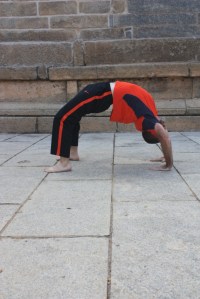
IMG_2643The good news is that yoga can help one lose weight. The bad news is that the mechanism by which this occurs isn’t what most people expect, and it involves the mind a great deal more than the muscles.


While many people hope for a secret to weight loss, there’s no secret. Weight loss is a function of calories eaten being less than calories burned.  This simple formula means that one can either eat less or exercise more. Both the diet and exercise matter for good health, but the eating part is more important to cutting weight. This statement may be controversial and seemingly gratuitous—particularly for people who think exercise is going to single-handedly shed excess pounds–and so I’ll take some time to try to make my point.


The first thing one should know is that our voluntary activity only accounts for about one-third of calories consumed. The other two-thirds are used whether we move a muscle or not. Between 20 and 25% of our energy consumption is devoted to our brain, and much of the rest is used to keep us at 37°C (98.6°F) because we are, after all, mammals. This means that increasing the intensity or amount of exercise—while it has tremendous health benefits—will achieve only a marginal increase in calories burned. From the Mayo Clinic website, I learned that a 109kg (240lb) individual will burn about 273 calories doing a typical hata yoga class or about 436 calories with Power Yoga. (Compare this to about 327 calories / hr. for tai chi or 654 calories / hr. for hiking.) So your hour of yoga has maybe knocked off a 32oz soft drink or one medium size French fries. Most people have trouble finding more than one hour of time and energy for exercise per day. And as someone who sometimes spends more than an hour a day exercising, I can attest that there is a point of diminishing marginal returns. So while exercise is an important part of weight loss, one can’t go hog-wild in eating just because one exercises.


[One should also note that many yoga practitioners experience a reduced basal metabolic rate (BMR) because of the calming aspect of the practice. A lower BMR means that you burn fewer calories just living and maintaining your metabolism. All things being equal, this makes cutting weight all the more challenging—though the effect is certainly counterweighted by the stress reduction aspect of the practice that will be discussed below.]


To summarize: unless you’re an elite athlete in training for something like the Olympics, the idea that you can eat whatever you please and cut / maintain a healthy weight is likely to result in disappointment.  A common piece of dietary advice for elite athletes is to daily eat one gram of protein for every pound of ideal bodyweight and eight fist-sized servings of vegetables. Beyond that, they can pretty much eat what they want. But with that much slowly digesting material, they’re probably not going to go overboard—even if they weren’t already, almost by definition, very disciplined people.

 

IMG_2737So if an hour of yoga a day doesn’t even make up for having a Mars bar, what good is it?  For one thing, the yoga student has the opportunity to become more attuned to his or her body and, in doing so, to learn to differentiate physiological hunger from the many other permutations of hunger that overtime merge into a multi-headed hydra of craving. What are these other hungers? First and foremost, there’s psychological hunger, or the use of food as therapy. People use food to reward themselves, to medicate themselves, to take their minds off of their woes. Secondly, there’s sensory hunger in which we have no real need to eat but the food looks or smells too good to avoid.


One of the forms of hunger that often remains hidden is social hunger. That is, one eats to be part of the in-group and to bond. For example, imagine you’ve just eaten, are not hungry, and someone offers you food. Depending upon who it is and what your relationship is that person, you may feel compelled to eat even if you don’t need it. The double whammy is that eating as socializing is so deeply engrained and that we humans—contrary to popular belief—are dismal at multitasking. We can’t converse and be aware of what we are eating, and thus one may overeat because one is so engrossed in the distraction of socializing. This isn’t to say that there is anything inherently wrong with social eating. We all have to do it to some degree or another. One just needs to recognize that if it becomes a habit to be distracted from one’s food, one may have problems.


Relating back to the idea of psychological hunger, yoga helps one destress.  Stress can be a perfectly healthy phenomenon, but when it’s prolonged it can have many adverse consequences. One such consequence is having cortisol levels remain too high, and this has the effect of ramping up the appetite. Your body has been pressed into fight or flight mode, it expects that you’re hauling ass away from a sabretooth tiger or an angry woolly mammoth mamma, and that you’ll soon need to replenish depleted energy stores. Your endocrine system doesn’t know that you’re curled up on the couch with a pint of ice cream… yeah, let’s call it a “pint.” As a form of exercise, yoga helps reduce this problem. However, beyond exercise, yoga offers many relaxation techniques such as yoga nidra, kaya sthairyam, restorative postures, and some forms of pranayama(breathing exercises) that can help you turn off the “fight or flight” and turn on the “rest and digest”—what Herbert Benson called the “relaxation response.” Sometimes you might delve into an intense practice like Ashtanga Vinyasa or Power Yoga, and other times restorative yoga might be just what the doctor ordered. [Disclaimer: “What the doctor ordered” is a figure of speech. I’m not a doctor, and I haven’t even played one on TV.]
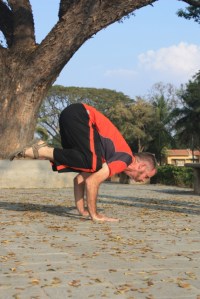
 

IMG_2633There is yet another way in which yoga can help. Yoga helps one dispassionately observe one’s drives and this way one can slowly, over time, rewire one’s attitudes toward food.  One can begin to think of hunger pangs as a sensation, rather than projecting a negative connotation onto them. In this way, one can learn to begin to watch the sensation and learn from it rather than running for the food.


Finally, an important benefit of yoga is in teaching one to be contented with oneself, even if one isn’t content to live with one’s present health or physical capability. Santosa is one of the niyama, and it teaches one to be content with who one is–perhaps even while one is simultaneously practicing the austerities of tapas (another niyama) in pursuit of personal development. If one isn’t contented with oneself, one can fall into a shame spiral that may create the kind of persistent stress that I warned about above. Also, if one is at a healthy weight, but has some deep-seated drive toward “perfection,” the lessons of santosa can inform you as well.


Best of luck in the pursuit of good health.

BOOK REVIEW: The Tell-Tale Brain by V.S. Ramachandran

The Tell-Tale BrainThe Tell-Tale Brain by V.S. Ramachandran
My rating: 5 of 5 stars

Amazon page

A brain injury patient simultaneously becomes demented and develops a previously unwitnessed artistic talent. Another patient’s brain lights up identically when seeing another person being poked as it does when he, himself, is prodded. An amputee brushed on a specific area of the cheek has a sensation in a specific area of the lost limb—i.e. phantom limb sensations can be mapped to points on the face. A stroke victim develops “metaphor blindness,” and suddenly “the 800 pound gorilla” becomes an actual gorilla. A test subject’s right angular gyrus has an electrical charge delivered to it through an electrode and the person has an instantaneous out-of-body experience. There are temporal lobe epilepsy patients who literally feel one with other people—or, in some cases, the natural world in general. These are just a few of the fascinating cases that Dr. Ramachandran presents in “The Tell-Tale Brain.” Many of these phenomena would have once been attributed to purely psychological or spiritual causes, but now their biological origins in the brain are being revealed.

Dr. Ramachandran is a neuroscientist whose claim to fame is making a noteworthy contribution to our understanding of the brain using mostly low-tech and non-invasive experiments with subjects who have brain abnormalities or injuries. Before there was EEG (electroencephalogram) and fMRI (functional Magnetic Resonance Imaging) machines, much of what scientists learned about the brain came from determining what capabilities were lost (or, occasionally, gained) by patients who had specific brain damage. In this way, we gained a great deal of insight into what areas of the brain are responsible for what tasks and we’ve learned that many aspects of the mind that were largely thought to be beyond biology are—in fact–not. It’s fascinating to see what bizarre effects can result from brain damage or abnormalities, from people who think they are dead to others who want to have a limb amputated because it doesn’t feel like it belongs to them to yet others who think their loved ones are imposters.

The central question addressed by this book is best summarized by a quote from the book’s introduction: “Are we merely chimps with a software upgrade?” Ramachandran proposes that any answer to this question that can be scientifically investigated must reside in the brain. Most of our organs and our general structure are not that different from those of our primate brethren. But our brains are infinitely more capable than those of other species. In responding to the question, Ramachandran considers the brain’s role in topics like language, aesthetics, and belief that are the sole domain of Homo sapiens. One of the most interesting discussions is how our brains fill in the blanks and a give meaning to what we see, such that we sometimes find signs in random data streams. The final chapter deals with introspection and how we come to define ourselves by what we think and what we feel and here Ramachandran gets into some of the most fascinating conditions mentioned in the book, such as Cotard Syndrome in which subjects firmly believe that they don’t exist.

There are a few topics that he delves into in particularly deep detail. One of these topics is that of mirror neurons. These neurons are integral to our relationships with others and are essential to our ability to learn. They fire in mimicry of movement (e.g. facial expressions) we see others perform. The author also uses his work with phantom limbs and synesthesia to illuminate the workings of the brain. Phantom limbs occur when an amputee can still feel sensations in the amputated limb. While phantom limbs were at one time believed to be residue of the soul or the like, studies have offered insights into its origins in the brain. Synesthesia is when the brain is mis-wired such that there is a blending of the senses. As an example, a person might see a different color associated with each musical note or with each number. Synesthesia was once considered a delusion and people were institutionalized for this cross-wiring of the brain. Autism is also addressed in a chapter, and-in particular—the theory that this affliction may be linked to the mirror neurons.

I found this book to be fascinating and insightful. While it delves into our tremendously complex brains, it does so in a readable and comprehensible manner. The fact that Ramachandran’s focus is largely on low-tech and relatively simple experiments means that one can readily understand them in a manner that one might not with studies based on fMRIs or EEGs.

I’d recommend this book for anyone interested in the magnificent human brain.

View all my reviews

BOOK REVIEW: The Harvard Medical School Guide to Tai Chi by Peter M. Wayne & Mark Fuerst

The Harvard Medical School Guide to Tai Chi: 12 Weeks to a Healthy Body, Strong Heart, and Sharp MindThe Harvard Medical School Guide to Tai Chi: 12 Weeks to a Healthy Body, Strong Heart, and Sharp Mind by Peter Wayne
My rating: 5 of 5 stars

Amazon page

This book provides an overview (and a laymen-friendly literature review) of the scientific findings about tai chi, and it helps a beginner get started in his / her own practice. (Tai chi, short for tai chi chuan, is a Chinese martial art that is called an internal–or soft–style.)

The authors achieve an impressive tightrope act. And they manage to do it in a way that reads sincerely, while at the same time providing useful information for all readers. Often books on the science of Eastern health-enhancing activities (e.g. tai chi, chi gong, or yoga)–even if they are positive on the results of such activities—take digs at people’s beliefs about ideas like chi, prana, meridians, or chakra as the authors attempt to distance themselves from such beliefs. On the other hand, books that cater to the spiritually inclined—even when they are couched in scientific terms—may resort to third-hand anecdotes about the supernatural powers of some ancient master or report methodological train wrecks that support their views alongside sound studies, as long as the latter don’t present any evidence contrary to their belief system. In short, such books often talk in scientific lingo while showing a complete lack of understanding of the scientific method. In this book, Wayne manages to navigate these rocky shores because he’s both a scientist and a longtime tai chi practitioner who genuinely accepts that there may be more at work in the practice than science fully understands. Thus, he knows the importance of testable hypotheses and when a study needs to be validated by more a robust follow-up study, but he also reports on the traditional beliefs and isn’t adverse to writing about studies evaluating the benefits of spirituality (note: showing that being spiritual has benefits doesn’t mean that the benefits result from anything spiritual or supernatural.)

The book has 14 chapters divided into three parts. The first part introduces the reader to tai chi, describes the dimensions along which tai chi has been shown to offer benefits (the authors call these “the 8 active ingredients of Tai Chi,” relating them to pharmacological medicines), and explains how tai chi can be simplified for beginners (even the short form sequences take a while to be memorized—let alone building any grasp of the intricacies of said forms.) The second part consists of six chapters that report the findings of studies on the health effects of tai chi, as well as discussing the possible mechanisms of those benefits. The topics discussed in this section include: increased balance, bone density, pain mitigation, cardiovascular health, mental performance, psychological well-being, and sleep quality. The book’s last part suggests ways in which the reader can build a tai chi practice. The five chapters in this section deal with the interactive practices of tai chi (tai chi isn’t just the solo forms that you’ve seen elderly people do in the park), integrating tai chi with other health and fitness practices, the potential for practicing tai chi at work, the role of tai chi in creative practices, and tai chi as a practice of lifelong learning (this last chapter gives beginners tips about how to start a practice.) There is also an afterword about how tai chi might play a part in building improved health and well-being in the present era.

I found the book to be well-organized to achieve its objective. It’s packed with food for thought. Neophytes will find a lot of benefit in this book, but I suspect even advanced practitioners can glean insights—particularly if said advanced practitioner hasn’t been reading up on the scientific findings. Humor, quotes, and stories are used to lighten the tone and illustrate key points. There are some photos and other graphics where needed (mostly in chapter 3), but they are relatively sparse for a book on a practice like tai chi. (That’s not a complaint. I think there are far too many attempts to teach movement arts through books—an impossible task—and not enough effort put into conveying the kind of ancillary information that is transmissible in book form.)

I’d recommend this book for anyone who’s interested in knowing more about the health benefits of tai chi, and moving beyond the platitudes often heard but seldom evaluated.

View all my reviews

BOOK REVIEW: What is Life? by Addy Pross

What Is Life?: How Chemistry Becomes BiologyWhat Is Life?: How Chemistry Becomes Biology by Addy Pross
My rating: 4 of 5 stars

Amazon page

Dr. Pross’s book shares a title (but not a subtitle) with the seminal work by the renowned physicist Erwin Schrödinger from 1944. While Schrödinger addresses a wide range of topics on how life might be explained in terms of physics and chemistry, Pross’s focus is narrower. Pross asks—and proposes an answer for—the straightforward (but thorny) question of how abiogenesis could occur. Abiogenesis is life from the non-living. Darwin did an excellent job of explaining how we could get from single-celled organisms to the great complexity we see in our own bodies, but Darwin didn’t touch the question of how that very first ancestor became animated.

The subtitle of this work, “How Chemistry Becomes Biology,” gives one insight into how Pross proceeds. There’ve been many ideas about how life came to be on planet Earth over the years. For a time, the idea of panspermia—life arriving from an extraterrestrial source—was popular. Of course, the most popular belief has been that there was a force of life (i.e. an “élan vital”) breathed into non-living matter by a, presumably, supernatural force / entity. While the awe-inspiring nature of life made this idea appealing / believable, it took a hit from the Urey-Miller experiments. Said experiment exposed the four materials believed to have been the most common in our pre-biologic atmosphere (hydrogen, ammonia, methane, and water vapor) to lightning, and the result included a range of organic materials—including amino acids–the building blocks of… well, us, among the other life forms of the planet. Of course, Urey-Miller didn’t make abiogenesis a foregone conclusion, but the production of ever more complex self-replicating molecules under laboratory conditions has made it easier to digest the notion that life developed without any intelligent or supernatural push.

While Pross’s ideas are at the stage of hypothesis, he develops a compelling explanation that revolves around the idea of dynamic kinetic stability. “Dynamic Kinetic Stability” is a mouthful, and so it’s necessary to break it down. The best place to start is with the “stability” part. This is because the biggest problem for an abiogenetical theory of life is the Second Law of Thermodynamics. The Second Law tells us that entropy increases. There are many ways of restating this, such as that chemical reactions move to states that are of lower free energy. However, the most intuitive way is to say that a beer mugs break but do not spontaneously pop into existence. So if everything is getting simpler by deteriorating, breaking, and decomposing, how does one get / maintain a stable state of complexity? First and foremost, the answer involves adding a lot of energy and resources, but there’s more to it than that–as the author explains. “Dynamic” can also be explained in complex terms, but it’s most easily thought of as being like a river in that the river’s existence is stable, but it’s always a different river—ever changing water molecules arranged differently. (Critically, our bodies are the same way. Except for neurons, our cells are constantly being replaced.) The term “kinetic” speaks to how said replacement takes place; replication must be fast and decay slow.

The appeal of the ideas put forth by Pross is that they’re conceptually consistent with Darwinian Evolution. That is, an entirely new set of principles isn’t necessary to make sense of the origins of life. Pross argues that the self-replicating molecules that can most effectively put resources to use succeed in doing so, and—in the process–they drive others into extinction.

I found this book interesting and readable. The author uses good analogies to make his points (which often deal in complex matter) as clearly as possible. I can’t disagree with the other reviewers who’ve pointed out that the book is a bit repetitive and drags out a relatively simple statement of the argument. It’s not so egregious that I could say that it’s necessarily the result of a desire to pad the book out to a length necessary to sell in hard-copy form. (But it might have been.) The understanding of this topic is in its infancy, but that doesn’t mean this book isn’t a valuable contribution to popular understanding of abiogenesis.

I’d recommend this book for anyone interested in reflecting on from whence we came in a fashion that is open-minded to explanations that eschew the supernatural.

View all my reviews

BOOK REVIEW: Fight Like a Physicist by Jason Thalken

Fight Like a Physicist: The Incredible Science Behind Martial ArtsFight Like a Physicist: The Incredible Science Behind Martial Arts by Jason Thalken
My rating: 4 of 5 stars

Amazon page

When I saw this book’s title, I imagined a bloodied and battered Poindexter in a bow-tie–a professorial type dying in a puddle of his own bodily fluids as he calculated the Bayesian probability of winning given that initial beating. After all, physics is a highly cerebral activity, and being cerebral in a fight is a certain path to a beat down. However, Thalken makes a good point with his explanation of the title (and the book’s theme.) He’s suggesting that one use tactics and techniques that are supported by evidence and rooted in a sound understanding of the science of combat—as opposed to mindlessly doing whatever your sensei tells you or–worse yet–just muddling through on a combination of instinct and ignorance. In short, be skeptical, but inquiring. It turns out that there is a time for a fighter to be cerebral, but it’s when they are making decisions about how to train.

The book is divided into two parts. The first part explains how classical mechanics can help one to be a better fighter. There are four chapters in this section that deal with center of mass and its crucial role in a fight, the differences between high momentum and high energy strikes and how each is achieved, differences in circular versus linear paths and where the advantage in each lies, and what simple machines (i.e. levers and wedges) can do for a fighter. This section is what one would expect from such a book. Unlike the second section, which deals largely with sport fighters, the advice on offer in the first section is as applicable to those involved in self-defense or other real world combative situations as it is to fighters in the ring.

The second section examines the issue of concussions and brain damage in some detail, including consideration of the degree to which gloves and headgear do—or don’t—make one safer. The reader gains great insight into the mechanics and neuroscience of a knockout. While the majority of the section offers advice for those engaged in combative sports, the last two chapters take a bit of a turn. The first of these two deals with the myths perpetuated by Hollywood—which, let’s face it, is the source of most people’s information on what combat is. Debunking the notion that a person who gets shot is always and everywhere instantly incapacitated is a central theme this chapter. The last chapter deals with the issue of pseudoscience in the martial arts, and the insanity of believing one can defeat an opponent with chi (also qi, or—in Japanese Romanization–ki) or mind power alone. These last two chapters seem like a turn from the main theme of the book, but they do stay under the umbrella of the martial arts through a scientific lens.

While this is a book about science, it’s readable even for an educated non-scientist. All the math is put in boxes that the reader can opt to skip, or to follow, depending upon his or her comfort level with equations. There is no complex jargon, nor any incomprehensible concepts. The physics is largely high school level Newtonian mechanics.

Diehard believers in the supernatural or pseudo-scientific conceptions of the universe should be warned that this isn’t the book for you unless you like your sacred cows flame-broiled. You won’t learn about chi (qi) in this book except to be reminded that it’s a make-believe concept.

I’d recommend this book for those who are interested in how science can be applied to the martial arts or human movement more generally. It’s short, readable, and offers some interesting food for thought.

View all my reviews