5 of My Favorite Books on Writing [So Far]

I’ve read enough books about writing to make it a challenge to pick a top five, but not so many that I would dare consider this list definitive. I know there are many great books on the subject that I’ve missed or are yet to come. I’m always interested in hearing about the picks of others, so feel free to comment.


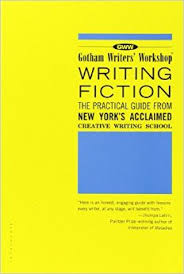
5.) Writing Fiction from the Gotham Writers’ Workshop: This book is one-stop shopping for the fiction writer. Besides offering lessons on writing, it presents exercises to help one get down to the nitty-gritty. It explores character development, plotting, pacing, dialogue, revising — i.e. the whole ball of wax. While the book offers the advice of many and varied experts, it uses a Raymond Carver story [which is included as an appendix] as a connective tissue across the various chapters.


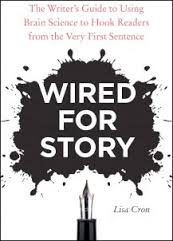
4.) Wired for Story by Lisa Cron: Cron explores what it is about stories that appeal to the human brain, and how to take advantage of such knowledge in crafting effective stories.


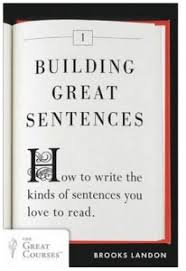
3.) Building Great Sentences by Brooks Landon: I bought the audio course from The Great Courses that this book is based upon and listened to it many times over. Landon’s approach to sentence crafting resonated with me, and while it might seem overly technical as one is perusing the Table of Contents, the author’s use of examples and his manner of explanation is clear and informative.


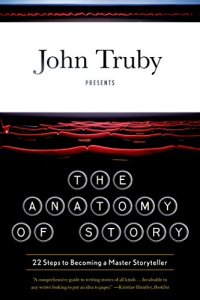
2.) The Anatomy of Story by John Truby: Like the GWW book above, this is a guide to crafting stories. However, while Writing Fiction gets into a lot of concrete details, Truby keeps a systematic emphasis on taking a flawed character through a course of events and decisions that will result in the character coming out of the story changed. Writing Fiction presents a greater diversity of views about what is important, but The Anatomy of Story offers a more cohesive approach to building one’s story.


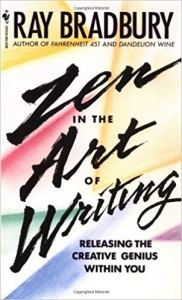
1.) Zen in the Art of Writing by Ray Bradbury: Ray Bradbury was, in my opinion, one of the best when it came to combining story-crafting and creative use of language. One gets a lot of the latter in this book. It’s not a guide in the sense that most of the books above are. It’s inspiration — explicitly, and by example.

BOOK REVIEW: Deciduous Qween by Matty Layne Glasgow

Deciduous QweenDeciduous Qween by Matty Layne Glasgow
My rating: 5 of 5 stars

Amazon page


This collection of [mostly] free verse and prose poems touches on nature, sexuality, and the loss of a mother. The poems are evocative and sometimes haunting, and they offer insight into experiences as specific as the author’s life as a gay man in Houston’s bayous and as universal as the loss of a loved one.

The collection is arranged into five parts. Each part continues the eponymous poem, “Deciduous Qween,” such that that poem acts as a connective tissue for the collection. The various parts each have their own unique feel.

As mentioned, sexuality is a major feature of this collection, and so readers sensitive to the subject should be forewarned. The fourth part is where the poems become explicit. In terms of graphicness, I’d put them in line with the more risqué works of Allen Ginsberg.

I found these poems to be poignant, heartfelt, and readable. I’d recommend the collection for poetry readers, particularly those who aren’t sensitive to matters of sex and sexuality.

View all my reviews

BOOK REVIEW: Venus in Furs by Leopold von Sacher-Masoch

Venus in FursVenus in Furs by Leopold von Sacher-Masoch
My rating: 4 of 5 stars

Amazon page


This novella revolves around the relationship of Severin and Wanda. Severin is obsessed with Wanda (the titular “Venus in Furs”) to the extent that he seeks to deify her and to submit to her as a slave. The problem arises that Severin can only take this proposition to a middle ground. He isn’t contented with a traditional spousal arrangement, but yet he is unable to submit to the fullest extent of what it means to be enslaved. He, as have many others, believes that if he submits himself fully, he will become the center of Wanda’s world and she will have no need of other relationships. And, as it has for many others, this “domination through submission” scheme frays and fails in time.

Wanda, for her part, recognizes this disparity and is conflicted about the idea of having a slave. Her rational mind thinks it’s a bad idea, her own cravings are for a man with a more commanding personality, but her hedonistic pleasure centers find it a not altogether objectionable state of affairs. After an extended period of spurning the proposition, she goes all in and agrees to test the proposition. If she is reliable, she does this in order to teach Severin a lesson – though one can never tell about the reliability of claims on motive, particularly when made by a character who is conflicted. What is clear is that Severin’s desire to be both her man and her slave is untenable because what she wants in the former is not seen in the latter. As the story unfolds, Severin is exposed to greater and greater challenges to his ability to maintain the façade of slave.

This novella, first published in 1870, is a bit slow-moving, particularly in the early part of the arc. However, it is an interesting study in psychology and how mismatched motives kill relationships. If it seems intriguing, read it, but it’s not a premise everyone will find intriguing. Some will find it disturbingly kinky, though — it should be noted — others will find it far too tame and lacking in explicit sexuality for a book about an intimate relationship.

View all my reviews

BOOK REVIEW: All Systems Red by Martha Wells

All Systems Red (The Murderbot Diaries, #1)All Systems Red by Martha Wells
My rating: 5 of 5 stars

Amazon page


This novella’s protagonist is a security cyborg that is corporately-assigned to protect a survey team of human scientists. What makes the story intriguing, not to mention humorous, are the features that we consider human frailties that are witnessed in the thoughts and behaviors of this cyborg. There is his discomfort in interacting with humans. He refers to himself as a “murderbot” and displays some of the awkward mannerisms that are familiar to me as an introvert, though — in this case — they aren’t so much about being easily overstimulated as being uncomfortable with the fact that humans see him as giant robot with great capacity for violence. (Hey, it dawns on me that maybe it is the same with me.) The Murderbot also displays the human traits of laziness and desire to be entertained, and is often watching serial shows when an ordinary robot would either be doing work-a-day tasks like downloading protocols or would be off-line.

The most salient human trait is that he bonds – if awkwardly — with part of his team, and – even though he’s lazy by nature – he goes to great lengths to make sure they survive. Because the Murderbot is notably lazy, the reader must consider whether his willingness to put his life on the line comes from something beyond his protocols. The reader doesn’t know to what degree the cyborg is free, though we do know it has hacked the governor unit that overrides autonomous functions, and so one knows it’s freer than most units in its line of work. [Of course, “putting it’s life on the line” isn’t necessarily as solemn a matter as with humans because murderbots are notoriously difficult to kill, and can suffer severe damage and be quickly repaired / healed – provided they have access to the requisite facilities.]

I won’t get into specifics of story except to say that it takes place on a remote planet that is newly being charted, and the Murderbot’s team is one of a couple teams independently surveying different parts of the planet. Things go wrong and the Murderbot’s team of humans must find out who is the culprit, why said culprit has done what they did, and get out alive.

I enjoyed this novella. The subversion of expectations that comes from the cyborg being perhaps the most neurotic of the characters provides plenty of opportunity for humor, not to mention light philosophizing about the nature of being human and how trust forms. Readers of sci-fi will certainly enjoy this story, non-genre readers should give it a try as well.

View all my reviews

BOOK REVIEW: Second Nature by Michael Pollan

Second Nature: A Gardener's EducationSecond Nature: A Gardener’s Education by Michael Pollan
My rating: 5 of 5 stars

Amazon page


This isn’t simply a discussion of lessons of gardening, though it does tread that ground. However, Pollan uses that topic as a jumping off point to explore a couple of broader topics. First, what defines the American approach to lawns and gardens, which is clearly distinct from that of our Old-World ancestors / comrades? Second, what does it mean to say some approach is more or less “natural” in an ecosystem that has been shaped by the hand of man? As a neophyte balcony-container gardener, I was attracted to the book for its gardening lessons, but I found myself most provoked to thought by these other questions.

This book starts with an Introduction to set the stage and a first chapter that contrasts two approaches to lawn and garden that Pollan saw within his own family. The other eleven chapters are divided into seasonally themed parts. These parts – Spring, Summer, Fall, and Winter – touch upon the life of a gardener during each, respective, season.

The section entitled Spring discusses the challenge of getting plants to grow against the onslaught of competitors and consumers: animal, vegetative, and other. It also discusses mowing, the open approach to lawns found throughout America, and what the latter means for the former. (It has long intrigued me that many Americans who will pledge liberty or death, often aren’t so big on their neighbor’s liberty if said individual’s lawn gets to about four inches of shag.) Lastly, Pollan educates the reader about the gardener’s passion for compost.

The three Summer chapters explore what happens through the middle of the growing phase, including the need to weed. Though Pollan explores the criticisms from the “keep it natural” camp. There’s a lot of discussion of the ideas of Emerson and Thoreau, and how they represented a change from previous thought on the garden. However, the first chapter in this section is about Pollan’s experiences with growing roses, a provocative subject among gardeners, apparently.

Fall is harvest season, but the chapter in this section that I found most intriguing was one about planting a tree. This is where Pollan brings the question of what it means to be “natural” to a head. He discusses a nearby piece of protected forest that was decimated by a tornado. There was an ardent debate between those who thought that nothing should be done with the land and it should be allowed to grow back however nature saw fit and others who thought intervention was necessary. The argument can end up turning a position on its head. What if one does nothing and the land is overtaken by a non-indigenous invasive species?

The last section has an amusing chapter on garden catalogs and how companies’s style and emphasis varies in an attempt to corner a segment of the market.

I enjoyed this book, and would highly recommend it not just for gardeners, but for individuals who have an interest in the interplay between nature and humanity.

View all my reviews

BOOK REVIEW: How to Write a Sentence by Stanley Fish

How to Write a Sentence: And How to Read OneHow to Write a Sentence: And How to Read One by Stanley Fish
My rating: 4 of 5 stars

Amazon page


The sentence is the unit of writing at which beauty resides. So, while sentences might not be the sexiest scale of writing, it’s worth learning how to do them well. Stanley Fish offers a book which explores why we should care about the sentence and what separates the good and bad of sentences, before it moves into investigation of various types of sentences.

The first four chapters lay the groundwork by explaining what it is about sentences that make them worth mastering, and then outlines what makes a good sentence (while simultaneously explaining how truly great sentence construction might not come about through the sources and approaches that one has been led to expect.)

Chapters five through ten examine a few different classifications of sentences. Chapters five and six contrast the subordinating style with the additive style. The former sentences are hierarchically arranged, while the latter offers the freer / less ordered approach. Each of the two approaches has its advantages. The former make up many of the pithy bits of wisdom transmitted through sentence, while the latter supports a streaming consciousness style of writing (if done well.)

Chapter seven considers satire by sentence. Chapters nine and ten turn to a different classification scheme: first and last sentences, respectively. Both first and last sentences are disproportionately remembered, and each has a unique role in written works. The final chapter is about sentences that are self-reflective.

Throughout the book, Fish uses sentences – some famous and others from famous works – to offer the reader exemplars of the craft. The general approach is a good deal less technical and more reflective than most books on the subject. This makes Fish’s book both more readable, but also more contentious (in as much as a discussion of sentences can be contentious) than related works.

I’d recommend this book for writers and those interested in crafting language.

View all my reviews

BOOK REVIEW: The Anatomy of Story by John Truby

The Anatomy of Story: 22 Steps to Becoming a Master StorytellerThe Anatomy of Story: 22 Steps to Becoming a Master Storyteller by John Truby
My rating: 5 of 5 stars

Amazon page


Whether a story works or not is often clear to small children and demented lunatics. Why a story does or doesn’t work requires a level of technical understanding not much less complex than that required to know why an internal combustion engine is or isn’t working. Why? Story structure rests invisibly below the surface (except to the writer and those who mine for it, and sometimes even to them,) and structure is where the story wins or fails.

John Truby’s book systematically explores what components are necessary to have an appealing story, and how those components are best arranged. It’s written for writers, allowing one to systematically proceed through the chapters in order to build a detailed outline of one’s story, but it could be beneficial for those who want to understand story in contexts other than writing (e.g. business uses, film-making, etc.)

As the subtitle mentions, Truby’s model of story revolves around a 22-step framework. It should be noted that this division is neither the only one imaginable, nor the only one that works. There are numerous great books on story available, and most have their own unique ways of organizing the details. While some authors focus heavily on screenplay versus the novel versus other story forms, Truby keeps his approach generalizable. Like others, he uses examples from both film and classic novels. Having said that Truby’s way isn’t the only way, it is a way that works, and it’s among the most popular works on story building.

While would-be writers may seek out books that focus on “concrete” issues, i.e. building character details, describing setting, plotting actions, etc., this book keeps eyes on the conceptual details that make or break a story. That is, the story consists of a flawed character with a need who experiences a chain of events or trials that results in him or her having a revelation and coming away changed. This is not to suggest that Truby doesn’t investigate issues like character development and creation of setting (there is a chapter each for those issues,) but he does so always with an eye to how one takes that character from a psychological and moral need through to a revelation, coming away somehow changed. I don’t want to make the book sound boring because it focuses on concepts like moral need, theme, and symbolism. Such concepts are what good stories are built upon. If one wonders why even movies with blockbuster budgets sometimes fail, it’s often because they lack such a conceptual framework.

The book consists of eleven chapters. The first sets up the idea of story and how stories work. The second chapter is about the premise of the story, the one-line idea that shapes the happenings of the story. Chapter three describes seven key steps of story, the seven are added to / expounded upon to develop the aforementioned 22 steps. The seven steps are: 1.) weakness & need, 2.) desire, 3.) opponent, 4.) plan, 5.) battle, 6.) self-revelation, 7.) new equilibrium.

The fourth chapter is about characters. However, it’s more about arranging characters in webs of interaction and considering them as archetypes in order to advance the story, rather than the usual types of advice on making unique characters. Chapter five is about the moral argument being made by the story. The hero’s path from need to revelation will reflect some sort of moral lesson. The sixth chapter is about story world, which other books might call “setting.” Again, the approach remains focused on advancing the story, and not on picking a time and place that seems neat or interesting for their own sake.

Chapter seven delves into territory that one doesn’t see in every book of writing advice, and that’s symbolism. The chapter describes building a symbol web that – like the story world – advances the feeling one is trying to create in the story. Chapter eight is about plot, and it fleshes out the seven key steps mentioned above to offer the full 22-step model. Chapters nine and ten discuss scene, the individual events happening in a story at a given time and place. The first deals with what Truby calls “scene weave” or how scenes are organized to create optimal tension. The penultimate chapter is about how individual scenes are constructed to advance the story. Chapter ten also explains how dialogue is most effectively written. The final chapter is a brief conclusion that explains how stories with good structure maintain relevance.

The book uses text-boxes, graphics, and notes as necessary.

I found this book to be tremendously useful. Truby spends a lot of time using well-known examples from film and literature to explore how the masters put together stories, and that benefits the reader greatly. 22 steps sounds like an unduly complex approach, but it works, especially as the focus remains so tightly on the hero’s arc. I’d highly recommend this book for writers, and anyone else who needs to understand story at a detailed level.

View all my reviews

BOOK REVIEW: Magic Mushrooms by Hank Bryant & Israel Bouseman

Magic Mushrooms: The Psilocybin Mushroom Bible – A Guide to Cultivation and Safe UseMagic Mushrooms: The Psilocybin Mushroom Bible – A Guide to Cultivation and Safe Use by Hank Bryant
My rating: 4 of 5 stars

Amazon page


As a neophyte on the subject at hand, I can’t say how many books are on the market on this subject. However, I’ve read one other (one I’m led to understand is famous in relevant circles, entitled “Psilocybin: Magic Mushroom Grower’s Guide” by O.T. Oss and O.N. Oeric [pseudonyms / nom de plume for the McKenna brothers]) and I will say that I found this book to be a more beneficial read. Only part of the advantage of this book is to be found in its more substantial length. The McKennas’ book was more narrowly focused on cultivation, and to the degree it touched on other aspects of psilocybin mushrooms, it engaged in a more mystical approach. What I liked about Bryant and Bouseman’s book is that it takes a scientific approach and a pragmatic tone. Also, it seems to be one-stop shopping for anyone interested in the how-to of psilocybin mushrooms, even if one doesn’t intend to cultivate one’s own.

This book is divided into four parts. The first part of the book is designed to give the reader an understanding of what psilocybin mushrooms are, what varieties they come in, what effects they have, and how they can be safely used. It should be noted that this doesn’t mean that the sum of all knowledge is provided. The authors repeatedly state that the best practice with respect to both foraging / identifying as well as consuming these mushrooms is to have an expert on hand. There is only so much that can be passed on by way of a book, and picking mushrooms as an amateur can result in deadly mistakes. (Which is not to downplay the advice to have an experienced guide, but knowing oneself goes a long way for an inexperienced consumer – whereas being an inexperienced forager can get you killed.) The book does provide descriptions and pictures for a variety of the most common psilocybe species to give the reader an idea of the differences. The first part of the book is useful whether the reader has any intention of engaging in fungiculture or not.

The rest of the book, is geared toward those who have an interest in how mushrooms are cultivated. Part II discusses the basics that might be employed on a small scale at little cost by an inquisitive beginner. There is more sterilization than one might expect, and the book describes the equipment (e.g. pressure cooker) and processes that must be applied. (Compared with gardening, with which I have a little experience, mushroom cultivation involves some amount of added complexity – though both this book and the other suggest it’s not a daunting process. And for gardeners who can their produce, it’s probably not much more extensive.) Part III delves into more advanced techniques for those who are considering growing on a larger scale, over a longer / continuous span, or outdoors. This book offers a number of more options on varying scales than the McKenna brother’s book. However, the processes seem quite similar. That said, I can’t really comment on the technical merits of any approaches to fungiculture, and I presume from the clear and well-written instructions that the authors know of what they speak.

The last part of the book discusses problems that one can run into with these processes, as well as the varying legality across the US and abroad. (The latter is bizarre and changing landscape. In many places having and consuming mushrooms is perfectly legal, but if the psilocybin or psilocin were extracted and put into a capsule it would become a Schedule I drug with immense potential consequences. Which is how it is where I currently live.) The last section also has sources for additional information.

The book has graphics (drawings and photos) as are quite beneficial in a book of this nature. I found the graphics to be clear and well-presented.

I’d highly recommend this book for individuals who are interested in exploring fungiculture. For those who aren’t interested in cultivation, part I will be quite useful as will be much of part IV. (Though there may be books that are more focused on non-agricultural issues, if that is your case.)

View all my reviews

BOOK REVIEW: Intimate Ties by Robert Musil

Intimate Ties: Two NovellasIntimate Ties: Two Novellas by Robert Musil
My rating: 4 of 5 stars

Amazon page


This volume collects two recently-translated novellas written by the Austrian author, Robert Musil. Originally published in Musil’s native tongue in 1911, the novellas in question are: “The Culmination of Love” and “The Temptation of Silent Veronica.” Both novellas revolve around a woman tormented by love relationships and indiscretion. In the first, the woman is haunted by marital infidelity, and in the second, the titular character is entangled in an unconsummated love triangle gone awry.

While I can’t speak to how true the translations are to the original, I will say that the language is beautiful and is the highlight of book. However, these works shun story, and so readers of popular fiction will find them unengaging, and may come away thinking that the book’s greatest feature is its brevity. I will say, that “The Temptation of Silent Veronica” was more pleasurable to read as it built up some tension. Readers of prose poetry may enjoy the play of words and emotional content of these novellas.

For readers of literary fiction and prose poetry, I would recommend “Intimate Ties.” However, I suspect readers of popular fiction will find the book tedious. Particularly, likely to think so are those who pick up the book thinking it is romance or – even more so — erotica. While the themes revolve around love and relationships, the “action” is more in the character’s mind than in the bedroom.

View all my reviews

BOOK REVIEW: Beyond Weird by Philip Ball

Beyond WeirdBeyond Weird by Philip Ball
My rating: 4 of 5 stars

Amazon page


Quantum mechanics is so mystifying and baffling that I even misunderstood the title of Philip Ball’s book on the subject at first. I thought “Beyond Weird” was being used as is in, “twelve miles outside of Weird, almost all the way to ‘Incomprehensibly-bizarre-burg,’ is where one finds quantum theory.” About two-thirds of the way through the book, I realized that what he meant was that it’s time to move beyond thinking of the subject as one that – while it works well for the technologist’s practical purposes — is impossible to make any sense of with the human mind. [Perhaps the author wants to move “Beyond Weird” because the popular descriptions of quantum mechanics paint a picture that’s hard for the average reader to differentiate from magic – i.e. things popping in and out of existence inexplicably, things seeming to be in two irreconcilably different states at once, particles interacting instantaneously across light-years, etc. It all sounds like the stuff of a Harry Potter novel.] Who knows, maybe Ball meant “beyond weird” in both ways, like a quantum object is said to be both particle and a wave. (Though Ball weakly rejects that notion as untrue, though stating that sometimes it might as well be true.)

What is weird about the quantum world? To oversimplify, one can think of three interconnected conundrums. The first set of challenges I’ll group together as measurement problems. This includes both the fact that observing evidence of a quantum object cannot be done without influencing the nature of that evidence, and the fact that measuring one characteristic may limit the accuracy with which one can measure another. The second challenge, which derives from the first, is often called wave-particle duality, and it’s the fact that evidence of the same entity or object may sometimes suggest it’s more particle-like and other times that it behaves in a more wave-like fashion. [As is famously observed in double-slit experiments.] A third counter-intuitive fact is quantum entanglement, which is observed when one quantum object is observed and another that has become entangled with it instantaneously displays a corresponding measure. [The reader will note that, even after reading the book, I’m sure that I’m not describing these ideas in nearly sufficient precision to make them truly accurate. And still I’m writing convoluted sentences in attempt to give it my best shot to accuracy. And that’s just how confusing the topic is.]

Because the world behaves oddly at a quantum scale when compared to the world we see (the one that is governed by classical physics,) many paradigms have been established to try to convey what is happening to non-specialists. These models are necessarily oversimplifications. A lot of what Ball does is to try to wring a tiny bit more clarity out of what goes on at the quantum scale by describing in greater detail what is true, false, or under contention about what we “see” in quantum objects. This is how Ball comes up with chapter titles such as: “Quantum objects are neither wave nor particle, (but sometimes they might as well be.” Or, “Quantum particles aren’t in two states at once (but sometimes they might as well be.)” The first half of the book is mostly spent trying to clean up the public perception of quantum mechanics a little. Completely clarifying the subject isn’t yet possible. If it was, the value of such a volume would be minimal.

In the second half of the book, Ball gets into the influence of quantum mechanics on technology (and, in particular, tries to give the lay-reader some concept of what is being talked about when technologists talk of quantum computing.) He also explores some of the theories that are being pursued in the halls of academia to try to make sense of the parts of quantum mechanics that we can’t yet wrap our heads around. This includes the many-worlds interpretation in which each [“decision”] event results in a schism of the universe, such that Schrodinger’s — much misunderstood — cat isn’t in a super-position of alive and dead, but is alive in one branch universe and dead in the other. The book ends with a chapter entitled, “Can we get to the bottom of it?” There is hope that once we are able to look at the subject from the right angle, it will all clear up. Humans do have difficulty making sense of scales that are smaller or bigger than those of our daily experience, as well as time scales shorter than we can notice or longer than we live. We are viewing the world through frames, and those frames create – in a sense – blinders. Some scientists hope that one day we’ll be free of whatever frame (e.g. inability to experience all dimensions of space, time, or space-time) is limiting our capacity to understand the quantum.

As one would expect of this type of book, there are graphics, notes, and a bibliography.

My primary interest in quantum mechanics involves its implications (if any) for consciousness, and this is not a subject that Ball gets into in much detail beyond discussing Eugene Wigner’s views on the subject and touching on the ideas of David Bohm. Wigner was a Nobel Prize-winning scientist who believed that consciousness caused wave-form collapse. It should be noted that there are many scientists who feel that there is no need to think consciousness exerts any influence outside the skull of the conscious one. However, it remains an open question, and it’s not clear whether those who reject it have much better ideas or just have a knee-jerk reaction to that which might halt the onward march of the Copernican revolutionary norm. Though ideas at the interaction of consciousness and the quantum are not explored in great detail in Ball’s book, I still found it of use for edging a little closer to what goes on at a quantum scale than past popular science books have gotten me.

I’d recommend this book for the non-physicist who wants a little better grasp on quantum theory. It’s readable and helps separate wheat from chaff with respect to popular models of quantum mechanics.

View all my reviews