BOOK REVIEW: District and Circle by Seamus Heaney

District and CircleDistrict and Circle by Seamus Heaney
My rating: 5 of 5 stars

Amazon page


“District and Circle” is a collection of 44 poems by the Nobel Laureate Seamus Heaney that was released in 2006.

One feels the essence of the 20th century across this collection. There are a couple of poems that refer to World War II, not from the perspective of crucial events and violent clashes, but as it was experienced in “the District” (e.g. “Anahorish 1944.”)

There are also a number of poems that make industrialization romantic or—at least, in some way–evocative. Heaney writes of mechanical devices and processes in a way that many great nature poems are composed (e.g. the first poem in the collection “The Turnip-Snedder.”) In fact, it’s almost like industrial haiku. It doesn’t share the brevity of Japanese form, but it removes the extraneous and deals in only what one can experience with the senses. In that way, one can feel the heft of these objects. They aren’t cheap, flimsy plastic, but wood and iron and brass. There are also some lovely nature poems.

Heaney’s use of language is resplendent. It’s not just the description, but the sound. I’ve even found myself thinking, “I don’t know what that word means, but—damn–it sounds gorgeous right there.”

The poems range from several words to a few pages in length, with most fitting on a single page. It’s about 80 pages of beautifully composed poetry.

I’d recommend this book for all poetry readers.

View all my reviews

POEM: Great Characters in Literary History I

Call me Ishmael.

And if you write me

send it by fish mail,

addressed: high seas.

POEM: The Missing Link

cafe_cellphone

I called you on the telephone.

It turned out weren’t at home.

“How can this work, if you won’t pick up.”

I messaged, sipping coffee from my cup.

“I’m right here,” a voice did say.

A hallucination as clear as day.

This was no time to go insane.

Hitting redial, I tried her in vain.

No answer. I feared I’d become unstable.

“Hey, lunkhead, I’m right across the table.”

The voice matched by a pounding sound.

The angry poltergeist had me spellbound.

Then a splash of water hit my face.

Lashing out, angered at the disgrace.

“Oh, hey, how long have you been there?”

Rolling her eyes in a dumbfounded stare.

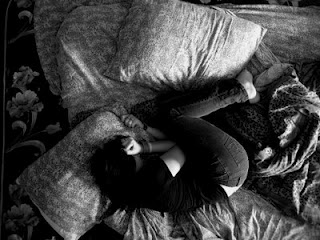
POEM: Mind Gravity: or, The Heft of Mental Putrefaction

depression-in-bed

Gravity pulls her head down into the pillow.

Like tar through a garden hose, thoughts flow.

Thoughts weighty, not freed of mass and matter.

As stuck in time and lost to reason as the Hatter.

Thoughts arise because they’re lighter than air.

Hers fell sodden, a lead balloon in the state fair.

The infection arose from a single putrid notion.

One drop floating free to fester across an ocean.

That she wasn’t enough. Enough for whom? Enough for what?

Unanswerable questions that congealed into a sluggish pus.

They say truth has weight, but truth lifts one to fly free.

What pulled her head to pillow was the mass of negativity.

As her thoughts hardened into a slag, devoid of truth or reason.

She summoned the strength for a search in her final season.

She scoured the four corners of the Earth for a fabled cure.

But it lie in a place close at hand, but vastly more obscure.

POEM: Kettle

an old tea kettle

bottom rusted through

sits propped on spout and shoulder

a vision of civility

kicked into the dystopian wasteland

Poem: APC

Armored Personnel Carrier

10 tons of angry seaweed green, a weighty sight when

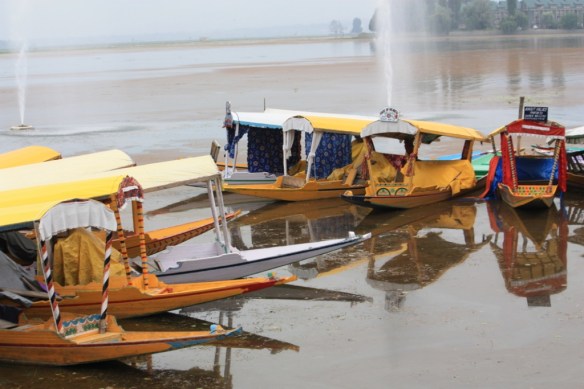
viewed from Dal Lake in a languidly rocking shikara

the APC’s slits, the narrowed eyes of a suspicious lover

the shikara’s school bus yellow contrasts with the drab compound

that the APC guards

an abandoned hotel, confiscated and re-purposed

makeshift sheet metal walls topped with coils of concertina wire

Beirut, bullets swapped for rocks

a ramshackle guard tower of framing timbers and plywood

is painted green and draped with a camo netting

that serves only to create shadows

&

remind the guards they are still in the Army

camouflage that doesn’t blend with a decrepit block hotel

transformed into a hive of paramilitary activity

Shikara on Dal Lake

Shikara on Dal Lake 

POEM: Tomb

thick-walled tomb

a slapping hand, numb and beet red

all sound absorbed

nothing passes

but a tremor

knocking loose a grain of sand

one sand grain for all the frantic panic

for all the screaming, kicking, and pounding

a grain of sand no one will miss

it’ll hit the earth without a shock wave

it’ll tumble into a pile of its kind, becoming indistinguishable

it’ll happen in the space between heartbeats

all that frenetic energy eaten by stone

the sum of a human life force in its final throes

muted by a tomb

POEM: the god of abstraction

tree on one corner

on the other a shrine

they hedged their bets

stood astride the line

they sealed their letters to the holy ghost

and slipped them in the midnight post

afraid of what their friends would say

if they mailed them in the light of day

each one believed in the abstract

a realm free of the force of fact

but when that ghost began to ride

they laced their cakes with cyanide

better to be crazy amid false gods

than run the table and play the odds

A Tongue-in-Cheek Poem

I know you feel my sex appeal

despite the lack of earnest squeals.

You should know, despite my glow,

the fans rarely stop to say, “Hello.”

Am I not a rockstar, superhero

because my visibility ranks near zero?

In this hour of superpowers

I think I’ll stop to sniff the flowers.

POEM:The Door

img_0939

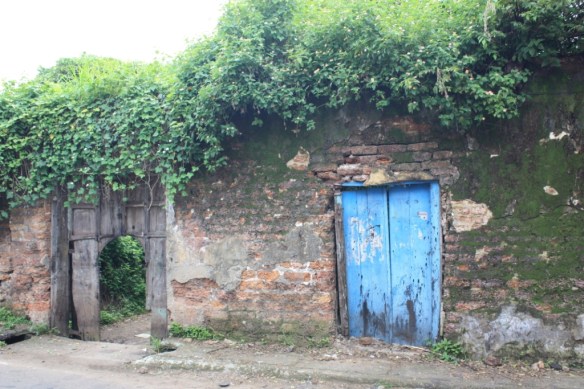
The door:

rusty hinges

weathered wood

rhomboidal sag


The lock:

clunky brass

formidable

sturdy, shiny, and

out-of-place


Who puts such a sterling lock

on such a pathetic door?


Who could be blamed

for lifting the lock

to feel its heft?


But when the slightest touch

tore the rusty, pointy wood screws

out of the door frame’s rotten wood,

it felt like a burglary in process.


But what could be worth burgling

behind such a sad, worn door?


The only thing worth thieving was the lock,

but it had a rusty hasp & staple dangling from it.


And a lock without a key is a paperweight.

One needn’t turn to a life of crime for a paperweight.

For the defining characteristic of a

paperweight

is that it be able to sit in place

and not go wandering about.

Anything but a cat can be a paperweight.


The door creaked when I looked inside.

I had to look inside.


Who wouldn’t look inside

to see what was worth guarding

with a big brass lock?


Inside: pure darkness.

Except the back wall,

where light strained through

cracks & slats.


I took two steps into the inky murk,

and plummeted down my own personal rabbit hole.