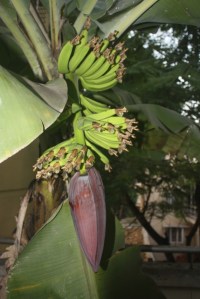
bounces on a banana-laden stalk
your long leaves
twist & tear
like the Tacoma Narrows bridge
when wind whips over
every annum
foliage falls
stalk sags
yet you will rise and be reborn
bounces on a banana-laden stalk
your long leaves
twist & tear
like the Tacoma Narrows bridge
when wind whips over
every annum
foliage falls
stalk sags
yet you will rise and be reborn

lost city
buried in
time
by
jungle
someday
your metropolis
will be
crumbled
&
overgrown
but we’ve
forgotten
how to
forget
all that is known
is locked away
&
shot into space
a call
to the heavens
but forgetting
is a laudable skill
&
therapeutic, too
sniffing mouse
waggles its sniffing nose
turns & retreats
cheep-cheep
baby bird calling
no answer
steaming coffee
lazy tendrils
curl idly
overcast
Prague skies above
faux winter
Chase me down ’round the bend
All great men seek amends
When they’re caught red-handed,
&
their clan is disbanded
They throw into dark tides
time-wrecked, busted past pride
lost to all foreign shores
like
sand-sunk litter of past wars
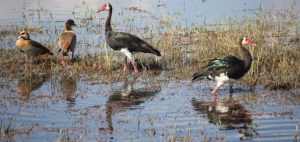
hawk’s spiral swoop
snatches a sack skyward
morsels spilling
crow tugs rat carcass
like a combat comrade
cursing pal’s flab
Maribu meeting
looks formal: coat and tie
civil as Congress

you’ll some night die
frost in your beard
you’ll some night die
trudging through snow
you’ll some night die
presaging numbness
you’ll some night die
smelling the smoke
of a cabin unseen
wondering where
that heat source lies
you’ll some night die
one winter night
in life’s autumn
subterranean
take a thick slab wall &
bury it deep underground
a tomb smothered by tombs
rat squeak reality check
is the only sound one knows
except… when they come
when they come
there’s the warning squeal
of the rusty hinge of a metal door
faint means it’s another cell
a melange of guilt & relief
tingles about one’s skin & viscera
but when the squeal is
like a plow furrow
rutting up one’s spine
they’ve come for you
bobbing up and down
lulling one to reverie
waves lap sans a sound
ride the wave
float the tide
you’re energy’s slave
til the day you die
The walls throb and gargoyles attack
an hour into midnight climax.
Pipe cleaner Kama Sutra twists
chronicled indiscretion lists.
His hand dissolves into puddle.
Giggling; he’s become befuddled.
She’ll take him for a midnight ride
while with acid he is plied.
A night to remember, he will have lost
until the Polaroids do accost

 How to Read a Poem: And Fall in Love with Poetry by Edward Hirsch
My rating: 5 of 5 stars
If one were to judge solely by the mundane title, one might expect this to be a different book—i.e. more along the lines of “Poetry for Dummies.” That’s not what Hirsch is offering with his book. There’s plenty of opportunity to learn to differentiate pentameter from tetrameter or a lyric from an epic poem, but the book isn’t arranged according to such fundamentals. It might even take one a few pages (or chapters) to realize there is an organizing structure. But you’ll get there because of the author’s contagious passion for poetry and his presentation, and an analysis, of many beautiful poems by masters such as Keats, Yeats, Whitman, Dickinson, Frost, Neruda, and many others–more ancient or modern and equally or less well-known. In the end, you’ll think of poetry in a new light.
The book is arranged into 12 chapters, each of which looks at poetry from a different dimension. Chapter 1 considers the poem in two ways. First, it emphasizes the importance of the reader, i.e. the poem is presented as an interaction rather than an act of transmission. Second, the author considers how various poets have defined poetry, and what we can learn from said definitions—besides that poetry is defiant in the face of definition. (Like a wet bar of soap, the tighter one tries to grasp it, the less one succeeds.) Chapter 2 continues to investigate the nature of a poem using the framework of the word’s etymology, coming from the ancient Greek word meaning “to make”–thus the chapter title: “A Made Thing.”
Chapter three delves into the making of connections (or lack thereof) as a theme in poetry. As with most of the book’s chapters, it’s built around a small number of poems that elucidate the author’s point. In this case, poems by Keats, James Wright, and Baudelaire are used to describe cases in which a human connection is sought, in which it momentarily exists, and in which it is shunned. As is true of other chapters, this doesn’t mean that these three poems are all that are mentioned. It’s just that they are given in-depth analysis, while other poems and fragments are referenced to help illustrate points.
Chapter four is entitled “Three Initiations” and it introduces three types of poetry through quintessential examples. The three types of poems are: 1.) poetry of trance; 2.) poetry of praise; and 3.) poetry of grief. The latter two may be more easily grasped than the first, which are poems that convey an altered state of consciousness.
Chapter five examines the subject of authenticity and vividness in poetry and how poets convey such genuineness—even by way of surrealism. The classic example is Shakespeare’s sonnets that mock Petrarchan sonnets in suggesting a less hyperbolic form of love letter (i.e. Sonnet 130, “My mistress’ eyes are nothing like the sun”)
Chapter six is entitled, “5 Acts,” and, as such, it covers five different subjects through the motif of a play. This first act is about opening poems or introductory soliloquy. The second act is about drama and its role in verse, and is heavily influence by a quote from Robert Frost (i.e. “Everything written is as good as it is dramatic.”) Act three is about what might be called “character” in the scheme of a play, but is really about the personhood of a poem. Act four delves into the topic of dialogue as a poetic tool. The last act is about concluding poems / death poems—as exemplified by Bashō’s deathbed poem and the postcard poems written by Miklós Radnóti on a Holocaust death march.
Chapter seven considers desolation as a theme in poetry. The next chapter places poetry in the context of history, using Polish poetry of war and Holocaust to convey the emotion and numbness of tragic events. Chapter nine proposes a nexus between art and justice, and looks at how this is displayed through jeremiads and political poems. The two core examples of this chapter are a work song by Sterling Brown and an ode by Pablo Neruda.
Along with chapter four’s “poetry of trance,” I found chapter ten’s discussion of poems that transport the reader to a moment of epiphany–or ecstatic / transcendental experience–to be particularly fascinating. There are a couple modern pieces that Hirsch presents herein, but some work by Dickinson introduces the topic and truly shows how it’s done. Chapter eleven presents the soul as a poetic theme. The poem gives substance to that which is inherently insubstantial, but which is somehow essential and beyond refute. Walt Whitman’s references to the soul offer particularly vivid insight on this question.
The last chapter is a brief echo of the first, reiterating the role of the reader and the need for poetic definitions for poetry because any definition that tries to capture the medium in precise prose loses it as it’s reinvented countless times over. If one prefers a simple and direct definition of poetry—e.g. writing that displays meter and rhyme–this is may not be your go-to book. (You might prefer a book such as Fry’s “The Ode Less Traveled” that is more dogmatic about prosody as the sine qua non of poetry.)
As for ancillary material, there is a huge glossary. It’s huge not by virtue of containing a vast number of words, but rather because it goes into considerable detail on most of the entries. There is also an extensive and thoroughly organized “recommended reading” section. The book also offers discussion questions for those who want to review or used the book for a book club or whatnot. There’s not much by way of graphics, except for one or two displays of visually oriented forms of poetry, but there’s no need of more than that.
I found this book to be insightful and I welcomed the unique way in which the author divvied up and evaluated the topic of poetry. If you enjoy poetry, or if you write it, there is much to be garnered from reading this book.