BOOK REVIEW: What If? by Randall Munroe

What If?: Serious Scientific Answers to Absurd Hypothetical QuestionsWhat If?: Serious Scientific Answers to Absurd Hypothetical Questions by Randall Munroe

My rating: 5 of 5 stars

Amazon page

If you like the tv show Mythbusters and snarky and / or silly humor, you’ll love Randall Munroe’s What If?: Serious Scientific Answers to Absurd Hypothetical Questions. Munroe gained internet fame (still not the same as real fame) drawing the popular webcomic xkcd. The book’s subtitle says it all. Munroe solicited questions from his web-legion (not the same as a real legion) of fans, selected a collection that he found intriguing, and answers them with a mix of science and humor. Munroe’s bona fides to answer questions of a technical nature include a degree in physics from Christopher Newport University and a brief career as a roboticist for NASA—though he’s fond of pointing out that he’s just a web-cartoonist whenever his answers might be wrong.

Each chapter presents a detailed answer to one of the absurd hypothetical questions. Most of the chapters are just a few pages long and feature the same variety of stick-figure cartoon that grace the xkcd website. He covers 60-ish questions in the book. Scattered throughout the book are sections called “Weird (and Worrying) Questions” which usually don’t receive answers but merely cartoons that mock the demented mind that came up with said question. (If that seems harsh, keep in mind that many of the questions he does answer are pretty warped (e.g. setting off a nuke in a hurricane or whether steady rising would result in death by freezing or suffocation).)

Like the Mythbusters, Munroe does an excellent job of selecting questions that have unexpected answers. For example, the author addresses the question of what would happen if one went swimming in a spent fuel pool (nuclear fuel rods are stored underwater for a long time after they come out of the reactor before they can go to dry storage.) The answer: Nothing if one swam near the surface, but if you swam down and touched the casks, you’d die in minutes. Munroe also takes liberty to find the more interesting unintended consequences embedded in some of the questions. For example, he dismissively answers the old question about whether every human on the planet standing as close together as possible and jumping so as to land simultaneously would have any effect on the planet. Instead, he takes on the questions of the logistics of getting everyone to one place, how much space humanity would take up, and how / whether people could get out of this state of shoulder-to-shoulder proximity alive.

Some of the questions are impossible to answer with certainty but Munroe takes them on when he can offer reasonable, scientifically-based speculation. For example, what will the area that is currently New York City look like in a million years? His answer is more or less: Who cares? Humans will be long gone and veins of plastic in past landfills will be the only evidence that we ever existed. Another such question is how much power can Yoda achieve through application of the Force?

Besides the many physics question (e.g. What’s the fastest speed at which one can hit a speed bump and live?), there are others that involve mathematics, chemistry, and biology. Mathematics questions include calculations of the likelihood that one would find his or her soulmate if each person really only had one soul mate. (My Indian friends might be pleased to know that we’d all be screwed if that were the case.) There are actually many questions that hinge on mathematical calculations.

One of my favorite chapters is in the domain of chemistry, and it answers what would happen if one tried to make a wall by collecting together blocks of all of the elements in the periodic table in the relative position in which they exist on the table? Answer: Nothing good. There are a few biologically centered questions as well. Munroe takes on the question of how much computing power human brains collectively have—and the more interesting unasked question of how human “computing” is different from that of machines.

I’d highly recommend this book for science lovers. In fact, even people who don’t care for science may find this book palatable because of its humor and the fascinating questions it addresses.

View all my reviews

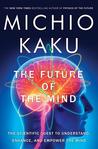
BOOK REVIEW: The Future of the Mind by Michio Kaku

The Future of the Mind: The Scientific Quest to Understand, Enhance, and Empower the MindThe Future of the Mind: The Scientific Quest to Understand, Enhance, and Empower the Mind

by Michio Kaku

My rating: 4 of 5 stars Amazon page

The Future of the Mind continues a line of inquiry that Michio Kaku has been following with his earlier books Physics of the Impossible and Physics of the Future. The central question remains: what sci-fi imaginings might come to fruition, which of them are impossible given the laws of physics in the known universe, and what breakthroughs or discoveries would be necessary to achieve the achievable. Technology is the inevitable gateway to these advanced breakthroughs. Humanity has eliminated gross evolutionary pressures through technology—this might not remain true, but we can certainly not expect X-men style mutations as a result of the foreseeable progression of humanity (which is more likely to be described by the horrible—though probably presagious 2006 movie Idiocracy than it is by the X-men movies.)

The theme of the book, as the title suggests, is the mind. As the most complex system that we know of, the human nervous system offers fertile ground for investigation. Among the sci-fi mainstays considered by Dr. Kaku are telepathy, telekinesis, false memories (think Total Recall), intelligence enhancement, mind control, artificial intelligence, and the nature of alien minds. Along the way he considers the challenges of reverse engineering the brain and whether consciousness could take a non-material form (e.g. embedded in a beam of light.)

As always, Kaku’s book is easy to follow, even for the scientific neophyte. Few others write on the topic with such clarity. While part of Kaku’s book deals with the same concepts covered by Roger Penrose in his book Shadows of the Mind, the Kaku book scores much higher in readability. Of course, the flipside is that Kaku’s book offers less explanatory power. So if one isn’t looking for pop science simplification, The Future of the Mind is probably not for you. However, if you want the jist of the science and have neither the background nor the energy to digest the mathematical and biological nuance, you’ll find this book readable.

Incidentally, Kaku is more optimistic about the ability to computationally replicate consciousness than Penrose, which the latter argues is impossible. Professor Kaku’s optimism runs through all of his books. He takes the stance that if one can imagine it–and figure out a technological or theoretical loophole around the known barriers –one can achieve it. Therefore, some of his discussion of what could come to pass depends upon theories about, for example, black-holes being true. It should be noted that Kaku is quite clear about the differences of opinion that exist about these theories and the role that differences between theory and reality could play in making science fiction into scientific reality.

I enjoyed this book. I’ve been reading a lot about neuroscience lately—entirely on the pop science level- and found this book to be beneficial to my understanding of the subject. It begins by discussing what is known about the brain and consciousness—it turns out that a lot remains unknown, but the technology of recent years has vastly improved our understanding of the brain, and it continues to do so by the day. The book also delves into the depths of what could come to be. There is definitely pragmatic understanding to be gained as well as outlandish, but fun, science fiction ruminations.

For sci-fi fans and writers, it’s definitely worth reading. I had many new conceptions of the future as I read the book. (I might suggest reading Physics of the Impossible first, which gives an overview many “impossible” technologies and explains how few are just flat impossible regardless of technological development and scientific discovery. My review of that book is here.) Many of the ideas covered may seem a bit eccentric, such as what first contact with an alien race would look like. (Kaku is of the notion that the transmission of an immaterial consciousness(es), possibly in conjunction with self-replicating machines would be the likely shape of such an alien presence.)

I recommend this book for almost anyone. We are really only beginning to venture out of the dark ages understanding the mind, and this book provides an interesting map what might be possible.

As I mentioned it, sadly, this may be the more likely future of the human mind:

View all my reviews

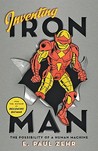
BOOK REVIEW: Inventing Iron Man by E. Paul Zehr

Inventing Iron Man: The Possibility of a Human MachineInventing Iron Man: The Possibility of a Human Machine by E. Paul Zehr

My rating: 4 of 5 stars

Amazon page

As the title suggests, this book examines whether Iron Man could exist in the real world. As with Michio Kaku’s book Physics of the Impossible, answering the question involves defining the various meanings of “impossible.”

One way to parse the question is, “Is Iron Man possible today given the existing state of technology?” In and of itself, this question is of limited interest because the answer is, “no.” There’s certainly a demand, and so if Iron Man could exist given current technology, he probably would. That’s not to say it isn’t interesting to learn about what technologies are holding us back and where the cutting edge of relevant technologies lies—both of which are addressed by the book.

Still, a more interesting inquiry is, “Will Iron Man ever be reality given the physical laws that we know to govern the universe?” While more intriguing, it’s also a harder question to definitively answer. It’s impossible to foresee all the technological developments that might come along to answer the seemingly insurmountable challenges (e.g. Tony Stark’s inevitable Traumatic Brain Injury (TBI).) The book deals with the critical question of what challenges would have to be overcome for Iron Man to be reality.

As Zehr suggests, the appeal of Iron Man is that he’s considered to be among superheroes for the common man. Like Batman, the sufficiently bright and diligent nerd may fantasize that, “That could be me.” You or I can’t be Superman or Wolverine, but given enough money, smarts, and training we could be Batman, or—even better—pilot the Iron Man suit. Put in this light, the book may seem like just another frivolous attempt to capitalize on the popularity of superheroes to sell books. However, there’s actually a great deal of food for thought packed in the book. Like others, I read the book because its title is Inventing Iron Man and not Neuro-motor control of a self-propelled armor system or some other suitably scholarly title.

Dr. Zehr has the bona fides to delve into this topic. He is a Professor who investigates questions of how the nervous system controls movement. That subject may not constitute the sum total of critical concerns, but it’s one of the most important challenges. For Iron Man to move the way he does in the movies and comic books, Tony Stark’s impulses to move have to be transmitted seamlessly to the servo-motors that move the suit. From dodging Col. Rhodes’ (i.e. War Machine’s) punches to ducking RPGs, Stark can’t be quick enough if he has to manually steer the device. Then, of course, there’s the issue of feedback. Any neophyte meditator who’s had his or her foot fall sound asleep will know how difficult it is to walk surefootedly when one can’t feel anything through one’s foot.

[Iron Man 3 spoiler commentary in this paragraph.] One of the most damning challenges for making Iron Man a reality is the high probability of severe concussions. Let’s say you make the suit out of a material that is virtually indestructible? This may be possible. However, the pilot’s mushy brain is still sloshing around inside that impenetrable armor. One can remotely pilot the suit in order to negate this (as has been done in the comic books and the third movie), but—at that point—is it still Iron Man? I know from a writer’s perspective it’s a lot harder to maintain tension if there’s nothing human on the line. In the third movie about 30 autonomously piloted suits get wiped out and the viewer doesn’t care—the only source of tension is that Tony Stark is without armor half the time.

Some of the most interesting discussions are about where the current state of the art lies with respect to: a.) direct mind control over mechanical systems; b.) a “flying suit”; and c.) robotic movement enhancers. Zehr conducts interviews with those engineers and technologists involved in such technologies, and finds out where we are presently. Letter “a” above seems to be the least developed of the three technologies, but they are all active lines of research.

I enjoyed this book and found it interesting. I think anyone who is interested in the state of technology and its limits will find it a nice pop-sci introduction to the subject. The use of superheroes as a pedagogic device may be overdone, but it continues to work because we are fascinated by the edge of possibility, and that’s what superheroes represent.

View all my reviews

BOOK REVIEW: The Einstein Theory of Relativity by H.A. Lorentz

The Einstein Theory Of RelativityThe Einstein Theory Of Relativity by Hendrik Antoon Lorentz

My rating: 3 of 5 stars

Amazon page

It’s hard to complain about this book because: a.) it’s a free kindle book, b.) the author was brilliant, a Nobel Laureate, and a man whose work contributed to the discoveries of Einstein, and c.) it’s a very short book, clocking in at about 60 pages, and so it’s not a huge time investment–though for most it will be a bigger time investment than its page count would suggest.

All that being said, I’ll be upfront and tell you that his work is the product of a different era and doesn’t establish its audience clearly.

Science writing, particularly on subjects as arcane as relativity, is a challenge. One has to pick an audience and carefully write for that audience. If ones audience is broad (i.e. not well-trained in science), this means one has to accept a lot less precision in exchange for clarity. In other words, one has to write like Brian Greene or Michio Kaku do in their popular works. On the other hand, if you want to write for technical people, you should probably feel free to show your math and sling the technical jargon.

This book tries to walk a middle ground. It doesn’t lay the subject out in clear, simple, and entertaining analogies. (With the exception of a moving car analogy early on that gets bogged down.) However, there’re no equations or highly technical and jargon-suffused discussions. (Though the section on deflection of light does get into measurements and is bit technical.)

So the question the reader needs to ask themselves–provided they haven’t had physics since high school or their freshman year of college–is whether they are willing and able to grind through reading that will require them to think hard the whole way. One doesn’t need a big science vocabulary, and you aren’t asked to ponder any equations, but you do have to noodle out what the author is saying to get value out of the reading. As I implied earlier, this book (pamphlet) took me considerably longer to read than 60 pages normally would–and I read a fair amount of popular science works.

Of course, given that it’s free, it’s worth a try if you have a Kindle. If nothing else, you should come away with some basics– such as what differentiates special from general relativity. If you don’t like the book you can always buy a Greene or Kaku book to explain the subject in a more palatable fashion.

View all my reviews