Storied Lands [Sonnet / Idyll]

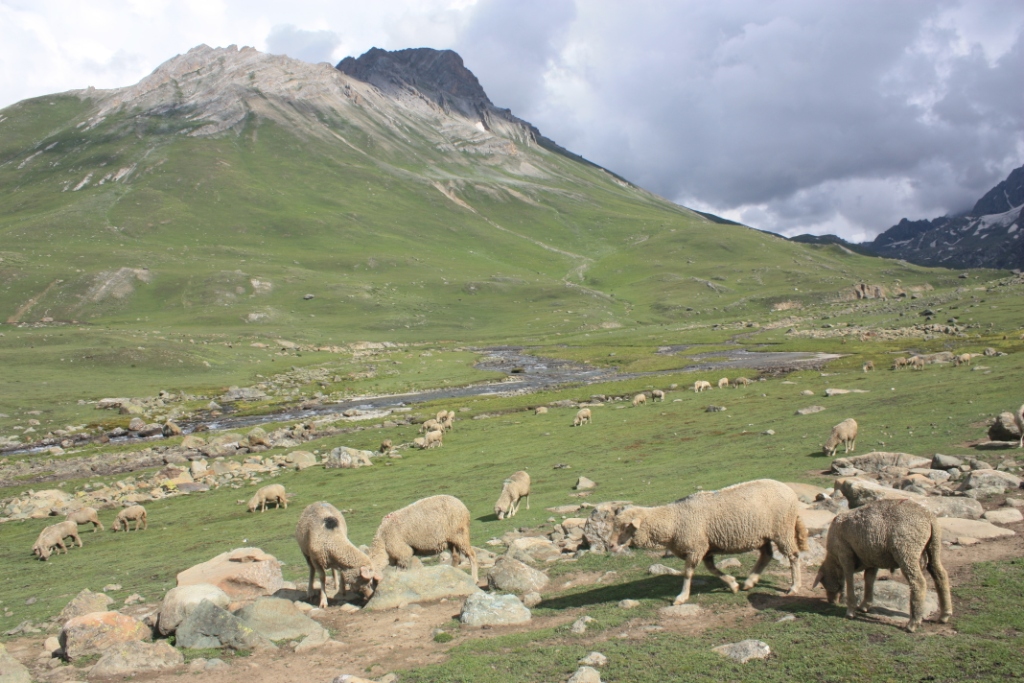
In mountain meadows, bleating sheep abound,
and green grass grows as high as their hunger
allows -- about as high as cricket grounds,
but I am lost in fantastic wonder.

It seems to me this is a storied land,
not merely grazing space, but where dragons
once flew, and one might see giants, firsthand --
a place that's never known a plow 'r wagons. 

It's where magic must once have arisen,
if ever such a place had existed --
where sparkling streams still burble and glisten
whose secret is kept ever tightfisted.

If you stumble into this storied realm
don't let its siren sight overwhelm.

BOOK REVIEW: Forest Walking by Peter Wohlleben & Jane Billinghurst

Forest Walking: discovering the trees and woodlands of North AmericaForest Walking: discovering the trees and woodlands of North America by Peter Wohlleben
My rating: 5 of 5 stars

Amazon.in Page

Out: April 26, 2022

Wohlleben’s “The Hidden Life of Trees” was one of those rare books that profoundly changed the way I looked at the world, and so I was eager to read his forthcoming work. This book is at once narrower in focus (i.e. intended to appeal to the North American market, specifically,) but also much much broader (i.e. reflecting upon not just the trees but the other species that reside among them as well as how humans can best get around within the forest.) It might seem strange for Wohlleben (a German forester) to do a book on the North American forests, and I suspect that’s one reason that his one-time translator / editor (Jane Billinghurst) became his co-author. [I don’t know where Billinghurst is from, but she does add many North America-specific vignettes to the book.]

Like “The Hidden Life of Trees” this book is packed with intriguing insights into woodland environments. The twenty-one chapters aren’t explicitly divvied up, but there’s a clear logic to the grouping of chapters. An opening chapter focuses on the importance of having a multi-sensory experience in the woods, and then chapters two through five are concentrated on trees and their various parts.

Chapters six through eight explore species that work on, with, and against trees, with particular focus on fungi and other species that break down and recycle forest material. Chapters nine and ten turn the attention to how to help kids get the most out of their forest experience. The next couple chapters consider how to get the most of seeing the forest at unconventional times, i.e. night and during varied seasons. Then there are a few chapters investigating how to observe other lifeforms of the forest, particularly animals and insects.

Several chapters follow that explore how humans can survive and thrive in wooded ecosystems, including everything from wilderness survival / primitive living skills to dressing to save oneself from ticks and chiggers.

I learned a lot from this book. As I mentioned, it’s full of intriguing little tidbits about the forest.

The opening sentence of the book’s Introduction did mention it being intended as a book one would take into the forest with one, and I would say it’s not that book at all. It’s the kind of book one reads before going out (and probably returns to after coming back) but it’s just not organized in such away to make it worth lugging around (i.e. it’s not like a field guide – set up to allow one to rapidly find what one is interested in on the fly.)

That said, you’ll learn a lot from reading it, and I’d highly recommend it.


View all my reviews

DAILY PHOTO: Two Views of Varkala Beach

Taken in March of 2016 at Varkala

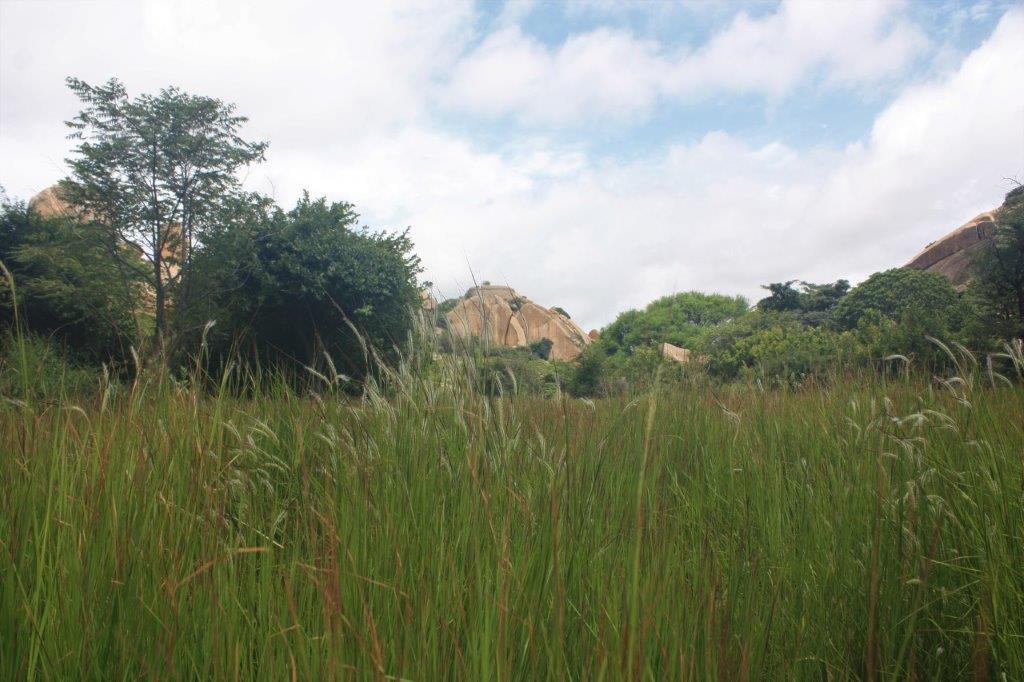
DAILY PHOTO: Walking in the Tall Grass, Chitradurga

Taken in Chitradurga Fort in September of 2021

Nearsighted [Haiku]

across the valley,
looms a majestic mountain...
if one sees that far

Still River [Haiku]

branch-draped moss
high in the treetops:
wind wiggled

DAILY PHOTO: Clouds Over Mountains, McLeodganj

Taken in June of 2015 above McLeodganj in Himachal Pradesh

The World Below [Haiku]

the pond reflects 
tiny things, yet makes the world
feel infinite

BOOK REVIEW: The Stranger in the Woods by Michael Finkel

The Stranger in the Woods: The extraordinary story of the last true hermitThe Stranger in the Woods: The extraordinary story of the last true hermit by Michael Finkel
My rating: 5 of 5 stars

Amazon.in Page

This book delves into the fascinating case of Christopher Knight, a man who lived twenty-seven years in central Maine without human contact. Knight survived by stealing food and other supplies from cabins and other unoccupied buildings in the area. By his own admission, Knight conducted about forty burglaries per year for the more than a quarter of a century he lived in solitude. In addition to providing a biography of Knight, his hermit years as well as his capture, his trial, and his challenging reentry into society, the book discusses the psychology and philosophy of reclusive living in some detail.

This book was riveting to me, in part because I’m pretty deep into introverted territory and I recognize some of Knight’s personality traits in myself, and even I can’t fathom how he managed that degree of solitary living over so many years. What seems to be most difficult for people to comprehend was how he lived with only a tent-like shelter through the Maine winters, sometimes below zero Fahrenheit, while never building a campfire. (He did have a propane stove, but wouldn’t build a fire for fear that it would bring the authorities right to him.) That is astounding, but what I find even more amazing is the psychology, how Knight maintained sanity with that degree of self-imposed isolation, prisoners in solitary confinement have gone stark-raving mad with shorter and less intensely solitary stints.

Another issue that makes Knight’s story so compelling is that in so many ways he wasn’t your typical hermit. While he seems to have been uniquely wired to thrive on solitude and had the intelligence necessary to problem solve his survival, he wasn’t a spiritual seeker; he wasn’t particularly a minimalist (he accumulated lots of stuff;) and he did listen to the radio, as well as listening to television shows over his radio. While he went to great lengths to ensure he didn’t come into contact with people and that his camp wasn’t found, it’s interesting that he did stay fairly close to people [granted that might have been entirely owing to the need to steal from them, but one has to wonder if proximity didn’t have other causes as well.] Knight is an engaging character, it’s hard not to have some respect – begrudging or otherwise — for his ingenuity and unique capacity for extreme solitude, but he’s also a felon whose burglaries disturbed a lot of people’s lives.

This is one of the most captivating books I’ve read in some time, and I’d highly recommend it.

View all my reviews

Light on Moss [Haiku]

morning light catches
the moss, and i see it for
the first time