BOOK REVIEW: Better Balance by Salamon and Manor

Better Balance: Easy Exercises to Improve Stability and Prevent Falls (Harvard Medical School Special Health Report Book 6)Better Balance: Easy Exercises to Improve Stability and Prevent Falls by Suzanne E. Salamon
My rating: 4 of 5 stars

Amazon page


Balance is one of those qualities that one takes for granted until it fails. Actually, given our bipedal stance, it’s extraordinary that we aren’t falling down all the time. Achieving a stable upright posture takes a lot of complex anatomy and physiology operating flawlessly. I picked up this book because I believe a yoga teacher should be cognizant of the range of capacities for balance that might be seen while teaching. If one teaches students in their 20’s to their 40’s, the need for balance modifications and capacity building might not come up much. It’s when one deals with the very young as well as older students that one sees flawed balance in large measure. [And—let’s face it—the very young can fall down 30 times, pop right back up each time, and be all the stronger for it, and so mature students are the major concern.]

This isn’t the first book in this series of Harvard Medical School Guides that I’ve read and reviewed, and probably won’t be the last. (see: “Your Brain on Yoga,” “Guide to Tai Chi,” and “Low Back Pain.”) I’ve found the series to be beneficial because it presents scientifically sound information, but isn’t afraid to give alternative approaches—such as yoga and tai chi—their due when the studies show that said activities are of benefit. This book is no exception. At several points the authors mention tai chi as being beneficial, and the book includes a yoga balance workout as one of the six that it contains.

The book is organized into 13 sections (i.e. chapters.) The first chapter describes how our vestibular (inner ear), visual, and proprioceptive (the nervous system elements that track where one’s body parts are) systems interact to keep us upright.

Chapter 2 presents an overview of a range of conditions that affect balance. Some of these influence balance specifically and exclusively, but many are conditions that one might not associate with balance problems though they’ve been shown to increase the risk of imbalance. There are sections about which medications have side-effects adversely affecting balance as well as what your doctor may be able to do about balance problems.

Chapter 3 is a “Special Bonus Section” and is of particular importance to mature readers or those who care for said individuals. The topic is preventing falls, and this section describes common causes of falls and offers checklists of considerations for setting up the environments in which those with balance problems will be active.

Chapter 4 introduces various types of activities that improve balance, and chapter 5 is a brief guide to considerations relevant to beginning a balance workout such as whether to consult one’s doctor and what safety precautions should be considered.

In chapter 6, the authors propose how balance workouts can be merged into one’s overall fitness plan. A lot of this chapter is an introduction to exercise—e.g. how much is needed, and what the benefits are. Then there are some tips about how to smoothly merge balance with other exercises.

Chapter 7 presents more specific considerations for beginning balance workouts. Unlike chapter 5, this section provides information about equipment, warm-ups, and how to interpret the instructions for the workouts. The latter is beneficial because the workouts are in a one page per exercise format, and this section negates the need to be needlessly repetitive.

The next six sections (chapters 8 through 13) are various balance workouts that are organized in an easiest to hardest format. The first is a beginner’s workout, which is performed with a chair—used for sitting in some exercises and as a prop in others. The second is a standing balance workout that features simple static balance maneuvers. The level of challenge is similar to that of the first workout, except that one is without a chair prop. The third workout adds in movement to help maintain balance through steps and motion. The next workout is similar but utilizes another prop, a 360 step (a circular step of similar height to the more common Reebok rectangular step, but circular.) The penultimate workout uses a pseudo-balance beam. The author’s mention a product put out by Beamfit, but other manufacturers produce a similar product. It’s a low, dense foam beam that sits on the floor. The last workout utilizes classic Hatha Yoga poses, and features both expected poses like tree pose (vrksasana) and others such as down dog (adho mukha svanasana) that might come as a surprise.

There’s a resources section and glossary at the end. The book presents many graphics, most notably photos of each of the exercises in the six workouts.

I’d recommend this book for anyone who needs an overview of the problems of balance and what can be done about them. It’s short, readable, and user-friendly.

View all my reviews

BOOK REVIEW: The Science of Breath by Swami Rama et. al.

Science of BreathScience of Breath by Swami Rama
My rating: 4 of 5 stars

Amazon page


This is an oldie, but a goody. The first edition came out in 1979, but as its intent is to provide an overview of the anatomy and physiology of breath for yoga practitioners, the fact that it doesn’t access the bleeding edge of respiratory science isn’t all that detrimental.

This short book consists of four chapters. Two chapters are by the famous yogi Swami Rama, and the other two are written by medical doctors. The first chapter is an introduction to breath from the yogic perspective. It both explains why it’s so important to understand and work with breath and introduces the mythic physiology (prana, nadi, chakra, etc.) that has historically been used to explain pranayama (breath exercises.)

The second chapter is written by Dr. Alan Hymes and it explains the mechanics of respiration. While Chapter 2 focuses on the anatomy of breathing, it begins with an explanation of cellular respiration to introduce the role of breath in powering muscles. There is a fine explanation of the operation of the diaphragm and the intercostal muscles in breathing.

Chapter 3 is written by Dr. Rudolph Ballentine, and it delves into the role of the nose and nasal cavities in respiration. Breathing through the nose is emphasized in both yoga and many other systems of breath training (e.g. the Buteyko and Wim Hof methods.) This is because the nasal cavities perform many useful functions such as moisturizing and warming air, capturing pollutants, and extract heating and moisture from exhaled breath. Besides exploring nasal anatomy and physiology, Dr. Ballentine describes jala neti shatkarma (nasal cleansing with salt water) and nadi shoudhana (alternate nostril breathing.)

The final chapter, written by Swami Rama, mostly describes various techniques of pranayama (breathing exercises) and related practices bandhas and mudras (locks and seals in which bodily parts are contracted or constricted.) However, the chapter begins with a mix of physiology and mythic physiology. That is, it explains some topics not addressed earlier–such as the interaction between the nervous and the cardiovascular systems as well as chakra.

My standing complaint about books that weave together science and pseudo-science is mitigated a bit herein. My problem with putting these ideas together is that it can be difficult for the reader to determine what concepts reflect reality and which offer models to help one visualize energy. However, except for the last chapter, this book does a good job of keeping these ideas separate. The chapters by the medical doctors present the science with minimal intrusion of unscientific concepts. Swami Rama does present science and mythology together, but not so much scrambled together in a confusing mish-mash.

Chapters 2 through 4 use a number of graphics to help present the material. In the middle chapters these largely consist of line drawings to convey the relevant anatomical features or physical actions. The last chapter adds photographs to demonstrate relevant postures. There is a page of recommended readings, but it’s more of an advertisement for other books put out by the Himalayan Institute than the recommendation of books on the science of breath.

I found this book to be educational. It packs a lot of useful information into a concise package and is readable to a layman. I’d recommend it for yoga practitioners and others who are engaged in breath work.

View all my reviews

BOOK REVIEW: The Checklist Manifesto by Atul Gawande

The Checklist Manifesto: How to Get Things RightThe Checklist Manifesto: How to Get Things Right by Atul Gawande
My rating: 5 of 5 stars

Amazon page


Checklists have a bad, bureaucratic rap. Like Taylor’s time and motion studies and forms filed in triplicate, checklists seem to exist only to compound the drudgery of the workplace. Furthermore, many of the sectors in which checklists are most necessary are also those in which they are certain to be resisted—i.e. places in which there is a strong leader who is unused to having his or her instructions challenged: e.g. operating rooms and airplane cockpits. The element that ties those two locations together (along with other places where checklists are found) is that they are domains in which extremely complex activities take place, and in which one missed detail can have tragic consequences.

While the main story being told in this book is about the author’s experience leading a task force to build a surgical checklist and research its efficacy via a global study. However, Dr. Gawande takes us on the rounds of industries that found checklists before medicine did, and which had a thing or two to teach doctors about building and using them—notably the construction and air travel industries.

The book consists of nine chapters. After an Introduction that features a surgical case exemplifying how unexpected case characteristics can easily be overlooked when seconds count, the problem of extreme complexity is described as a rationale of the need for checklists in Chapter 1. While we tend to think we humans are tailor-made for complexity, the fact of the matter is that we aren’t. Mother Nature gives no capabilities that aren’t demanded to survive in the environment in which one evolved. So while we’ve done a great deal of cultural evolution to increase our capacity to deal with complexity (checklists included), the fact of the matter is that our minds and bodies are limited instruments. We can only hold a few items in short-term memory at once. We are no good at multi-tasking—despite the fact that most people feel otherwise. And when stress throws us into “fight or flight” mode, we develop tunnel-vision, not helping our capacity to see the minutiae in the big picture.

Chapter 2 delves into the checklist as solution to the aforementioned problem of extreme complexity. This chapter begins with the story of a bomber aircraft that had awesome capabilities but was deemed too complex for a single pilot to fly. (All it needed was a checklist.) The chapter then goes into medical examples. The first is a study of one of the major cause of infections: central line insertions. This offers a prime example of a procedure in which medical staff members know exactly what to do, but often small details are overlooked leading to disastrous outcomes. Then there is the case in which a little girl was saved against apparently impossible odds, in part due to a checklist performance.

Chapter 3 is entitled “The End of the Master Builder,” and as that name suggests, it’s largely about the role of checklists in construction. Construction can be compared and contrasted with medicine. The major similarity is that both fields have such high degrees of complexity that many specialists must be involved. The major difference is that time isn’t so critical in construction. (Just stopping and mulling over a solution is frequently not an option in surgery.) The biggest takeaway of this chapter is that it’s not only the tasks to be performed that need to be on the checklist but also the communication between team members.

Chapter 4 explains how centralized decision-making can be death in complex environments. The principle case discussed was how Wal-Mart out-performed the government in the wake of Hurricane Katrina in large part because leadership supported but did not dictate to managers of the stores in the storm-damaged area. However, the most fascinating piece of information for me was the explanation of why Van Halen had its infamous contract rider about having a bowl of M&M’s with all the brown ones removed. Apparently, no one cared about the candy. It was just an easy way to see at a glance whether anyone had been through the minutiae of the document–minutiae that included critical information such as how much weight the stage had to accommodate—i.e. safety issues not so easily observed but which would be potentially devastating if missed.

Chapter 5 tells the story of the World Health Organization (WHO) contacting Dr. Gawande and his first attempt at building and implementing a surgical checklist. As to be expected, there was a lot about that initial trial that wouldn’t work.

This led the author to go to what he calls “The Checklist Factory” in Chapter 6. Said “factory” is at Boeing, and it writes and updates all the checklists for Boeing aircraft—which are then modified by the individual airlines, presumably within limits governed by regulatory agencies. While the construction people taught Gawande that communication had to be on the checklist, the aircraft people taught him the need to simplify. One can’t put every detail on the list, only those that could be easily overlooked with devastating consequences. (i.e. One doesn’t need to write “Make an incision” because that’s impossible to forget, but one does include “Ensure antibiotics were delivered.”) Boeing also taught the author that there are two different flavors of checklist: READ-DO and DO-CONFIRM.

Chapter 7 describes the pilot study of the revised surgical checklist in eight hospitals in eight different countries (four developed and four developing.)

Chapter 8, “The Hero in the Age of Checklists,” explores the problem mentioned above about there being resistance in a many sectors (including medicine) because those leaders have rock star vibe going. We admire risk-takers and those who excel under pressure, but checklists seem to run counter to those traits. Thus, even when it’s clear that checklists save lives, there can be a reluctance to adopt them. Of course, as in the airline industry, eventually the checklist becomes accepted, and its use becomes second nature.

Chapter 9 tells of one of the author’s own surgical foibles, and how it led him to work to improve the procedure in order to reduce the risk of that kind of accident. It’s also an example of how the checklist kept the tragedy from being much worse.

This book has its sources annotated, but contains no graphics or other ancillary matter.

I’d recommend this book, particularly for those who work in the domain of complexity. However, I read it because it was referenced in a book I’d read on decision-making under fear. So it may also be of interest to you if you’re into questions of optimal human performance.

View all my reviews

BOOK REVIEW: Altitude Illness by Stephen Bezruchka

Altitude Illness: Prevention and Treatment (Mountaineers Outdoor Expert)Altitude Illness: Prevention and Treatment by Stephen Bezruchka
My rating: 5 of 5 stars

Amazon page


I picked this book up after my third, and most recent, trek at high altitude. On each trek, I felt the altitude at some point along the trail, but the most troubling and persistent issue for me has been sleep disruption—what I learned in the book was called periodic breathing. That was one of several useful lessons I learned from this book.

Altitude illness is an odd affliction. There’s a clear logic to what is happening inside your body. There’s a lack of sufficient oxygen to get said oxygen distributed throughout your body by way of your body’s business as usual operations. Homeostasis is out of whack, and the body does a number of things at once to rectify the problem. Because of this, in practice the ailment is actually a range of disparate illnesses that can seem to act in an arbitrary manner. Different people feel altitude in different ways. Some have no problems if they acclimate a few days, but others hit a ceiling beyond which they can’t travel no matter what. One’s level of fitness has little to do with how well on acclimatizes. For some, like myself, it can be a nuisance, but for others it can turn into a threat to survival in a flash.

This book is a concise introduction to altitude illness that covers: acclimatization / adaptation [ch. 1], the various forms of altitude illness [ch. 2], prevention [ch. 3], diagnosis [ch. 4], treatment [ch. 5], the effects of altitude given common preexisting conditions [ch.6], and a guide to preparing for a high altitude jaunt [ch.7.] In addition to the chapters mentioned above, there are two final chapters that make for nice features. Chapter 8 presents case studies of various true instances of altitude afflictions. The cases not only make for interesting reading, but also may help one connect the dots as to what is happening with oneself or someone in one’s party. The last chapter is a frequently asked questions (FAQ) collection that helps to summarize and restate issues addressed in the main chapters. The FAQ may also help one find needed information more quickly, rather than having to flip through the entire book while someone is having trouble.

There are some graphics in the book. Most of the graphics are photos of high or extreme elevation environments—and mostly the latter. (fyi: The book calls 12,000 – 18,000 feet [3660m to 5490m] high altitude, and over 18,000ft [5490m] is extreme altitude.) There are also several tables and a line drawing or two. There’s a short bibliographic section that is nicely divided into two sections, one for health care professionals and the other for lay readers.

I found this guide to be useful and well-presented. It’s well organized, concise, and easy to navigate (bullet points are frequently used to good effect.) This is the kind of book that is meant to help you get to the information you need quickly. There’s not a lot of use of the narrative approach beyond the case study chapter and a few anecdotes in the chapters to liven the discussion. I don’t mean to make is sound dry, but it’s a book with a purpose and that purpose isn’t entertainment. The lack of extraneous information and the keeping of blocks of text small is a good idea for this kind of guide. Having said all that, it’s quite readable by a layman. Jargon is explained and there is a glossary. (There are only a few medical terms—e.g. edema (fluid build-up), ataxia (incoordination), and syncope (fainting)that one needs to be concerned with repeatedly.)

If you will be traveling at altitude (and remember that may not be high or extreme elevations, some people have problems at as low as 6000ft [1800m.]) I’d highly recommend this book. I’d further recommend one re-read it on subsequent high elevation travels. It’s a short book and is broken up into tight subsections.

View all my reviews

BOOK REVIEW: Low Back Pain ed. by Jeffrey N. Katz, M.D. [A Harvard Med School Guide]

Low-Back Pain: Healing Your Aching BackLow-Back Pain: Healing Your Aching Back by Harvard Health Publications
My rating: 5 of 5 stars

Amazon page


This guide is one in a series put out by Harvard Medical School. It’s the second one that I’ve read, and I found them both to be beneficial reads. The first was on the health benefits of tai chi chuan (a Chinese martial art / system of health exercise [qi gong.])

Harvard Medical School’s willingness to report findings about unconventional approaches and self-care was part of the appeal of this book. When I first developed lower back problems, I went to the doctor, was diagnosed with arthritis via x-ray, and all I got was an offer for pain killers. To me this was much like going to the mechanic because the check engine light came on, only to be told that all they could do for me is unplug the pesky indicator light. At any rate, that’s why this kind of book can be useful, because one can’t always expect a given doctor within the modern medical establishment to be on top of treatments not involving drugs or surgery. This isn’t to denigrate those options, often times they are the best or only option, and they are covered in this guide as well. However, back pain is one of those rare areas in which sometimes the best option is outside medical norms. Much as many doctors hate having information thrust in front of them by patients, at least Harvard Medical School may garner more respect than a WikiMD post. There’s even a box talking about the mind-body connection, and options in that domain.

Low back pain is both extremely common and often still poorly understood. That’s because there are so many problems that can cause similar symptoms. [I guess this shouldn’t be a surprise because our pelvis had to rotate through evolutionary changes to take us from quadrupedal to bipedal. It makes sense that our nerves and blood vessels might be routed in such a manner as to cause troubles.]

While this guide is short, it does take on a range of issues, including: who’s most at risk, how the spine works [and doesn’t], what the basic categories of back injury are, how one’s specific ailment may be diagnosed, how to evaluate treatment options, what one can do on one’s own to help heal a problem back while preventing future injury, what medicines may be prescribed, what surgical options may be offered, and advice on facilitating a recovery.

As far as ancillary features are concerned, there are a number of line drawings. This artwork is generally either anatomical drawings used to show how the spine works or is injured, or show exercises that one can use to strengthen the back. There are a few pages each of resources and glossary. The resources are not so much printed resources (there’s only one of book, and that one is authored by the editor of this guide,) but rather organizations and even websites.

I found this guide to be informative and helpful. I would recommend it for anyone who has low back problems, or who might benefit from learning more about them (e.g. yoga teachers.)

View all my reviews

BOOK REVIEW: Piriformis Syndrome by Loren Fishman, M.D.

Piriformis Syndrome: Diagnosis, Treatment, and Yoga: Pain in the ButtPiriformis Syndrome: Diagnosis, Treatment, and Yoga: Pain in the Butt by Loren Fishman
My rating: 4 of 5 stars

Amazon page


This short book (<50pp.) describes piriformis syndrome, what causes it and how it’s diagnosed and treated. Piriformis Syndrome is a malady in which a nerve is pinched by the piriformis muscle. Because of the way pain (and other sensations) radiate, it’s not necessarily easy to differentiate this syndrome from a low back injury. However, the descriptions of the specifics of this condition, and the test used to diagnose, it may give one insight as to whether one is looking in the right direction for the cause of one’s butt and leg pain.

One nice feature of this book is that it explains how yoga can be used both as part of the treatment regimen and as a preventive measure. The yogic treatment consists of just four classical postures of Hatha Yoga: Janu Shirshasana (head to knee pose), Parivrtta Trikonasana (twisted triangle pose), Matsyendrasana (a simple twisting pose named for a sage), and Parivrtta Parsvakonasana (twisted side angle pose.) However, yoga teachers who have students who’ve been diagnosed with this condition will find it nice that the book gives modifications and clarifications pertaining to use of the postures to help such people.

There are seven chapters in the book. The first describes the condition and its cause. The second chapter explains the connection between the condition of piriformis syndrome and the symptom of sciatica. Chapter three clarifies the ways in which this condition may be misdiagnosed, and this is followed up by the chapter that shows how it is diagnosed by both physical examination and by imaging technology. Chapter five gives a basic overview of the available treatment options including injections, drugs, physical therapy, surgery, and yoga. The next chapter talks about the state of research. The last chapter explores the yoga asana that can be used to help treat or prevent piriformis syndrome. There are a few graphics. These include line drawings such as of the diagnostic physical exam, and photos of modified versions of the yoga postures.

I’d recommend this book for those who’ve been diagnosed with this ailment, who believe they might have it, but also for yoga teachers who are interested in expanding their understanding of the afflictions of which their students may suffer—so as to be prepared to help them or, at least, not hurt them.

View all my reviews

BOOK REVIEW: Being Mortal by Atul Gawande

Being Mortal: Medicine and What Matters in the EndBeing Mortal: Medicine and What Matters in the End by Atul Gawande
My rating: 5 of 5 stars

Amazon page


This may be the scariest, saddest, and most necessary book that I’ve read in some time. In it, Dr. Gawande discusses how medicine has proven increasingly effective at extending life, but—at the same time–we are less able to care for the elderly. The traditional approach, in which the elderly move back in with their families (or live independently near them,) often proves untenable. And it’s not necessarily because people are too busy, lazy, or indifferent to put up with granny, but rather that granny is likely to end up with needs that require a professional caregiver—in some cases for virtually every aspect of her daily life. In short, we’ve done a great job of extending life, but often with a sharp dip in the quality of life at the end.

The nursing home was the solution that the health care community came up with when this problem first became apparent. While the nursing home is both necessary and effective for many, for those of sound mind and sound-ish body, the move can be highly demoralizing. People revert from being independent and autonomous adults into a child-like status in which they have little freedom or privacy. Again, if grandpa has dementia or needs to be tube-fed, there’s no way around this, but if he’s just at risk for a fall that might break his hip, then it can be humiliating.

When it comes down to the end, fear of death has led to an unwillingness to ask important questions or even consider what might be just around the corner. This has led patients to keep asking for that one treatment that just might extend their lives—and doctors have been more than willing to allow this. This may be fine in the early days of a terminal illness, but once one has gone through—say–a couple of courses of chemotherapy, the treatment one is likely to get is some trial phase experiment that is as likely to kill one cruelly as extend one’s life—and to the degree that it does extend one’s life one may suffer a set of complications far more miserably than one would in letting the disease kill one. One of the most intriguing study results cited showed that people who took up hospice palliative care (making one comfortable) were found on average to live a little longer than those who kept seeking whatever treatment they could find.

This all sounds like bad news, but the author devotes much of the book to exploring the options that have been put forth in the face of these problems. One of these is the assisted living facility as an alternative to a traditional nursing home. These facilities work for people who are of sound mind and who aren’t too bad off physically. They allow the individuals to live as they might in a condo or apartment, but there are on-sight caregivers and assistance with all the tasks around the house that might prove too challenging for an older person. The other major solution is hospice care. Not that palliative care is new, but it’s increasingly being show to be a preferable option for all concerned. Another important outcome resulted from a major insurance provider’s decision to allow individuals to pursue palliative care while they were still being treated. [Historically, one only had the option of hospice once one had given up on treatment.] At any rate, the intriguing finding was that the insurance company actually ended up paying less because more people signed up for palliative care and those individuals used expensive health care elements like emergency rooms and intensive care units (ICU) less.

While I can’t say that I enjoyed reading this book, I would recommend it for everyone. It’s very readable. The approach is case-based. Dr. Gawande talks not only about his own patients and the patients and caregivers that he interviewed (his practice is not geriatric in nature, so he spoke with several experts), but also about the end of his own father’s life. It’s a short book of about 300 pages arranged into eight chapters. There are no graphics, and endnotes are the only ancillary matter, but nothing else is necessary for this book.

Read it.

View all my reviews

BOOK REVIEW: Hallucinations by Oliver Sacks

HallucinationsHallucinations by Oliver Sacks
My rating: 5 of 5 stars

Amazon page


Hallucinations are among the most captivating, yet misunderstood, phenomena of the mind. In the popular imagination, they are synonymous with losing one’s grip on reality and are considered evidence of a full-blown psychosis. However, there are a great variety of causes and forms of hallucination, many of which occur among the sane. What Sacks provides in this book is a survey of the forms of hallucination through exploration of cases and anecdotes. To emphasize the point that hallucinations aren’t just for the insane, Sacks doesn’t arrange the book around the idea sanity and insanity. Cases of mental illness are peppered throughout, but there are even more cases of people who fully realize that their hallucinated sensory experiences aren’t real. In fact, he starts with Charles Bonnet Syndrome, hallucinations among blind individuals who are often scared to discuss the phenomena for fear they will be labeled insane even though they know they aren’t really seeing anything. (The brain’s abhorrence of under-stimulation is a recurring theme in the book.)

As mentioned, the approach of the book is to discuss cases of hallucination, and not so much to delve into the research on causes and treatments. This anecdotal approach makes the book readable and offers a unique and intimate insight into hallucination, but it doesn’t drill down into the brain science as much as some might like. This will no doubt be a positive for many, and a negative for others. The author describes several of his own hallucinatory experiences related to drug use, drug withdrawal, and migraine headaches. As I understand it, that level of candor was par for the course for Sacks (though this is the first of his books that I’ve read.) At any rate, his personal experience offers a particularly vivid portrait, and moves the book beyond the sterile feel often found in scientific works.

The book consists of 15 chapters, organized by types / causes of hallucination. After an introduction and the aforementioned chapter on Charles Bonnet Syndrome, there’s a chapter on sensory deprivation hallucinations that’s aptly entitled “the prisoner’s cinema.” Chapters three and four are on olfactory and auditory hallucinations, respectively. The fifth chapter focuses on cases of hallucination experienced by those with Parkinson’s Disease. Chapter six is entitled “Altered States,” but it deals largely with drug-induced hallucinations (it should be pointed out other “altered states” of consciousness, notably sleep, are dealt with in other places), and it’s where Sacks’ personal story begins to be detailed. The next chapter deals with migraine headache related phenomena, and—as the author suffered from such headaches—his story is also imprinted on this chapter.

Chapter eight deals with epilepsy, and, like the Sam Kean book that I reviewed yesterday, is entitled “The Sacred Disease.” That name derives from the fact that those who develop temporal lobe epilepsy are sometimes known to become spontaneously hyper-spiritual in the process. In fact, many scientists now believe that Joan of Arc, Saint Paul (the Apostle), and [for my Indian readers] Ramakrishna were afflicted by this ailment. (Not based on their high degree of spirituality, but rather on accounts of sensory phenomena they were said to have experienced.)

Chapter nine examines cases related to hemianopia—a situation in which one occipital lobe is damaged resulting in a kind of “blindness” in half one’s visual field. While people think of blindness as being a problem with the eyes, it’s possible to have perfectly good eyes and optic nerves and be blind (on a conscious level) due to brain’s incapacity to process the input it is receiving. (Incidentally, in his book “Subliminal” Leonard Mlodinow describes engrossing cases of people who were blind due to brain damage, but–owing to a redundant subconscious systems–they could walk around without running into obstacles.)

Chapter ten describes cases associated with delirium, a common cause of hallucinations that can be the side-effect of any number of physical problems including fever, blood sugar imbalance, and liver failure.

The next two chapters are about sleep-related sensory imaginings. Chapter eleven details cases of hypnagogic and hypnopompic imagery, which are what we see as we are on the edge of falling asleep or awaking, respectively. Hypnagogic hallucinations may be as simple as shifting shapes, or more elaborate. If you’ve gotten this far in the book without any experience that corresponds to what Sack’s is describing, you’ll almost certainly have some experience with hypnagogic images. If not, you should stop consciously counting sheep (or whatever other daydreaming you do as you fall asleep) and just watch what your mind projects. You’ll know it when you see it because you won’t be able to control the imagery (though you can distract over it with conscious thought) and—as in dreams—it probably won’t make a lick of sense. Hypnopompic images are quite different, less widely experienced, and often more disconcerting. Chapter twelve presents cases dealing with narcolepsy (random spontaneous falling asleep) and sleep paralysis, a common experience on the trailing edge of sleep in which one can’t move and which often comes with imagined sensations of a more nefarious variety—hence the widespread lore of night hags and the like.

Chapter thirteen scrutinizes cases that are associated with traumatic events from one’s past. These can involve sightings of ghosts of departed loved ones or replays (flashbacks) of the traumatizing event. This chapter, in a discussion of dissociation, also foreshadows the phenomena of out-of-body (OOB) experience that’s dealt with in more detail in chapter 14. The theme of that penultimate chapter is seeing oneself. Beyond OOB, it deals with a variety of hallucinations of oneself, including those in which one’s body appears distorted (i.e. so-called “Alice in Wonderland” Syndrome.)

The last chapter discusses hallucinations in the tactile domain, and, specifically, the most widely investigated form of these phenomena—the phantom limb. Phantom limb syndrome is experienced by amputees, many of whom can still feel the lost limb. This has resulted in nightmarish scenarios in which an awaking patient complains of an itch on the sole of his or her foot only to be shown that they have no legs from the knee down.

There are no graphics in the book, but, because it’s based around cases, it doesn’t need them for clarification of complex ideas. There are footnotes, as well as a bibliography.

I found this book to be absorbing, and I learned a great deal from it. I’d recommend it for anyone who seeks greater insight into hallucinations or unusual mental phenomena more generally.

View all my reviews

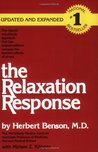
BOOK REVIEW: The Relaxation Response by Herbert Benson

The Relaxation ResponseThe Relaxation Response by Herbert Benson
My rating: 4 of 5 stars

Amazon page


I read the 25th anniversary edition of this seminal work on stress reduction, which was released in 2009. Obviously, that makes this an oldie, but it’s clearly a goodie as well. The new addition has a substantial introduction, providing updated information.

The body’s “fight or flight” response to stressful conditions has long been recognized and it’s virtually a household term. However, despite the equally alliterative name and the fact that Dr. Benson’s original book came out well over 30 years ago, the relaxation response remains a lesser known phenomena. Decades ago, Herbert Benson, a Harvard physician, recognized that patients’ coping ability influenced their health outcomes–specifically with respect to hypertension (a.k.a. high blood pressure.) This led him to investigate how a state of reduced stress could be achieved, and whether this could have a positive impact on health outcomes.

Benson and his co-investigators found that Transcendental Meditation (TM) could trigger the relaxation response, and from that they further uncovered specific aspects of TM that were generalizable in achieving this state (i.e. an object of concentration and a passive / non-judgmental attitude.) From this it followed that activities such as yoga, chi gong, walking, and some types of exercise could achieve the same physiological state as meditation. There was scholarly pressure to establish that the relaxation response was more than a placebo effect. In proving that the relaxation response didn’t hinge on a patient’s beliefs and that it had a predictable effect (and hence it was inconsistent with the placebo effect) Benson also realized that maybe doctors shouldn’t be so dismissive of the placebo effect—people were getting better, after all, and there was some mechanism by which that wellness was achieved that would be worth understanding.

In the first chapter, Benson describes an epidemic of hypertension, the fight or flight response, and its opposite number: the relaxation response. The next chapter delves into the specifics of hypertension and related topics like cholesterol consumption. Chapter 3 makes a connection between stress and the proclivity to develop hypertension. The following chapter lays out various approaches to achieving a more relaxed physiological state, including: biofeedback, yoga, zen, progressive relaxation, and hypnosis. Chapter 5 is about altered states of consciousness, and, specifically, the meditative state. Various age-old methods of achieving a meditative mind are examined. That’s followed by a chapter which lays out the results of relaxation response training in reducing hypertension and drug use. Chapter 7 is an explanation of how to achieve the desired state that generalizes beyond the specific approach of TM. The last chapter is a brief summary.

I found this book to be both interesting and informative. It’s useful both as a practical guide to practice and an explanation of related information.

I’d recommend “The Relaxation Response” for anyone who is interested in learned to de-stress. It’s a classic, and the new edition offers substantial updates.

View all my reviews

BOOK REVIEW: Discovering the Power of Self-Hypnosis by Stanley Fisher

Discovering the Power of Self Hypnosis: The Simple, Natural Mind-Body Approach to Change and HealingDiscovering the Power of Self Hypnosis: The Simple, Natural Mind-Body Approach to Change and Healing by Stanley Fisher
My rating: 4 of 5 stars

Amazon page


For many, hypnosis is the domain of stage artists who make people cluck like chickens. As with the feats of stage magicians, few give much consideration to wherein the trick lies, but they assume there’s a trick. In scholarly circles, hypnotic practices have been on a roller-coaster ride. Hypnosis was once mainstream psychology but then fell into disrepute but now there’s a resurgence of interest as neuroscience answers questions about what is happening in the brain during a trance state. Doctor Fisher’s book is an attempt to demystify the subject, and to explain how a personal practice can be used to achieve a wide range of benefits.

Fisher’s book culminates in a description of how to build one’s own self-hypnosis exercise to work toward change in one’s own life. However, there’s a lot of track that needs to be laid in anticipation of that final chapter (Ch. 9.) The first chapter counters seven of the most common myths about hypnosis. Given the aforementioned misapprehensions about hypnosis, this seems like a wise place to start to get readers on board. Chapter 2 starts where Fisher’s personal involvement with self-hypnosis began, with the use of it to prepare patients for surgery and surgical recovery. Here we get our first look at the technique of self-hypnosis as well as a discussion of cases of self-hypnosis used for surgical patients. Cases are central to Fisher’s approach, and are used throughout the book to inform the reader about how self-hypnotic methods worked for particular individuals in the pursuit of various goals. Chapter 3 explains what the trance state is and how it’s achieved.

Chapter 4 explains the process by which we make choices with an eye toward helping to disrupt destructive impulse behavior. In the next chapter the reader learns about how the state of mind can contribute to physical illnesses, and how changing the state of mind can help improve one’s health. Chapter 6 is about reevaluating ingrained beliefs that don’t serve us well. This includes the notion that one can’t change one’s behavior because it’s just how one feels, as well as the belief that one can simply quash one’s emotions through force of will. Chapter 7 examines cases involving a number of common problems resulting from stress and the pressures of everyday life.

The penultimate chapter offers comparison and contrast with a range of alternative methods that are used to achieve the same goals—some more advisable than others. The alternatives include: therapy, meditation, biofeedback, exercise, somatic desensitization, and drug use.

As indicated, the final chapter offers an outline for building one’s personal self-hypnosis practice to achieve one’s own goal. There are three sections to this chapter. The first is a simplified set of exercises to evaluate one’s capacity to enter a trance—including both a survey and physical methods (e.g. degree of eye roll.) Susceptibility to hypnosis varies widely. The subjects one sees at a stage show tend to be those rare specimens who are highly suggestible. Often, part of the act is separating them from the crowd. There are also those who can’t be hypnotized under any circumstance. Most of us are in the meaty middle, having some, limited capacity to be hypnotized. The second section offers advice about how one might go about setting up the suggestive part of one’s exercise, i.e. the core of the exercise carried out once one has induced a trance. The final section lays out three different methods of inducing a trance. The first of these is the eye roll-based method one is introduced to in Chapter 2, and the others are variants that may work better for some.

I found this book to be informative and useful. It gives the reader both the necessary background to understand how one’s subconscious mind can influence one’s life and how positive ideas are introduced through it, as well as a practical guide to setting up one’s own personal practice.

I’d recommend this book for anyone who wants to learn about self-hypnosis.

View all my reviews