5 Literary Classics That Could Have Used an Editor

I’ve got nothing against long novels. Some of my best friends are long novels. Sometimes a book either needs to be long, or — at least — manages to be a joy to read despite being long. However, I’m arguing here that there are some novels that could afford to have a little taken off the top.


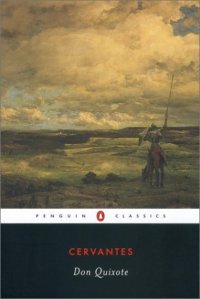
5.) Don Quixote by Miguel de Cervantes: This is a funny and clever novel, but the gag goes on a bit too far. We don’t need to see every man, woman, and child in Spain kick the man of La Mancha’s butt because he hallucinates that each is a brigand or neer-do-well while he imagines himself a knight.


4.) Tale of the Genji by Lady Murasaki: To be fair, some consider this to be the first novel, and so it’s a little unreasonable to expect perfection of style and readability. (Not to mention that its target audience of 11th century Japanese courtiers are all long dead.)


3.) Atlas Shrugged by Ayn Rand: Irrespective of how one feels about Rand’s work as a political statement, we should all be able to agree that it doesn’t take 1,100+ pages to show us a world where entrepreneurs and capitalists go on strike.


2.) Moby Dick by Herman Melville: I realize that many consider this to be the great American novel, but I knew far too much about ambergris and whale bile ducts when I finished reading it… just sayin’.


1.) Ulysses by James Joyce: I’m aware of the stunningly beautiful language, but almost 800 pages to cover a single day in the life of one guy?

BOOK REVIEW: The Heart’s Necessities by Jane Tyson Clement

The Heart's Necessities: Life in PoetryThe Heart’s Necessities: Life in Poetry by Jane Tyson Clement
My rating: 4 of 5 stars

Amazon page


At its heart, this is a collection of the poems of Jane Tyson Clement, who lived from 1917 to 2000, but there’s more going on in the book than the poetry. As the subtitle, “A Life in Poetry,” hints, the poems range over the almost sixty-year writing career of this author and poet. Having a selection of verse that runs from Clement’s teenage years into her seventies, offers the reader an opportunity to watch the growth of this poet and to see how the dictates of life influenced the style and content of her poems. The poems cover a range of topics, including: relationships, art, and nature. I found the nature poems particularly evocative, but they are all skillfully composed and endearing. Also, it should be noted that the Prelude and commentaries were presented by a musician and songwriter, Becca Stevens, and her interest skews to the artistically oriented works. While I’ll discuss at length how these poems were spread across the life of a little known but skillful 20th century poet, I should point out that the poems don’t feel dated or obsolete. Dealing in fundamental issues of humanity, the selections have aged well.

The collection is divided into five chapters. There is a roughly chronological progression to the collection, but chronology isn’t strictly followed in favor of supporting each chapter’s theme. (Though the themes are informed by what was going on in the poet’s life during various points.) The first chapter presents poems written between 1935 and 1939 (age 18 to 22.) The second picks up in 1939 and while it ends on a poem from 1953, mostly covers a period to 1941. Chapter three includes selections from 1940 to 1953 (ages 23 to 36.) The penultimate chapter includes poems from 1954 and 1955. The last chapter is stretched out from 1955 to 1991 with much less temporal density to the poems than is seen in earlier chapters.

I said in the introductory paragraph that there was more going on than the poems. Here I’ll discuss what these ancillary additions were, ranging from what I found to be most to least beneficial to the work overall. First, there are photographs throughout the book that are warm, heavily oriented toward nautical-coastal themes, and which create a retro vibe appropriate to a book on the life of a twentieth century poet. Besides the coastal and nautical photographs, there are many that revolve around music, including photos of Stevens but also more artsy still-lifes.

Second, each chapter begins with a brief biographical statement of where Tyson Clement was at during the period in question in terms of relationships, family, religious beliefs, where she was living, and what else was occupying her time besides poetry writing. It was interesting to see what was going on with the poet as she was composing the selected works.

Finally, there are commentaries interspersed amid the poems here and there, presented as though Becca Stevens is letting the reader into her head as she ruminates on some of the poems. At this point I’ll confess my own bias. I’m not a big fan of commentaries in poetry collections. There is a famous saying by E.B. White about humor that I think equally applies to poetry: “Analyzing humor is like dissecting a frog. Few people are interested and the frog dies of it.” I’m not saying that Stevens didn’t offer insight, particularly related to her life as a musical artist. She is certainly articulate and thoughtful. Still, I think commentary detracts from the poetry reading experience by overwriting what the reader takes from a piece with the commentator’s thoughts. But, your mileage may vary.

I would recommend this work for poetry readers. The poems are evocative and the language is beautiful. The poems are readable and have aged well.

View all my reviews

5 Readable Philosophical Novels

There are many philosophical novels in existence. However, many of them are difficult reads either because they are complex in language or concepts (e.g. “Thus Spoke Zarathustra” or “Faust“) or because — while readily understandable — they were badly in need of an editor (e.g. “Atlas Shrugged.”) Here are a few novels with interesting philosophical lessons that aren’t killers to read.


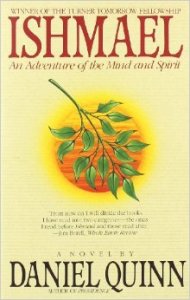
5.) Ishmael by Daniel Quinn: A man answers an ad that begins: “Teacher seeks pupil.” The teacher he discovers and the lessons he is taught aren’t what he bargained for. The book considers the impact of modern man versus aboriginal people, and the two groups’ respective place in the world.


4.) Brave New World by Aldous Huxley: In a futuristic world, people are controlled and manipulated by genetic engineering, classical conditioning, sleep-teaching, not to mention heaping helpings of drugs and promiscuity. The book considers the role of technology in humanity’s trajectory, and it contrasts Orwell’s bleak vision of dystopian governance with one that is every bit as manipulatory — if a great deal more pleasant in appearance.


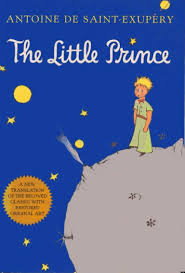
3.) The Little Prince by Antoine de Saint-Exupéry: A young prince from a far-away land comes to Earth, and shows how wise the young can be and how absurd adults often are.


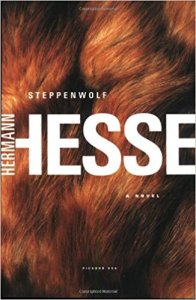
2.) Steppenwolf by Hermann Hesse: A man who feels out of step with humanity faces events that force him to reconsider what it means to be a man in the world of men.


1.) The Journeys of Socrates by Dan Millman: The prequel to Millman’s acclaimed book “The Way of the Peaceful Warrior.” It blends Eastern and Western philosophy in the training of a warrior.

BOOK REVIEW: The Unlimited Dream Company by J.G. Ballard

The Unlimited Dream CompanyThe Unlimited Dream Company by J.G. Ballard
My rating: 5 of 5 stars

Amazon page


The protagonist, Blake, crashes a stolen small aircraft into the Thames River beside the sleepy English town of Shepperton. In short order, Blake discovers that he cannot escape Shepperton and gradually he comes to realize that he can do anything else that he can imagine. This gradual discovery is like a dream becoming lucid. At first the world seems right even though there is plenty that is odd about it, as is the case when one is dreaming and oddities and anomalies don’t trigger a response as they do when one is conscious. Despite the fact that Ballard captures the surrealism of the dream state well, and even uses the word “dream” in the title, the reader is never sure what is going on exactly until the book’s conclusion. Is Blake dreaming everything? (including the plane theft?) Or, was he knocked unconscious in the crash? Or, is something supernatural going on that is dreamlike, but not a dream. There are a cast of townsfolk who sometimes behave oddly, but who seem like they have enough depth to be more than projections of Blake’s subconscious. The unfolding of the story involves the surreal nature of Shepperton becoming more obvious as the reader — little-by-little — gets a better idea of what is going on there.

Readers with a prudish streak should be aware that references to sex are ubiquitous. It’s not that there are a lot of graphic sex scenes, but – as in a dream state, the subconscious mind is at the fore and primal urges take center-stage. Blake imagines having sexual relations with everyone in the sleepy town. He doesn’t, but he speculates about it. There is also symbolic sexual reference – e.g. flowers growing from his seed. Frequent references are made to Blake being naked, but the townsfolk not realizing it. There’s generally not graphic description, this recurring device primarily serves as a means to show how the other people in the story aren’t lucid, because Blake’s nudity doesn’t set off their weird-o-meters as it would in waking consciousness.

I enjoyed this book, and, if you like surreal and trippy stories, you should give it a read.

View all my reviews

5 of My Favorite Trippy, Mind-bending Books

I love books that send one down the rabbit hole. Here are a few of my favorites. [Note: as I was putting this post together, I realized that I’d left out Philip K. Dick entirely. That is a glaring oversight as almost any of his books could make this list, but I’m too lazy to make a bigger list right now, so you’ll have to wait for Part II.]


5.) The Unlimited Dream Company by J.G. Ballard: A man crashes a small aircraft into the Thames, and after struggling up from the wreckage he discovers he can’t leave the town of Shepperton — though he can do just about anything else he likes.


4.) The Lathe of Heaven by Ursala K. Le Guin: George Orr believes his dreams shape reality. At first, he’s taken for a crazy man, but then his therapist begins to wonder.


3.) Hard-Boiled Wonderland and the End of the World by Haruki Murakami: A man hired for his skill at using his mind as an unbreakable encryption device, finds out that the job that seemed too good to be true, was.


2.) The Master and Margarita by Mikhail Bulgakov: The devil comes to Moscow with his  rogue’s gallery, throws the city into disarray, and it’s all tied to a novel based on the life of Pontius Pilate.


1.) Alice in Wonderland  & Through the Looking Glass by Lewis Carroll: Tumbling down a rabbit hole or walking through a mirror, Alice is transported to a whimsical land where everything is strange and exhilarating.

Let me know of any oversights [besides the aforementioned PKD.]

BOOK REVIEW: Stories of Your Life and Others by Ted Chiang

Stories of Your Life and OthersStories of Your Life and Others by Ted Chiang
My rating: 5 of 5 stars

Amazon page


This collection of eight smart short stories is most well-known for the eponymous story that served as the basis for the movie “Arrival.” The stories are sci-fi, but in the broadest sense of that word. “Speculative fiction” is probably a more apt descriptor. At any rate, the pieces all have nerd appeal and offer philosophical food-for-thought as well as entertaining stories.

1.) “Tower of Babylon:” The Biblical myth re-imagined. What if god didn’t sabotage construction by introducing varying languages and spreading humanity to the four winds? What if, instead, the tower did eventually reach to the heavens?

2.) “Understand:” A man who suffered severe brain damage due to a fall through thin ice, is put on an experimental medicine that begins to stimulate neurogenesis on a massive scale. The protagonist becomes preternaturally intelligent, realizes that such super-intelligence is considered a threat, but is able to keep one step ahead of the ordinary minds who pursue him. That is until he runs into another patient who had a similar accident and treatment. A thinking man’s “Lucy” (referring to the Scarlett Johansson movie), this piece considers the question of how different people would use such a gift, and whether differences could be reconciled.

3.) “Division by Zero:” If a scholar’s life was invested in an idea or way of thinking about the world, but then the scholar proved that that way was in error, might it cause a descent into madness and even a crumbling of one’s world?

4.) “Story of Your Life:” This is the story that the Amy Adams’ movie “Arrival” is based upon. The protagonist is a linguist charged with helping to communicate with a newly arrived alien species that has a very different approach to language. In the process of learning their language and interacting with them, she begins to see the world as they do – time being an illusion. Stories from her daughter’s life, which the lead character has seen in full before conception, are interspersed with the description of her work with the alien language.

5.) “Seventy-Two Letters:” This is a golem story. In this world, names have the power to animate matter and golems can be created. (A Golem is a living being created from inanimate matter; the idea comes from Jewish folklore.) The story ads a layer to the question of what would be created if humans could make a simulacrum of themselves – e.g. Frankenstein’s Monster style – and asks the reader to consider what would be the reaction to the dawn of an era in which the golems might be able to make themselves.

6.) “The Evolution of Human Science:” This is one of the shorter pieces and is also the least story-centric entry. It considers philosophical questions around the development of meta-humans.

7.) “Hell is the Absence of God:” This story is also not as story oriented as most of the others, but it is thought-provoking. It revolves around a support group for people who’ve lost significant others in tragedy and asks one to consider the various approaches to belief in the wake of tragedy.

8.) “Liking What You See: A Documentary:” This clever piece imagines a technology that prevents wearers from being able to recognized beauty (and ugliness as well.) As the subtitle suggests, it’s presented as if it were a documentary that is following a college’s debate over whether to require the student body to use said technology.

I enjoyed this collection of stories. “Understand,” “Stories of Your Life,” and “Seventy-two Letters” are gripping stories, and all eight are thought-provoking and well-written. I’d highly recommend this book for readers of short fiction, particularly speculative fiction.

View all my reviews

BOOK REVIEW: Careless Whispers: Pritish Nandy Recreates the Best of Sanskrit Love Poetry

Careless Whispers: Pritish Nandy Recreates the Best of Sanskrit Love PoetryCareless Whispers: Pritish Nandy Recreates the Best of Sanskrit Love Poetry by Pritish Nandy
My rating: 4 of 5 stars


This is the third in a series of [at least] three short, illustrated collections of love poetry. As with the others in the series, the poems are said to be based upon the work of historical poets though not – strictly speaking – translations of these poets’ work. The books were release in 1994 by Rupa & Co. with the sub-subtitle of “Classic India: Images of Love.” This book is different from the preceding volumes in a couple of ways that result in it having a different feel. First, the poems anthologize from the works of various poets rather than having a single inspiration. Second, they changed artists, and the artwork bears little resemblance to the previous volumes except with respect to being erotic in subject matter.

The book begins with a short introduction by Nandy that seeks to both introduce the reader to the anthology which serves as the basis for the poems included, as well as to explain that the poems are not translations but rather work with the gist of that poet’s verse to create new works, and why he took that approach. The source matter is said to have been originally anthologized by a Bengali Buddhist scholar named Vidyakara.

Beyond the introduction, the 50-ish pages are covered with poems and black and white line drawings. The poems are sparse free verse poems. Unlike the previous collections, it is quite clear where one poem begins and the next ends because these are attributed to different authors.

The artist who did the drawings is M. F. Husain. The drawings are not only monochrome, but are more crudely drawn and stylistic. (I’m not suggesting the artist is less skillful. They may well be purposely cruder, intending to reflect a historical artistic style rather than being modernistic like the previous volumes. The previous volumes’ art was very 1980’s.)

Despite the campiness of the titles, which are based on American pop tunes or romantic pop culture references, these books have insightful moments amid language that can sometimes drip with cliché and bland – if lustful — imagery.

If you read love poetry and run across a copy of this book, it’s worth a read.

View all my reviews

BOOK REVIEW: Unchained Melody: Pritish Nandy Rediscovers the Love Poems of Amaru

Unchained Melody: Pritish Nandy Rediscovers the Love Poems of AmaruUnchained Melody: Pritish Nandy Rediscovers the Love Poems of Amaru by Pritish Nandy
My rating: 4 of 5 stars


This is the second in a series of [at least] three short, illustrated collections of love poetry. As with the others in the series, the poems are said to be based upon the work of historical poets (in this case, Amaru) though not – strictly speaking – translations of their work. The books were release in 1994 by Rupa & Co. with the sub-subtitle of “Classic India: Images of Love.”

The book begins with a short introduction by Nandy that seeks to both introduce the reader to Amaru and to explain that the poems are not translations but rather work with the gist of that poet’s verse to create new works, and why he took that approach. Amaru was a Sixth Century poet and anthologist. As for why Nandy rewrote, rather than translating from the Sanskrit, he offers an Italian quote that says that poetry translations are like women, “the more beautiful, the more unfaithful.”

Beyond the introduction, the 50-ish pages are covered with poems and colorful drawings. The poems are sparse free verse poems, and it’s not always clear where one is meant to begin and another end. Because the topic throughout is love, sex, and romance, and the imagery thereof, the poems often flow together — whether that was intended or not is not clear. One can choose to read them as short pieces or as a longer flowing pieces.

The artist who did color drawings (the look to be colored pencil drawings) is Samir Mondal. The plates are always erotic, sometimes symbolically so, but in most cases explicitly so – involving nude figures or sensuous lips.

Despite the campiness of the titles, which are based on American pop tunes or romantic pop culture references, these books have insightful moments amid language that can sometimes drip with cliche and bland – if lustful — imagery.

If you read love poetry and run across a copy of this book, it’s worth a read.

View all my reviews

BOOK REVIEW: Untamed Heart: Pritish Nandy Rediscovers the Love Poems of Bhartrhari

Untamed Heart: Pritish Nandy Rediscovers the Love Poems of BhartrhariUntamed Heart: Pritish Nandy Rediscovers the Love Poems of Bhartrhari by Pritish Nandy
My rating: 4 of 5 stars


This is the first in a series of [at least] three short, illustrated collections of love poetry. As with the others in the series, the poems are said to be based upon the work of historical poets (in this case, Bhartrhari) though not – strictly speaking – translations of their work. The books were release in 1994 by Rupa & Co. with the sub-subtitle of “Classic India: Images of Love.”

The book begins with a short introduction by Nandy that seeks to both introduce the reader to Bhartrhari and to explain that the poems are not translations but rather work with the gist of that poet’s verse to create new works, and why he took that approach.

Beyond the introduction, the 50-ish pages are covered with poems and colorful drawings. The poems are sparse free verse poems, and it’s not always clear where one is meant to begin and another end. Because the topic throughout is love, sex, and romance, and the imagery thereof, the poems often flow together — whether that was intended or not is not clear.

The artist who did color drawings (the look to be colored pencil drawings) is Samir Mondal. The plates are always erotic, sometimes symbolically so, but in most cases explicitly so – involving nude figures or sensuous lips.

Despite the campiness of the titles, which are based on American pop tunes (except this one which appears to be taken from an American romantic comedy film), these books have insightful moments amid language that can sometimes drip with cliche and bland – if lustful — imagery.

If you read love poetry and run across a copy of this book, it’s worth a read.

View all my reviews

BOOK REVIEW: The Master and Margarita by Mikhail Bulgakov

The Master and MargaritaThe Master and Margarita by Mikhail Bulgakov
My rating: 5 of 5 stars

Amazon page


The Devil comes to Moscow with his entourage of henchmen – a tram-riding cat, a fallen angel turned assassin, an ex-choirmaster, and a vampiress – and chaos and malevolence ensue. While most of the story unfolds in early 20th century Soviet Union, a few chapters focus on the story of the crucifixion as seen from the perspective of Pontius Pilate. We learn well into the book that Pontius Pilate is the subject of a novel written by the character who calls himself “the Master.” A love story between he and Margarita is central to the story, though mostly in the latter half of the book.

While Bulgakov’s book is whimsical and humorous in places, its theme is demons and supernatural beings acting in a rational, modern world that has abandoned belief in the supernatural. The Devil (who goes by the name Woland, a variation on a Germanic word for demon) and his troupe perform a black magic show that the audience assumes to be illusionism though it produces far more disturbing effects than a David Copperfield show. The story is a dark carnival tale (think Bradbury’s “Something Wicked This Way Comes” but not so much horror as a macabre comedy. One will also note that the relationship between God and the Devil is more on the order of Pratchett and Gaiman’s “Good Omens” than the Biblical rendition.)

While the book is pure fantasy in its story, it presents a thinly veiled commentary on Soviet life. Part of the reason why the mischief of Woland and his lackeys goes unthwarted is because it takes place in a world where the government “disappears” people on a regular basis and in which the quashing of religion means that even seeing doesn’t result in believing. Anyone witnessing a supernatural act is written off as drunk, insane or – at best – easily duped.

Although, as I think about this, it might not be so much a contrasting and ancient and modern life as it appears. After all, Pontius Pilate is at the fore of the historical part of the novel. Pilate, who viewed Jesus as a harmless lunatic, was troubled by the decision to execute him when the violent figure of Barabbas was selected instead for release based on a Passover norm. (Hence, Pilate’s famously “washing his hands” to the whole business of Jesus’s execution.) In this light, it may be more of a general commentary on humanity’s simultaneous need to believe in, and inability to believe in, the supernatural.

This novel is well-written, engaging, and thought-provoking, and I’d recommend it for all readers.

View all my reviews