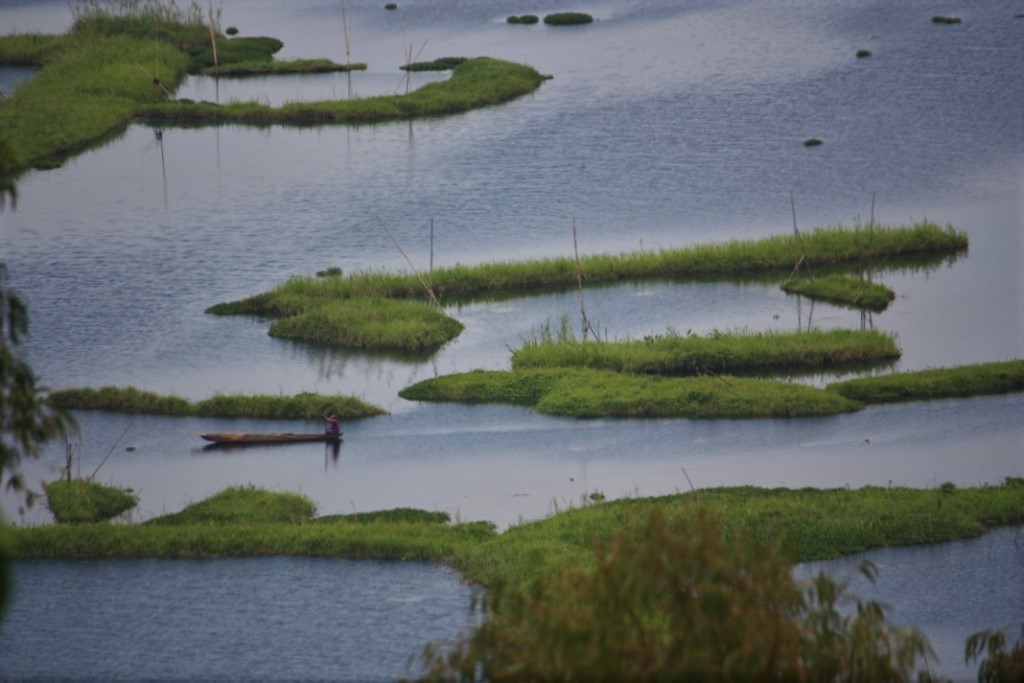
Patches of grassy land stand above the water. They lop up the lake into a labyrinth of passageways. Even in a shallow draft canoe, one can often see past the phumdi grass, but still one must know the tiny isles or be trapped among them.

a narrow boat
silently glides between
floating islands
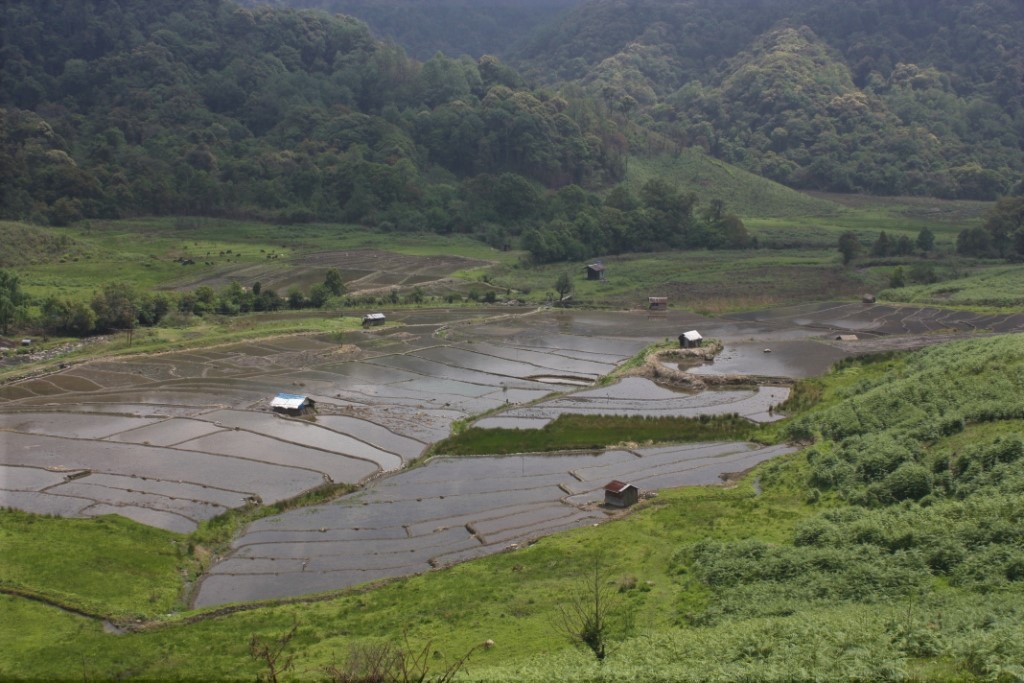
In a quiet valley, terraced rice paddies lie flooded but unsprouted, their glassy surfaces vaguely mirror the sky above. More than the narrow dykes, it's the mere inches of elevational difference that gives each irregular patch of water a distinct appearance. Each one is hit by light from the same distant source, and though they are as close to equidistant from that source as imaginable, each tells its own story in hue and glint. Amid the paddies, squat supply shacks pose as an inhospitable village -- all moat, no yard, and unneighborly distances between them. And yet there is something quaintly soothing about this fiction of a village.


squat shacks stand,
islands amid paddies --
a faux village
The cone-hatted ladies converge on the plantation, a spreading swarm, picking the fresh green leaves, tossing them over the shoulder into a backpacked wicker basket, leaving behind a flattop trimmed tea shrub. The mid-day rains drive away the pickers for a short time, but they'll be back, squeezing between dripping tea trees, their skirts saturated with the cold morning rain that will steam off into a muggy afternoon.

tea pickers
head back to the fields
after mid-day rains
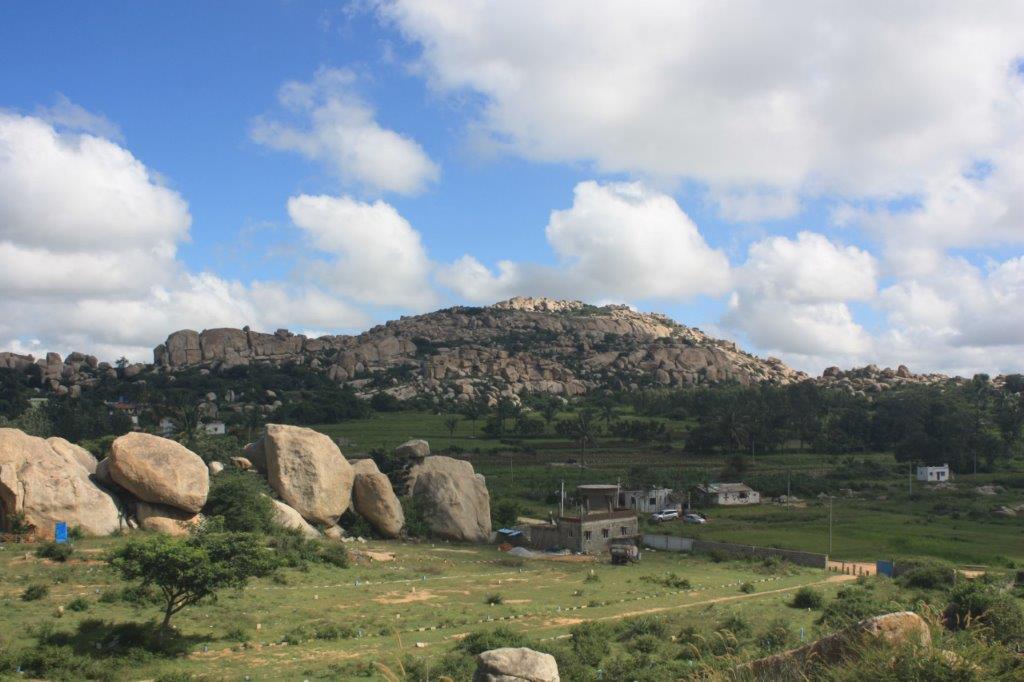
The landscape is strewn with boulders, its topography formed from piles of them, its flat fields dotted with them. These boulders are the remnants of a once mighty mountain -- an ancient mountain.

People stand in awe of those rough, angular slabs of granite, standing a mile high. But those are the young whippersnappers.

This mountain is so old that it's just a pile of bones, devoid of connective tissue or fleshy covering. It's a corpse of a mountain that has half buried itself.


the ancient mountain
is now bone-smooth boulders
its age unsung
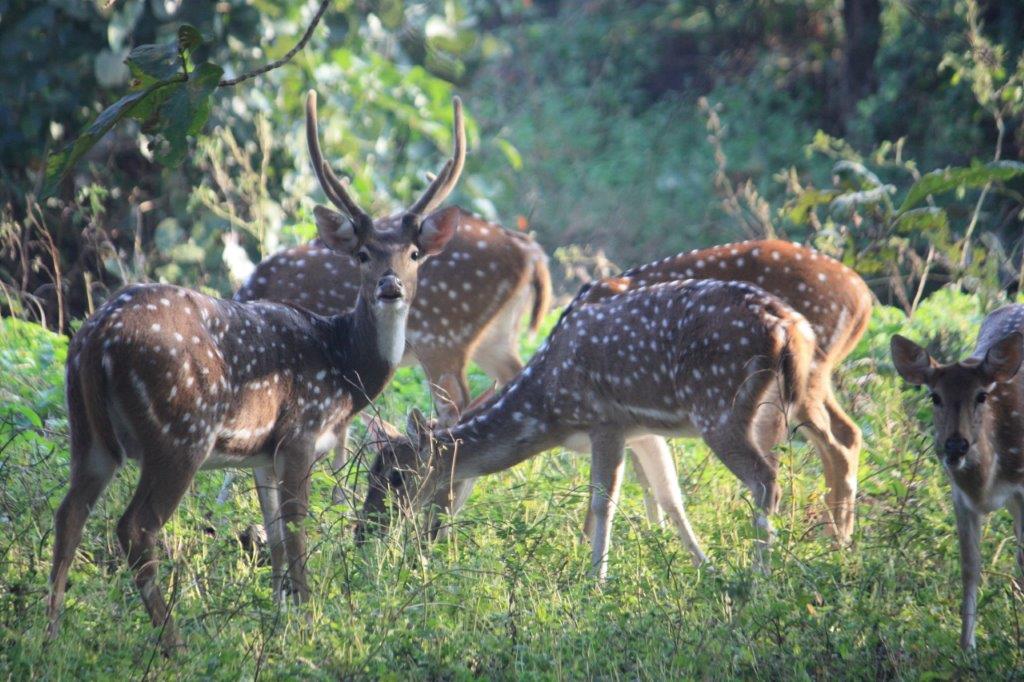
Spotted deer framed in a glade, the warm morning light showing each coat to be a distinct shade of tawny brown. Two deep brown eyes - glassy but lively - keep watch, while the herd hangs heads low, grazing lazily on the overgrown greenery. The deer mill about so languidly that one could count each one's spots.

spotted deer,
grazing in a glade,
one stands sentry
The river glides like a glassy sheet. It seems to steam, but it's just fog forming over the frigid water that is nevertheless a reservoir of heat compared to the freezing air above. The fog erases the sharp edges that make the world seem real -- neither painting nor figment. The far shore is a brush-dabbed fiction... and I may be, also. The early morning cold affects my brain in the same manner that the fog influences the scene.

river fog
makes the cold morning
a painted scene
The clouds hang gray this mid-winter day, while streets glisten with the watery sheen of rains that never break for long. Wheels roll through, throwing the water into a swish-slosh song. All seems clean, if perpetually dreary. The air looks clear, though some funk clings to one's shoulders as one walks through town, and every scent is compressed in intensity at street level.

streets glisten,
the city slick from rains
that linger
The forest is silent, and winter has painted the woods in earthen hues. Bare black loam is spottily strewn with beige to brown leaves -- dried to a curl and crunch that's almost crumbling. If any animals are moving, it's only at the eyes. There're no skittering feet, no frantic digging, no chirped warnings, and no explosive attempts to flee.

Then, at the base of a downed log, there's a lively scene of vibrant green moss and tender, burnished-orange fungi caps.

winter forest --
all seems dead or dormant,
but one tender scene