BOOK REVIEW: Gone Girl by Gillian Flynn

Gone GirlGone Girl by Gillian Flynn

My rating: 5 of 5 stars

Amazon page

This book is about the perils of adopting a false face when dating. At first Nick and Amy seem like the perfect couple, but that’s because Amy is donning the guise of “Cool Girl” and Nick is playing the part of the romantic. When the facades crack apart, so does their marriage. Then Amy goes missing under mysterious circumstances.

This isn’t the type of book that would normally call to me, but I read it because I kept seeing references to it and had to see what the hullaballoo was about. I must say, however, the book did not disappoint. I found Gone Girl hard to put down. Flynn does an outstanding job of carefully revealing information—and sometimes planting false flags—so that one is kept thinking throughout the book. To the characters in the book—besides Nick–it increasingly looks like Nick killed his wife, but to the reader it’s more of a roller coaster ride. At first we can’t believe he’s responsible, then we discover he’s not who he appears, then we learn who Amy really is, and so on.

The organization is alternating chapters from the point of view of the two leads, Amy and Nick. This is why we can’t believe Nick is a murderer at first, because we are seeing his point of view, but then we realize that it’s a limited point of view, and Nick isn’t particularly forthcoming about his peccadilloes and vices. In fact, Nick’s penchant for lying is a major factor in his deepening crisis. Nick’s problem is that he can’t stand to not be liked, particularly by women. Amy’s problem stems from having parents who wrote a book series called Amazing Amy that portrays a character that is a thinly veiled version of her—except perfect in every way. This leads to a condition in which Amy needs to appear perfect, even if she realizes that perfection is illusory.

If the reader has a point of dissatisfaction with this book, I believe it will be with the ending. I, myself, have mixed feelings on the subject. On one hand, the ending seems unbelievable and maybe a little flat. On the other hand, it’s an unexpected ending, and I think any ending that wasn’t completely unexpected would come across as a letdown after all the twists, turns, and reveals of the book.

I’d recommend this book for anyone who likes a good story. As I said, it’s highly engaging and readable.

FYI – there is a movie version coming out on October 3, 2014.

Here’s the trailer:

View all my reviews

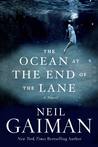
BOOK REVIEW: The Ocean at the End of the Lane by Neil Gaiman

The Ocean at the End of the LaneThe Ocean at the End of the Lane by Neil Gaiman

My rating: 4 of 5 stars

Amazon page

As the title suggests, The Ocean at the End of the Lane takes place in a world in which the supernatural and spectacular lay camouflaged amid the most mundane of settings. The story is about a boy’s interaction with a tri-generational household of women who I’ll—controversially—call “good witches.” The characters explicitly gainsay the title of “witch,” but for lack of any better term with which to describe these ladies other than “a trio of females with supernatural abilities and benevolent purpose,” I’ll call them good witches.

In particular the boy befriends the youngest good witch, a girl who physically appears not much older than he, but whom he comes to realize seems much older. It’s the girl who refers to the pond on her family homestead as the “Ocean.” The girl introduces the unnamed boyish male lead to a supernatural parallel universe, but—in doing so—unwittingly gets the boy tangled up in peril. The boy tracks a portal into his world through which a malevolent creature can slip through. The shape-shifting creature becomes his nanny. However, he is the only one in his family who can recognize the creature’s true nature, and it will do anything to keep the boy from ruining its new gig.

The good witches become the boy’s protectors, and powerful protectors they are. But they aren’t omnipotent, and the forces arrayed against them are formidable as well. Among the morals of the story are that the more powerful enemy of one’s enemy is not only not necessarily one’s friend, but may spell one’s doom. The book also speaks to the rashness of youth running headlong into trouble, and the value of wisdom and experience to find solutions.

This book is short and highly readable. It’s appropriate for young adult readers, but can be enjoyed by adult readers as well. The ending is slightly too deus ex machina for my taste, but overall it’s an intriguing book.

View all my reviews

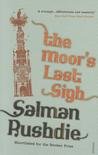
BOOK REVIEW: The Moor’s Last Sigh by Salman Rushdie

The Moor's Last SighThe Moor’s Last Sigh by Salman Rushdie

My rating: 5 of 5 stars

Amazon page

The Moor’s Last Sigh tells the tale of three generations of an Indian family that built its fortune in the spice trade. This isn’t the type of book that would usually float to the top of my stack. I read it because I was traveling to Kochi (Cochin), and it came recommended because much of the first part of the book is set there. (The same recommendation might be received by someone traveling to Mumbai because the latter half of the book is set in that city; granted, there are a lot more stories set in Mumbai [Bombay] than Kochi.) Ultimately, I was pleasantly surprised by this book, despite its soap opera like tone.

The book does read like a soap opera, at least until it gets into the narrating character’s story. There are strong women characters in this male-dominated environment of an Indian family business, though they tend to fall into the categories of “petty bitch” or “prima donna” or both. In the first generation there is a matriarchal character who dominates the family by manipulation and cruelty. In the second generation, the female lead—a strong-spirited, independent artist—falls in love with a Jewish employee of the family. Those familiar with marriage as practiced by the Indian elite will recognize how this inter-sect wedding with an underling might result in no small grief. The resulting marriage produces two female children and a boy. The latter would be nothing but a source of bliss, but for a birth defect that results in a malformed arm. While his mother smothers him with love and attempts to display a progressive spirit that’s beyond biases against such infirmities, under the surface there is the need to come to grips with the fact that handicapped children aren’t supposed to happen in high-caste families. The man with the infirmity is the narrator and overall protagonist of the book. He—as seems inevitable—will eventually fall for a woman of which his mother does not approve.

Beyond the soap opera pettiness, there are genuine intrigues that unfold in the latter half of the book. However, the pettiness of narcissistic people is the root of the protagonist’s ultimate trial.

While Rushdie builds characters in the manner we expect of literary fiction, he doesn’t abandon story. There is a narrative arc that unfolds over the course of the novel. Surprises are revealed and twists unfold.

This is the first Rushdie novel I’ve read. I’ve always intended to read The Satanic Verses to see what all the hullaballoo was about, and the readability of this work makes me even more interested in following through. You know a writer has to be good to inspire a country to take out a hit on him.

I’d recommend this for more than just people visiting Kochi or Mumbai—though it will be particularly interesting for those who are. If you’re interested in the lifestyles of the rich and famous in India more generally, you’ll find this work enlightening. In general, it will appeal to those who like their literary fiction with a bit of a storyline—and if you like the low drama of bitchiness, all the more so.

View all my reviews

BOOK REVIEW: The Beach by Alex Garland

The BeachThe Beach by Alex Garland

My rating: 5 of 5 stars

Amazon page

I imagine the elevator speech for this book being, “Lord of the Flies done Paul Theroux style.” While that may or may not sound appealing, this is one of the most gripping novels I’ve read recently.

The Beach will have its greatest appeal with travelers because understanding the mindset of a traveler versus that of a tourist (vagabonds versus regular folk, if you prefer) is essential to being able to feel the realism in the behavior of the book’s characters. (If you don’t know the difference between a traveler and a tourist, it’s safe to say that you are a regular person who travels as a tourist.) Like Moby Dick, this is a book about all-consuming obsession, but the obsession is in finding and protecting the traveler’s paradise. (Such a paradise is partially defined by a complete lack of tourists.) Unlike Moby Dick, The Beach isn’t rambling, and it maintains tension throughout.

The story beings on Khao San Road in Bangkok, a familiar haunt for backpackers and other low-budget world travelers. The protagonist, Richard, has just gotten in to Bangkok and checks into a hostel. Rooming next to Richard is a Scottish man named “Daffy” who seems to be a complete lunatic and who keeps talking aloud to himself about a “beach.” Owing to the accent, Richard first thinks Daffy is talking about a “bitch,” but soon realizes the man’s obsession is with a patch of sand. Richard has a brief and unusual interaction with Daffy, who throws a lit joint onto Richard’s bed. In the morning, Richard finds a meticulously hand drawn map on his door with “the Beach” prominently labeled. When he goes to see why the crazy stranger left it for him; he knocks on Daffy’s ajar door to find the man has committed suicide.

The beach is on one of the small islands that are kept off-limits as part of the Thai National Parks system. Richard teams up with a French couple who was also staying next to him. While Richard had heard their amorous sounds through the thin walls on the night he met Daffy, he didn’t meet the couple until they were all called in to talk to the police about Daffy’s suicide. For some reason Richard is unwilling to tell the police about the map, but he does tell the Frenchman. The map leads them to the island. It isn’t easy to get to. Once on the island, they discover they must get through a grove of marijuana guarded by heavily armed locals to get to the fabled beach.

It turns out a small community of travelers has already set up on the idyllic beach. As with any group, some people get along well and others rub each other the wrong way. We get the best insight into those individuals who become the friends and enemies of Richard, and many of the others are the novel equivalent of movie extras. At first, all is well on the island. Richard and the French couple have to do work a few hours a day on the fishing detail, but otherwise they are living in their Eden. However, as things begin to go wrong—and they do go frightfully wrong—Richard and others begin to be confronted by the question of what they are willing to do to protect the Beach, and how will their personal moralities be twisted in the process.

Garland uses a couple of interesting techniques in the book. First, Richard is plagued by dreams featuring Daffy, and later–as the burden of secrets to which he is party piles up—he begins to have hallucinations of Daffy during the day. In both cases, it seems that the dreams and hallucinations are an attempt to help him work out the mysteries of the Beach. No one on the island will tell him about Daffy, and he is desperate to know what drove the man mad—or whether he was always like that. There’s one character, Jed, who goes off every day and no one seems to know where he goes or what he does. Eventually, Richard comes to be in on some of these secrets (e.g. becoming Jed’s partner), and the burden of knowledge doesn’t improve his state of mind. In the end, Richard seems to realize that he is the new Daffy, and what drove Daffy into madness will surely do the same for him if he doesn’t get off the island.

Second, Garland uses what—for lack of a better term—might be called foreshadowing. However, it’s not so much a matter of subtle hints as a bold statements such as [paraphrasing], “It’s too bad _________ would die, especially in the way he did.” This should have seemed ham-handed, but there’s always enough mystery about what will come next that the these tips were like lighter fluid to intensify one’s reading so one could find out what would happen next and how.

I whole-heartedly recommend this novel, and think it’s one of the best pieces of travel-oriented writing that I’ve read. It’s a page-turn from beginning to end.

View all my reviews

BOOK REVIEW: Batman: Arkham Asylum by Grant Morrison

Batman: Arkham Asylum - A Serious House on Serious EarthBatman: Arkham Asylum – A Serious House on Serious Earth by Grant Morrison

My rating: 4 of 5 stars

Amazon page

This is the third, and probably last, installment in my “Happy 75th Anniversary, Batman” series of reviews. Batman: Arkham Asylum is an attempt to convey a nightmare on the page, and it succeeds both graphically and narratively. It’s quite different from other Batman comics in style and content. It takes the dark nature of the Dark Knight’s mythology to the extreme.

There are two story-lines woven together in Batman: Arkham Asylum. The main line involves Batman entering an Arkham Asylum being run by the inmates. There he finds himself pitted against his foes: the Joker, Two-Face, Scarecrow, and others. The other is the 19th century tale of Amadeus Arkham’s descent into madness.

As is common in the Batman mythology, psychiatrists are portrayed as walking the razor’s edge between sanity and insanity. For those who don’t read comic books, this is most readily exemplified by the character of Dr. Crane / Scarecrow in the first film of the Nolan trilogy, Batman Begins. I’m not sure whether the point is to create enemies that are so strong they can bend doctors to their will, or if there is a general disdain for psychiatrists—as one might see a dislike of lawyers in other stories.

Among the nightmarish elements of this work is the fact that Batman’s face is never seen clearly. The Dark Knight is always a vaguely and/or surrealistically silhouetted. There’s a mix of sharpness and haziness in the graphics. The Joker gets his own crazy scrawl font. The graphics are as creepy and strange as can be. On my low-end Kindle, the work was in black and white, which worked well. I did look at the sample pages, and the color version uses a lot of sepia and crimson.

Batman: Arkham Asylum asks us to consider whether Bruce Wayne / Batman is sane or just a lunatic with a moral code.

View all my reviews

BOOK REVIEW: Batman: The Dark Knight Returns by Frank Miller

Batman: The Dark Knight ReturnsBatman: The Dark Knight Returns by Frank Miller

My rating: 4 of 5 stars

Amazon page

A couple of reviews ago, I covered Frank Miller’s Batman: Year One, which imagined the first year of the Dark Knight’s venture into crime fighting. The Dark Knight Returns is Miller’s take on the other end of the Caped Crusader’s career. It begins ten years after the last sighting of the Batman. Commissioner Gordon is on the verge of retirement, and there’s a mix of new and old threats rising.

There are four parts to this work. The first, also entitled The Dark Knight Returns shows the rise of a powerful gang of thugs called “The Mutants.” The way this gang’s leader is drawn makes him look like he truly is an altogether different species, but it’s his filed teeth and his bulky physique that account for his appearance. The main battle is with the “rehabilitated” Harvey Dent (a.k.a. “Two-Face,” an inappropriate moniker as his face has been fixed and his flighty psychiatrist ensures the community that Dent’s mind is fixed as well.) We see Bruce Wayne’s concern about the deteriorating state of Gotham and his eventual return to crime fighting, which is instigated by a freakish bat flying through his [closed] window. Wayne takes the bat as a sign from the universe that the Batman is indeed needed. Dent engages in a terroristic plot which the Dark Knight must try to foil.

As was the case in Batman: Year One, the story of Commissioner Gordon plays out in parallel with that of Bruce Wayne / Batman. However, in the third book, Gordon has retired and it’s the new Commissioner, Ellen Yendel, who shares the spotlight. Yendel, unlike Gordon, promptly issues an arrest warrant for Batman.

Book Two is called, The Dark Knight Triumphant, and it’s in this episode that Batman comes up against the leader of the Mutants. As in Batman: Year One, Batman arrives to the fight as an underdog. However, as would be expected, the nature of his underdog status is completely different. In Year One, Batman is a supreme physical specimen, but is green to crime fighting. In The Dark Knight Returns we see a battle-hardened veteran Batman who is a spry geriatric, not up to fighting young, mutant thugs. However, as with the former comic, the Dark Knight does redeem himself. Many of the Mutants, being fair-weather friends to their leader, form a cult of Batman in the wake of the Dark Knight’s victory over their former boss.

Besides broadening the readership demographic to retirement community dwellers, another new demographic is appealed to with Carrie Kelley, the new Robin. There are references early in the book to the profound effect that the death of Jason Todd had on Bruce Wayne. Be that as it may, Batman seems quick to bring this young girl into harm’s way given the lingering wound of Jason Todd.

Book Three, Hunt the Dark Knight, pits Batman against his ultimate nemesis, the Joker—who like Dent—has been sprung in no small part due to his lunatic psychiatrist. Miller continues the popular Batman comic disdain for psychiatrists, who are portrayed as a small nudge away from becoming bat-shit crazy (pun intended.) While the battle against the Joker provides this chapter’s crime fight, Commissioner Yendel’s war on Batman is a major part of the storyline. We also discover that time has not been as kind to Selina Kyle as it was to the men of this series. (i.e. Gordon is old but distinguished, and Batman has pretty much the same preternatural physique that he did as the young batman.)

The Dark Knight Falls is the last section, and it’s the most famous for the battle between Batman and Superman. Earlier in the book there’s a foreshadowing call from Clark Kent to let Batman know that the Superman will be out-of-town for a while. Appropriate to the 1986 issue date of this comic, a Cold War crisis is the event consuming Superman’s time. These Cold War tensions result in a nuclear missile launch that Superman diverts, but the Man of Steel hasn’t read up on the Electro-Magnetic Pulse (EMP) effect. [Incidentally, Miller didn’t read up on the use of nuclear weapons as an EMP either, or—at least—he gets it completely wrong. Perhaps, he just figured that his readers wouldn’t know the difference–and he’s probably right. At any rate, I’m not deducting stars for bad science.] The power outage caused by the EMP results in looting and societal chaos. Batman quells this with the help of the cult of Batman mentioned previously. However, this doesn’t go over smoothly with some, which results in Superman’s invasion of Batman’s Gotham turf, and the ultimate battle.

I enjoyed this work more than Batman: Year One in part owing to the serious enemies that the Dark Knight must vanquish. I’d agree with the common view that this is a must-read for those interested in the canon of the Caped Crusader.

Also, if you aren’t a comics fan but are wondering how Batman and Superman could end up fighting–as per the upcoming Batman v Superman: Dawn of Justice movie–this might give you some insight. [Though I wouldn’t expect that movie to follow this work in any of the vaguest ways.] Also, there are other Caped Crusader versus Man of Steel interpretations out there, though this is probably the most famous.

View all my reviews

BOOK REVIEW: Batman: Year One by Frank Miller, et. al.

Batman: Year OneBatman: Year One by Frank Miller

My rating: 3 of 5 stars

Amazon page

Amazon recently had a sale on classic Batman collections in celebration of the Caped Crusader’s 75th anniversary. I bought a few titles, including this one.

Batman: Year One is Frank Miller’s vision of the hero’s first year of crime fighting. Unlike the first movie in the Nolan trilogy, Batman Begins, there’s no backstory about Bruce Wayne’s training. The comic begins with Bruce Wayne beginning to go on the equivalent of self-sanctioned “neighborhood watch” rounds in Gotham’s seedy underbelly. He’s in his planning and research phase, and only quasi-reluctantly gets into brawls with street thugs. His goal is, ostensibly, intelligence gathering.

Miller’s work isn’t aimed at a boyish market. From the intimation of underage prostitution to themes of marital infidelity to the unsubtle homage to Edward Hopper’s famous painting Nighthawks, this book is directed at a more mature reader. It’s grittier, but Batman hasn’t yet become so sophisticated as to abandon wearing his underwear outside his pants.

The four chapters that make up this graphic novel parallel and twist together the stories of Jim Gordon and Bruce Wayne as they each begin their Gotham crime fighting careers. In many versions of the Batman mythology, Gordon is a young cop who helps boyhood Bruce Wayne on the night his parents are killed. This is one of the ways in which the Miller version differs. In Batman: Year One Gordon is a detective who moves to Gotham from Chicago at about the same time Bruce Wayne is sticking his toe in the waters of Gotham crime. This comes in handy for Miller later in works like Batman: The Dark Knight Returns in which he is able to have a geriatric Bruce Wayne and Jim Gordon coexisting.

The interests of Gordon and Batman only align at the very end of the last chapter. Until then, Gordon is trying to find and apprehend Batman like all the other cops. In fact, Gordon is leading the crusade against the Dark Knight when his bosses still have little interest in it—until Batman crashes their ball.

There are no supervillains yet—only corrupt cops and organized crime. Bruce Wayne, who adopts the guise of Batman only after a bat flies through his window (never heard of that happening), gets off to a rough start. He isn’t yet the phantom nightmare that he will later become, and is still learning his lessons. In his early encounters with criminals, he prevails mostly by being able to take a punch.

Besides Bruce Wayne’s inner monologue being a bit ham-handed, I enjoyed this work. The ham-handed inner monologue is—no doubt–intended to convey that Wayne is a man of thought as well as a man of action, but it’s hard to believe that someone who could transform himself into the Batman would be that riddled with doubt. That said, the dialogue is better written than the typical comic. There’s not a lot of the “As-you-know-Bob” dialogue that often plagues this genre.

If you’re a fan of the Dark Knight, this is worth reading.

View all my reviews

BOOK REVIEW: The Good Soldier Ŝvejk by Jaroslav Haŝek

The Good Soldier ŠvejkThe Good Soldier Švejk by Jaroslav Hašek

My rating: 4 of 5 stars

Amazon page

Haŝek’s novel is a satire of war and the absurdities that arise therein. It’s a novel in the vein of Heller’s Catch-22 and Vonnegut’s Slaughterhouse Five. It predates those novels, and is set around World War I–rather than those other novels’ World War II bases.

The novel begins at the outset of the First World War, and revolves around the title character, Ŝvejk (also spelled Schweik). Ŝvejk is an enigma. Believing that no man can be so stupid, authority figures are constantly suspecting him of being a saboteur or a goldbrick. It’s never made clear whether Ŝvejk is a brilliant con artist or the complete dolt he appears to be.

The story follows Ŝvejk from some ill-considered statements about the Archduke Franz Ferdinand that get him in trouble through to his unit’s advance on the front lines of the war. He leaves behind his job selling mangy dogs with forged pedigrees when he’s drawn back into the military (he’d previously served and been released as feeble-minded.) Along the way, he spends time as a chaplain’s assistant and a batman (a military officer’s servant, not the superhero)—that is, after he gets released from a lunatic asylum.

Ŝvejk is, at once, the best and worst of soldiers. He is honest to a fault, except when lying in the service of others—at which point his lies are inevitably humorously transparent. He isn’t a free-thinker and will follow orders—as best he can remember or understand them—to their, often absurd, bitter end. Of course, the flip side of this is that he doesn’t know how or when to speak, and while he’s not a free-thinker, nor is he much of a thinker–period.

The following quote sums up why Ŝvejk is the best and worst of soldiers: “Beg to report, sir. I don’t think because soldiers ain’t allowed to. Years and years ago, when I was in the Ninety-first Regiment, the captain always used to tell us: ‘Soldiers must’nt think. Their superior officers do all their thinking for them. As soon as a soldier begins to think, he’s no longer a soldier, but a lousy civilian.’” This is the mantra Ŝvejk lives by, and it serves no one well in the volatile and mercurial world of war.

Ŝvejk isn’t the only comedic character in the book. There’s a drunkard Catholic priest of Jewish ancestry for whom Ŝvejk serves as an assistant until the priest lost him in a card game. There’s another batman who’s constantly hungry, and eats anything he can get his hands on–even if it’s the private stock of the officer for whom he works. There’s a reserve officer, Lieutenant Dub, who is always trying to show how tough he is but is constantly foiled by Ŝvejk’s frankness and naiveté.

There’re also straight men such as Lieutenant Lukas—the man who wins Ŝvejk’s services from the chaplain, and who comes to rue the day he did. Lukas is a competent military officer with a good head on his shoulders. But Ŝvejk’s bumbling antics are constantly getting the Lieutenant in hot water, and he finds Ŝvejk to be the proverbial bad penny. A prime example of Lukas’s regret comes when Ŝvejk gets the Lieutenant a dog that he knows is stolen, but that turns out to be rightfully owned by a Colonel.

Another straight man is the Quartermaster who knows enough to ignore the first order to draw rations because the military never moves as quickly as the officers think it will. (Incidentally, the best piece of advice I ever got when working with bureaucratic organizations was to always ignore new directives that seemed asinine because eventually most will die on the vine.)

This book is humorous, if not hilarious. One of the funniest episodes is when Ŝvejk is cast in with the malingerers and has no idea what they are talking about as they discuss their strategies for staying out of the war. Another is when the officers devise a code based on an obscure book only to discover that it’s a two volume set and they’ve dispatched the wrong volume as the key.

Much of the humor comes in the form of Ŝvejk’s dialogue. He’s a gregarious chap who rambles on at the most inopportune times. Some classic Ŝvejk quotes include:
-“I’m feeble-minded, fair and square.” (when accused of being a cunning malingerer)
-“I’ve been cross-examined once and they chucked me out. And what I’m afraid of is that these other gentlemen who are here along with me are going to have a grudge against me because I’ve been called for cross-examination twice running and they’ve not been there at all yet this evening.” (upon being called back for a second round of interrogation)
-“Pigs might fly if they had wings.” (when accused of being a spy, and asked whether he’d have taken pictures if he’d had a camera)
-“I used to serve under a Colonel Flieder von Boomerang, or something like that, and he was just about half your height. He had a long beard, and it made him look like a monkey, and when he got ratty he used to jump so high that we called him India-rubber Daddy. Well, one day—“ (upon being accused of having no respect for his superiors)

One of the weaknesses of this novel is its rather abrupt ending. This is because Haŝek was only two-thirds of the way through with the novel when he died of tuberculosis. It’s not that there is no ending, but it reads like just another turn of events that Ŝvejk would eventually bumble his way out of. Of course, that’s likely because that’s what the author intended it to be.

As with Heller and Vonnegut, Haŝek’s novel benefits from his personal experience. He was drafted into the military and spent five years as a prisoner of war in the hands of the Russians. (A situation that somewhat mirrors the experience of his protagonist.)

If you like war satire, you should pick up The Good Soldier Ŝvejk.

View all my reviews

TODAY’S RANDOM THOUGHT: Chasing MacGuffins

What's the "Rabbit's Foot?" Source: Paramount

“What’s the ‘Rabbit’s Foot?'” “I don’t know, but I’m going to shoot her in the head if you don’t give it to me.” Source: Paramount

Critics often bemoan the effectiveness of MacGuffins. A “MacGuffin” is an object so intrinsically valuable that people are willing to kill for it, die for it, or chase each other across the universe for it… and this is the important bit…without knowing precisely why said object is so valuable. In other words, it’s a plot device designed to propel plots forward that would have no reason to advance otherwise. Its exact characteristics are unimportant, and sometimes even its general characteristics remain unrevealed.

Prime examples from the cinema include “the case” from Pulp Fiction, the “Maltese Falcon” from the same-named movie, the “one ring” from Lord of the Rings, the sword “Destiny” from Crouching Tiger, Hidden Dragon, the “Rabbit’s Foot” from Mission Impossible III, the “Tesseract” from The Avengers, or “Genesis” from Star Trek II: The Wrath of Khan.

So, why would people kill, die, or chase after something that they didn’t understand? That’s what the aforementioned critics say, but I have my own theory as to why MacGuffins work well and frequently.  MacGuffins work because people are used to spending their lives chasing something that they don’t precisely understand. Call it bliss or legacy or a missing part of oneself. If one spends one’s life chasing after a key that may or may not achieve one’s desired goal, it would be hypocritical to not have sympathy for characters who do the same.

BOOK REVIEW: Injustice: Gods Among Us by Tom Taylor

Injustice: Gods Among Us #1Injustice: Gods Among Us #1 by Tom Taylor

My rating: 4 of 5 stars

Amazon page

If you’re among those who were distraught over Superman’s uncharacteristic behavior at the climax of the Man of Steel movie, this graphic novel isn’t for you. However, the author and illustrator do know how to build tension and keep it rolling. That’s the good news. The bad news is that they achieve this via a mountain of corpses. If you’re good with that, you’ll likely enjoy this work. If not, you may find it a tad dark and / or gratuitous in its violence.

With the movie Batman v Superman: Dawn of Justice filming for a summer of 2016 release date, many are wondering how a Batman versus Superman battle might occur (and how the Caped Crusader could credibly avoid being smashed to pulp 30 seconds into the movie.) This comic offers one possible approach—though it’s exceedingly unlikely to be the tack portrayed in the movie. (This book is ancillary to a video game, and wouldn’t necessarily be seen as core canon of the Justice League.)

This book consists of six parts. In part I, the Joker outwits Superman, tricking him into an act that is so horrendous that it will shake the Man of Steel’s core values. In part II, Superman takes a proactive stance against global conflict. In part III, the U.S. government supports a covert action designed to give them leverage against Superman, and to dissuade him from enforcing his previously announced ceasefire. Aquaman and his nautical army oppose Superman in the fourth part because the former is displeased with a dictator setting rules in the maritime domain—even if it is a largely benevolent dictator. In the penultimate part, Batman and Nightwing resist Superman’s attempt to clear out Arkham Asylum and to put the lunatics somewhere where they can’t keep breaking out and causing trouble (as the Joker caused for Superman.) In the final part Batman is exposed to a life-altering event (as Superman had been at the book’s beginning), but the bulk of this section is just picking teams for the epic game of superhero dodgeball that is presumably to unfold in later volumes.

What worked? The setup in which the Joker bests Superman is well-played. The Joker’s willingness to die for the ultimate prank, his perfect psychopathy, and his love of sowing the seeds of chaos make him the perfect man for the job. Harley Quinn gets a few laughs in this otherwise morose book. There’s a lot to think about in terms of the morality of a benevolent dictator. If a god-like creature, i.e. Superman, were to exist on Earth, what should he/she/it take on and what should he leave alone? That’s a question that’s at the core of this book. As in many good storylines, there’s a blurring of the lines between good and evil, a blurring which is essential to have a Batman versus Superman battle make sense.

What doesn’t work? We come into the middle of the Joker’s plot and are supposed to accept that he and Harley Quinn could pull off the phenomenally complex plan in a manner in which it seems easy. It involves hijacking a nuclear sub, successfully taking control of and reprogramming a nuclear weapon, and not only giving Superman a hallucination but controlling the nature of the hallucination. For these events to play out, the Joker needs more than his usual complete lack of moral compass; he needs access to far greater intellectual ability than he usually has to display. And that’s not the only point at which events seem a little too easy. (However, yes, I do realize we are talking about a world in which there are people who can fly under their own locomotion and make complex constructs out of thin air. I didn’t say it was a deal breaker. I’m just saying there were some opportunities for tension missed.)

There is also a death that should have a profound impact on Batman, but which he seems to shrug off pretty well after a couple of hours of bereavement—and possibly some behind-the-scenes Catwoman nookie. I assume the effects of said death will play out in later volumes, but it seemed gratuitous given its lack of effect within the volume. Unlike the death that fundamentally alters Superman’s course, Batman seems to remain unchanged. I’m presuming that the death wasn’t just to create an excuse to bring Selina Kyle (Catwoman) into the storyline, and addition of mixed outcomes. Kyle’s left-of-Marx preachiness will grate on the nerves of politically conservative readers. (Not that it should, regardless of one’s views, one should be able to accept that realistic character development will include individuals with extreme views—just as one sees such individuals in real life… or on Facebook. I’m just saying that, sadly, in our world people don’t want to hear opposing views unless they are being lampooned, and so some will stay away just to avoid hearing characters spouting views contrary to their own. I don’t know how we got there, but…)

I enjoyed this comic overall. Like most entries in its genre, it’s a quick read, and it’s better written than most.

View all my reviews