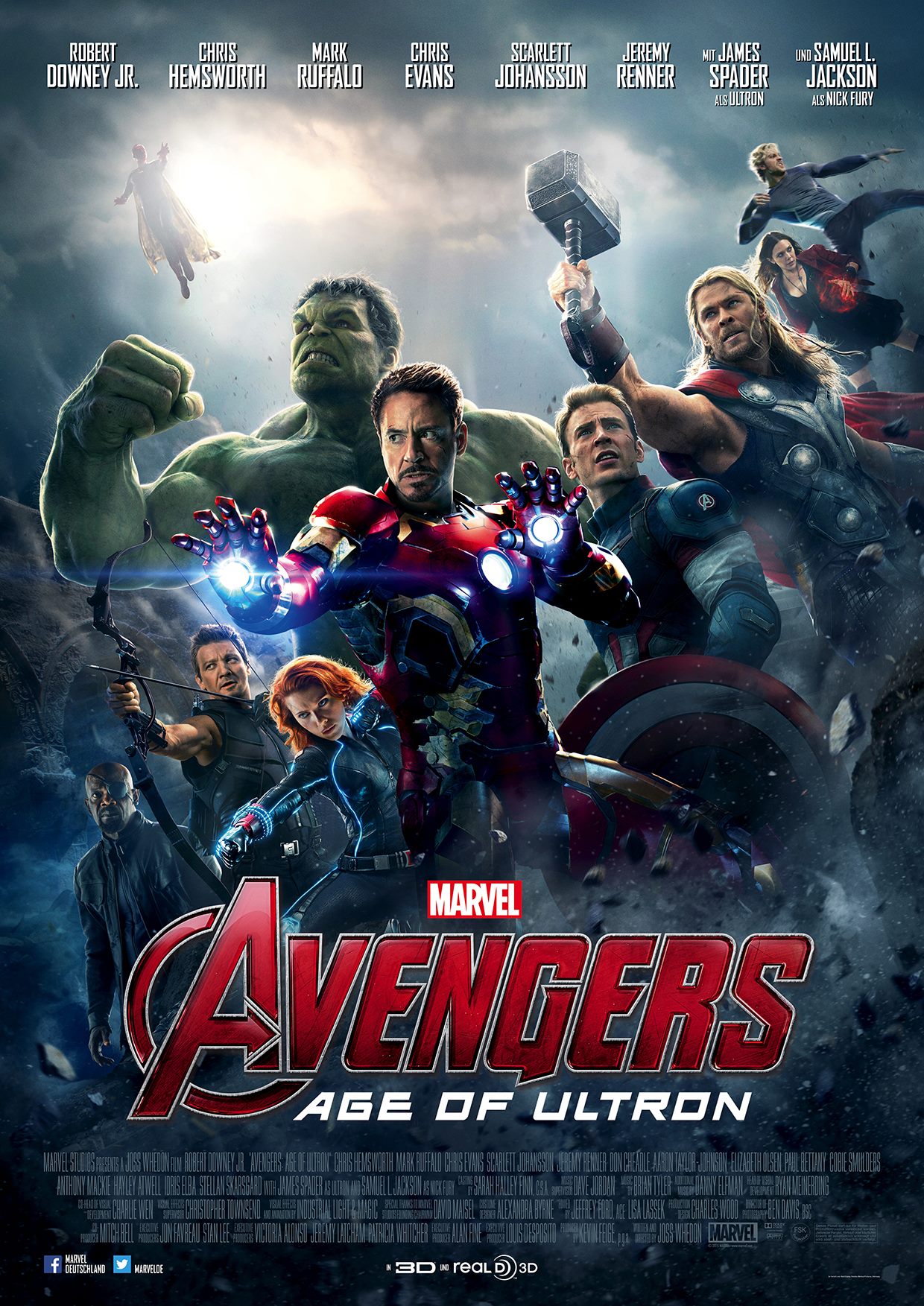
MOVIE REVIEW: Avengers: Age of Ultron

Avengers-Age-of-UltronAvengers: Age of Ultron opened across India today, April 24, 2015. This film is set sometime after the events of the second films in the Captain America and Thor solo “trilogies.” We know this because Thor is on Earth and the Falcon (in a cameo) makes an offhand comment indicating that he’s spending time looking for Bucky Barnes / Winter Soldier. Furthermore, we know it because the opening scene is the Avengers working as a team to take down Baron Von Strucker’s fortress (re: Captain America 2 end-credit scene) in a fight to obtain Loki’s scepter. This scene suggests that the team has been working together for a while in taking down Hydra bases of operation globally. (Many have jokingly inquired why Steve Rogers (Cap) wouldn’t have called in his avenging friends during the events of the Winter Soldier film.  This film reinforces, rather than solves, that riddle.) At any rate, that opening scene contains an awesome action sequence.

The core premise of the film will not come as a surprise to anyone who has seen the trailers for this film–not to mention the previous Marvel Cinematic Universe (MCU) films and post-credit scenes. Tony Stark (Iron Man) tries to “create a suit of armor around the world” and the program–dubbed Project “Ultron”–goes terribly awry.  After Ultron comes into existence, he quickly moves to co-opt the Maximoff twins (better known as The Scarlet Witch and Quicksilver.) Because the twins have an axe to grind with Tony Stark, they willingly side with Ultron. The Scarlet Witch is instrumental in Ultron’s plan. If you haven’t seen the trailers don’t finish this sentence, but for others it will be apparent that the Scarlet Witch’s mind control is used to pit some Avengers against either themselves or others.

The tone of this film is different from the first Avengers movie. In the first film much of the tension springs from unfavorable first impressions and standoffishness. Now the characters know each other and love-hate relationships are rife–some more loving and some more loathing than others. This may make it easier to relate to what’s going on between the major characters. The strained relationships inside the team remain an important factor, and are crucial to the films going forward–most notably Captain America 3: Civil War.)

While the trailers may have led one to believe this would be a big film for Natasha Romanov (aka Black Widow) given the flashback scenes, it’s actually Clint Barton (aka Hawkeye) who has a more pivotal and revealing role in this film. (Perhaps to the chagrin of the many who wonder why he’s even on the team.) However, the evolving relationship between Romanov and Bruce Banner gets a fair amount of screen time–though the need to pack a lot into the film given the huge cast makes this drama feel a bit thin. The twins and their tormented past are also critical to the tone of the film. They hold an event from the past against Stark, but they are ethical people at their core.

The Vision is the character that has been held closest to the vest by Marvel. I won’t say much about Vision to avoid spoiling anything other than that it’s an intriguing character. I was worried that either the way this character was created or the effect he had on the story would be a disappointment, but it wasn’t.

I think James Spader did an excellent job of playing Ultron–a character that vacillates between being childlike and being a grim psychopath. (One may not get the childlike part from the trailers, but this is a brand new intelligent entity, and so it’s clever to show that.)

Like the first Avengers movie, this one has its bit of deus ex machina (bolt from the blue solutions to once insolvable problems), but it’s not the perfection of story that makes these movies engrossing. (I didn’t find it as deus ex machina as the first film–though there is at least one moment that springs to mind.)

What sells these films is: a.) the witty dialogue;  b.) the stunning visuals of the action sequences; and c.) the tension between characters both friend and foe. (Probably not in the aforementioned order.) On those three items this film doesn’t disappoint.

I won’t even bother to recommend you see it, as I’m sure–like everybody else on the planet–you will.

READING REPORT: February 27, 2015

I finished three books this week.

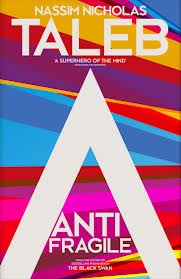
Antifragility

The first of these is Antifragile, the latest offering by Nassim Nicholas Taleb, whom you may know from Black Swan and Fooled by Randomness fame. While it’s his latest book, it came out a couple of years ago and I started it over a year ago.  The premise is that some entities become stronger when exposed to stressors and disorder,  and there are ways to nurture this tendency to be antifragile. While the ideas and many of the examples are fascinating, I put it down for a long time because Taleb is prone to rambling diatribes. After about the 1oooth time reading about how much he loathes the 98% of professors (we get it already), you may be ready to set it down as well.  [To be fair, Taleb probably gets a hundred death threats a year from enraged social science scholars whose life’s work will appear ridiculous to anyone who understands the gist of Taleb’s arguments in this and his preceding two books.] Taleb is a first-rate thinker who has delivered some very important messages about the misapplication of statistics, I’m not sure why he feels compelled go all Howard Stern about it–though it does probably sell a few extra copies and I suspect he is genuinely that way.


pyjamagameMark Law’s The Pyjama Game is in part a micro-history of the martial art and sport of judō, and in part is an accounting of his own experiences in taking up judō at the ripe age of 50. For me the history and evolution of judō is where the book is at its most interesting. However, if you don’t have any martial arts experience–or even if you don’t have any grappling-centric training experience–you may find Law’s discussion of testing and randori (free form training, the grappling equivalent to sparring) intriguing, or invaluable if you’re considering taking up judō, jujutsu, or sambo.


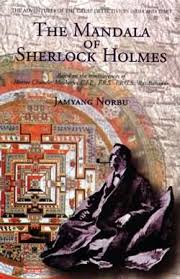
mantraSherlockHolmesThere is apparently a cottage industry of writers putting out their own Sherlock Holmes novels, and–in particular–writing about Holmes’s gap years. For those unfamiliar with the literary history of Sir Arthur Conan Doyle, at one point he got sick of writing these crime fiction novels and killed off Sherlock Holmes. However, there was such a clambering for the master detective that Doyle resuscitated Holmes. These gap years in which Holmes was believed dead have proven fertile soil for writers who wish to write their own spin on where Holmes went and what he did when he was traveling incognito. I saw a press post for a new one the other day in which Holmes goes to Japan. The Mandala of Sherlock Holmes, however, speculates that Holmes traveled to Bombay, and from there to Tibet and eventually to Shangri La. It’s an intriguing premise and offers some good travelogue type description of setting–however as a story it’s not as artfully executed as the Arthur Conan Doyle books.


I bought four books this week, two of which–in part–because they’ll help me complete the Book Riot 2015 Read Harder Challenge, which I will talk about below.


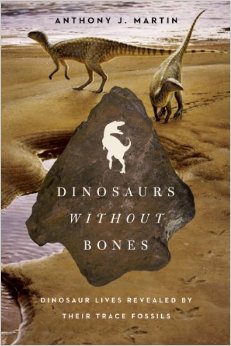
Dinosaurs_wo_Bones

Admittedly, I bought this book, Dinosaurs Without Bones,  not because the subject jumped out at me (though I’m sure it will prove thrilling) but rather because I knew the author about a billion years ago (I know; I should take geological time more seriously when mentioning a book of this subject.) At any rate, we trained at the same martial arts school in Atlanta, Georgia. That disclaimer being made, the topic looks fascinating and I’m eager to learn more about paleontological detective work.


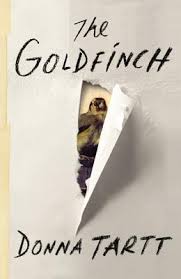
GoldfinchThe Goldfinch won the 2014 Pulitzer Prize for Literature, and so it meets an unchecked requirement for the Book Riot Challenge (recent award winner of one of the major literary prizes.) Honestly, if it weren’t for my desire to complete the challenge, I might have read Tartt’s The Secret History first. The latter books seems a little more up my alley, but I”m eager to see what this critically acclaimed novel has to offer. If it’s engaging, I’ll go back and pick up her first novel.


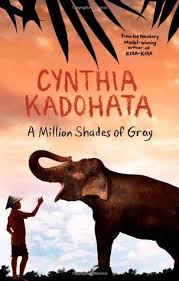
AMillionShadesofGray

No A Million Shades of Gray isn’t a mommy porn book 20,000 times more intense than E.L. James’ book. On the contrary, it’s an intriguing YA book about a teenage elephant handler who escapes into the jungle with his elephant to escape war-torn Vietnam. This book will hit on an unchecked category on the Book Riot Challenge (i.e. YA book)


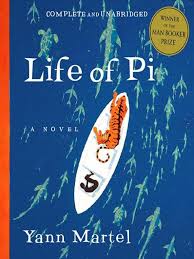
Life of Pi

Life of Pi is a book that I intended to read long before the movie came out, but still haven’t gotten around to it. It was cheap on Kindle, and so I picked it up. I’ve seen the movie, so it’ll be interesting to compare, given how visual the movie was.


I’m almost halfway through the Book Riot 2015 Read Harder Challenge. The 19 books I’ve completed thus far this year include books in 11 of the 24 categories, including:


3.) Short story collection or anthology: a.) 999: New Stories of Horror and Suspense, and b.) I Have No Mouth And I Must Scream


6.) By someone of another gender: a.) Tears in Rain, and b.) Principles of Tibetan Medicine


7.) Takes place in Asia: a.) Quarantine in the Grand Hotel, and b.) The Mandala of Sherlock Holmes


10.) A micro-history: Yoga Body: The Origins of Modern Postural Practice


12.) A science fiction novel: a.) Tears in Rain, b.) The Martian


17.) A collection of poetry: Leaves of Grass


18.) A book that was recommended: Key Muscles of Hatha Yoga


19.) A book originally published in another language: a.) Tears in Rain (Spanish), b.) Quarantine in the Grand Hotel (Hungarian)


20.) A graphic novel or comic book collection: The League of Extraordinary Gentlemen (Vol. 1)


23.) A book published in 2014: The Martian


24.) A self-improvement / self-help book: Zen Mind, Strong Body


BOOK REVIEW: The League of Extraordinary Gentlemen (Vol. 1) by Alan Moore

The League of Extraordinary Gentlemen, Vol. 1The League of Extraordinary Gentlemen, Vol. 1 by Alan Moore

My rating: 4 of 5 stars

Amazon page

For those unfamiliar with this series or the movie featuring Sean Connery, this graphic novel assembles a team of heroes from 19th century science fiction and adventure novels. Specifically, the team includes: Mina Harker (of Bram Stroker’s Dracula), Allan Quatermain (of H. Rider Haggard’s King Solomon’s Mine series), Captain Nemo (of 20,000 Leagues Under the Sea and other Jules Verne novels), Dr. Jekyll/Mr. Hyde (of the Robert Louis Stevenson novel featuring their names), and Hawley Griffin (of the H.G. Wells novel, The Invisible Man.) The team’s principle nemesis is Professor James Moriarty of Arthur Conan Doyle’s Sherlock Holmes series.

Interestingly, this book follows the same general plot progression as the movie, but is much different in tone, settings, and character details. The plot progression of which I refer is that the team is assembled (with no small amount of mutual animosity) and they bond into a team as they face a grandiose threat of steampunk industrialization run amok. That plot progression aside, you’ll find an entirely different story otherwise. First, those who favor gender equality will appreciated that Mina Harker is in a leadership role in this volume, the role played by Quatermain in the movie. (That being said, this isn’t a group of individuals who take readily to being led.) Second, those who like darker, grittier tales will find this book more appealing than the movies. Allan Quatermain is found by Harker wasted in an opium den. Griffin is captured after having moved into a girl’s school to use his invisibility to lecherous advantage and the head mistress of said school is decidedly dominatrix like. I generally liked the grittier tone better, though it was hard to reconcile Griffin’s abhorrent behavior with heroism—anti-heroes are a challenge, particularly one who can disappear at will. Third, the team in the book is smaller and more manageable, with the movie having taken on two more characters (Dorian Gray and Tom Sawyer.) Finally, the book doesn’t get around so much. The movie features at least four major settings—not counting the high seas, but the book takes place mostly in Victorian London.

You don’t have to have read all the classic works from which the characters derive to get the story, but it does make it a little more fun. (Yes, I realize that I’m using “classic” for books–some of which–were considered the pulp fiction of their day. However, if your book is still in print after 100 years, I’d say you deserve the status and respect.) Those who’ve read the books will get some subtleties that aren’t critical to the story but are kind of nifty. That being said, don’t expect the characters to match their originals perfectly. The novels covered are wide-ranging, some rely on supernatural elements and others are more realistic, some are futuristic while others reflect the times more accurately. One can’t bring all these individuals into one world and have them be exactly as they were in their original domains.

There are some extra features at the end including a short story featuring a time traveling Allan Quatermain and some art from the series.

I’d recommend this book for those who read comics and graphic novels—especially if they’ve read the stories of at least a few of the 19th century characters. (If you haven’t read any of the novels, you should probably go back and hit some classics before you read anything else. Just my opinion.) It’s an intriguing concept, and it’s done well.

The movie trailer is here.

View all my reviews

BOOK REVIEW: Batman: Arkham Asylum by Grant Morrison

Batman: Arkham Asylum - A Serious House on Serious EarthBatman: Arkham Asylum – A Serious House on Serious Earth by Grant Morrison

My rating: 4 of 5 stars

Amazon page

This is the third, and probably last, installment in my “Happy 75th Anniversary, Batman” series of reviews. Batman: Arkham Asylum is an attempt to convey a nightmare on the page, and it succeeds both graphically and narratively. It’s quite different from other Batman comics in style and content. It takes the dark nature of the Dark Knight’s mythology to the extreme.

There are two story-lines woven together in Batman: Arkham Asylum. The main line involves Batman entering an Arkham Asylum being run by the inmates. There he finds himself pitted against his foes: the Joker, Two-Face, Scarecrow, and others. The other is the 19th century tale of Amadeus Arkham’s descent into madness.

As is common in the Batman mythology, psychiatrists are portrayed as walking the razor’s edge between sanity and insanity. For those who don’t read comic books, this is most readily exemplified by the character of Dr. Crane / Scarecrow in the first film of the Nolan trilogy, Batman Begins. I’m not sure whether the point is to create enemies that are so strong they can bend doctors to their will, or if there is a general disdain for psychiatrists—as one might see a dislike of lawyers in other stories.

Among the nightmarish elements of this work is the fact that Batman’s face is never seen clearly. The Dark Knight is always a vaguely and/or surrealistically silhouetted. There’s a mix of sharpness and haziness in the graphics. The Joker gets his own crazy scrawl font. The graphics are as creepy and strange as can be. On my low-end Kindle, the work was in black and white, which worked well. I did look at the sample pages, and the color version uses a lot of sepia and crimson.

Batman: Arkham Asylum asks us to consider whether Bruce Wayne / Batman is sane or just a lunatic with a moral code.

View all my reviews

BOOK REVIEW: Batman: The Dark Knight Returns by Frank Miller

Batman: The Dark Knight ReturnsBatman: The Dark Knight Returns by Frank Miller

My rating: 4 of 5 stars

Amazon page

A couple of reviews ago, I covered Frank Miller’s Batman: Year One, which imagined the first year of the Dark Knight’s venture into crime fighting. The Dark Knight Returns is Miller’s take on the other end of the Caped Crusader’s career. It begins ten years after the last sighting of the Batman. Commissioner Gordon is on the verge of retirement, and there’s a mix of new and old threats rising.

There are four parts to this work. The first, also entitled The Dark Knight Returns shows the rise of a powerful gang of thugs called “The Mutants.” The way this gang’s leader is drawn makes him look like he truly is an altogether different species, but it’s his filed teeth and his bulky physique that account for his appearance. The main battle is with the “rehabilitated” Harvey Dent (a.k.a. “Two-Face,” an inappropriate moniker as his face has been fixed and his flighty psychiatrist ensures the community that Dent’s mind is fixed as well.) We see Bruce Wayne’s concern about the deteriorating state of Gotham and his eventual return to crime fighting, which is instigated by a freakish bat flying through his [closed] window. Wayne takes the bat as a sign from the universe that the Batman is indeed needed. Dent engages in a terroristic plot which the Dark Knight must try to foil.

As was the case in Batman: Year One, the story of Commissioner Gordon plays out in parallel with that of Bruce Wayne / Batman. However, in the third book, Gordon has retired and it’s the new Commissioner, Ellen Yendel, who shares the spotlight. Yendel, unlike Gordon, promptly issues an arrest warrant for Batman.

Book Two is called, The Dark Knight Triumphant, and it’s in this episode that Batman comes up against the leader of the Mutants. As in Batman: Year One, Batman arrives to the fight as an underdog. However, as would be expected, the nature of his underdog status is completely different. In Year One, Batman is a supreme physical specimen, but is green to crime fighting. In The Dark Knight Returns we see a battle-hardened veteran Batman who is a spry geriatric, not up to fighting young, mutant thugs. However, as with the former comic, the Dark Knight does redeem himself. Many of the Mutants, being fair-weather friends to their leader, form a cult of Batman in the wake of the Dark Knight’s victory over their former boss.

Besides broadening the readership demographic to retirement community dwellers, another new demographic is appealed to with Carrie Kelley, the new Robin. There are references early in the book to the profound effect that the death of Jason Todd had on Bruce Wayne. Be that as it may, Batman seems quick to bring this young girl into harm’s way given the lingering wound of Jason Todd.

Book Three, Hunt the Dark Knight, pits Batman against his ultimate nemesis, the Joker—who like Dent—has been sprung in no small part due to his lunatic psychiatrist. Miller continues the popular Batman comic disdain for psychiatrists, who are portrayed as a small nudge away from becoming bat-shit crazy (pun intended.) While the battle against the Joker provides this chapter’s crime fight, Commissioner Yendel’s war on Batman is a major part of the storyline. We also discover that time has not been as kind to Selina Kyle as it was to the men of this series. (i.e. Gordon is old but distinguished, and Batman has pretty much the same preternatural physique that he did as the young batman.)

The Dark Knight Falls is the last section, and it’s the most famous for the battle between Batman and Superman. Earlier in the book there’s a foreshadowing call from Clark Kent to let Batman know that the Superman will be out-of-town for a while. Appropriate to the 1986 issue date of this comic, a Cold War crisis is the event consuming Superman’s time. These Cold War tensions result in a nuclear missile launch that Superman diverts, but the Man of Steel hasn’t read up on the Electro-Magnetic Pulse (EMP) effect. [Incidentally, Miller didn’t read up on the use of nuclear weapons as an EMP either, or—at least—he gets it completely wrong. Perhaps, he just figured that his readers wouldn’t know the difference–and he’s probably right. At any rate, I’m not deducting stars for bad science.] The power outage caused by the EMP results in looting and societal chaos. Batman quells this with the help of the cult of Batman mentioned previously. However, this doesn’t go over smoothly with some, which results in Superman’s invasion of Batman’s Gotham turf, and the ultimate battle.

I enjoyed this work more than Batman: Year One in part owing to the serious enemies that the Dark Knight must vanquish. I’d agree with the common view that this is a must-read for those interested in the canon of the Caped Crusader.

Also, if you aren’t a comics fan but are wondering how Batman and Superman could end up fighting–as per the upcoming Batman v Superman: Dawn of Justice movie–this might give you some insight. [Though I wouldn’t expect that movie to follow this work in any of the vaguest ways.] Also, there are other Caped Crusader versus Man of Steel interpretations out there, though this is probably the most famous.

View all my reviews

BOOK REVIEW: Batman: Year One by Frank Miller, et. al.

Batman: Year OneBatman: Year One by Frank Miller

My rating: 3 of 5 stars

Amazon page

Amazon recently had a sale on classic Batman collections in celebration of the Caped Crusader’s 75th anniversary. I bought a few titles, including this one.

Batman: Year One is Frank Miller’s vision of the hero’s first year of crime fighting. Unlike the first movie in the Nolan trilogy, Batman Begins, there’s no backstory about Bruce Wayne’s training. The comic begins with Bruce Wayne beginning to go on the equivalent of self-sanctioned “neighborhood watch” rounds in Gotham’s seedy underbelly. He’s in his planning and research phase, and only quasi-reluctantly gets into brawls with street thugs. His goal is, ostensibly, intelligence gathering.

Miller’s work isn’t aimed at a boyish market. From the intimation of underage prostitution to themes of marital infidelity to the unsubtle homage to Edward Hopper’s famous painting Nighthawks, this book is directed at a more mature reader. It’s grittier, but Batman hasn’t yet become so sophisticated as to abandon wearing his underwear outside his pants.

The four chapters that make up this graphic novel parallel and twist together the stories of Jim Gordon and Bruce Wayne as they each begin their Gotham crime fighting careers. In many versions of the Batman mythology, Gordon is a young cop who helps boyhood Bruce Wayne on the night his parents are killed. This is one of the ways in which the Miller version differs. In Batman: Year One Gordon is a detective who moves to Gotham from Chicago at about the same time Bruce Wayne is sticking his toe in the waters of Gotham crime. This comes in handy for Miller later in works like Batman: The Dark Knight Returns in which he is able to have a geriatric Bruce Wayne and Jim Gordon coexisting.

The interests of Gordon and Batman only align at the very end of the last chapter. Until then, Gordon is trying to find and apprehend Batman like all the other cops. In fact, Gordon is leading the crusade against the Dark Knight when his bosses still have little interest in it—until Batman crashes their ball.

There are no supervillains yet—only corrupt cops and organized crime. Bruce Wayne, who adopts the guise of Batman only after a bat flies through his window (never heard of that happening), gets off to a rough start. He isn’t yet the phantom nightmare that he will later become, and is still learning his lessons. In his early encounters with criminals, he prevails mostly by being able to take a punch.

Besides Bruce Wayne’s inner monologue being a bit ham-handed, I enjoyed this work. The ham-handed inner monologue is—no doubt–intended to convey that Wayne is a man of thought as well as a man of action, but it’s hard to believe that someone who could transform himself into the Batman would be that riddled with doubt. That said, the dialogue is better written than the typical comic. There’s not a lot of the “As-you-know-Bob” dialogue that often plagues this genre.

If you’re a fan of the Dark Knight, this is worth reading.

View all my reviews