
Central Presbyterian Church from the State Capitol; Taken in February of 2012 in Atlanta

Atlanta First United Methodist (L) and Basilica of the Sacred Heart of Jesus (R) from SunTrust Plaza

Central Presbyterian Church from the State Capitol; Taken in February of 2012 in Atlanta
Atlanta First United Methodist (L) and Basilica of the Sacred Heart of Jesus (R) from SunTrust Plaza

Taken in December of 2012 at the Atlanta Zoo
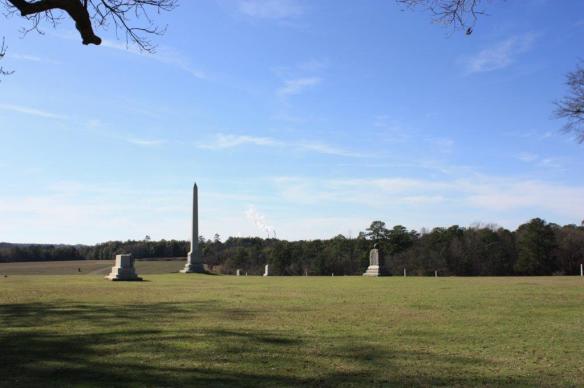
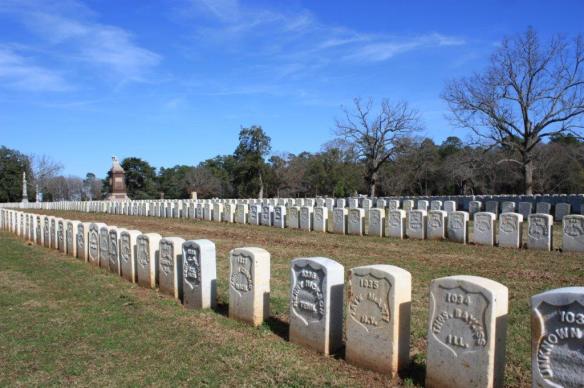
Taken in December of 2011 at Andersonville National Historic Site / Andersonville National Cemetery

Taken in December of 2011 in Albany, Georgia
 Topographies by Stephen Connely Benz
My rating: 5 of 5 stars
This is a collection of travel essays exploring locales within America and abroad. The fifteen essays collected are reprints of periodical publications.
As Benz describes destinations and tells travel tales, he often presents local history such as a murder mystery in the Everglades, the fate of the Donner Party, the truth about the Rough Riders at San Juan Hill, and the nuclear test at Trinity, New Mexico. But not all of the essays mix history lessons into the travelogue, and some of the most evocative pieces touch on the local landscape in interesting ways such as walking a postman’s route in Havana or camping in Wyoming.
Some travel writing drills down on a single destination and other works spread out over a diverse set of locations. Benz’s approach is somewhere in between. While, except for a couple chapters set in Havana, the essays are about varied locations, only a couple (i.e. the ones on the Everglades and Moldova) stand out as far afield of the rest. Of the seven international essays, three feature Cuba and two Guatemala, and of the eight US essays, all but one is set in the West and three present Wyoming.
The essay collection is divided into two parts. The first eight essays are about locations within the United States, and the last seven describe foreign travels. I found the organization to be smartly arranged, with each of the two parts beginning an ending on essays that are among the strongest in the collection. In the case of Part I, the collection starts with a piece set in the Everglades which brings to life a historical murder, and it ends with a visit to the Trinity Site where the first nuclear test detonation took place.
With respect to the international chapters, they open with a visit to Moldova. The last travel essay I read about Moldova was in Eric Weiner’s “The Geography of Bliss.” If you’re wondering why a book on the happiest places on Earth would feature Moldova, it’s for the perhaps ironic but definitely instructive reason that Moldova often comes up as among the LEAST happy countries. Benz presents a similar portrait of Moldova without explicitly taking the dismal nature of the country as his theme. The last two chapters discuss the author’s time in Guatemala, and the last discusses the poetry scene in a country in a country under political upheaval.
The book has a prologue in verse and an extended epilogue in prose.
I’d recommend this book for readers of travel writing, particularly those interested in the American West and Central America. I found the writing to be both skillful and readable, and that the author recognized the value of an intriguing story.

Taken in March of 2012 near Tims Ford State Park in Tennessee

Taken in August of 2018 in Chicago
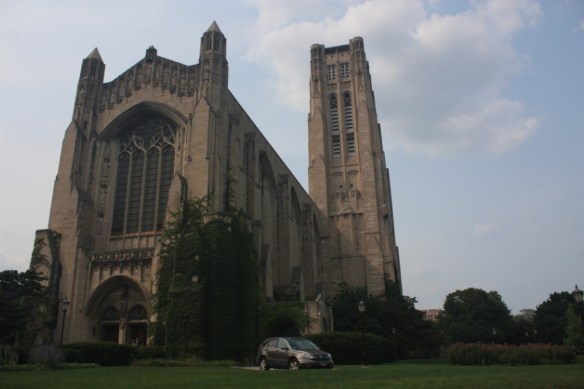
Taken in August of 2018 in Chicago
 How to Love a Country by Richard Blanco
My rating: 5 of 5 stars
Out March 26, 2019
This book takes one on a roller coaster ride of insight into the author’s relationship with his country as an immigrant from a family of Cuban exiles. At times the tone is hopeful and at other times seething or even vitriolic. Unlike many of the angry works of political verse of late, this one sometimes reflects that most beautiful of pragmatic truths: one can’t truly love anything if one can’t embrace it imperfections and all. As it happens, this wide sway in tone is partly the result of these poems being collected from various sources. Having a poem commissioned by the State Department in a collection with a poem that was a response to a news story about someone being gunned down is bound to result in some variation in feel. Still, I think the poems were well-organized to reflect the various trials and glories one goes through in a relationship. The angry verse is well-positioned toward the middle, and about the time I was over the rage, the storm clouds began to break up and a more beautiful scene unfolded.
The poems are prose poetry or free verse. There is beautiful use of language interspersed with plain-spoken verse.
I’d recommend this collection for poetry readers. I don’t suspect it will have a particularly wide audience. A jingoistic reader who picks it up for its title will drop it like a hot rock long before getting to the aforementioned angry plateau. Which is not to say that there isn’t something to be gained from reading this book even if it doesn’t comport with one’s own views. The issue of division along fault lines of political-philosophy is a major theme of this collection.





 Tiger Riding for Beginners