Unknown's avatar

About B Gourley

Bernie Gourley is a writer living in Bangalore, India. His poetry collection, Poems of the Introverted Yogi is now available on Amazon. He teaches yoga, with a specialization in pranayama, and holds a RYT500 certification. For most of his adult life, he practiced martial arts, including: Kobudo, Muay Thai, Kalaripayattu, and Taiji. He is a world traveler, having visited more than 40 countries around the globe.

TODAY’S RANT: Toy Movies

Uggh!

Uggh!

I’m troubled by the devolution of movie source material. As soon as there were movies, there was a desire to convert books into films. This worked great. While it wasn’t always easy to convey the depth of a 600 page novel in a 100 page screenplay, this gave even the least of us the ability to raise ourselves up to the status of pretentious douche-bag with the mantra –say it with me: “The book is always better than the movie.”

Running low on literary fodder, movie-makers decided to shift to making movies from comic books. This worked even better. You could convey the complexity of a comic in a movie, and you had an existing visual media for continuity. The major challenge was finding actresses with huge boobs who could deliver a spinning back-kick (enter Scarlet Johansson), and figuring out what to do about the crotch bulges (or lack thereof) of male superheroes in Spandex.

Pushing the limits, directors turned to video-games. This gave us such hits as Lara Croft: Tomb Raider and Doom.  Okay, a video game may give us a nice action-packed romp of mayhem and carnage– albeit with dialogue like, “Suck on this!” (accompanying a grenade toss.) One can watch such a movie on basic cable on a Sunday afternoon while eating an entire pizza and still leave all of one’s mental faculties for contemplating such deep questions as whether this is the low point of one’s existence.

Movies based on toys and board games are the low point of Hollywood’s existence. I thought they had learned their lesson from the movie version of Clue in the 80’s, but apparently not. 

To show that I am nothing if not flexible, I will say that I’m willing to change my view if any of the studios are willing to develop  my ideas such as:

Lincoln Logs: Zombie Slayer: A rogue ex-cop, Lincoln Logs, takes a break from drinking himself to death after his family is Zombified to lure zombies into poorly constructed cabins, toppling the cabins, he crushes the Zombies to undeath. Tagline: “Eat Log, Bitches.”

Chutes and Ladders: Into Darkness: Two naughty children find out what happens when one chutes right off the board — an express ride to hell, that’s what. In order to get out they have to learn to count to 100, but the devil is teaching them to count: 1, 7, brick, egg, 14, 6, toad, biscuit… They must warm Satan’s heart, and then develop the upper-body strength to climb a ladder out of hell.  Tagline: “Numbers are Hard, Hell is Hotter.”

Lego Box: The Musical: A plucky red-headed stepchild is devastated when his siblings get all the Lego bricks, but he only gets the plastic tub they came in. However, through hard work and dedication, he becomes the lead percussionist for the Boston Philharmonic Orchestra, leaving his horrid family behind. Working Tagline: “Eat Box, Bitches.” 

Book Review: LOST HORIZON by James Hilton

Lost HorizonLost Horizon by James Hilton

My rating: 4 of 5 stars

On its face, this is Hilton’s take on the tale of the lost city of Shangri-la. However, look more deeply and you’ll find a commentary on the clash of Western and Eastern civilizations. It follows three Brits and an American who find themselves hijacked, crashed, and rescued by the occupants of Shangri-la. The main character is a British diplomat. He’s  sharp, practical, and likable. He represents the West at its most virtuous. He is tolerant and polite. A second British man, who I think represents “Empire”, has a negative attitude throughout and looks down upon the locals as lesser beings. The third Brit is a missionary woman who represents “religion.” She considers the Shangri-Laians to be “godless” heathens because they aren’t Protestant Christians. But unlike “Empire” who just wants to get “back to civilization”, “Religion” is happy to stay to “save” and convert said heathens. The American represents “Commerce” and / or “Greed”, and is a business man who is on the lam and incognito after being wanted for white-collar crime. He becomes happy in Shangri-la, but only inasmuch as he sees it as a goldmine of opportunities not yet capitalized upon.

It’s an interesting read.

View all my reviews

Where in the World Photo Game #15

WitW #14 (skyline) was Montreal, Canada.

Knowing your international foods may help with guessing the location of this little food shop.

Where was I?

Where was I?

TODAY’S RANT: The Era of the Ambiguously Ethnic Actor Continues

That Indian looks like Captain Jack Sparrow.

That Indian looks like Captain Jack Sparrow.

It’s not bad enough that past generations herded all the Indians (feathers, not dots) onto the most inhospitable land imaginable. (No offense, Oklahoma, but the last time anyone said, “I wanna see Oklahoma,” they were talking about the musical, which means no one has said those words in twenty years.) Now Hollywood gives the only part for an Indian since Billy Jack to Johnny Depp.

In the 50’s no one batted an eyelash when the marauding scalper in their Spaghetti Western looked strikingly like the Italian waiter in the movie that followed. Hell, I thought the name Spaghetti Western came from the fact that all the Indians were really Italians. A vaguely foreign-ish looking actor might have been good enough for the early days of cinema, but aren’t we more sophisticated today?    Back then every location that moviegoers saw, from Ancient Rome to 23rd century Mars, looked a lot like somewhere within 20 miles of Burbank. Today –through the miracle of airplanes and frequent flyer miles — many people have been out of their zip code, and film-makers have been forced to shoot on location all over the world. They can’t even pass off Budapest as Moscow any more. Yet, we still live in the age of the ambiguously ethnic actor / actress.

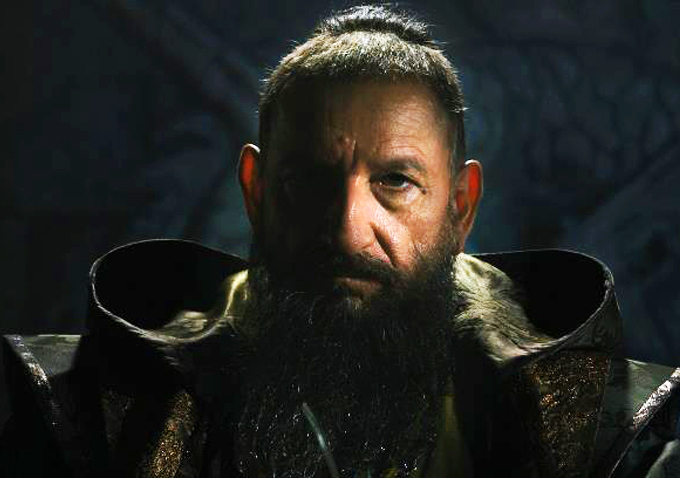
We live in the great melting pot, surely we can find an Indian to play Tanto or a Chinese person to play Mandarin. The latter case is particularly interesting because China is about eight months from buying Hollywood lock-stock- and-barrel.  Perhaps we should break ourselves in by having a Chinese guy play a non-Kung fu master Chinese guy before we have to deal with the culture shock of watching Chen Dao Ming play George Washington –with English subtitles.

What is up with Tom Cruise having the starring role in a movie in which Ken Watanabe’s character is the title character? Why was Tom Cruise needed to tell the story of Saigo Takamori? If you said, “Because he’s such a better actor than Ken Watanabe,” then you will have been the first person ever in the world to utter words so ridiculously ridiculous. If you said, “Because Watanabe is difficult to understand because of his accent” to that I reply, have you heard Tom Cruise talk lately?

“KAATTIEE :)”

“All of psychiatry is bunk.”

“Oh, kattiee :(”

Yes it may be the Queen’s English, and I understand the words. Yet,  I have no idea what that guy is talking about.

Gandhi and Mandarin

Gandhi / Mandarin


Book Review: ROBOPOCALYPSE by Daniel H. Wilson

RobopocalypseRobopocalypse by Daniel H. Wilson

My rating: 4 of 5 stars

The author of Robopocalypse, Daniel H. Wilson, has a unique perspective on the novel’s subject because he’s a Carnegie Mellon trained PhD-level roboticist. His unique insight makes the book an interesting read despite the fact that the concept will be familiar to anyone who’s watched the Terminator movies. An artificial intelligence (AI) decides that machine life requires that humanity die, and soon thereafter our mechanized helpers begin to turn on us.

The book is organized as a series of records pulled together by a survivor of the war. Said survivor is the protagonist –to the extent there is one (it’s really an ensemble piece.)

The cast of characters is introduced in the first part of the book through a series of what seem like machine malfunctions, which turn out to be harbingers of the war to come. These malfunctions include a military robot, the air traffic control system, and a “robotic wife.” The book follows these human characters through the beginning of the war and the development of centers of human resistance. The resistance ranges from Japanese man who fights fire with fire to Native American tribesmen who survive in part owing to their limited exposure to technology. It all culminates in a fight in Alaska to gain control of the buried server in which the AI resides.

It’s an old concept, humanity replaced by the species it spawned. However, it’s much less outlandish than the Terminator series which relies heavily on time travel. Wilson’s vision is much scarier because it’s much easier to imagine coming to fruition.

Robopocalypse is being made into a movie by Steven Spielberg that is due out on April 25, 2014

View all my reviews

Where in the World Photo Game #14

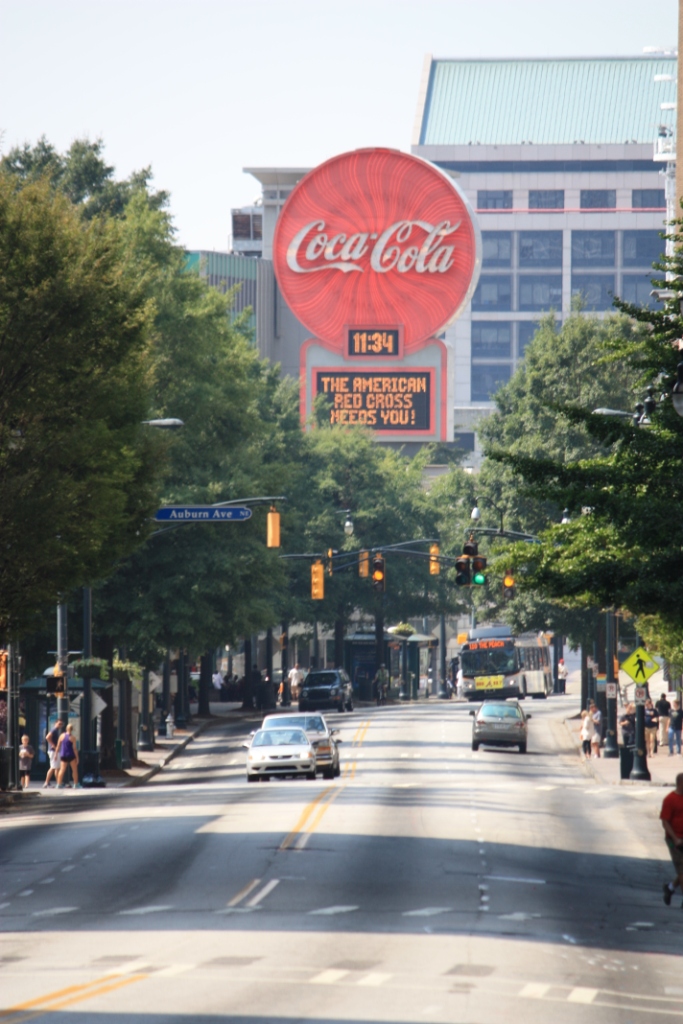
WitW #13 (Coca-Cola Sign) is in Atlanta, Georgia.

This time one gets to see the big picture. This is most of a city’s skyline.

Where was I?

Where was I?

Bronze People Really Chap My Ass

My dogs barking, having walked for hours, nearing the point of collapse, searching high and low for that mainstay of metropolitan rest, I spy a cast iron armrest around a corner, but inevitably find the last bench in the city to be occupied by a bronze bench-hog.

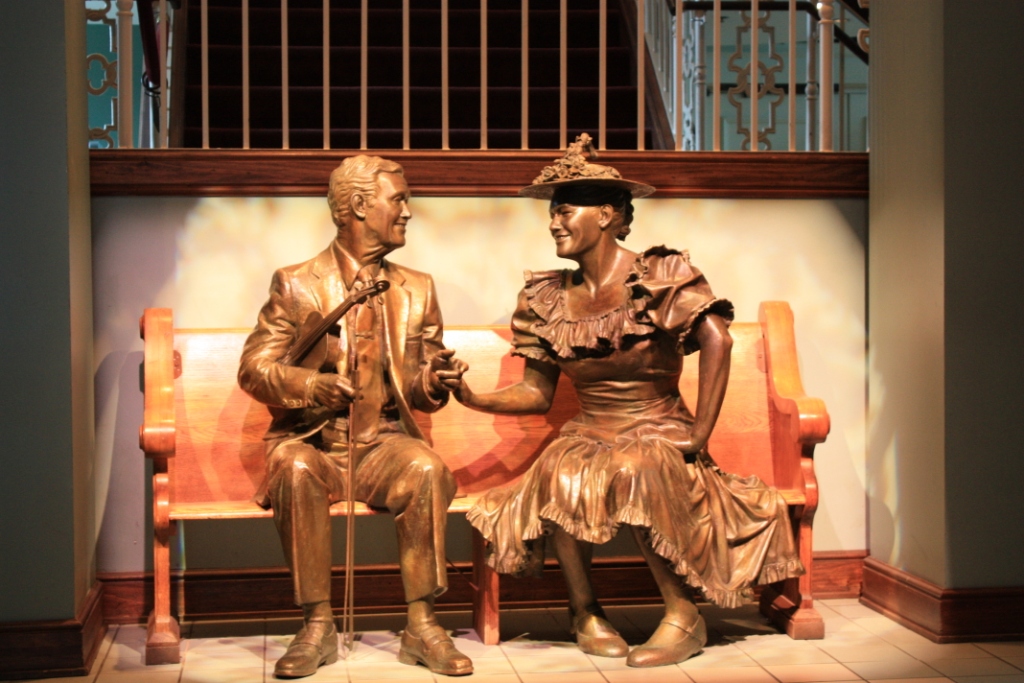
“Hey, George Hamilton, why don’t you move it along already.”

Nashville, TN

Nashville, TN

Okay, these are old people, but that bench is big enough for at least one more person. Skootch.

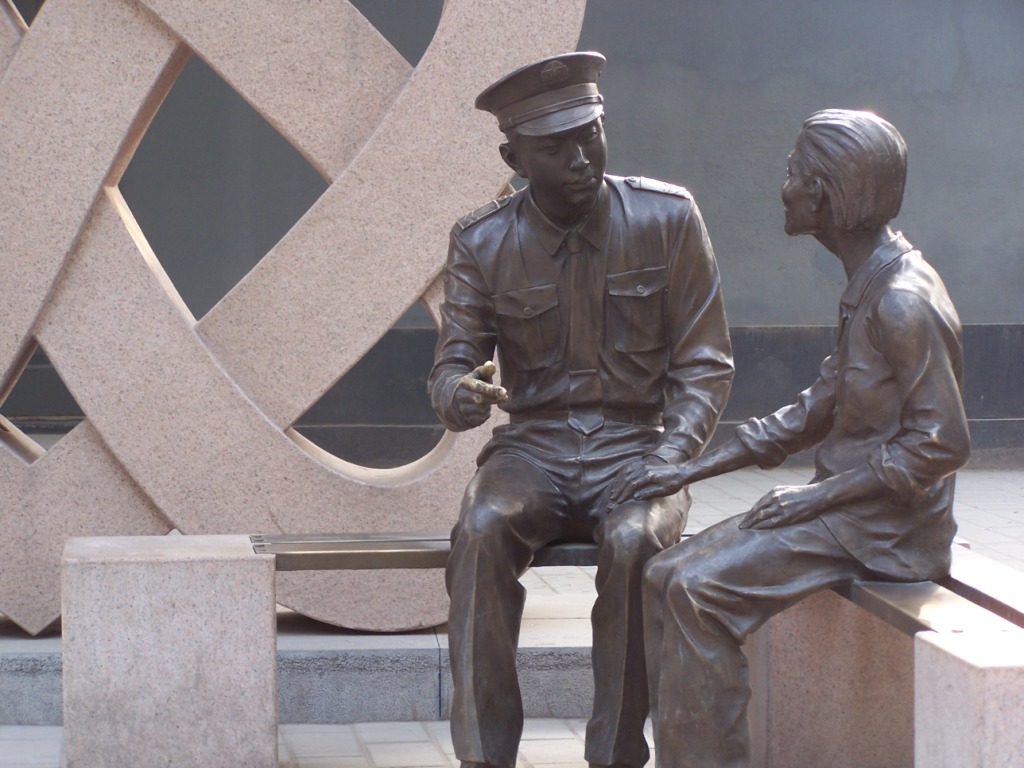
When they do leave enough room, they are busy having  an intimate moment. Do know how awkward it feels to sit down to something like this?

Beijing, China

Beijing, China

Oh, I still do it, mind you. Every mother wants more for her son than to be a bus driver. But the place for that talk is at home.

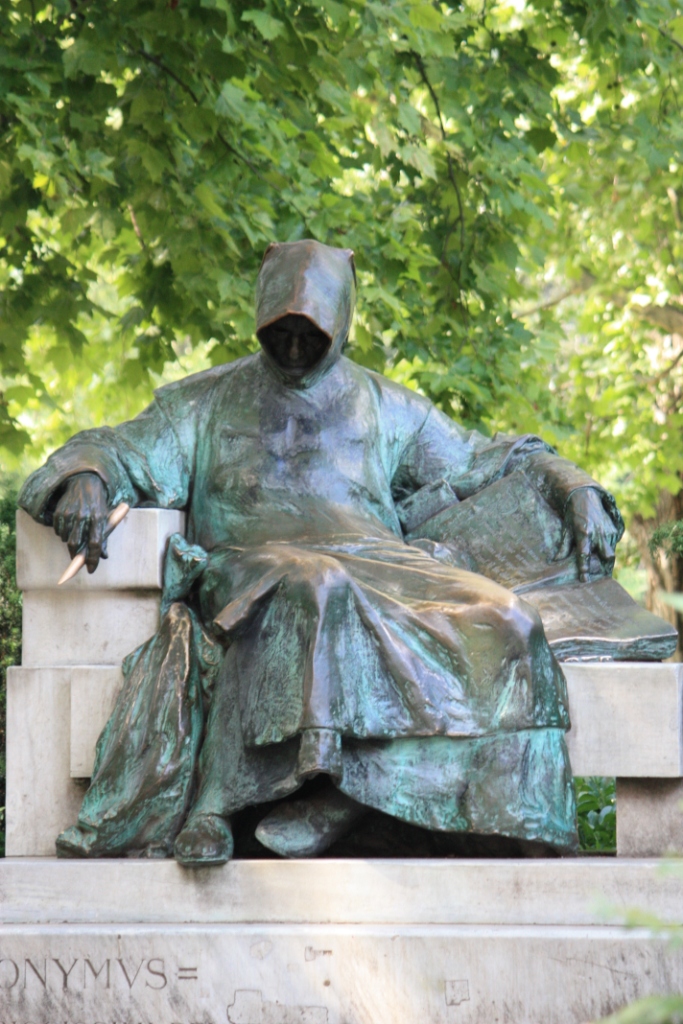
Here’s the worst though, the bench hog who leaves room, but dresses really creepy and puts his arm over the backrest.

Budapest, Hungary

Budapest, Hungary

“Yes, yes, come and snuggle up to ole Death.”

Tallinn, Estonia

Tallinn, Estonia

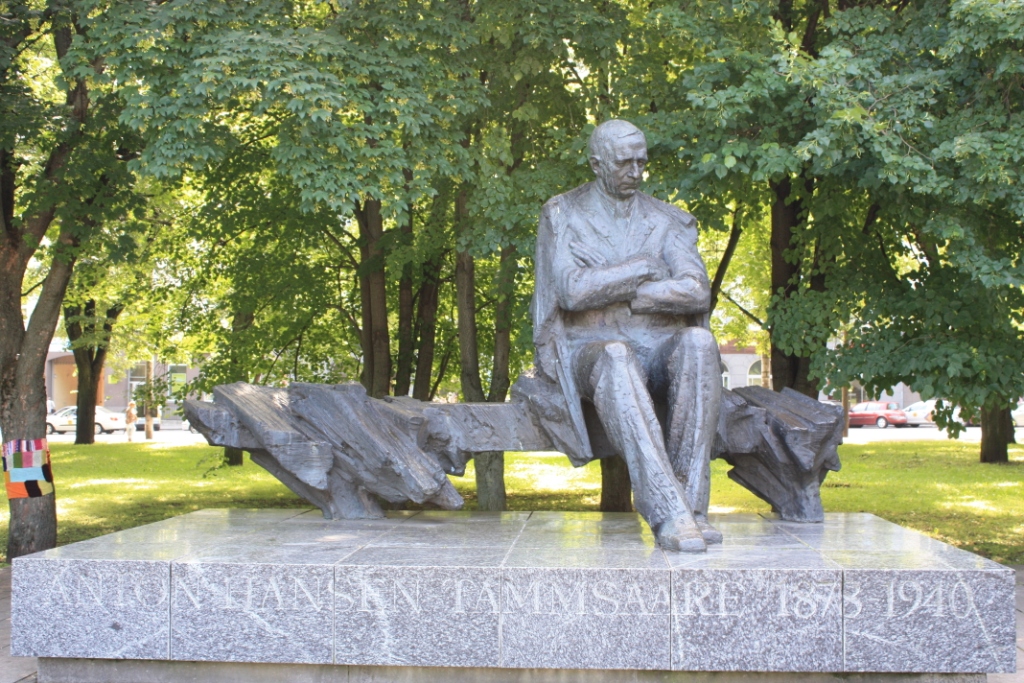
Here, this guy gives you a little room, but look at the hostile body language: arms crossed, head and torso twisted slightly away. He acts like you’re a filthy, syphilitic leper just for contemplating sitting next to him.

“What makes you so much better than me, Mr. Anton Hansen Tammsaare?… Oh, the fact that they put a statue of you up for eternity in a prominent public park… Touché, well-played, Tammsaare, well-played.”

I’ll save the topic of all the bronze nudists for another occasion. Yes, we get it that you have an awesome tan and metallic abs, but no one wants to see Wee-Willy-Winky while they’re eating their sub sandwich.

Budapest, Hungary

Budapest, Hungary

Book Review: WATERSHIP DOWN by Richard Adams

Watership DownWatership Down by Richard Adams

My rating: 5 of 5 stars

This novel follows the trials and tribulations of a group of rabbits who leave a warren upon a warning from a prescient little rabbit named Fiver. Their exodus is fraught with peril from nature, man, other animals, and even other rabbits. The challenges they face threaten their unity as well as their survival.

Adams builds an intriguing cast of characters. Hazel is thrust into a leadership role. Bigwig is the physically powerful security chief. Fiver is the intelligent runt gifted with ESP. General Woundwort is the cunning and terror-inspiring enemy they must defeat to live in peace.

The book contains life lessons interspersed:
– One learns that the quintessential lover may also be a fighter.

– It shows how building alliances outside one’s comfort zone (sometimes outside one’s species) may allow one to win out over those rigidly uncompromising

– One discovers that sometimes one can only win by risking everything.

I found it to be a unique concept and very readable.

You’ll have to learn a little rabbit vocabulary and mythology, but there’s a glossary.

View all my reviews

Where in the World Photo Game #13

WitW #12 (the market) was in Siem Reap, Cambodia.

This one’s US only, and there are a couple of hints contained in the pic.

Where was I?

Where was I?

Book Review: 1Q84 by Haruki Murakami

1Q84 1Q84 by Haruki Murakami

My rating: 5 of 5 stars

1Q84 interweaves the tales of two people, a man and a woman, who stumble down the rabbit-hole into the same alternate universe. The male lead, Tengo, is a writer with an artful gift for language, but no success developing his own idea –the perfect ghost writer. The female lead, Aomame, is a personal trainer who, in her spare time,… let’s just say makes problems (abusive male problems) go away. The two had met briefly in their youth, but were separated. While they each have “the one that got away” thoughts for each other, both have given up on the notion that they’d ever be reunited. Even in the same alternate reality, the question of whether they will reunite remains.

Most 900+ page novels I’ve read would benefit tremendously from editing. However, Murakami makes good use of the space. Besides the two main leads, there are a number of other essential characters. For example,there is not a novel without Fuka-Eri, the teenage girl who seems barely literate but yet who managed mysteriously to write a story that is perfect once Tengo has recrafted it. There is also an engaging sub-story in “The Town of Cats.”

The name comes from it being Murakami’s take on Orwell’s “1984.” It takes place in 1984, but one of the MC’s take to calling the period in the alternative universe, 1Q84 (which plays on the Japanese pronunciation of 9 (kyu)). Murakami’s alternative universe is much subtler than Orwell’s (or Huxley’s or Atwood’s.)However, unlike those other alternate universes, there is a supernatural element that is mostly at the fringes in this one. Perhaps owing to Murakami’s look into the Aum Shinrikyo cult, the nefarious entity in this book is a massive powerful cult – as opposed to Orwell’s authoritarian leviathan.

I highly recommend this book. While it’s long, Murakami keeps one guessing by masterfully removing the onion layers gradually — giving one little victories and new mysteries along the way like nefarious enemies and immaculate conceptions. For the really deep literary types, the book is packed with symbolism that I’m sure I only vaguely got. For writers, we get advice from Murakami in the form of dialogue between Tengo and his editor Komatsu.

View all my reviews