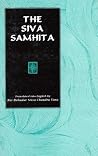
BOOK REVIEW: “Siva Samhita” Trans. by Srisa Chandra Vasu

Siva Samhita (English and Sanskrit Edition)Siva Samhita by Rai Bahadur Srisa Chandra Vasu
My rating: 4 of 5 stars

Available online

This book is considered to be one of three surviving classic texts of Hatha Yoga. (The other two being Hatha Yoga Pradipika [probably the most famous of the three because of a popular translation and commentary put out by the Bihar School] and The Gheranda Samhita.) Siva Samhita distinguishes itself among the three. It puts less emphasis on discussing technique (with the possible exception of Mudra, which — like the other two — it explores in depth, covering nine mudra with specificity) and puts greater emphasis on philosophical topics as well as yogic physiology (e.g. chakra and mapping physiology to the macro-scale natural world.) Siva Samhita only discusses four seated postures with specificity (three of which are cross-legged meditation postures,) and discusses pranayama (breathwork) mostly in generic terms. I wouldn’t say that this reflects a lack of interest in technical topics because one other topic that this book puts great emphasis on is the importance of the teacher (meaning there might not be much discussion of technique because of an assumption by the (unknown) author(s) that techniques should be entirely passed down verbally — teacher to student.

Even having read the other two texts, I found the Siva Samhita well worth exploring. The text takes its own distinct approach. I should point out that this version doesn’t include commentary or elaboration (beyond the occasional footnote.) The text is presented bilingually with Sanskrit and an English translation. I enjoyed reading the text and the translation felt skillful, but I think I would benefit from reading an edition with commentary, (provided the translator / commentator knew of what they spoke both in terms of Sanskrit language and Yogic practice.)

If you are a serious student and / or teacher of yoga, I’d highly recommend this text.

View all my reviews

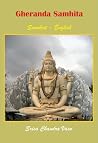
BOOK: “Gheranda Samhita” Trans by. Srisa Chandra Vasu

Gheranda SamhitaGheranda Samhita by Srisa Chandra Vasu
My rating: 4 of 5 stars

Available online – Terebess.hu

The Gheranda Samhita is said to be one of three surviving foundational texts of Hatha Yoga (along with Hatha Yoga Pradipika [HYP] and Shiva Samhita.) This is the first known edition of the Gheranda Samhita to include an English language translation. (It does retain the Sanskrit, as well.) This edition does not include commentary or elaboration (with the exception of the occasional footnote;) it’s just the shloka of the original and a translation, thereof.

The translation is clear and readable. The book does sometimes assume a basic vocabulary of terms that exist only in yoga and – therefore – do not have English language counterparts, but these can usually be easily looked up if the reader is not familiar with them. (And there is probably no good way around this because if one didn’t use the Sanskrit term one would have to give a longwinded explanation of the concept that would be painful reading for those who do have a basic yoga-related Sanskrit vocabulary (i.e. which is more likely the case for a reader of canonical texts.)

The book is arranged into seven lessons that cover Shatkarma (cleansing practices,) Asana (postures,) Mudra (“seals,”) Pratyahara (sensory withdrawal,) Pranayama (breathwork,) Dhyana (meditation,) and Samadhi (unified consciousness.) As with Hatha Yoga Pradipika [HYP] one sees cleansing practices (Shatkarma) elevated to essential elements of a practice, whereas Yama, Niyama (together the ethics of yoga) and Dharana are not afforded the status of “limbs” of practice. While there are similarities between HYP and Gheranda Samhita content there are differences as well. For example, the latter felt like it raised the importance of breathwork (pranayama) in part because it speaks of how crucial such practices are and also because it moves pranayama closer to samadhi in the progression of practice.

I’d highly recommend yoga teachers and students interested in the evolution and progression of Yoga read this text.

View all my reviews