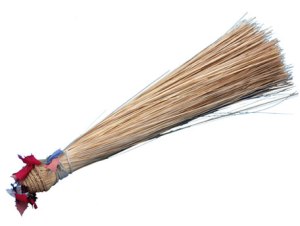
POEM: Tiny Window


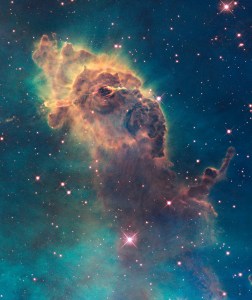
That speck of sand
that you can barely see
is a planet to the particle
that sits on either side of it,

awaiting a wave form collapse.


Your mind can’t roam out
to the tip of the spiral arm–
let alone to the leading edge
of space as it accelerates into…


5 billion years or 5,000,
it’s all the same to you.


And anything less than
a microsecond isn’t worth
being called time–

[though it’s half a life time for muonium.]


Such a tiny window
through which to seek
the sum of all knowledge.

POEM: Sacred River

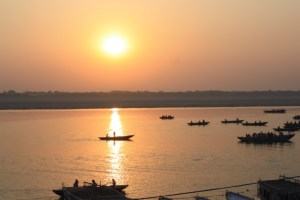
Sitting on the ghat,

folded legs

&

spine straight.

Gazing at the flowing river,

&

thinking that sacred waters

must answer sacred questions.

But they recoil from the answer.

From being shown that they are the river–

a river which forgets that which happened,

while remembering events that never did.

They crave a gift of clarity.

But the only path to understanding

is a backwards plunge into an abyss

in a moment of sacrificial madness.

BOOK REVIEW: Collected Poems 1947 – 1997 by Allen Ginsberg

Collected Poems 1947-1997Collected Poems 1947-1997 by Allen Ginsberg
My rating: 5 of 5 stars

Amazon page


This “collection” is actually 13 collections bound together in one volume that presents much of the published poetry of the Beat poet Allen Ginsberg over the second half of the 20th century—till his death in 1997. Ginsberg is probably best known for “Howl,” which is both the name of the third collection in this book and the poem for which it was named (i.e. “I saw the best minds of my generation destroyed by madness,…”) However, Ginsberg’s work is extensive, and one can find many a lesser known gem inside.

Ginsberg’s body of work isn’t just copious; it’s also highly varied stylistically. While Ginsberg most commonly uses free verse, he also uses rhyming / metered poems, shaped poems, variations on haiku, musical lyrics, and–in rare instances–prose form poems and puzzle poems.

While Ginsberg’s work is also thematically varied, there are a number of recurring themes. First, as one might expect of the author of “Howl,” Ginsberg’s work is highly politically charged. One gets a history review of the latter 20th century from reading this volume. Ginsberg rails against the war in Vietnam, against the Iran-Contra affair, and against alleged CIA drug dealing at home and abroad. It should be noted that while Ginsberg’s views are expectedly counter-culture, there isn’t the delusional glorification of the opposition that one often sees from many political writers. That is to say, as Ginsberg rebukes capitalists and conservatives, he also takes on the Soviets and other leftist regimes who engaged in human rights violations or war-mongering.

Second, as one might expect from the inspiration for Alvah Goldbook in Jack Kerouac’s “Dharma Bums,” Ginsberg frequently references Eastern spiritual traditions—notably Tibetan Buddhism and Zen. There are a number of poems set in places like Varanasi (Benares) and Siem Reap (Angkor) that reflect Ginsberg’s traveling exploration of these systems. Of course, Ginsberg was a traveler in general, and so there are a number of poems set in the Western Hemisphere and Europe as well. Ginsberg also writes a little bit on his birth religion, Judaism, but usually in a secular manner and sometimes while rebuking the actions of Zionists.

Third, there are many [mostly homoerotic] sex poems in the collection. For those who are sensitive about such matters, I don’t use the term “sex poem” as a sloppy substitute for the word erotica. These aren’t erotic love poems in the conventional sense, they are usually graphic and Ginsberg purposefully uses provocative, shocking, and sometimes lurid wording to evoke a response in the reader. If reading about Ginsberg’s sexual adventures will cause you emotional trauma, be forewarned.

There are end-notes that can be quite helpful, particularly if you’ve forgotten some of your 20th century history, are unfamiliar with Beat trivia (all of the characters from Kerouac’s “Dharma Bums” make an appearance), or aren’t familiar with the various yogic and Buddhist gurus who Ginsberg refers to. (The first set of notes oddly comes after the 10th collection. that’s because this collection is actually even more of a matryoshka doll than I suggested. The first 10 collections are actually collections inside a collection (“Collected Poems 1947 – 1980”) that’s inside a collection (“Collected Poems 1947 – 1997”.) The last three collections have their own end-notes immediately following them.

There are few graphics, mostly the music to poems that are—or can be—set to music.

I’d recommend this collection to poetry readers, particularly those who enjoy Beat period language. As I mentioned, the delicate political or sexual sensitivities of some readers may be offended. On the other hand, as I always say: If you’re not reading outside your comfort zone, you shouldn’t consider yourself so much educated as indoctrinated.

View all my reviews

POEM: Strange Language

It’s often thought that rationality and morality can’t coexist under the same roof,

but it’s rationalization and morality that are incendiary roommates.

Mid-monsoon Kolkata, when torrents back up the lines, is as noisome as ever,

but far less noisy as people seek shelter and an incessant spatter shushes.

Everybody gets crapulous on Thanksgiving, but no one will admit as much

because it sounds like one is bragging about one’s dietary roughage.

I’d like to think that I’m generally combobulated, sheveled, and gruntled,

but who could I tell.

POEM: Not All Journeys Have Routes; Not All Journeys Are Mapped

Struggling to give birth to bliss,

the proud parent fears it’ll flee

–never to return.

He heard his guru chanted the

the mantra one thousand times

–pow, Enlightenment.

Chanting the mantra 999 times

he waits expectantly for his gift

–pow, Nothing.

They told him that it was a path.

A guru told him he had the map.

 False analogy.

Teacher’s destination is not yours.

Don’t buy a map to the unknown.

Dead reckon it.

Be a scientist, leaving the detritus

of failed experiments in one’s wake.

Inching closer.

The rules of space do not apply here.

No seekers have the same beginning.

& destinations vary.

Seekers must make their own path.

Chasing footprints is a fool’s errand.

Step forward.

POEM: Glimpsing Meghalaya Easter

Girls in their Sunday-go-to-meetin’,

plod along muddy roads–

colorful yet spatter-fearing–

trudging to Easter service

meticulously, yet carefree.

Some wedge their way into Tata Sumos

 to jounce their way to mass.

Master wicker craftsmen

made their Easter baskets.

My Hoosier childhood Easters

featured injection-molded plastic baskets

–pretend woven–

but pressed from a blob of pastel plastic.

Even our grass was plastic–fake grass.

[Same as Christmas tinsel but for color.]

I bet they have real grass, too.

We had access to real grass

but no one wanted it

to touch their jelly bean.

I find so much reality to be alien and off-putting.

And I never learned

whether Meghalayans eat their

 bunnies feet- or ears- first. 

POEM: Sick of Being Bossed Around

I’m sick and tired of Gravity

telling me where I should go.

Why must I have more entropy?

And approaching c I must slow?

I’m all for conservation,

but electrical charge and mass?

What authoritarian nation

could get such laws to pass?

POEM: Seed

There is a tinge of sadness in anything that floats.

In the float is buried the seed of sinking.

There is a tinge of sadness in everyone who sleeps.

The seed of wakefulness lay dormant in a dream.

People think themselves fearless of Poe’s pit–sans the pendulum,

but underestimate the suffocating power of the void.

The pendulum is swift; the pit, relentless

Fear of the dark is fear of what is not.


POEM: A Khasi Myth: or, Rodent, Lightening, and Sword

In a sacred forest

a Rodent roamed

who owned a sword

it freely loaned.

This was no hacking

machete blade,

but made of metal

of unmatched grade.

One day Lightening

made a request:

To borrow the blade

believed the best.

Lightening zigged,

sliced, and zagged.

Claiming ownership

 in its boastful brags.

The rightful owner

requested its return.

But the rodent’s

plea met only spurn.

So the critter devised

a clever, sensible plan

in order to bridge

the requisite span.

It needed to climb

from Earth to the sky

because it had no

wings with which to fly.

But it wasn’t just wings

which Rodent lacked.

It had only one item

 to be skyward stacked.

So it piled its poop

as high as it could,

from the base of a tree

past the top of the woods.

Stacking and piling, the

poop nearly touched cloud.

When a thunder crack

struck ear-splitting loud.

Lightening saw rodent

would reclaim the sword

that Lightening had come

to so ardently adore.

Down fell the Rodent

to a pile of fried dung

that had once been its

steps and its ladder rungs.

 You may think that

Lightening got its way.

But the Rodent piles

its poop to this very day.

Someday when Lightening

is momentarily distracted,

Rodent’s sword will be

surreptitiously extracted.

POEM: Sweep

Bristles flex against the flagstone.

Like Bruce Lee with his nunchaku,

she works two brooms at once.

Unlike Bruce,

she lacks fury and showmanship.

She’s oblivious an audience has formed.

Like Bruce, her body is coordinated,

capable of describing two arcs,

in two separate directions,

at once.

The soft scraping sounds

of two bundles of bristles

is the neighborhood’s wake-up call.

The hush whispers of leaves skittering

is the subdued scream

that cannot be ignored.

Like a demonic whisper,

all that’s quiet is not gentle.


[National Poetry Month, Poem #23]