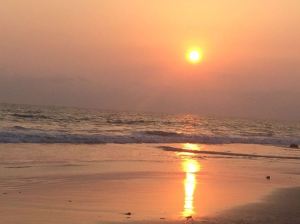
vanished lands,
on a sandy sea floor sit stones —
once a city
who will find them?
what a pity,
someone dragged those stones into place,
nudging them into the shape of a temple,
a temple where fish now seek shade.
vanished lands,
on a sandy sea floor sit stones —
once a city
who will find them?
what a pity,
someone dragged those stones into place,
nudging them into the shape of a temple,
a temple where fish now seek shade.
 A man is of two minds.
One mind craves novelty.
The other seeks familiarity.
Woe the one who reserves the latter for reality,
letting the former fall only on virtual ground.
 It’s Not Magic by Jon Sands
My rating: 4 of 5 stars
This is a collection of (mostly) prose and free verse poetry. The content is largely autobiographical in nature. Sands was one of five winners of the 2018 National Poetry Series award, winning with this title.
My own impression of “It’s Not Magic,” is that it started stronger than it finished. I can’t say whether that was because it’s truly more brilliant up front, or whether I just tired of its approach and tone. If you’re accustomed to poetry which shows you the universe larger and louder than life, and in which one has to strain to glimpse the poet, that’s not what you’ll find here. This is a kid jotting about things that happened in his life and insights he’s had. I credit the work that it’s not so angsty that it takes one out on the ledge. It’s cleverly cynical in places, and in places it’s reminiscent of Beat poetry.
I don’t know how useful recommendations are for this type of work. I think some will love it, and for others it will be just, “meh!” Hopefully, I’ve given some insight into which category you are likely to fall, but – if not – I understand.

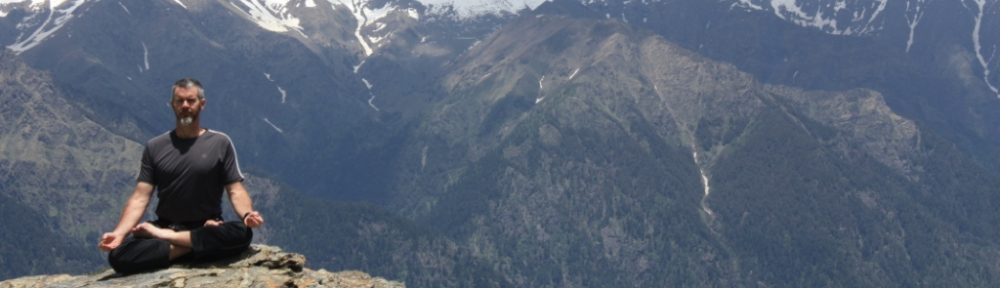
the carcass of an ancient inn
rests in a valley green
weary voyagers would long trudge
by the time it was seen
through a pass and round a bend
shaded by stark snow-caps
caravans moved by sight and coots
without a guide or maps
I heard the Buddha from the banks
of a river gently flowing.
Long before throngs swelled his ranks,
in the days of heaven knowing.
I sought the ferryman to cross,
to hear more than a faint mumble.
I felt missed words as a great loss,
and was made both mild and humble.
But, having missed that wise sermon,
my own truth I must determine.
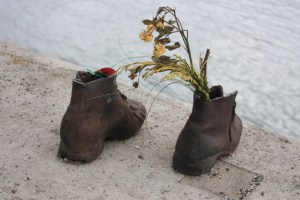 On a moonlit midnight —
between the bands of rain —
stretched a mile of murder.
Marched through the night
to keep day roads clear for troops,
Fascists sought to free themselves
of the ugly evidence of their crimes.
But sweeping the weary and woebegone
under the rug is not a rapid task,
and so a mile of murder
mass migrated towards the morn.

On mountain trails, the sound of running water
— burbling or rushing —
is a stalwart companion.
Even the rushing water, rushes lazily,
having surrendered to gravity.
Stagnation requiring an act of might —
a Herculean struggle against the flow —
that no drop can muster.
Should an unfortunate splash
spray a drop into a rocky pool,
even then,
time will insist it give itself to condensation.
All paths lead to the sea,
but no two paths are the same.
 My mind ‘s a leaf swept on mud brown waters.
Calm water, swift water, running to the sea.
Twisting, sliding, nudged, bumped, and hung up.
Dipping, gliding, but with nowhere to be.
Then I’m ejected at the river bend.
Is this death, or stillness, I cannot tell?
It’s a timeless place of infinite space,
Until, ‘long comes the lap of a swell,
and the world moves once more.

Pile my sins up over that fire,
and singe the sins you find most soft.
Though I’ll not hop upon your pyre,
but sin the sin I sinned most oft.
Burn me like an old, wooden toy,
but I’ll spark to ignite your cuff.
For I’m no less the mischievous boy
then before my first skin sloughed.
And when your fire fades to embers,
glowing amid the cold, gray dust,
I hope you’re able to remember
what made your little fire combust.
T’was not me who engaged the flame,
for mine isn’t a dry kind of shame.
 Spanish moss drapes the live oaks,
nightly fog creeps from the sea,
ghosting graves of ancient folk.
The fateful dead, who speak to me:
“We didn’t choose this place to rest our bones.
“Were we free, you’d elsewhere find our stones.
“Visit us, you must, in this eerie home,
“Just please don’t leave us here alone.”


